A strong upper back does more than help you look fit. The right upper back exercises support your posture, protect your neck and shoulders, and make everyday tasks like lifting groceries or working at a desk feel easier.
You do not need a gym full of machines to get results. You can train your upper back effectively at home with simple movements, a bit of space, and, if you have them, a pair of dumbbells or a resistance band.
Understand your upper back muscles
Your upper back is not just one muscle. It is a complex network of joints, nerves, and both large and small muscles that runs from your lower back up to your neck. That complexity is one reason many lifters struggle to train it effectively.
Key upper back muscles include:
- Trapezius, which spans from your neck to the middle of your back and helps you shrug, pull, and stabilize your shoulders
- Rhomboids, which sit between your shoulder blades and pull them together
- Rear deltoids, which shape the back of your shoulders
- Teres major and minor, and infraspinatus, which help control your shoulder joint and assist with pulling and rotating your arms
These muscles play a big role in how you carry yourself. When they are strong, it is easier to maintain good posture during both still and dynamic activities. When they are weak or tight, you are more likely to deal with rounding, tension, and pain.
Why upper back exercises matter
You probably feel your upper back whenever you hunch over a laptop or stare at your phone for too long. Over time, this forward posture can lead to tight chest and neck muscles and overstretched, weak upper back muscles. Research highlighted by Verywell Fit notes that correcting poor posture through targeted upper back exercises can reduce shoulder, middle back, and lower back pain in students and sedentary workers who sit for hours at a time.
Training your upper back at home helps you:
- Support better posture and spinal alignment
- Reduce tension and discomfort in your neck, shoulders, and mid-back
- Improve shoulder stability for lifting, carrying, and sports
- Build a balanced physique instead of overdeveloping your chest or arms
- Support your lower back, especially when paired with core strengthening
According to Kaiser Permanente, a gradual approach matters. They recommend starting exercises slowly and stopping if pain begins, and they encourage you to consult your doctor or physical therapist about which moves are right for you.
Warm up your upper back first
Before you jump into strengthening work, wake up your upper back with a brief dynamic warmup. This increases blood flow, loosens tight spots, and prepares your joints to move.
Simple dynamic warmup routine
You can perform each move for 20 to 30 seconds and repeat the sequence 1 to 2 times:
- Neck rolls: Gently roll your head in a slow circle, then reverse.
- Shoulder rolls: Lift your shoulders up toward your ears, roll them back, then down. Reverse direction.
- Arm circles: Extend your arms out to the sides and draw small circles, gradually making them larger.
- Overhead arm reach: Reach one arm overhead and slightly to the side, then switch.
- Chair rotation: Sit tall, place your hands on the sides of a chair, and gently rotate your torso side to side.
- Cat cow: On hands and knees, alternate arching your back up and then dropping your belly while lifting your chest.
- Thoracic extension: Sit or stand tall, clasp your hands behind your head, and gently open your elbows while lifting your chest.
These types of movements are recommended in resources on upper back posture and pain relief because they target the neck, shoulders, and upper spine together.
Beginner friendly bodyweight upper back exercises
If you are new to strength training, or returning after a break, start with bodyweight moves. They teach you how to control your shoulder blades and engage the right muscles without overloading your joints.
Wall push ups
Wall push ups give you an easier version of the traditional push up and help you practice shoulder control.
- Stand facing a wall, an arm’s length away, with your hands on the wall at shoulder height.
- Keep your body in a straight line from head to heels.
- Bend your elbows and bring your chest toward the wall while squeezing your shoulder blades slightly together.
- Push back to the start and gently spread your shoulder blades at the top.
Kaiser Permanente recommends wall push ups as a starting point and notes that you can progress to doing them on the floor as your strength and comfort improve.
Child’s pose with reach
This yoga-inspired move gently stretches the upper back while encouraging you to reach and lengthen.
- Kneel on the floor, big toes together and knees slightly apart.
- Sit your hips back toward your heels and walk your hands forward, lowering your chest toward the floor.
- To emphasize your upper back, walk both hands slightly to the right, breathe into your left side, then switch sides.
Child’s pose is often recommended as a calming stretch for the mid and upper back, and it works well after desk-heavy days.
Shoulder blade squeezes
Shoulder blade squeezes look simple, but they help you reconnect with your rhomboids and mid trapezius.
- Sit or stand tall with arms relaxed at your sides.
- Gently draw your shoulder blades back and down as if you are trying to tuck them into your back pockets.
- Hold for 3 to 5 seconds, then relax.
Kaiser Permanente highlights resisted shoulder-blade squeezes in their guidance. You can start without resistance, then add a band as you get stronger.
Resistance band and dumbbell exercises
Once you can control your shoulder blades and move without pain, you can add light resistance. Bands and dumbbells are perfect for home-based upper back exercises and can be scaled up as you get stronger.
Standing band pull aparts
Band pull aparts target the muscles between your shoulder blades and the back of your shoulders, which are crucial for good posture.
- Stand tall and hold a resistance band with both hands at shoulder height, arms straight in front of you.
- Keeping your arms mostly straight, pull the band apart by moving your hands out to the sides.
- Focus on squeezing your shoulder blades together at the widest point.
- Return with control.
Standing pull aparts are specifically recommended for strengthening these postural muscles and reducing upper back pain related to poor posture.
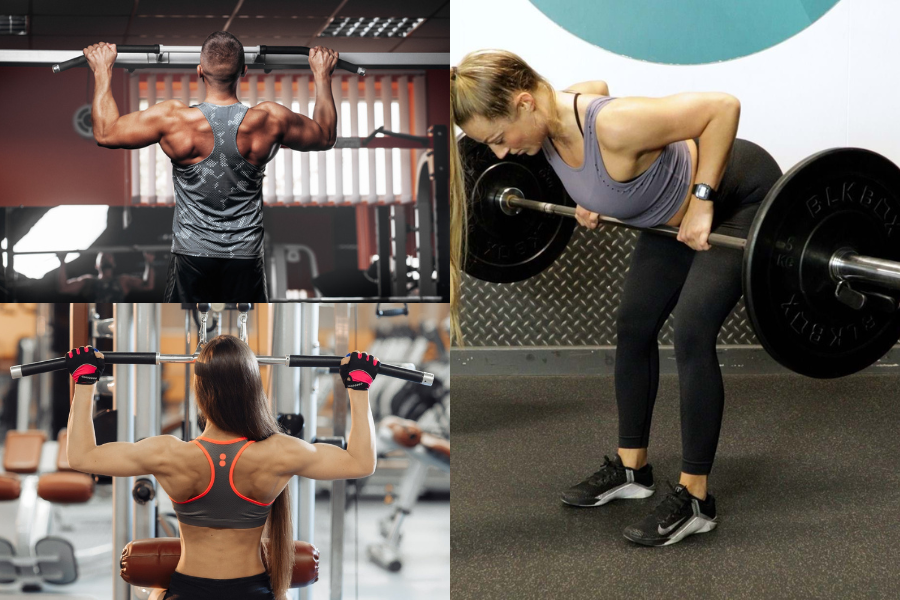
Bent over dumbbell row
If you have a pair of dumbbells, bent over rows are one of the most effective upper back exercises you can do at home.
- Stand with your feet hip-width apart and hold a dumbbell in each hand.
- Hinge at your hips so your torso leans forward about 45 degrees, maintaining a flat back.
- Let your arms hang down, palms facing each other.
- Pull the dumbbells toward your hips, keeping your elbows close to your body and squeezing your shoulder blades together.
- Lower slowly.
Rows engage your lats, rhomboids, rear delts, and mid-back muscles. Verywell Fit notes that rowing motions like these are a primary way to strengthen the area between your shoulder blades and the back of your shoulders.
Face pulls with a band
Face pulls focus on the rear delts and upper back, which often lag behind your chest and front shoulders.
- Anchor a resistance band at about eye level on a door or sturdy support.
- Hold one end of the band in each hand, arms straight out in front of you.
- Pull the band toward your face, leading with your elbows and keeping them high.
- At the end of the pull, your hands should be near your temples and your shoulder blades strongly squeezed together.
- Return with control.
Face pulls are widely recommended as part of an upper back and shoulder health routine because they counteract the internal rotation and rounding that come from everyday habits like typing and phone use.
Reverse dumbbell fly
Reverse flies help you feel the backs of your shoulders and upper back working together.
- Stand with feet hip-width apart, holding light dumbbells.
- Hinge forward at the hips with a flat back, arms hanging down, palms facing each other.
- With a slight bend in your elbows, lift your arms out to the sides until they are roughly in line with your shoulders.
- Pause and squeeze your shoulder blades, then lower slowly.
This move is similar to barbell high rows and other reverse pulling patterns that Verywell Fit highlights for upper back strengthening and posture support.
Posture specific stretches and mobility drills
After you work your upper back, or at the end of a long day at your desk, use static stretches to release tension and keep your range of motion.
Doorway stretch
The Doorway Stretch is a simple way to open your chest and relieve some of the tightness that pulls your shoulders forward.
- Stand in a doorway and place your forearms on the doorframe with elbows at shoulder height.
- Step one foot through the doorway slowly until you feel a stretch across your chest and the front of your shoulders.
- Hold for 15 to 20 seconds, then relax and repeat up to 3 times.
This stretch is especially helpful if you sit a lot, because it loosens tight chest and abdominal muscles that can contribute to poor upper back posture.
Upper trapezius stretch
The upper trapezius is a common hotspot for tension, especially if you spend hours looking at a screen.
- Sit or stand tall.
- Gently tilt your head toward your right shoulder, then use your right hand to apply light pressure on the left side of your head.
- Reach your left hand down toward the floor to increase the stretch.
- Hold for 15 to 30 seconds, then switch sides.
Resources on upper back posture note that the scalene and upper trapezius muscles are often tight in people with forward neck posture, and this kind of stretch can help reduce that tension.
Chin tucks (neck retraction)
Chin tucks strengthen the small muscles in the front and back of your neck and help you align your head over your shoulders.
- Sit or stand with your back against a wall or chair.
- Gently draw your chin straight back as if you are trying to make a “double chin,” without tilting your head up or down.
- Hold for 3 to 5 seconds, then relax.
Neck retraction exercises like chin tucks promote lengthening at the back of the neck and improved upper back and neck posture.
A simple way to remember: strengthen what is weak in your upper back and stretch what is tight in your chest and neck. This combination usually supports better posture and less pain.
How often to do upper back exercises
You do not need to work your upper back every day to see benefits. Consistency matters more than intensity, especially when you are starting out.
- Beginners can aim for 1 to 2 upper back sessions per week with light weights or bands, gradually adding repetitions and resistance over time.
- If your main goal is posture and pain relief, you can add brief daily posture breaks that include one or two stretches and a set of band pull aparts or shoulder blade squeezes.
- Pair your upper back work with core strengthening, since a stable core supports your spine and is linked to reduced lower back pain.
Kaiser Permanente emphasizes follow up care. That means keeping any physical therapy or medical appointments you have and letting your provider know if an exercise increases your pain or causes new symptoms.
Safety tips before you start
To get the most from your upper back exercises at home, keep a few guidelines in mind:
- Move slowly and with control so your upper back, not momentum, does the work.
- Stop an exercise if you feel sharp, shooting, or worsening pain, and talk to a healthcare professional.
- Focus on a neutral spine and avoid letting your head jut forward, especially during rows and band work.
- If you have a history of back, neck, or shoulder injuries, clear new exercises with your doctor or physical therapist first.
Upper back training does not have to be complicated. Choose two or three upper back exercises, add a short warmup and a couple of stretches, and you have a simple routine you can follow at home. Start with one session this week, notice how your posture feels afterward, and build from there.