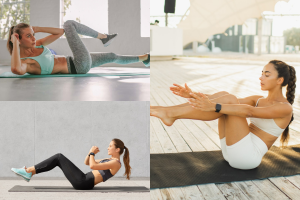
A dumbbell ab workout might look simple, but it can do more for your core than endless bodyweight crunches. By adding just a small amount of weight, you increase muscle engagement, build strength faster, and train your core to support you in everyday life, not only on the gym floor.
You also do not need advanced experience to get started. According to a June 2024 guide from Tom’s Guide, dumbbell ab exercises are effective for beginners who want stronger abs and more muscle mass without complicated equipment or routines.
Below, you will see why your dumbbell ab workout could be your best yet, how to structure it, and exactly which exercises to try.
Why dumbbell ab workouts work so well
When you add weight to ab exercises, you ask your muscles to work harder through the same movement. This extra challenge is what helps you get stronger and build muscle tone.
Dumbbells are especially useful because you can hold them in one hand at a time, which is called unilateral training. That lets you isolate one side of your body, challenge your balance, and correct strength imbalances more effectively than with many machines.
A well designed dumbbell ab workout can help you:
- Strengthen your entire core, including your low back, abdominals, and pelvic muscles
- Improve stability, balance, coordination, and posture
- Support spine health and reduce the risk of lower back pain
- Build functional strength that carries over to sports and daily activities
Weighted ab moves also use progressive overload, which means you can start light and gradually increase resistance as your core gets stronger. This steady progression is key for continued muscle growth and to avoid plateaus.
What dumbbell abs actually train
Your core is more than just the muscles you see in the mirror. A solid dumbbell ab workout trains:
- Rectus abdominis, the front “six pack” muscle
- Transverse abdominis, the deep corset like muscle that stabilizes your spine
- Internal and external obliques, the muscles that run along your sides and help you twist
- Lower back muscles and spinal stabilizers
- Pelvic muscles and hip flexors that help control movement at your hips
Weighted ab exercises tend to activate stabilizer muscles and intercostals more than bodyweight only moves. That extra engagement means you often get more benefit in fewer reps, and your core learns to support load in real world movements.
How often you should do a dumbbell ab workout
You do not need to train your abs every day. In fact, your core muscles benefit from rest just like any other muscle group.
Chuze Fitness recommends performing weighted dumbbell ab workouts at least twice per week, starting with lighter weights and gradually increasing resistance over time. You can place these workouts:
- At the end of a full body strength session
- On a separate core focused day
- After cardio, if you still have energy and focus for good form
Aim for 1 to 3 sets of 8 to 15 repetitions per exercise, depending on your fitness level. Choose a weight that feels challenging but does not force you to compromise your technique.
Key exercises for your dumbbell ab workout
You have many options, so begin with a mix of movements that hit your abs from different angles. Here are some of the most effective dumbbell ab exercises to include.
1. Dumbbell standing wood chop
The standing wood chop trains your entire core in a dynamic, rotational pattern. It targets the rectus abdominis, transverse abdominis, and both your internal and external obliques, and it also engages your shoulders, upper back, and lower back. This makes it especially helpful if you play sports like tennis or golf, where powerful rotation matters.
You start by holding a dumbbell with both hands near one hip, then rotate and lift it diagonally across your body to above the opposite shoulder. As you move, your core resists excessive twisting and helps control the arc. Focus on smooth rotation, a braced midsection, and controlled speed rather than swinging the weight.
2. Dumbbell butterfly sit up
Butterfly sit ups place your feet together and your knees wide, which reduces hip involvement and shifts more work into your abs. Holding a dumbbell at your chest or overhead increases the challenge.
In this version, you can press your feet lightly against a wall to increase your range of motion and keep your lower body stable. This setup helps you fully activate your rectus abdominis and obliques without relying on momentum. Move slowly through the lowering phase to get the most out of each rep.
3. Dumbbell overhead crunch
The overhead crunch is a smart step up from a standard crunch. You hold a dumbbell with both hands straight above your chest or slightly behind your head as you crunch up. This position forces your lower back, abs, hip flexors, arms, and shoulder stabilizers to work together to control the weight.
Start with one light dumbbell held in both hands. As your strength improves, you can progress to one dumbbell in each hand. Keep your lower back gently pressed toward the floor and move through a small but controlled range.
4. Dumbbell Russian twist
Russian twists are a classic oblique exercise that feel very different once you add a weight. With a dumbbell in your hands, you sit with your knees bent, lean back slightly, and rotate your torso side to side.
Tom’s Guide notes that this exercise is low impact but high difficulty, and it targets your abs and lower back while challenging your rotational control. Proper form matters:
- Lean back to about a 45 degree angle
- Keep your heels on the floor at first
- Avoid rounding your spine, stay tall through your chest
- Turn your head and shoulders together as one unit
To make it easier, perform the movement without a dumbbell and lightly touch both hands to the floor on each side. To make it harder, lift your feet and keep them elevated for the entire set so your core has to work harder to maintain balance.
5. Weighted plank row
Plank rows, sometimes called renegade rows, give you a full body challenge. You begin in a high plank position with a dumbbell in each hand. From there, you row one dumbbell up toward your ribs while keeping your hips as steady as possible.
This move strengthens your mid and upper back, hits your shoulders and arms, and heavily engages your entire core for stability. The key is to resist rotating your torso as you row. Think of your belly button pointing straight toward the floor the entire time.
6. Lying dumbbell leg raise crunch
Your lower abs can be difficult to target, and the lying leg raise crunch is one way to hit them more directly. In this exercise, you lie on your back, hold a dumbbell between your feet or above your chest, and lift and lower your legs while keeping your core tight.
You should feel your lower abdominal muscles working as you raise and lower your legs with control. If you feel strain in your lower back, bend your knees slightly or limit the range until your core is strong enough to handle the full movement.
7. Weighted plate crunch
A weighted plate crunch uses a dumbbell or weight plate to upgrade the traditional crunch. You hold the weight at your chest or straight up above you as you curl your upper body off the floor.
This variation focuses on the rectus abdominis and helps define your upper abs. You can progress by adding reps, slowing the tempo, or increasing the weight as you get stronger. Stay focused on quality, not speed, so your neck and lower back stay relaxed.
How to build an effective dumbbell ab workout
Putting these exercises together into a routine is simpler than it looks. You want a balance of:
- Flexion moves, such as crunches and sit ups
- Rotation moves, such as twists and chops
- Anti rotation or stability moves, such as plank rows
Here is a sample workout structure you can try twice per week:
- Dumbbell standing wood chop, 2 to 3 sets of 8 to 12 reps each side
- Dumbbell Russian twist, 2 to 3 sets of 10 to 15 reps total or per side
- Weighted plank row, 2 sets of 8 to 10 reps each arm
- Dumbbell butterfly sit up, 2 to 3 sets of 8 to 12 reps
- Weighted plate crunch, 2 sets of 10 to 15 reps
Rest 30 to 60 seconds between sets. Choose a weight that lets you finish your reps with good form while still feeling challenged by the last few repetitions.
If your form breaks down, reduce the weight or the number of reps so you can stay in control the whole time.
Safety tips and form checks
Weighted ab exercises are very effective, but you need to respect your current level and progress slowly. This is especially important for protecting your neck and lower back.
Keep these guidelines in mind:
- Start with lighter weights and master technique before increasing load
- Keep your ribcage and pelvis stacked in most movements to avoid excessive arching
- Stop or adjust if you feel sharp pain in your back, hips, or neck
- Consult a professional if you are concerned about conditions like diastasis recti
Proper form and gradual progression help you avoid overloading your spine or straining your neck. If you notice your lower back lifting away from the floor in lying exercises, shorten your range or decrease the weight.
Why abs are not only about visible “six packs”
A strong core is about much more than appearance. Weighted dumbbell ab workouts help you build the strength you need to:
- Maintain better posture during long days at a desk
- Protect your lower back when you lift, carry, or twist
- Move more efficiently in sports and workouts
- Improve overall balance and coordination
Even so, it is important to be realistic about what these workouts can do on their own. Research notes that achieving visible abs through dumbbell ab exercises alone is unlikely if your overall body fat remains high. You need a full fitness routine that includes strength training for your whole body, cardio, and a healthy diet to reduce belly fat and reveal the muscle underneath.
When you combine a smart dumbbell ab workout with broader training and nutrition habits, you give yourself the best chance to build a strong, resilient core that both looks and feels better.
Putting it all together
Your next dumbbell ab workout does not need to be complicated to be effective. With a pair of dumbbells, a short list of exercises, and consistent practice two or more times per week, you can:
- Train every part of your core
- Improve posture, balance, and stability
- Support your spine and reduce the risk of lower back pain
- Build the strength that underpins every other movement you do
Pick two or three of the exercises above and add them to your next workout. Focus on slow, controlled reps and steady breathing. Over time, you can add more moves, more weight, or more sets as your core gets stronger.
Your best ab routine might be the one that keeps things simple, uses the tools you already have, and fits easily into the workouts you are doing now.