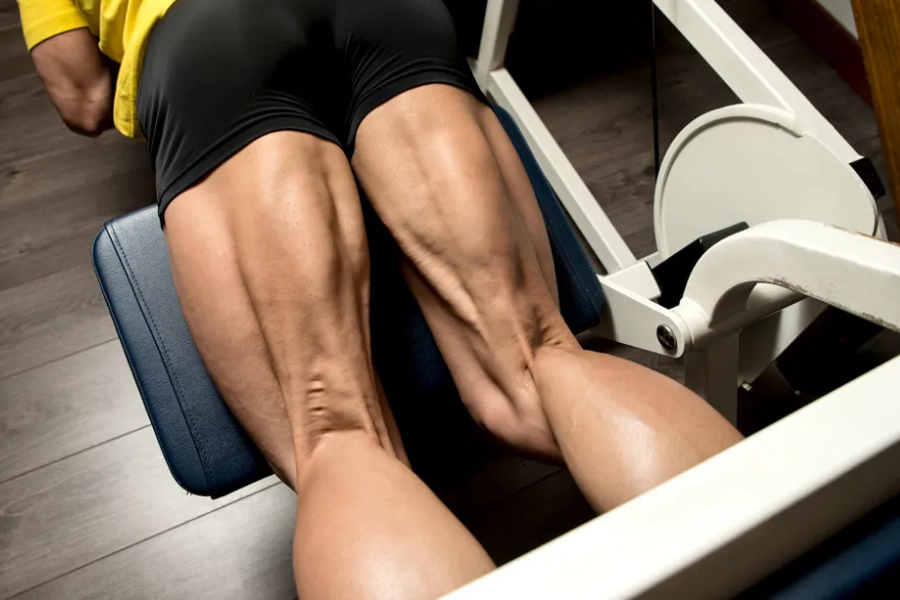
A strong set of hamstrings does far more than power your sprint. The right hamstring muscle strengthening exercises help you move better, protect your knees and back, and lower your risk of frustrating strains that take weeks to heal.
Below, you will learn why your hamstrings matter, how to tell if they are weak, and which exercises deserve a place in your routine, whether you train at home or in the gym.
Understand your hamstrings and why they matter
Your hamstrings are a group of three muscles at the back of each thigh: the biceps femoris, semitendinosus, and semimembranosus. Together they bend your knee and extend your hip, which means you rely on them every time you walk, run, squat, or hinge forward.
What strong hamstrings do for you
According to Banner Health, your hamstrings help control and stabilize movements like bending your knee or extending your hip, and you use them constantly during everyday activities like walking, running, sitting, and standing. When they are strong and working well, they:
- Support your low back when you lean forward to pick something up or wash dishes
- Help protect your knees, hips, and back from strain during sports or quick changes of direction
- Improve your ability to accelerate, jump, and land with control
On the flip side, weak hamstrings can contribute to low back pain, hip discomfort, knee instability, and even changes in how you walk, according to ACE Physical Therapy, LLC. Injured hamstrings also tend to heal slowly, so prevention is worth the effort.
Are your hamstrings on the weak side?
You might benefit from more targeted hamstring muscle strengthening exercises if you notice:
- A dull ache under your buttock when you sit or after activity
- Achiness along the back of your thigh
- Feeling “stuck” when you try to touch your toes or bend forward
Physical therapist Dr. Julie Ann Aueron notes that limited forward bending, a persistent ache at the back of the leg, and tightness that does not ease with casual stretching can all hint at hamstring weakness or stiffness. Normal hamstring length is often assessed by lying on your back, flexing your hip to 90 degrees, and trying to keep your knee straight, which can require regular stretching to improve over time.
If your quadriceps are much stronger than your hamstrings, your knees can also suffer. Peloton instructor Matty Maggiacomo highlights that quad dominance, which is especially common in women, can increase knee pain and strain risk. Balancing hamstring strength with your quads and glutes helps your form and stability when you run, squat, or lunge.
Key principles for safe hamstring strengthening
Before you add more hamstring work, it helps to understand how to train these muscles safely and effectively.
Focus on form, not ego
Your hamstrings respond best to controlled, deliberate repetitions. Surrey Physio points out that many people perform hamstring exercises too quickly and with a limited range of motion, which reduces effectiveness. Slower reps and full stretches and contractions allow the muscles to work through their full function.
Good form usually includes:
- Engaging your core to keep your spine neutral
- Squeezing your glutes so your hamstrings are not overpowered or bypassed
- Moving through as much range of motion as you can control, even if that is partial at first
Incomplete range of motion is acceptable when you are starting out, as long as you gradually increase it as your strength and flexibility improve.
Progress gradually to avoid injury
To let your hamstrings get stronger without flaring up, follow a few simple guidelines drawn from ACE Physical Therapy, LLC and other clinical sources:
- Start with light resistance or your own body weight
- Increase reps and weight slowly over several weeks
- Keep at least one rest day between intense hamstring sessions
- Maintain a healthy body weight and a balanced diet with fruits, vegetables, lean proteins, and whole grains to support muscle recovery
Repeated hamstring strains are often linked to returning to heavy or fast work too early. A steady, patient build-up is more effective in the long run than trying to rush strength gains.
Best gym-based hamstring exercises
If you have access to a gym, you can combine machines and free weights to train all three hamstring muscles thoroughly. Research from the University of Wisconsin–La Crosse and the American Council on Exercise has compared how much different exercises activate the hamstrings using electromyography (EMG), which helps identify especially efficient choices.
Prone and seated leg curls
A 2018 study by the University of Wisconsin–La Crosse found that the prone leg curl machine elicits relatively equal activation of the biceps femoris and semitendinosus muscles in resistance-trained adults aged 20 to 25 years. ACE also highlights the seated leg curl as one of the top three hamstring strengthening exercises, along with kettlebell swings and single-leg Romanian deadlifts.
Practical tips for curl machines:
- Adjust the pad so it rests just above your heels, not on your calves
- Keep your hips pressed into the bench or seat rather than letting them lift
- Pause briefly at the top of each curl to feel your hamstrings contract, then lower slowly
If you have one leg that feels weaker, single-leg curls can help you even out strength and improve control.
Romanian deadlifts (RDLs)
Romanian deadlifts are a staple in many strength programs because they train hip extension, which is a primary function of your hamstrings. Surrey Physio notes that starting from about knee height and focusing on squeezing your shoulder blades at the top helps you target your hamstrings more directly.
To perform a basic RDL:
- Stand tall with a barbell or dumbbells held in front of your thighs.
- Soften your knees, then hinge at your hips, pushing them back as the weight travels down along your legs.
- Stop when you feel a strong stretch in your hamstrings but can still maintain a flat back.
- Drive your hips forward and stand up, squeezing your glutes and hamstrings.
The 2018 EMG study mentioned earlier found that single-arm or single-leg RDL variations showed similar levels of hamstring activation to prone leg curls, which makes them an excellent free-weight alternative.
Kettlebell swings
Kettlebell swings are another research-backed option. The same University of Wisconsin–La Crosse study concluded that kettlebell swings produced comparable activation of the biceps femoris and semitendinosus muscles when compared with the prone leg curl. ACE later highlighted kettlebell swings as one of the most effective hamstring strengthening exercises for young adults.
Since swings involve more momentum than RDLs, your focus should be on:
- Snapping your hips forward rather than lifting with your arms
- Keeping your spine neutral and your core braced
- Letting the kettlebell float to chest height as a result of hip power
They are especially useful if you want a hamstring-focused exercise that also raises your heart rate.
Effective bodyweight and Nordic exercises
You do not need a gym to challenge your hamstrings. Bodyweight and partner-assisted moves can build serious strength, and some even offer unique benefits for knee protection.
Nordic hamstring curls
Nordic curls have become famous in sports medicine circles for their role in hamstring injury prevention. Traditional Nordics involve kneeling with your ankles held in place by a partner or a secure object, then slowly lowering your torso toward the floor and using your hamstrings to control the descent.
Research cited by ACE Physical Therapy, LLC notes that Nordic exercises strongly target the semitendinosus muscle, which plays a key role in stabilizing the knee and protecting the anterior cruciate ligament (ACL). That makes Nordics especially valuable if you are returning from an ACL injury or reconstruction.
A starter protocol often recommended in the literature is one set of about 10 controlled repetitions, focusing more on slow lowering rather than trying to pull yourself all the way back up at first.
Hip extension at 45 degrees
Hip extension exercises performed with the hip in about 45 degrees of flexion, such as certain back extension bench variations, help you recruit the entire hamstring group more symmetrically. ACE Physical Therapy, LLC suggests this angle is useful if you have a history of repeated hamstring strains, because it reduces the stress on any single area and encourages balanced strength.
You can mimic this positioning by:
- Using a 45 degree back extension bench and focusing on driving your hips forward as you lift
- Keeping your spine long instead of overextending your low back at the top
If you do not have equipment, you can approximate the movement with a good morning exercise using just your bodyweight or a light bar across your shoulders.
Bridges, donkey kicks, and more
Maggiacomo and trainer Andy Silva recommend several bodyweight moves that strengthen and lengthen your hamstrings, including:
- Good mornings
- Bodyweight squats
- Glute bridges
- Donkey kicks
- Standing marches
- Deadlifts and one-leg deadlifts
- Bulgarian split squats
Glute bridges and donkey kicks in particular are friendly entry points if you are recovering from a previous strain. Focus on driving through your heels and keeping your hips level, and you will feel the back of your legs and your glutes working together.
Resistance band hamstring exercises at home
If you want to train at home with minimal equipment, resistance bands are a surprisingly powerful option. Several strength brands and coaches note that bands provide continuous and progressively increasing tension through the movement, which forces your muscles to contract harder with each repetition.
Why bands work so well
Because the band stretches as you move, resistance increases at the point where your hamstrings are already working the hardest. This variable tension can promote effective muscle activation and strength gains, especially when you do not have access to heavy weights.
Bands also make it easier to progress over time. Beginner-friendly bands might offer 20 to 35 pounds of resistance, while stronger sets can go up to 150 pounds. You can move up through band levels as you get stronger to keep challenging your muscles.
Sample band exercises
Common and effective hamstring muscle strengthening exercises with bands include:
- Lying hamstring curls with the band secured to a stable anchor point
- Seated hamstring curls where you loop the band around your heels
- Good mornings with the band under your feet and around your shoulders
- Romanian deadlifts with the band under your feet and held in your hands
- Glute bridges with a band over your hips for added resistance
- Donkey kicks with a loop band around your midfoot
Some strength equipment brands recommend pairing hip bands for moves like donkey kicks with longer resistance bands for RDLs or pull-throughs. A typical at-home workout might include band RDLs, single-leg glute bridges, banded hamstring marches, and lying curls, performed for 2 to 3 sets of 8 to 15 reps each.
If you are newer to strength training, twice-weekly band sessions with at least 48 hours between them is a practical starting point. You can aim for up to about 10 total sets for hamstrings across 3 exercises per session, using a mix of lower and higher reps to develop both strength and muscular endurance.
How often to train and how to progress
Your hamstrings are powerful muscles, but they still need time to adapt. For most people, training them 2 times per week works well. That is frequent enough to see results, but spaced out enough to allow for recovery.
A simple progression plan might look like this:
- Weeks 1 to 2: Learn the movements with bodyweight or light bands, focusing on form and controlled tempo.
- Weeks 3 to 4: Add a second set to each exercise and slightly heavier resistance where possible.
- Weeks 5 to 8: Build up to 3 sets per exercise, experiment with unilateral (single-leg) variations, and challenge yourself with slower lowering phases.
If you are already lifting regularly, consider whether your hamstrings are getting as much attention as your quadriceps and glutes. Some bodybuilders, for example, perform far fewer sets for hamstrings than for smaller muscles like biceps, even though the hamstrings contain more total muscle mass. A common recommendation in bodybuilding circles is around 12 total sets for hamstrings in a dedicated session, such as 4 sets each of Romanian deadlifts, lying leg curls, and seated leg curls, with enough intensity to drive progress.
Putting it all together
Hamstring muscle strengthening exercises are not just for sprinters and powerlifters. They help you walk, run, bend, and lift with more control and less risk of injury. Research-backed moves like prone and seated leg curls, Romanian deadlifts, kettlebell swings, Nordic curls, and band-based variations give you plenty of options whether you prefer the gym or your living room.
Start with one or two exercises from each category that fit your current setup. For example, you could pair Romanian deadlifts with glute bridges and banded lying curls. Focus on slow, controlled reps and steady progression rather than chasing heavy weights too quickly.
Over time, you will likely notice easier forward bends, more powerful strides, and fewer nagging aches along the back of your legs. Your knees, hips, and low back will thank you for the extra support.