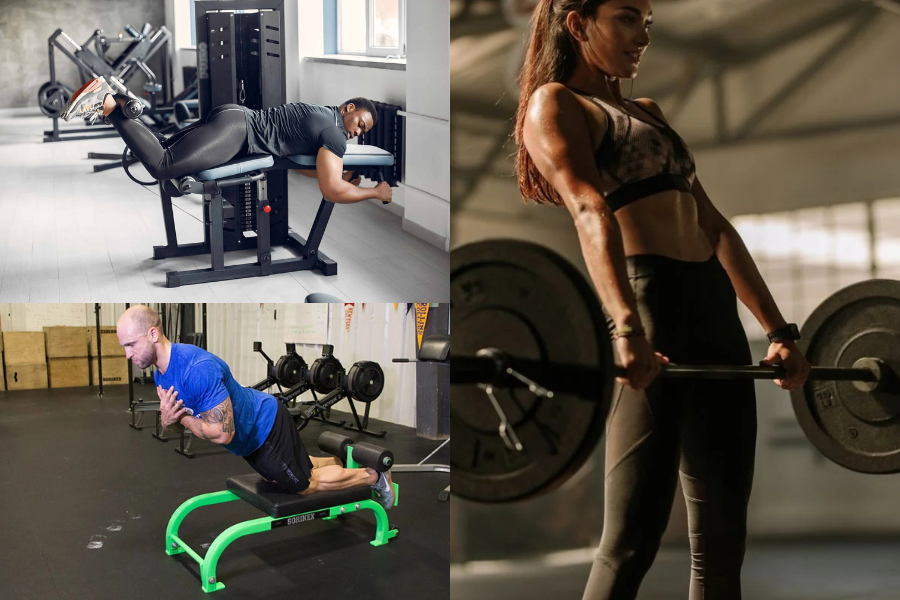
A little targeted work on hamstring mobility exercises can change how your whole body feels, from your lower back to your feet. You do not need a gym or fancy gear, just a bit of space at home and a clear idea of what you are actually trying to stretch.
Below, you will find simple, beginner friendly hamstring mobility exercises you can start today, plus tips to avoid common mistakes that keep your “tight” hamstrings tight.
Understand what you are stretching
Before you drop into the first stretch, it helps to know what you are aiming at.
Your hamstrings are a group of muscles on the back of your thigh. Their main jobs are to bend your knee and extend your hip. When they are stiff or weak, you feel it every time you walk, squat, or get up from a chair.
Many people feel a sharp burn behind the knee during a “hamstring” stretch and assume that means the hamstrings are tight. In reality, that sensation is often tension on your sciatic nerve, not your hamstring muscle. This usually happens when you lock your knee and aggressively lean forward, which pulls the nerve tight.
A good hamstring stretch should be felt in the middle of the back of your thigh, not directly behind your knee and not deep in your calf. That is your cue that you are actually targeting the muscle belly instead of cranking on the nerve.
Warm up gently first
Cold muscles do not like to be pulled on. A brief warm up helps your hamstrings respond better to stretching and reduces the risk of strains.
You do not need anything elaborate. Spend 3 to 5 minutes on light movement before you focus on hamstring mobility exercises. For example, you could:
- March in place or walk around your home
- Do a few sets of bodyweight squats within a comfortable range
- Perform gentle hip circles while standing, holding the back of a chair
The goal is to raise your body temperature slightly and get blood flowing, not to work up a big sweat. Once you feel warmer and your legs move more freely, you are ready to focus on your hamstrings.
Try bent knee hamstring stretches
Traditional straight leg stretches often dump tension into your sciatic nerve and calves. Starting with a bent knee position takes some slack off the nerve and lets you target your hamstrings more safely and effectively.
Supine bent knee hamstring stretch
You can do this on the floor, bed, or a yoga mat.
- Lie on your back with both knees bent and feet flat.
- Hug your right thigh toward your chest so your hip is flexed and your knee is bent.
- Keeping your thigh in place, slowly begin to straighten your right knee until you feel a mild stretch in the back of your thigh.
- Stop before you feel any sharp pull behind the knee or in the calf.
- Hold for 15 to 30 seconds, breathe calmly, then bend the knee again to relax.
- Repeat 2 to 3 times per side.
Think of “reaching your heel to the ceiling” rather than yanking the leg straight. Bending and re straightening the knee a few times in this position can also work as a gentle dynamic warm up before heavier activity.
Seated bent knee forward hinge
This variation is good if you prefer to sit.
- Sit on the edge of a sturdy chair with your feet under your knees.
- Extend your right leg forward, but keep a soft bend in the knee so it is not locked.
- Sit tall with a flat or slightly arched lower back.
- Hinge forward at your hips, as if you are bringing your belly toward your thigh, and slide your hands down your right leg.
- Stop when you feel a stretch in the middle of the back of your thigh and hold for 15 to 30 seconds.
- Return upright and switch legs.
Focus on hinging from your hips instead of rounding your back. That helps you access the hamstring rather than stretching your spine.
Use the “runner’s lunge” at home
If you do not have a bench or step for classic hamstring stretches, the runner’s lunge gives you a lot of control using just the floor.
How to do a runner’s lunge hamstring stretch
- Start in a low lunge with your right foot forward and your left knee on the floor.
- Hug your right thigh lightly with both hands or rest your hands on either side of your front foot.
- Pivot so your right heel is on the floor and your toes lift slightly.
- Slowly shift your hips back, straightening your right knee until you feel a stretch in the back of your right thigh.
- Keep your spine long and your chest lifted rather than collapsing over the leg.
- Hold for 15 to 30 seconds, then return to the lunge and repeat on the other side.
Because you can move forward and backward, this position makes it easy to “dial in” the amount of stretch you feel. If the sensation travels down to your calf or behind your knee, rebend the knee slightly and ease off.
Add strength focused mobility moves
Your hamstrings rarely need only length. They often need strength in their lengthened positions too. Hamstring mobility exercises that blend strength and stretch help you keep the range you gain and support your joints in everyday life.
Romanian deadlift pattern (no weights needed)
Romanian deadlifts are widely recommended for hamstring strength and mobility, and you can start with just your bodyweight. Experts consider eccentric isometric Romanian deadlifts especially effective because the slow lowering phase gently lengthens muscle fibers and improves control.
- Stand with your feet hip width apart and a soft bend in your knees.
- Place your hands on your thighs or hold a light household object for balance.
- Keeping your back flat, hinge at your hips as if you are closing a door with your butt.
- Slowly slide your hands down your thighs toward your knees or shins for 3 to 5 seconds.
- Pause for 2 to 3 seconds when you feel a stretch in the back of your thighs.
- Push through your heels and squeeze your glutes to return to standing.
Perform 6 to 8 slow reps, resting as needed. As this becomes easy, you can add light weights like water jugs or a backpack. The key is control, not depth, so stop the movement before your back rounds.
Single leg reach (balance and mobility)
This move combines balance training with hamstring mobility.
- Stand tall near a wall or chair for support if needed.
- Shift your weight onto your right foot with a small bend in the knee.
- Hinge at your hips and extend your left leg behind you as your torso leans forward.
- Reach both hands toward the floor or a point in front of you until you feel a stretch in your right hamstring.
- Keep your hips level and your back flat.
- Return to standing and repeat 6 to 8 times per leg.
Go slowly so your hamstrings and hips learn to control the full movement instead of bouncing in and out of the stretch.
Loosen supporting areas for better results
Your hamstrings do not work alone. Tightness in your back, hips, and calves can all restrict your leg motion and make your hamstrings feel tighter than they are.
Before you dive into longer hamstring holds, spend a minute or two on areas that commonly limit you. For instance, you might try:
- Gentle cat cow movements on hands and knees to mobilize your spine
- Hip flexor stretches in a half kneeling lunge
- Simple calf stretches with your hands on the wall and one heel pressed toward the floor
Freeing up these regions first often makes your hamstring stretches feel easier and more effective almost immediately.
Use sciatic nerve glides if needed
Sometimes, what you perceive as hamstring tightness is actually tension in the sciatic nerve. This is where “sciatic sliders” can help. They do not stretch the nerve aggressively, they move it gently through its available range so it glides better.
Here is a simple lying version:
- Lie on your back with both knees bent.
- Bring your right thigh toward your chest and hold it behind the knee.
- As you straighten your right knee, pull your toes toward your face.
- Then, as you bend your knee again, point your toes away.
- Move in and out of this motion slowly for 8 to 10 repetitions, staying below any sharp or burning pain.
If you feel your usual “hamstring tightness” ease after this drill, it is a sign that nerve mobility was part of the problem. Because nerve tissue is sensitive, keep this movement small and comfortable and never force it.
Time your stretches for better payoff
You get the best results from hamstring mobility exercises when you match the type of work to the right time of day or workout.
Dynamic stretches, where you move in and out of end range, are better before activity. Supine dynamic stretches or controlled Romanian deadlift patterns wake your muscles up and prepare them for running, lifting, or sports.
Static stretches, where you hold the position for 15 to 60 seconds, are more effective after you are warm. Post workout, you can settle into bent knee or runner’s lunge stretches and let the muscles relax to a longer length.
Short, repeated static holds of around 15 to 30 seconds are usually more useful than one long hold, especially if you are newer to flexibility training. You might do three rounds of 20 second holds on each side, instead of trying to stay in the same position for two full minutes.
Build a simple at home routine
To keep your hamstrings happy, it helps to work on them consistently instead of attacking them once a week. Many coaches suggest targeting your hamstrings two to three times per week, ideally as part of a full lower body routine that also includes glutes and core.
Here is one way you could structure a quick home session that fits into 10 to 15 minutes:
- Light warm up: 3 minutes of marching, squats, or stairs
- Dynamic bent knee hamstring stretch: 8 to 10 controlled reps per side
- Bodyweight Romanian deadlifts: 2 sets of 6 to 8 slow reps
- Single leg reaches: 2 sets of 6 reps per leg
- Runner’s lunge static stretch: 2 rounds of 20 to 30 seconds per side
If you sit a lot for work, sprinkling a few of these moves into your day can counteract the flexed hip and knee position that keeps hamstrings both tight and weak. Even one or two short stretch breaks can ease the strain they put on your back, hips, and knees over time.
Know when flexibility is “enough”
It is easy to assume you always need more flexibility. In reality, many people already have adequate hamstring range for day to day life and most sports.
If you can comfortably raise your straight leg to around an 80 degree angle while lying on your back, you probably have sufficient passive flexibility for regular activities. Unless your sport requires extreme ranges of motion, like dance or advanced yoga, you may benefit more from building strength and control than from pushing for extra stretch.
Whatever your starting point, the same principles apply. Move gently, focus on feeling the stretch in the middle of your thigh, and avoid forcing your body into positions it is not ready for. With regular practice, even a short list of at home hamstring mobility exercises can help you move more freely, reduce aches, and support an active, injury free lifestyle.