Why quad isolation exercises matter
If you want stronger, more defined thighs, quad isolation exercises deserve a place in your workout. These moves focus directly on your quadriceps so they do the bulk of the work while other muscles stay relatively relaxed.
That targeted focus helps you:
- Build muscle size and definition in the front of your thighs
- Correct left to right imbalances
- Increase training volume without exhausting your whole body
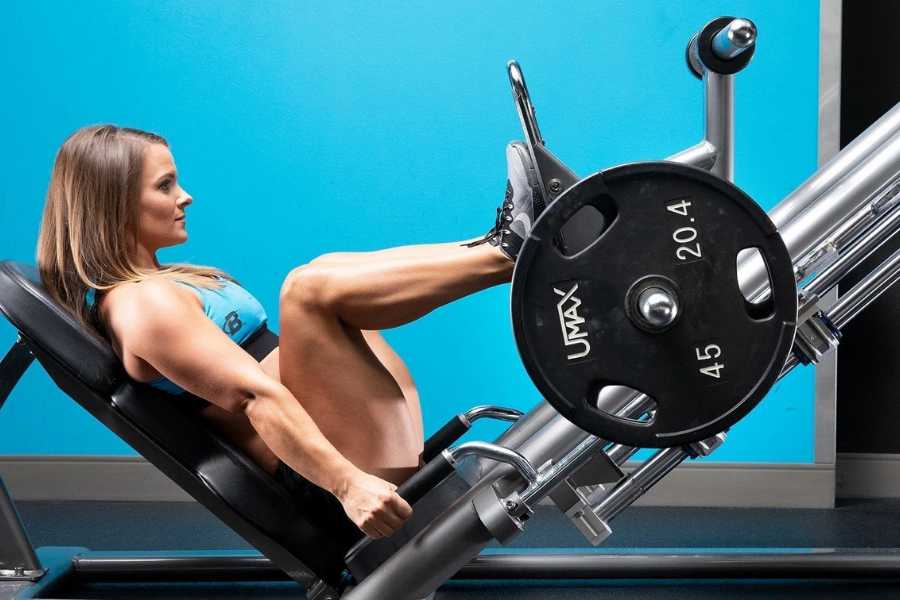
When you pair quad isolation exercises with big compound lifts like squats and leg presses, you get a smart, efficient approach to leg training that supports both strength and symmetry.
Understand your quads before you train them
Your quadriceps are a four muscle group on the front of your thigh. Their main job is to straighten your knee and help stabilize it when you walk, squat, or jump.
Compound exercises like back squats, lunges, and step ups all hit the quads, but they also involve your glutes, hamstrings, and core. That is great for overall strength, but those other muscles can sometimes take over, which means your quads do not always get pushed close to their limit.
Quad isolation exercises are different. They mainly use a single joint movement, usually knee extension, to put most of the load on your quads alone. This is especially useful if you:
- Struggle to feel your quads in squats
- Have a weaker side that you want to bring up
- Want extra quad volume without wrecking your whole body with more heavy squats
How to program quad isolation exercises
To get the most from quad isolation work, think about where and how you place it in your week.
You will generally get better results if you:
- Train your quads 2 times per week
- Include at least 2 quad focused exercises per workout
- Give yourself roughly 48 hours between heavy quad sessions to recover
A balanced session can start with compound moves, when your energy is highest, then finish with isolation work like leg extensions to fully fatigue the quads without overloading the rest of your body.
Since isolation exercises are less taxing overall, you can:
- Use higher rep ranges, often 10 to 30 reps per set
- Take shorter rest periods, sometimes under 60 seconds and even under 30 seconds in some programs
- Add extra sets across the week without the same risk of systemic fatigue you would get from more heavy squats
Leg extensions: The classic quad isolation move
The leg extension is one of the most effective quad isolation exercises you can use. On the machine, your body is supported and your quads do almost all the work as you straighten your knees.
This exercise is especially good for:
- Building quad size and definition
- Strengthening the patellar tendon and the quadriceps attachment at the knee
- Creating a strong peak contraction at the top of each rep
Because the rest of your body is supported, leg extensions are easier to recover from than big compound lifts and can be used a bit more frequently in your program.
How to do machine leg extensions
- Adjust the backrest so your knees line up with the machine’s pivot point.
- Set the ankle pad just above your ankles.
- Sit tall with your back against the pad and grip the handles.
- Extend your legs until your knees are almost straight, then squeeze your quads hard.
- Lower the weight under control until your knees are bent to about 90 degrees.
Aim for moderate to high reps, around 10 to 20 per set to start. Higher rep ranges up to 30 can also work well for muscle growth while reducing joint stress compared with heavy loads.
Single leg extensions and isometric holds
To get even more from leg extensions, you can use two simple variations:
-
Single leg extensions
Train one leg at a time to correct imbalances and keep one side from doing more work than the other. This also makes lighter weights feel much harder, which is helpful if you are training in a busy gym with limited plates. -
Isometric holds
Extend your legs and pause at the top for 20 to 30 seconds, keeping your quads fully tensed. This builds muscular control and stability and is often used in rehab settings as well as for extra quad activation.
Because these variations are still isolation focused, you can keep rest periods fairly short, often around 30 to 60 seconds between sets, without overwhelming your overall recovery.
Banded leg extensions at home
If you do not have access to a machine, banded leg extensions are a simple way to mimic the movement with minimal equipment.
Loop a resistance band around a sturdy anchor behind you, sit on a bench or chair, and hook the band around your ankles. As you extend your knees, the band tension increases, which means your quads work harder the closer you get to the top of the rep.
Banded leg extensions are joint friendly yet challenging because you get:
- Progressive resistance throughout the movement
- Strong tension at the top without heavy weights
- Minimal stress on your hips and lower back
A practical starting plan is 3 to 4 sets of 12 to 20 reps with about 45 to 60 seconds of rest. Focus on slow, controlled reps and a firm squeeze at the top for maximum engagement.
Quick guideline: if your goal is quad endurance and a strong muscle pump, aim toward the higher end of that rep range with shorter rest periods.
Unilateral quad isolation: Lunges and split squats
Unilateral, or single leg, quad exercises help you build strength and size while also improving balance and core control. They are especially helpful if one leg feels weaker or smaller than the other.
Two of the most effective options are lunges and Bulgarian split squats, especially when you tweak your setup to put more load on the quads.
Lunge variations for quad focus
To make lunges more quad dominant, you can:
- Use a slightly shorter stance
- Keep your torso more upright
- Elevate your front heel on a small plate or wedge
Raising your front heel increases knee bend and reduces hip involvement, which pushes more of the work onto your quads instead of your glutes.
Bulgarian split squats for stability and symmetry
Bulgarian split squats also respond well to small form changes. To target your quads more directly:
- Place your back foot on a bench or box behind you.
- Step your front foot closer so you are not in an overly long stride.
- Keep your torso mostly upright and let your front knee travel over your toes.
This setup helps you isolate each leg, correct imbalances, and challenge your quads, glutes, and stabilizers all at once. A good starting point is 3 to 4 sets of 8 to 12 reps per leg, adjusting load and reps depending on whether your main goal is strength or hypertrophy.
Sissy squats: An advanced quad burner
Sissy squats are an advanced bodyweight quad isolation exercise. They dramatically reduce hip contribution by shifting your weight forward and taking your glutes largely out of the equation.
You start on your toes, lean back, and drive your knees forward over your toes while keeping your hips extended. This puts intense tension on your quads throughout the range of motion.
Because sissy squats are demanding, it is helpful to:
- Start with assistance from a band or stable support
- Use a small range of motion at first, then gradually increase
- Progress to bodyweight or smith machine versions only when you have good control
They can be very effective for quad size and definition, but they are not usually the first isolation exercise you should learn. Treat them as a progression once you are comfortable with leg extensions and split squats.
Use foot position to increase quad emphasis
Small changes in how you place your feet can make traditional exercises feel much more quad dominant.
You can:
- Elevate your heels on a plate or slant board for squats, goblet squats, and lunges
- Focus on your knees tracking in line with your toes rather than sitting your hips far back
Heel elevation increases knee flexion and reduces the demand on your hips and glutes, which shifts the load toward your quads. This approach applies both to compound lifts and to some isolation moves like leg extensions, and it is a straightforward way to make your existing exercises more quad focused.
Put it all together in your week
You do not need to overhaul your entire routine to benefit from quad isolation exercises. A few thoughtful changes are enough to start seeing progress in strength, size, and definition.
Here is a simple way to structure two quad focused days each week:
| Workout | Early in session (compound) | Later in session (isolation) |
|---|---|---|
| Day 1 | Front squats or leg press | Leg extensions 3–4 x 10–20, optional isometric holds |
| Day 2 | Hack squats or goblet squats with heels raised | Banded leg extensions 3–4 x 12–20, plus Bulgarian split squats 3–4 x 8–12 per leg |
Keep at least 48 hours between these sessions so your quads can recover and grow. Over time, you can adjust sets, reps, and variations based on how your legs feel and how your strength progresses.
Start by adding just one or two of these quad isolation exercises to your next lower body workout. Pay attention to how your quads feel during and after, then gradually build up your volume from there.