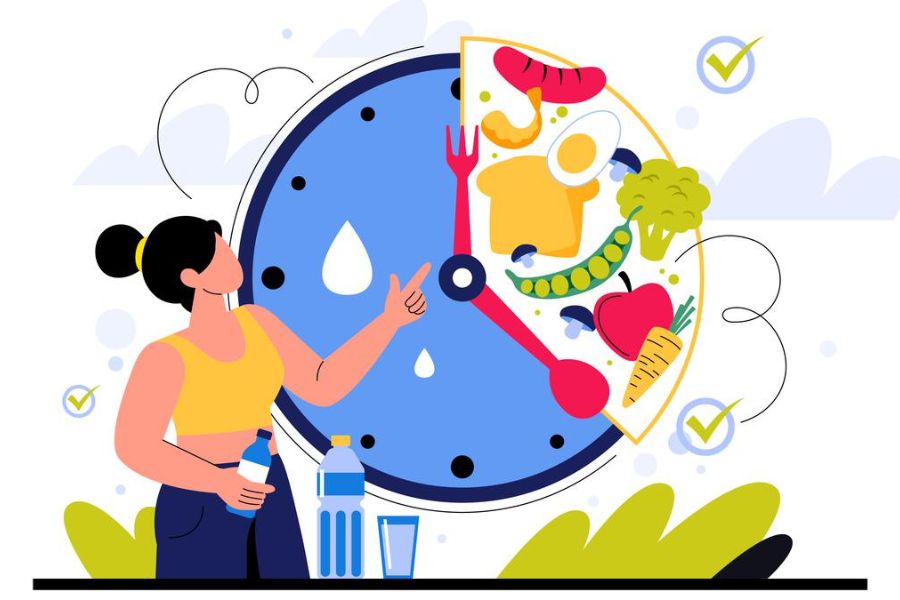
Intermittent fasting for beginners can feel confusing at first, but it does not have to be complicated. At its core, intermittent fasting is simply an eating pattern where you cycle between periods of eating and fasting by shortening your daily eating window to set times that work for you (EatingWell). When you approach it gradually and pair it with nourishing foods, it can support weight management and overall health in a realistic, sustainable way.
Below, you will learn how intermittent fasting works, which schedules are easiest for beginners, what to eat, and how to start without feeling miserable or deprived.
Understand what intermittent fasting is
Intermittent fasting is not a specific diet menu. Instead, it is a schedule for when you eat. During some hours you eat your usual meals, and during other hours you take in very few or no calories at all (Mayo Clinic).
You might see different versions of this pattern:
- Time restricted eating, such as 16 hours of fasting and an 8 hour eating window
- Day based methods like eating normally five days and cutting calories on two days
- Alternate day approaches that switch between typical eating and very low calorie days
Whatever the method, the idea is the same. You give your body regular breaks from digesting food so it can tap into stored energy and focus more on repair.
Learn how intermittent fasting may boost your health
When you fast, your body gradually uses up the sugar stored for quick energy. Once those stores run low, it starts to burn fat instead. Johns Hopkins Medicine describes this as a metabolic switch that happens when your body moves from using sugar to using fat as its main fuel source (Johns Hopkins Medicine).
This shift may offer several benefits:
You may find it easier to lose or maintain weight because you are limiting the hours you can eat. Fewer hours often means fewer automatic snacks and less mindless eating at night. A beginner friendly fasting pattern can also help you pay more attention to genuine hunger, instead of eating just because the clock says lunchtime.
There is also growing interest in how intermittent fasting might support long term health. Early research suggests it may help improve metabolic health markers, may support diabetes prevention, and could play a role in healthy aging, although long term effects are still being studied (University of Michigan School of Public Health, Mayo Clinic). A 2023 review found that intermittent fasting may reduce fatigue, improve quality of life, and lower levels of IGF 1, a growth factor linked with tumor development, although its weight loss results were similar to other diets overall (EatingWell).
It is important to know that intermittent fasting is not a magic fix. You still need balanced meals and movement. Think of it as a structure that can make healthy choices easier instead of a quick solution on its own.
Choose a beginner friendly fasting schedule
The best intermittent fasting schedule for beginners is one that fits your real life. Your work hours, family routine, social schedule, and health needs all matter. Experts recommend starting with gentler methods, then adjusting only if you feel well and your doctor agrees (Verywell Health).
12:12 overnight fast
If you are completely new to intermittent fasting, a 12 hour overnight fast is a simple entry point. You fast for 12 hours, then eat within the other 12 hours. For example, you might stop eating at 8 p.m. and have your first meal at 8 a.m. the next day.
Verywell Health notes that a 12:12 schedule is often ideal for beginners, because most of the fast happens while you are asleep (Verywell Health). The University of Michigan also suggests starting here and lengthening the fasting window only if it feels comfortable for you (University of Michigan School of Public Health).
16:8 time restricted eating
Once a 12 hour fast feels routine, you can experiment with a 16:8 schedule. In this pattern, you fast for 16 hours and eat during an 8 hour window each day. For instance, you might eat from 10 a.m. to 6 p.m., then fast until 10 a.m. the next morning.
This is one of the most popular intermittent fasting methods for beginners because it still allows two full meals and a snack while giving your body a longer daily fasting stretch (Verywell Health, Johns Hopkins Medicine). Some people start with a softer version, such as a 14 hour fast with a 10 hour eating window, then slowly work toward 16:8 as their appetite and energy adjust.
5:2 or calorie reduction days
If you prefer to eat breakfast daily and do not enjoy skipping meals, you might do better with weekly patterns instead of daily fasting. In the 5:2 approach, you eat your normal intake for five days of the week, then reduce calories to around 20 to 25 percent of usual intake on two nonconsecutive days (PrivateMDs, Johns Hopkins Medicine).
A 2021 study of people using a 5:2 pattern found that participants reported positive experiences when they eased into it, rather than jumping into aggressive fasting right away (EatingWell). This method can work well if your weekdays and weekends look very different, or if you prefer more flexibility with the clock.
Approaches to skip when you are new
Some intermittent fasting styles are more extreme. These include alternate day fasting, the Warrior Diet with a 20:4 split, and one meal a day plans. Verywell Health notes that such methods may not be appropriate for beginners or for people with certain medical conditions because they involve long or intense fasting periods (Verywell Health).
The Mayo Clinic also lists alternate day fasting and days with little or no intake as more advanced options, and it highlights that potential side effects like fatigue, headaches, mood changes, and constipation can occur, especially at the start (Mayo Clinic). For your first experience, it usually makes sense to keep things simple and gentle.
Know who should be cautious or avoid fasting
Intermittent fasting is not suitable for everyone. The University of Michigan explains that while it can be safe and effective for many people, it is not recommended if you have advanced diabetes, if you are pregnant, or if you have a history of eating disorders (University of Michigan School of Public Health).
Verywell Health also points out that women can sometimes be more sensitive to fasting because of hormone fluctuations. Men may experience changes in androgen levels that affect metabolic health and libido, especially with more intense fasting patterns (Verywell Health). If you take medications, especially for blood sugar or blood pressure, or if you have any chronic conditions, it is important to talk with your healthcare provider before you start.
Longer fasts of 24 to 72 hours can be risky and may even encourage your body to store more fat in response to what it perceives as starvation, so Johns Hopkins advises working with a doctor if you are considering longer fasting periods (Johns Hopkins Medicine).
Focus on what you eat during eating windows
Intermittent fasting for beginners works best when you combine it with steady, nutrient dense meals. Fasting cannot make up for highly processed food all day. The University of Michigan emphasizes that the quality of your food is just as important as sticking to your fasting schedule (University of Michigan School of Public Health).
A useful guideline is to build your meals around:
- Lean proteins like fish, poultry, beans, eggs, or tofu
- Fiber rich foods, including vegetables, fruits, lentils, and whole grains
- Healthy fats from nuts, seeds, olive oil, and avocado
EatingWell highlights that getting enough lean protein and fiber helps you stay satisfied, maintain lean muscle, and meet your nutrient needs while fasting (EatingWell). Johns Hopkins also suggests following a Mediterranean style pattern that includes leafy greens, whole grains, and healthy fats during your eating window for the best results (Johns Hopkins Medicine).
You also want to avoid going too low on calories. PrivateMDs notes that eating far too little during your eating window can harm your health and stall your results, and it suggests lengthening your eating window if you cannot meet your calorie needs within a shorter one (PrivateMDs).
Follow key rules during fasting hours
During fasting periods, your goal is to avoid calories, not to suffer through intense thirst or dryness. You can and should drink water. Johns Hopkins says zero calorie drinks such as black coffee and plain tea are also allowed (Johns Hopkins Medicine).
PrivateMDs explains that any calories technically break your fast, so butter in coffee or a glass of wine before bed do not fit a true fasting window (PrivateMDs). If you prefer a small splash of milk in coffee, you can decide whether you want to be that strict or whether you are comfortable with a looser approach that still limits your eating hours.
Staying hydrated also makes it easier to tell thirst from hunger. Sometimes a glass of water and a few minutes of distraction are enough to get you through a mild hunger wave, especially early in your intermittent fasting journey.
Start gently and avoid common beginner mistakes
You will probably adjust better to intermittent fasting if you ease in. EatingWell suggests a gradual start, for example by using a 5:2 pattern or shorter fasting windows first, so you do not feel overwhelmed by hunger from day one (EatingWell).
PrivateMDs highlights a few issues that often trip people up:
If most of your current calories come from refined carbohydrates, like white bread, sweets, and sugary drinks, your blood sugar may swing up and down. Those swings can make fasting feel much harder because your appetite spikes. Shifting toward a pattern with more quality protein and healthy fats can improve satiety and make fasting hours more manageable (PrivateMDs).
Meal planning also matters. When you begin fasting, it is easy to arrive at your eating window overly hungry and grab whatever is closest. Setting up simple meals or snacks in advance can help you avoid that pattern and keep your nutrition steady (PrivateMDs).
Finally, try not to treat your eating window as a free for all. Large, heavy meals can leave you sluggish and may lead to digestive discomfort. You will likely feel better with two balanced meals and perhaps a snack, instead of trying to fit an entire day’s worth of food into one sitting.
A simple way to start is to close the kitchen two hours earlier tonight than usual. Notice how your sleep feels, how your morning hunger changes, and how your energy tracks through the day. You can build from that small change over time.
Keep your approach flexible and sustainable
Rigidity can quickly turn intermittent fasting into something stressful rather than supportive. EatingWell notes the importance of staying flexible and listening to your body’s hunger and fullness cues, instead of getting stuck in strict rules or constant calorie counting (EatingWell).
You might decide to:
- Shift your eating window earlier on days when you have breakfast meetings
- Widen your window slightly during vacations or busy family days
- Take a break from fasting if you feel run down or if your schedule changes drastically
The Mayo Clinic also points out that intermittent fasting can sometimes conflict with social eating, which is another reason to choose a pattern that fits your life instead of trying to force a rigid schedule that leaves you isolated (Mayo Clinic).
Intermittent fasting for beginners works best when it feels like a helpful structure, not a punishment. Start gently, focus on whole, satisfying foods, and involve your healthcare provider if you have medical conditions or take regular medications. From there, you can experiment, adjust, and find a rhythm that supports both your health and your everyday life.