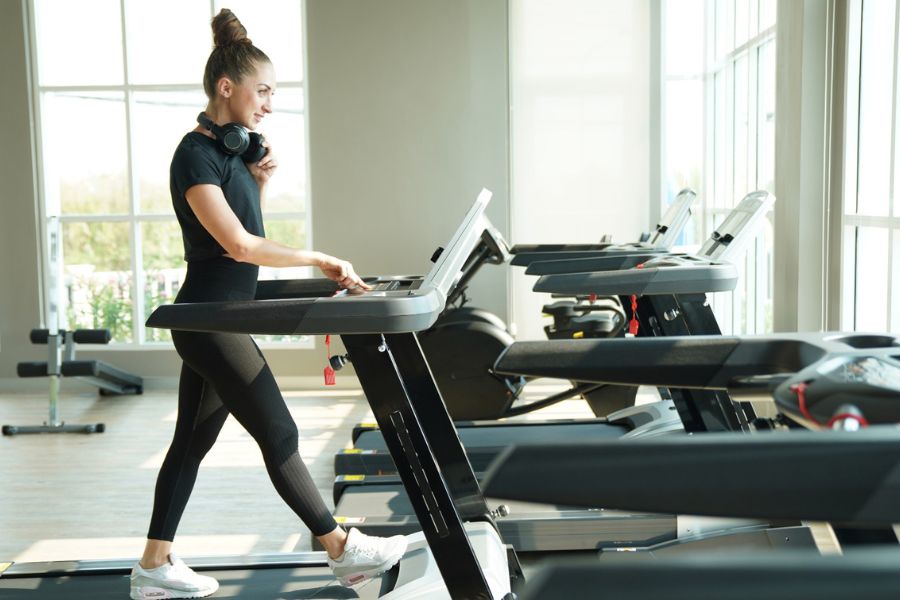
A treadmill can be much more than a rainy-day backup plan. With the right treadmill cardio routines, you can burn more calories in less time, build stamina, and improve your overall health without ever leaving home or the gym.
Below, you will find practical ways to use your treadmill so every workout feels purposeful, not random.
Why treadmill cardio routines work so well
Treadmills give you control. You can adjust speed, incline, and time to match your goals and fitness level, which makes it easier to progress without guessing.
According to certified trainers, treadmill interval training can boost VO2 max, speed, cardiovascular and muscular endurance, and even bone and joint strength, all while burning more calories in less time than steady running alone (Garage Gym Reviews). You get a consistent surface with no potholes or bad weather to worry about, and you can repeat the exact same workout to track improvement week after week.
Walking or running indoors also simplifies calorie tracking. For example, Harvard Medical School estimates that a person who weighs 155 pounds burns about 150 calories during 30 minutes of brisk treadmill walking at 3.5 mph (NordicTrack). When you add incline, intervals, or both, those numbers climb quickly.
Start with steady walking and running
If you are new to exercise or returning after a break, simple treadmill cardio routines are your best entry point. Walking prepares your muscles, joints, and cardiovascular system for more intense work later.
Steady-state walking means you choose a manageable pace and stay there for an extended period. This type of workout is ideal for building basic endurance and mental stamina, since you learn to move continuously at a set speed (SOLE Fitness). Over time, you can extend your duration from 10 to 20 to 30 minutes or more.
Beginner walking plans are often used as a foundation for future running or even marathon training, because they gradually strengthen your legs and lungs with low impact effort (NordicTrack). Once walking feels easy, you can sprinkle in short jogging intervals.
A small 2022 study found that treadmill running can be just as effective as outdoor running for improving fitness and reducing body fat in recreationally active males (Health.com). That means you are not sacrificing results by choosing the belt over the sidewalk.
Use incline to burn more and build strength
Incline is one of the simplest ways to supercharge your treadmill cardio routines without needing to run faster. Raising the deck simulates uphill walking or running, which demands more from your muscles and heart.
Research shows that walking at a 5 percent incline can raise your metabolic cost by about 52 percent, and a 10 percent incline can increase it by around 113 percent compared to flat walking (NordicTrack). In other words, you burn significantly more calories at the same walking speed.
Incline also recruits more of your hamstrings, glutes, quads, and calves and helps develop leg strength and stamina (SOLE Fitness). Some trainers note that high incline running can build lower body muscle faster than flat training, which makes hill-based routines especially valuable for endurance and definition (UK Gym Equipment).
If you are a beginner, start with flat walking, then gradually introduce small inclines for short periods. Begin with 1 to 3 percent, keep your pace comfortable, and slowly increase either the incline or the time spent climbing so you avoid overloading your knees or calves (UK Gym Equipment).
Try interval training to boost stamina
Once you can comfortably walk or jog for 20 to 30 minutes, interval training can take your fitness to the next level. Interval workouts alternate between harder efforts and easier recovery, which keeps sessions engaging and time efficient.
On a treadmill, this might mean mixing fast walking with slow walking or alternating between jogging and running. Interval training conditions your heart and lungs to handle changing intensities, which is one of the most effective ways to increase stamina and sustain higher levels of effort over time (SOLE Fitness).
High intensity interval training, or HIIT, is a more demanding version of this pattern. You alternate short bursts of very hard work with brief recovery periods. HIIT treadmill workouts can help you burn more calories in a shorter session and improve muscle endurance and overall fitness by repeatedly pushing your pace, then backing off just long enough to go again (City Fitness).
Treadmill HIIT that mixes faster speeds and steeper inclines can increase calorie burn by up to 28 percent more than steady walking and may even improve cognitive function after a single workout (NordicTrack). Because of the intensity, HIIT is usually better suited to intermediate or advanced exercisers who already have a solid fitness base (Garage Gym Reviews).
Sample treadmill cardio routines to try
You can tailor any treadmill workout to your current level and goals. Use the following routines as templates and adjust speed and incline so they feel challenging but doable.
Always warm up for 5 to 10 minutes with easy walking or light jogging before these routines, and cool down for 5 minutes afterward.
1. Low impact calorie burn walk
This is a simple option if you are starting out, focusing on consistent, brisk movement.
- 5 minutes at an easy walking pace, 0 percent incline
- 20 minutes at brisk pace you can maintain a conversation, 0 to 2 percent incline
- 5 minutes at easy walking pace, 0 percent incline
A 155 pound person walking briskly at 3.5 mph for 30 minutes can burn around 150 calories, and you can increase that further by lightly increasing the incline as you get stronger (NordicTrack).
2. Beginner incline stamina workout
Use hills to build endurance and leg strength without needing to run.
- 5 minutes easy walk, 0 percent incline
- 3 minutes brisk walk, 3 percent incline
- 2 minutes easy walk, 0 to 1 percent incline
- Repeat the 3 + 2 minute block 4 to 5 times
- 5 minutes cool down, flat
This pattern helps you gradually tolerate higher inclines. As your fitness improves, you can increase the incline or add more rounds (UK Gym Equipment).
3. Classic treadmill interval for speed
If you want to run your mile, 5K, or half marathon faster, a structured speed workout can help. One common treadmill interval workout uses several rounds of faster running with recovery breaks (Garage Gym Reviews).
As an example structure for about 30 minutes:
- 5 to 10 minutes warm up jog
- 6 rounds of:
- 2 to 3 minutes at a challenging but sustainable pace
- 2 minutes easy jog or walk
- 5 minutes cool down
You can tweak the number of rounds, the length of the intervals, or the pace to match your current fitness level.
4. 3-2-1 stamina builder
The 3-2-1 treadmill workout is a popular way to build endurance and get comfortable with different speeds.
You run fast for:
- 3 minutes
- 2 minutes
- 1 minute
Each effort is separated by an equal or longer period of easy running or brisk walking. Beginners can complete one full 3-2-1 cycle, intermediate runners may do two cycles with longer warm up and cool down, and advanced users can run three cycles with 15 minute warm up and cooldown. If you repeat this workout three to four times a week, you can usually see improvements in stamina and speed within about a month (UK Gym Equipment).
5. Short HIIT sprint session
If you already have a strong base and want a quick, intense treadmill cardio routine, try a HIIT sprint workout. These are best for intermediate and advanced exercisers.
A typical HIIT treadmill session might look like:
- 5 minutes warm up
- 5 rounds of:
- 30 seconds very hard effort, close to your maximum sustainable speed
- 1.5 to 2 minutes easy walk or very light jog
- 5 minutes cool down
Guidelines suggest that when you truly push to near maximum effort, you rarely maintain this style of training for much longer than 15 minutes total (Garage Gym Reviews). Start conservative with speed and increase gradually as you learn your limits.
Form and safety tips for better results
Good form keeps your joints happy and your workouts productive. On a treadmill, aim to:
- Land with a midfoot strike instead of heavily on your heels
- Keep your hands relaxed and your arms bent around 90 degrees
- Lean slightly forward from your ankles, not your waist
- Lead with your chest so you avoid hunching over the console
This running posture improves efficiency and can lower your risk of injury (Health.com).
For safety, especially during faster or incline treadmill cardio routines, clip the magnetic safety key to your clothing. If you lose balance, it will pull free and stop the belt automatically (Fit&Well). Keep your gaze forward, resist the urge to hold the handrails while running, and step to the side rails if you need to pause suddenly.
Staying hydrated also matters. Dehydration can cause dizziness, fatigue, and confusion, which are risky on a moving belt. Keep water within reach and sip regularly during longer or more intense sessions (NordicTrack).
Make treadmill routines a long term habit
The real power of treadmill cardio routines comes from consistency, not a single perfect workout. Mixing different types of sessions keeps things interesting and challenges your body in new ways.
Steady-state runs, interval training, and incline workouts all have unique benefits. Combining them over the week, and progressing gradually, is one of the best ways to build stamina and enjoy lasting fitness improvements (SOLE Fitness).
You do not have to overhaul your routine overnight. Start by choosing one workout from this guide for your next treadmill session. Once that feels manageable, rotate in a second style, such as an incline day or a simple interval day.
With each step, your treadmill turns from a clothes rack or last resort into a reliable tool that helps you lose weight, strengthen your body, and feel better in daily life.