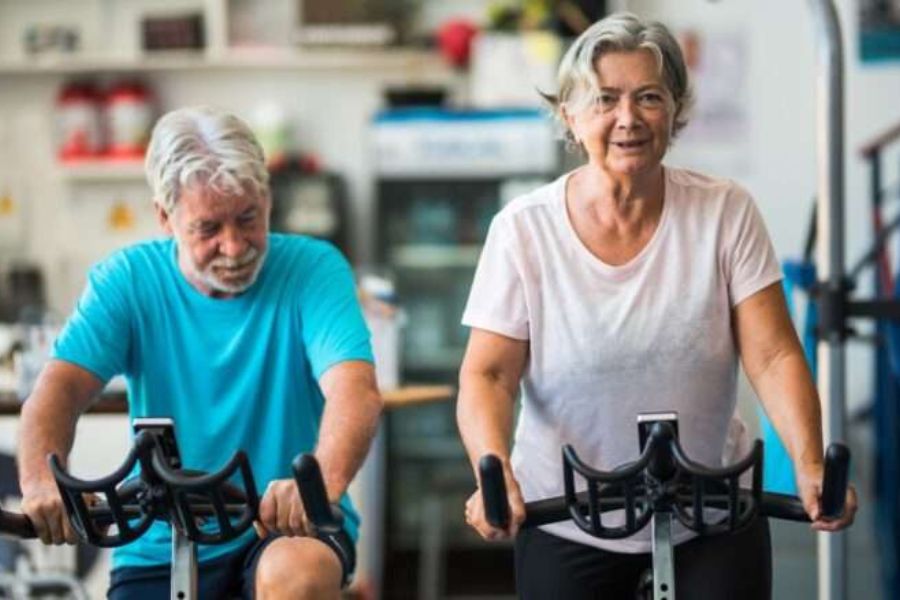
A simple exercise bike workout for seniors can do more than just raise your heart rate. It can improve your balance, help you stay independent, ease joint stiffness, and support a healthy weight, all without the impact that comes with walking or jogging.
An exercise bike workout for seniors is especially helpful if you have arthritis, limited mobility, or you simply feel safer on stable equipment instead of heading outdoors. Stationary bikes provide a joint friendly, low impact way to strengthen your heart and legs while reducing fall risk and joint strain (Freebeat Fit).
Below, you will find a clear, beginner friendly plan you can follow at home or in a gym.
Why an exercise bike is ideal for seniors
Outdoor cycling has its benefits, but it also comes with traffic, uneven surfaces, and weather. As you age, changes in vision, hearing, reaction time, and strength increase your risk of injury on the road (Scripps Health). A stationary or recumbent bike gives you the fitness benefits of cycling without those hazards.
Stationary biking is recommended for older adults because it is low impact and easier on your joints than walking on a treadmill or running. It can help you:
- Improve circulation and heart health
- Increase joint flexibility, especially in hips and knees
- Strengthen your quadriceps, hamstrings, calves, and glutes
- Enhance balance and reduce fall risk
Regular exercise bike use can also support independence by building the muscular strength and endurance you need for everyday tasks like climbing stairs, standing up from a chair, and carrying groceries (Theracycle).
Upright vs recumbent: Choosing the right bike
You have two main options: an upright bike or a recumbent bike. Both can work well, but they feel different in your body.
An upright bike looks and feels like a regular bicycle. You sit higher and lean slightly forward to reach the handlebars. Some people enjoy this familiar riding position, especially if they have good core strength and no major back issues.
A recumbent bike has a larger seat with back support and pedals positioned in front of you. This design:
- Reduces strain on your lower back and hips
- Puts less pressure on knees and ankles
- Offers a stable, secure position that lowers fall risk
- Makes it easier to mount and dismount
Recumbent bikes are often considered the best cardio machines for seniors because they minimize joint pain and still prioritize heart health and flexibility (FitKit UK). They are especially helpful if you live with arthritis, back pain, or balance challenges.
If you are unsure, start with a recumbent bike or any model with a wide seat, backrest, and low step through frame. Comfort makes it easier to stick with your routine.
Safety tips before you start riding
Even though an exercise bike feels safe, you still need a few precautions, especially if you have heart disease, joint issues, diabetes, or you have been mostly inactive.
Start by checking with your doctor, especially if you have been advised to limit activity or you take medications that affect your heart rate or blood pressure. Once you get the green light, use these safety guidelines:
Adjust the bike to your body.
Seat height should allow a slight bend in your knee when the pedal is at its lowest point. If your knee locks out completely or feels cramped, adjust the seat until it feels natural. Place your feet so the ball of your foot rests over the center of the pedal, and strap your feet in if your bike has straps.
Sit with good posture.
Keep your shoulders relaxed and your chest open. Avoid hunching. On a recumbent bike, scoot back so your lower back rests against the back support.
Start slowly and build up.
If you are new to exercise, begin with 10 to 15 minutes of easy pedaling and gradually add a few minutes each week. Many experts suggest older adults aim for 20 to 30 minutes per session, three to five times per week, once they are comfortable (Westmont of Santa Barbara).
Listen to your body.
You should feel slightly breathless but still able to speak in full sentences. Stop right away and seek medical help if you feel chest pain, severe shortness of breath, dizziness, or pain in your jaw, left arm, or back.
Warm up and cool down every time.
Gentle pedaling at low resistance prepares your joints and muscles, then cooling down brings your heart rate back down safely. Skipping these steps raises your risk of injury (Westmont of Santa Barbara).
How long and how often should you ride?
If you are around 70 or older, a good starting point is 20 to 25 minutes on the exercise bike, two to three times per week (FitKit UK). If that feels like too much, you can begin with 10 minutes and add 2 to 3 minutes each week.
Many senior fitness programs recommend building up to:
- 20 to 30 minutes per session
- 3 to 5 days per week
This level of activity supports heart health, joint mobility, and leg strength without overloading your body (Westmont of Santa Barbara).
You do not have to reach this in the first week. Think of it as your long term target.
If you are just starting, any amount of regular, gentle cycling is better than none. Consistency matters more than intensity.
Simple warm up to protect your joints
Before you jump into your main exercise bike workout for seniors, spend 5 to 7 minutes warming up. This wakes up your muscles, increases blood flow, and lubricates your joints.
Try this gentle sequence:
- Sit tall on the bike and pedal with very light resistance for 3 minutes. You should feel like you could do this all day.
- Increase the resistance slightly for 2 minutes while keeping an easy pace.
- During the last 1 to 2 minutes, do some upper body movements: roll your shoulders, gently turn your head side to side, and open and close your hands on the handlebars.
Once your body feels looser and your breathing has picked up slightly, you are ready for the main workout.
Beginner friendly exercise bike workout for seniors
This simple 20 minute routine is joint friendly and can be done on either an upright or recumbent bike. It blends steady riding with short, gentle pushes to build stamina and leg strength.
You can adjust the timing and resistance to match your fitness level. Think of resistance in three levels:
- Light: Easy to pedal, can talk comfortably
- Moderate: Breathing faster, can still talk in full sentences
- Challenging: Noticeably harder, prefer to speak only a few words at a time
Here is the structure:
-
Minutes 0 to 5: Warm up
Light resistance, relaxed pace. Focus on smooth, circular pedal strokes and gentle breathing. -
Minutes 5 to 10: Steady ride
Increase to a light to moderate resistance. Pedal at a comfortable, steady pace. You should feel your heart rate climb, but you should still be able to talk without gasping. -
Minutes 10 to 14: Gentle intervals
Alternate 1 minute of slightly faster pedaling with 1 minute easy.
- Fast minutes: Increase your speed a bit or add a small amount of resistance, but stay in control.
- Easy minutes: Return to light resistance and slower pedaling to recover.
-
Minutes 14 to 18: Steady ride again
Go back to the light to moderate resistance from earlier. This is your endurance building phase. Focus on relaxed shoulders and steady breathing. -
Minutes 18 to 20: Cool down
Gradually reduce resistance to the lightest level. Slow your pedaling. Let your breathing return to normal by the end.
This type of routine is similar in spirit to the gentle mobility and interval workouts that fitness brands design specifically for seniors, such as 20 minute low to medium resistance rides to improve joint health and short interval sessions to maintain leg strength and muscle tone (SOLE Fitness).
If you feel strong and comfortable over time, you can extend each phase by a minute or two, or add another interval cycle in the middle portion.
Gentle variations for joint pain or low energy days
Some days your knees, hips, or back might feel stiff, or your energy might be lower. Instead of skipping movement altogether, you can dial things down while still gaining benefits.
For stiff joints or arthritis, try a mobility focused ride similar to the Gentle Mobility Ride recommended for seniors, which centers on 20 minutes of low to low medium resistance pedaling (SOLE Fitness):
- 5 minutes very light pedaling
- 10 minutes at slightly higher but still comfortable resistance
- 5 minutes of easy cool down
On days when you feel good and want a small challenge, you can adapt your main workout with very short strength focused intervals. For example, 30 seconds of slightly harder pedaling followed by 90 seconds of easy riding, repeated a few times, helps maintain leg muscle and bone support (SOLE Fitness).
The key is to avoid pain. Mild muscle effort is fine. Sharp or worsening joint pain is a sign to stop or reduce intensity.
How a simple routine supports weight loss and health
You do not need an intense workout to see results. A consistent exercise bike workout for seniors helps with:
Heart health and blood pressure
Cycling increases blood flow and can help lower your resting heart rate over time. This supports a healthier cardiovascular system and can complement your doctor’s plan for managing blood pressure and cholesterol (Westmont of Santa Barbara).
Weight management
Regular stationary bike sessions burn calories and help preserve lean muscle. Muscle tissue uses more energy than fat, even at rest, which supports long term weight control. Stationary bikes provide similar cardiovascular and weight loss benefits to treadmills, but they place less stress on your joints (Freebeat Fit).
Joint comfort and mobility
The smooth, circular motion of cycling helps lubricate joints and increases range of motion in your hips, knees, and ankles with minimal impact. That makes an exercise bike especially useful if you live with arthritis or past joint injuries (FitKit UK).
Balance and independence
By strengthening your legs and core, regular riding improves your stability. Stronger muscles and better balance can reduce fall risk, which is a major factor in maintaining independence as you age (Theracycle).
Mood and mental wellness
Like other aerobic exercise, cycling boosts endorphins that can lower stress and help ease feelings of anxiety or low mood. Some programs even offer online group rides or classes so you can connect with others while you work out (Theracycle).
Simple ways to stay consistent
The best exercise bike workout for seniors is the one you actually do. A few small habits make it easier to stay on track:
- Keep your bike in a space where you see it often, not hidden in a corner.
- Schedule your rides at the same time of day, such as right after breakfast.
- Play music, a podcast, or a favorite show to make the time pass faster.
- Mark completed workouts on a calendar so you can see your progress.
- Invite a friend or family member to ride with you, in person or virtually.
If motivation dips, shorten the session instead of skipping it. Ten minutes of gentle pedaling still supports your joints and circulation and helps you keep the habit alive.
Start with the 20 minute routine above this week. Once you see how much better your joints, energy, and mood feel, you will have your own proof that a simple exercise bike workout can offer big benefits at any age.