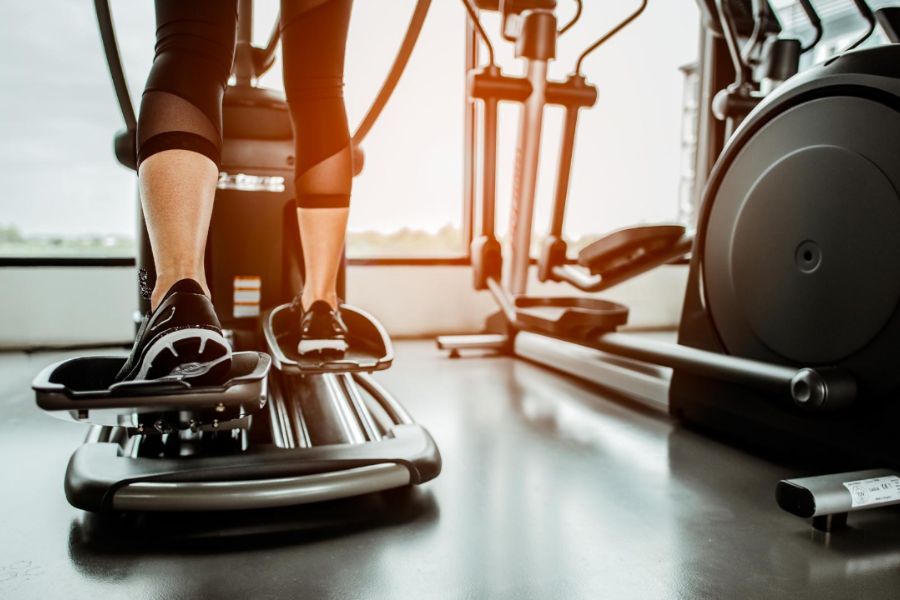
An elliptical workout for muscle toning can do more than help you break a sweat. With the right settings and form, you can use this one machine to sculpt your legs, glutes, arms, and core while keeping stress on your joints low. It is an efficient way to combine cardio, strength, and endurance in a single session.
Below, you will learn exactly how to use the elliptical for muscle toning, what muscles you are working, and how to structure your workouts for noticeable results.
Understand how the elliptical tones muscles
An elliptical is often treated as a pure cardio machine, but it actually engages a wide range of muscles. When you use the pedals and moving handles together, you get a full-body workout that can tone your lower body, upper body, and core at the same time (Healthline).
Ellipticals are also weight-bearing. You support your own body weight as you move, which helps strengthen both muscles and bones and supports overall muscle toning and bone health (Hospital for Special Surgery).
You will not build bodybuilder-size muscle on the elliptical. Instead, you will improve muscular endurance, definition, and overall fitness. This makes it a great option if you want to look and feel more toned without high-impact exercise.
Know which muscles you are working
Understanding what muscles your elliptical workout for muscle toning actually targets helps you adjust your form and settings to get more from each session.
Lower body muscles
Most of the work happens below your hips. The elliptical primarily targets:
- Glutes
- Hamstrings
- Quadriceps
- Calves
These muscles are engaged through the cycle of pushing down and back, then pulling up and forward on the pedals (Garage Gym Reviews). Increasing resistance or incline places more demand on your glutes and hamstrings and can dramatically boost their activation. One analysis found that a 9 degree incline increased hamstring activation by 635 percent and gluteus maximus contraction by 345 percent, compared with a flat setting (Hone Health).
Upper body muscles
If your machine has moving handles and you use them actively, you will also work your:
- Chest
- Back muscles including rhomboids and trapezius
- Shoulders
- Biceps and triceps
Pushing and pulling the handles with control helps turn your cardio session into a full-body muscle toning workout (Garage Gym Reviews, Hone Health).
Core muscles
Your core works the entire time to stabilize your body and keep you upright. That includes:
- Rectus abdominis
- Obliques
- Transverse abdominis
- Muscles along your spine
These muscles hold your torso steady as your arms and legs move, which builds stability and supports better posture (Garage Gym Reviews, Hone Health).
Use proper form for better toning
Form matters as much as how long you stay on the machine. Good technique keeps the work in your muscles instead of your joints.
Stand tall with your shoulders relaxed and back, and keep your head in line with your spine. Avoid leaning heavily on the handles because that reduces the work your legs and core are doing. Keep your feet flat on the pedals so you press through your whole foot, not just your toes or heels.
As you move, think about pushing down and back with one leg while the other comes up and forward in a smooth cycle. This conscious engagement prevents your legs from just “going along for the ride” and keeps your quadriceps active throughout the motion (Hospital for Special Surgery).
Begin with a moderate resistance that feels challenging but still allows you to maintain this form without bouncing or hunching. Many ellipticals offer 20 or more resistance levels, so there is usually plenty of room to progress as you get stronger (ACE Fitness Equipment Blog).
Adjust resistance and incline for targeted toning
If you always hop on the elliptical at the same speed and resistance, your body will adapt. To keep building strength and definition, you need to adjust the settings.
Increasing resistance forces your legs, glutes, and core to push harder with each stride, which improves muscle tone and endurance over time (Tousains). Raising the incline shifts more of the work to your glutes and hamstrings and can be particularly effective when you want to focus on the back of your legs (Planet Fitness).
Some machines also let you change stride length. Shorter strides tend to emphasize your quadriceps and calves, while longer strides demand more from your hamstrings and glutes (ACE Fitness Equipment Blog).
Experiment with these settings gradually. The goal is to feel your muscles working more, not to max out the machine on day one.
A good rule of thumb: if you can hold a conversation but feel your legs and glutes working by the end of each interval, you are in a productive toning zone.
Try interval-based elliptical workouts
High intensity interval training, or HIIT, works especially well on the elliptical. Alternating short bursts of hard effort with easier recovery periods increases calorie burn, helps with fat loss, and challenges your muscles in a way steady-state cardio does not (Healthline).
Here are two sample structures you can adapt to your fitness level.
Beginner friendly toning intervals
Aim for a 30 to 40 minute session:
- Warm up for 5 minutes at low resistance.
- Do 30 seconds at a higher resistance and faster pace.
- Follow with 1 to 2 minutes at an easy to moderate pace.
- Repeat this pattern for 15 to 20 minutes.
- Cool down for 5 minutes at low resistance.
These shorter bursts of effort followed by recovery can help you build strength and endurance steadily, even if you are new to the elliptical (Planet Fitness).
Intermediate HIIT for more definition
Once you are comfortable, you can try slightly more demanding intervals:
- Warm up 5 minutes.
- Set a moderate to high resistance and incline.
- Work hard for 45 to 60 seconds, focusing on driving through your legs and using your arms.
- Recover for 60 to 90 seconds at a lower resistance.
- Repeat for 15 to 25 minutes.
- Cool down 5 minutes.
You can also mix in reverse pedaling intervals, which light up your hamstrings and calves differently and add variety to your routine (Mr. Treadmill).
Engage your core and balance
You might be used to holding the handles the whole time, but occasionally letting go can benefit your core. When you safely use the elliptical without gripping the handles, your abs and back muscles work harder to keep you stable, which supports balance and abdominal toning (Healthline).
Try alternating 1 to 2 minutes with hands lightly resting on the handles and 30 to 60 seconds with your arms by your sides or on your hips. Keep your posture tall and your gaze forward, and only do this at a resistance and speed where you feel in control.
Combine elliptical training with strength work
An elliptical workout for muscle toning is powerful, but it is not a complete strength program on its own. Elliptical training mainly recruits your slow-twitch muscle fibers, which are great for endurance and fat loss but less effective for building large amounts of muscle mass compared with dedicated resistance training (Garage Gym Reviews).
You will see the best results if you pair regular elliptical sessions with simple strength exercises like squats, lunges, pushups, and core work. This combination helps you build lean muscle, increase definition, and support joint health at the same time (Tousains).
A basic weekly plan might look like this:
- 2 to 4 elliptical workouts focused on intervals and varied resistance
- 2 short strength sessions on nonconsecutive days
- At least one full rest or light movement day
Consistent movement, plus a diet that includes enough protein and overall calories for your goals, will support both fat loss and muscle toning.
Stay joint friendly while you tone
One of the biggest advantages of using the elliptical for muscle toning is how gentle it is on your joints. Because your feet stay on the pedals, you avoid the pounding that comes with running while still getting a solid cardio and strength workout (Planet Fitness).
This makes the elliptical a smart choice if you have knee or hip issues or if you are returning to exercise after a break. You still get the benefits of a weight-bearing workout that supports bone health and muscle strength, but with lower impact than many other options (Hospital for Special Surgery).
To protect your body:
- Increase resistance and incline gradually, not all at once.
- Stop or reduce intensity if you feel sharp pain, not just normal muscle fatigue.
- Focus on smooth, controlled motion instead of chasing the highest speed.
Put it all together
If you want to use an elliptical workout for muscle toning, you do not need a complicated plan. Start by:
- Practicing good posture and full, controlled strides.
- Using the moving handles to involve your upper body.
- Adjusting resistance, incline, and stride length to challenge different muscles.
- Incorporating intervals to keep your workouts efficient and engaging.
- Pairing your elliptical sessions with simple strength exercises and supportive nutrition.
You can begin with one small change in your next workout, such as turning up the resistance slightly or trying a few short intervals. Over time, these small, consistent tweaks will help you feel stronger, more toned, and more confident in your routine.