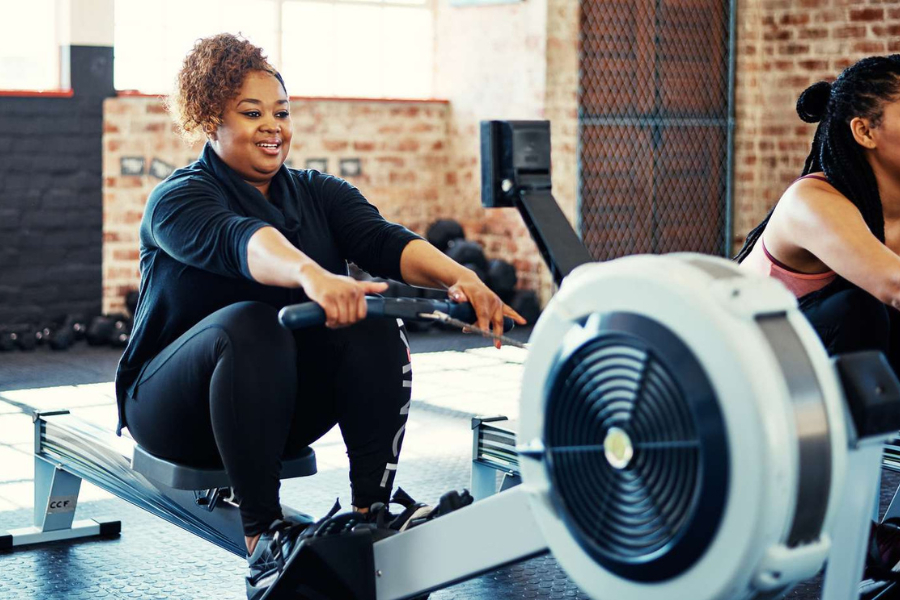
A rowing machine looks simple, but with the right plan you can turn it into one of the most effective tools for fat loss, heart health, and full body strength. Rowing machine HIIT workouts alternate short, intense bursts of effort with easy recovery, so you can get a powerful session in as little as 10 to 20 minutes (PureGym). If you struggle to find time to work out, or you get bored on steady cardio, HIIT on the rower can change that.
Below, you will find a handful of simple, repeatable HIIT rowing workouts plus clear technique tips. You do not need to be an athlete to start. You only need a basic understanding of how to row, a willingness to sweat, and a plan that fits your current fitness level.
Why HIIT rowing is worth your time
Rowing machine HIIT workouts give you a lot of benefits in a short window. Because you are pushing hard, your calorie burn climbs during the work intervals and stays elevated after you finish, which helps with fat loss and cardiovascular improvement (PureGym).
Rowing is also a true full body exercise. A single stroke recruits your legs, glutes, core, back, and arms. Some estimates suggest you are using nearly 85 percent of your major muscle groups every time you row (NordicTrack). This is why a rowing machine session can burn up to around 800 calories per hour in some cases, while hitting your quads, hamstrings, back, abdominals, arms, shoulders, and calves at the same time (Daily Burn).
Unlike running or jumping workouts, rowing is low impact and friendly on your joints. You still get intense effort, but your feet stay in place, which helps you train hard without the pounding that can come with higher impact cardio like plyometrics or treadmill sprints (Garage Gym Reviews).
How HIIT rowing actually works
HIIT stands for high intensity interval training. On a rowing machine, that means you alternate between:
- Short intervals at about 80 to 95 percent of your maximum heart rate
- Easier recovery periods at around 40 to 50 percent of your max heart rate
This pattern is more intense than steady rowing, which usually sits around 60 to 70 percent of your max heart rate (Garage Gym Reviews). The effort intervals mimic the short bursts of explosive power that competitive rowers use, followed by partial recovery before the next push. This style of training can improve both your cardiovascular fitness and your anaerobic energy systems (NordicTrack).
You do not need to obsess over exact heart rate zones at first. Think of your work intervals as “hard, you can only say a few words” and your recovery as “easy, you can talk in full sentences.”
Get your technique right first
Before you add intense intervals, it is smart to learn proper rowing form with slower, steady sessions (Garage Gym Reviews). Good technique keeps you efficient and helps prevent injury when you start pushing harder.
Basic power distribution
On each stroke, you want the power to come mostly from your lower body, not your arms. A helpful breakdown looks like this (Daily Burn):
- About 60 percent of your power from your legs
- About 20 percent from your core
- About 20 percent from your arms
This leg-driven stroke turns the rower into a powerful lower body and core workout, rather than a tug-of-war with your back and shoulders.
Stroke sequence and timing
Think of the drive (the push) and the recovery (the glide back). For each stroke during your HIIT rowing machine workouts, use this order (Daily Burn):
- Push with your legs first, keeping your arms straight.
- Lean back slightly at the hips, engaging your core.
- Finally, pull the handle toward your lower ribs with your arms.
On the way back, reverse the sequence: arms extend, you hinge forward at the hips, then bend your knees to slide forward.
Aim for a 1 to 2 ratio. The drive is quick and powerful, the recovery is about twice as long, smooth, and controlled (Daily Burn). This rhythm helps you avoid jerky motions and keeps your stroke efficient even when the intervals get tough.
Throughout the stroke, keep your core engaged to link your upper and lower body. This stable posture supports your spine and reduces the risk of overloading your lower back (Daily Burn).
Warm up the smart way
Jumping straight into all-out intervals is hard on your body and can cut your workout short. A simple warm up prepares your muscles and your heart rate for the work ahead (PureGym).
Try this 5 to 7 minute warm up:
- Row lightly for 3 minutes at an easy pace, focusing on form.
- Add 2 minutes at a moderate pace where you feel your breathing pick up.
- Step off and do 1 to 2 minutes of dynamic movements, such as leg swings, hip circles, or arm circles.
By the time you start your first interval, you should feel warm but not tired.
Quick check: if your technique falls apart as soon as you increase intensity, spend another week or two doing only steady rowing to build skill and endurance before you switch to HIIT.
Beginner-friendly HIIT rowing workout
If you are new to both rowing and intervals, start with a short, simple structure and longer rest periods. A common beginner guideline is 30 seconds of intense effort followed by 90 seconds of rest, with recovery time shortened as you get fitter (NordicTrack).
Try this 15 minute beginner workout:
- Warm up for 5 minutes.
- Row hard for 30 seconds. Aim for powerful strokes, not just faster flailing.
- Row very easy or rest completely for 90 seconds.
- Repeat steps 2 and 3 for 6 rounds.
- Cool down with 3 to 5 minutes of easy rowing, then stretch.
Start with this session once per week. As it feels easier, you can:
- Add more rounds
- Shorten your rest to 60 seconds
- Add a second HIIT day while keeping at least one rest or easy day between hard sessions
Most people gain significant benefits with 2 to 4 HIIT rowing machine workouts per week, which still leaves room for recovery and other activities (NordicTrack).
Quick 20 minute HIIT workout for busy days
Once you are comfortable with the beginner pattern, you can move to a simple time-efficient session that fits almost any schedule. A 20 minute HIIT rowing workout can significantly raise your heart rate and maximize calorie burn when you pair it with a good warm up and mindful breathing (Garage Gym Reviews).
Try this 20 minute ladder:
- Warm up for 5 minutes.
- Row hard for 40 seconds, then easy for 80 seconds.
- Row hard for 45 seconds, then easy for 75 seconds.
- Row hard for 50 seconds, then easy for 70 seconds.
- Row hard for 55 seconds, then easy for 65 seconds.
- Row hard for 60 seconds, then easy for 60 seconds.
- Cool down for 3 to 5 minutes.
This gradual build keeps things interesting and challenges you without feeling like a sprint from the start. Your “hard” pace should feel tough but sustainable for the duration of each interval.
Fun interval formats you can rotate
To keep your rowing machine HIIT workouts from feeling repetitive, you can swap in different structures that have been shown to work well.
Pyramid endurance intervals
Pyramid sessions use increasing then decreasing intervals to test your stamina. They are effective for endurance and mental focus (PureGym).
Example 18 to 20 minute pyramid:
- Warm up for 5 minutes.
- Row hard for 30 seconds, easy for 30 seconds.
- Hard for 45 seconds, easy for 45 seconds.
- Hard for 60 seconds, easy for 60 seconds.
- Hard for 45 seconds, easy for 45 seconds.
- Hard for 30 seconds, easy for 60 to 90 seconds.
- Cool down.
The middle intervals will feel challenging, so focus on steady breathing and strong, clean strokes.
Classic Tabata sprint session
Tabata is a famous HIIT protocol with 20 seconds of intense effort followed by 10 seconds of rest, usually for 8 rounds, which takes about 4 minutes. On the rower, you can build a short but powerful workout around this structure (PureGym).
Try this 12 to 15 minute Tabata themed workout:
- Warm up for 5 minutes.
- Do 1 Tabata block: 8 rounds of 20 seconds all out rowing, 10 seconds complete rest.
- Rest or row very easy for 2 to 3 minutes.
- Optionally repeat a second Tabata block if you already have a good conditioning base.
- Cool down for 3 to 5 minutes.
Keep in mind that true Tabata intensity is very high. If you are a beginner, one block is plenty and you can build from there as your fitness improves.
10-20-30 intervals
The 10-20-30 format mixes three intensities inside one minute, which feels more playful than staring at a stopwatch. This style balances intensity and recovery and can be adapted to rowing easily (PureGym).
Sample 15 to 18 minute 10-20-30 workout:
- Warm up for 5 minutes.
- For each 1 minute block:
- Row easy for 30 seconds.
- Row moderately hard for 20 seconds.
- Sprint for 10 seconds.
- Repeat that 1 minute pattern 8 to 10 times.
- Cool down.
You may find this structure easier mentally because the hardest effort only lasts 10 seconds at a time.
How often to do HIIT rowing
To see results while keeping your body healthy, aim for:
- 2 to 4 rowing machine HIIT workouts per week
- At least one easy or rest day between intense sessions
This range allows you to improve cardiovascular fitness and muscular strength without overtraining (NordicTrack). On your non HIIT days, you can walk, lift weights, or do light mobility work.
If your main goal is fat loss, remember that nutrition and overall movement during the day matter as much as your intervals. Although rowing is excellent for calorie burn, treadmill exercise may produce slightly higher maximal fat oxidation rates in some cases (NordicTrack). The best choice is usually the one you can stick with consistently, and for many people rowing is more comfortable and sustainable than running.
Simple tips to keep every workout safe and enjoyable
You will get more from your rowing machine HIIT workouts, and stay injury free, if you follow a few basic guidelines.
- Warm up before every session and cool down with easy rowing and stretching afterward (PureGym).
- Focus on leg and core power rather than yanking with your arms, using the correct sequence of legs, hips, then arms (Daily Burn).
- Mix up your interval durations so you do not get bored, and so your body keeps adapting (PureGym).
- Start with shorter total HIIT time, 15 minutes or less, up to once per week if you are a beginner, then increase gradually as tolerance improves (Garage Gym Reviews).
Above all, listen to how you feel. HIIT should be challenging, but it should not leave you in pain or completely drained for days.
Try one of the beginner workouts this week, even if you only have 15 minutes. Once you feel how effective and satisfying a short, focused session on the rower can be, it becomes much easier to come back and do it again tomorrow.