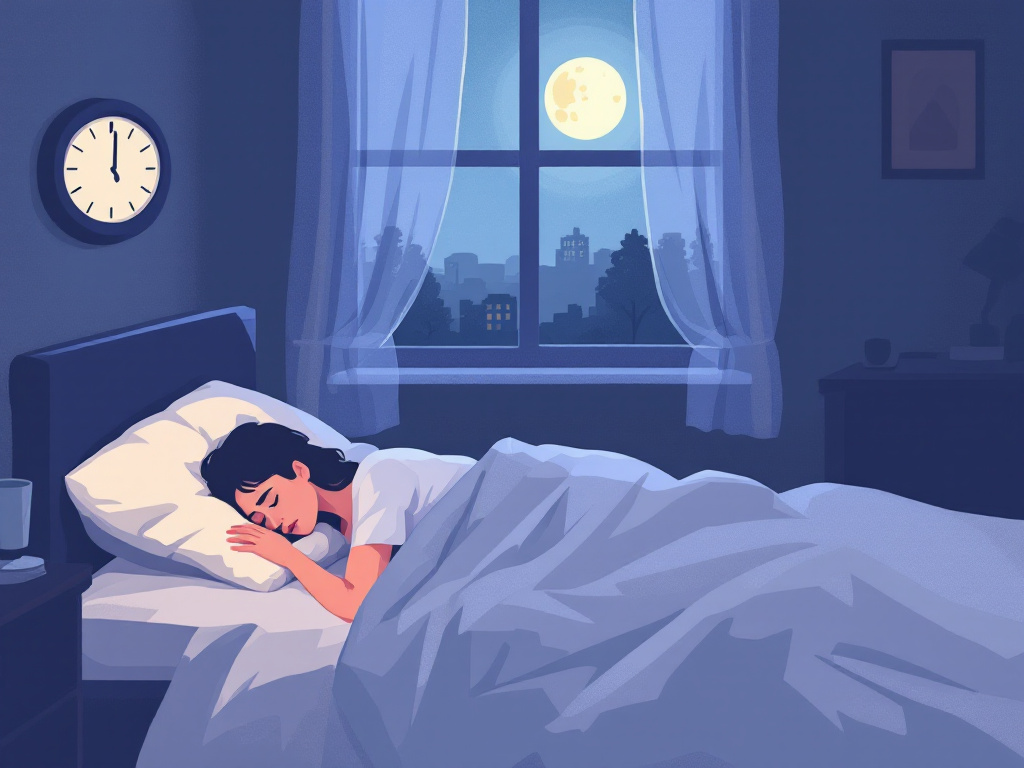
Image by Flux
A pattern of waking up at 3 a.m. can leave you dragging through the next day and wondering, “Why do I keep waking up at 3am, and what is wrong with my sleep?” The good news is that in most cases this is fixable once you understand what is behind it.
Instead of trying random sleep hacks, it helps to look at how your body clock, stress level, habits, and health all interact at that time of night.
Understand what is happening at 3 a.m.
Around 3 a.m. your body is usually cycling through lighter stages of sleep. If you tend to fall asleep around 10 p.m., that 3 a.m. window often lines up with REM sleep, which is easier to wake from than deep sleep (Cleveland Clinic).
That does not mean something is wrong just because you wake up. Most people briefly wake several times at night without even remembering it. You only notice it when you become fully alert or cannot fall back asleep.
During the early morning hours, your body also starts preparing to wake up. Hormones like cortisol gradually rise and core temperature slowly increases. If your sleep is already a bit fragile, these natural shifts can be enough to tip you into full wakefulness.
Common physical reasons you wake up
Sometimes the answer to “why do I keep waking up at 3am” is surprisingly simple. Your body might just be sending signals that are difficult to ignore.
You might be waking up because you need to use the bathroom, especially if you drink a lot of fluids or alcohol close to bedtime. When this happens frequently, it can be a sign of nocturia, a condition where you regularly wake up to urinate at night (Cleveland Clinic).
Light can also be a culprit. Streetlights, a glowing alarm clock, or the blue light from your phone can trick your brain into thinking it is time to wake up. Exposure to light during the night can disrupt melatonin production and make it harder to stay asleep or drift off again (Cleveland Clinic, Baylor College of Medicine).
Room temperature, noise, or a snoring partner can nudge you out of sleep as well. Over 35% of people wake up during the night at least three times a week. Many of these awakenings are brief and related to environmental changes, and most people fall back asleep quickly (Sleep Foundation).
How stress and mental load wake you up
If you find your mind racing at 3 a.m., stress is a strong suspect. Stress activates your sympathetic nervous system, which raises your heart rate and blood pressure and makes your body feel alert instead of sleepy (Healthline).
You might lie awake thinking about your job, your relationships, your health, or money. High stress levels also increase cortisol, which interferes with both falling asleep and staying asleep (Baylor College of Medicine).
Research shows that some people are naturally more sensitive to stress when it comes to sleep. This is called sleep reactivity, the tendency for stress to disrupt your sleep. People with high sleep reactivity are more than twice as likely to develop chronic insomnia over time compared with those who are less reactive (NCBI PMC).
If you notice that any stressful event, even a small one, makes your sleep crumble, you may fall into this more reactive group. That does not mean you are stuck with poor sleep forever, but it does mean you need to be especially proactive about protecting it.
The role of insomnia and sleep disorders
Waking up at 3 a.m. here and there is common. It becomes more concerning when it is frequent, long-lasting, and affects your days. If you wake during the night three or more times per week and struggle to fall back asleep for three months or longer, you could be dealing with insomnia (Healthline, Mayo Clinic).
Insomnia is not just about difficulty falling asleep at the beginning of the night. Middle-of-the-night awakenings that you cannot shake are part of the same picture. These sleep disruptions are especially likely during periods of high stress (Mayo Clinic).
Other sleep disorders can also show up as a 3 a.m. wake-up pattern:
- Sleep apnea, where your breathing repeatedly stops and starts, can jolt you awake gasping or with a dry mouth.
- Restless legs syndrome can cause uncomfortable sensations in your legs that get worse when you lie down.
- Chronic pain or certain medical conditions can make it hard for your body to stay comfortable through the night.
Sleep specialists are trained to spot these patterns and separate occasional bad nights from true sleep disorders. They can identify problems like insomnia, sleep apnea, and restless legs, and help you find the right treatment (Duke Health).
Why age and hormones make 3 a.m. wakeups more likely
As you age, your sleep naturally becomes lighter and more fragmented. Older adults spend less time in deep, restorative sleep and more time in lighter stages that are easier to wake from. They also tend to wake up three or four times per night and are more aware of being awake (UCLA Health).
Your internal clock shifts too. You may feel sleepy earlier in the evening and naturally wake earlier in the morning, sometimes in those 3 to 4 a.m. hours. These age-related changes in circadian rhythm can make you feel like you are waking up “too early” even when your body thinks it has had enough sleep (Healthline).
Hormones play a big role in sleep quality across your life:
- During menstruation, pregnancy, and menopause, hormone fluctuations can trigger hot flashes, night sweats, and temperature swings that wake you up repeatedly around the same time (Sleep Foundation).
- With aging, melatonin production often decreases and cortisol and testosterone may fluctuate. These shifts can desynchronize your sleep-wake pattern and make early morning awakenings, including at 3 a.m., more common (UCLA Health).
On top of that, many older adults live with chronic health conditions and take multiple medications. Some drugs, such as corticosteroids, antidepressants, beta blockers, and thyroid medications, can interfere with sleep and contribute to nighttime awakenings (Healthline, UCLA Health).
How your habits might be setting you up to wake
Your daily routine can quietly keep you stuck in a pattern of waking up at 3 a.m., even if you fall asleep easily. Poor sleep hygiene makes it harder for your brain and body to maintain a solid night of rest.
Some habits that can work against you include:
- Going to bed and waking up at very different times each day
- Drinking caffeine late in the afternoon or evening
- Using your phone, tablet, or laptop in bed
- Watching intense or stressful content right before sleep
- Drinking alcohol in the evening, which may help you fall asleep quickly but fragments your sleep later in the night
Blue light from screens suppresses your natural melatonin and keeps your brain feeling switched on, which can affect both how quickly you fall asleep and how well you stay asleep (Baylor College of Medicine). Irregular schedules and late nights make it hard for your body clock to settle into a predictable rhythm, so you are more likely to wake in the middle of the night (Healthline).
A consistent sleep routine, lower evening light, and a calming pre-bed wind-down can make a noticeable difference in how often you find yourself awake at 3 a.m. (Baylor College of Medicine).
If you have been relying on over-the-counter sleep aids to “knock yourself out,” it might be time to pause. These products rarely provide effective or lasting relief for mid-night awakenings and can sometimes create new problems (Mayo Clinic).
Practical changes to break the 3 a.m. cycle
Once you understand the likely reasons behind your wakeups, you can start experimenting with targeted changes. You do not need to overhaul everything at once. Choose one or two areas and give them at least a week or two.
Strengthen your sleep routine
Aim for the same wake-up and bedtime every day, even on weekends. This helps anchor your body clock so your sleep cycles become more predictable (Baylor College of Medicine). Build a short wind-down routine that tells your brain it is safe to relax: maybe a warm shower, a few minutes of stretching, reading a physical book, or light journaling.
Try finishing large meals and alcohol at least a few hours before bed and cutting off caffeine by mid-afternoon. If you often wake to use the bathroom, taper your fluid intake in the evening.
Protect your sleep environment
Keep your room as dark as possible. Use blackout curtains if outdoor light is an issue and dim or cover bright displays from electronics. If you wake and reach for your phone, consider keeping it across the room so it is not your first reflex.
Make your room cool and quiet. Earplugs, a white noise machine, or a fan can help mask disturbing sounds. If your mattress or pillow leaves you stiff or sore, upgrading them may help you stay asleep more comfortably.
Calm your mind before bed and at 3 a.m.
You cannot always control the stresses in your life, but you can change how you transition into sleep. Relaxing activities like gentle yoga, meditation, breathing exercises, or a warm bath before bed can calm your nervous system and help you fall asleep more efficiently (Baylor College of Medicine).
If you wake at 3 a.m. and your mind starts racing, try this:
- Avoid checking the clock repeatedly, which only adds pressure.
- Focus on slow, deep breathing, such as inhaling for four counts and exhaling for six.
- If your thoughts feel stuck, keep a small notepad by your bed. Jot down what is on your mind as a promise to yourself that you will handle it in the morning.
If you are still awake after what feels like a long time, it can sometimes help to get out of bed briefly. Sit in low light and do something calm and non-stimulating, such as reading a few pages of a book, until you feel sleepy again. This helps your brain keep the association that bed is for sleep, not worry.
When to talk with a sleep specialist
If you have been waking up in the middle of the night for more than about three months and it is affecting your mood, energy, or daily life, it is worth checking in with a health professional. Persisting problems may signal a sleep disorder or another medical or mental health condition that needs attention (Mayo Clinic).
Sleep specialists can:
- Evaluate for insomnia, sleep apnea, restless legs syndrome, and other sleep issues
- Review whether any medications might be disrupting your sleep
- Recommend evidence-based treatments like cognitive behavioral therapy for insomnia (CBT-I) or light therapy when appropriate (Healthline, Healthline)
Tracking your sleep patterns and symptoms for a week or two before your appointment can give your doctor a clearer picture. If you share a bed, your sleep partner might also notice snoring, gasping, or movements that you are not aware of, which can be valuable information (Duke Health).
Quality sleep does more than help you feel rested. It supports your mood, your hormones, your weight, and your heart health. The American Heart Association even lists sleep as a key pillar of cardiovascular health, which is one more reason not to ignore repeated night awakenings (Duke Health).
If you find yourself asking, “why do I keep waking up at 3am?” you are not alone, and you are not stuck. With a combination of small habit changes and, when needed, professional support, you can train your nights to feel smoother and your mornings to feel far more refreshed.