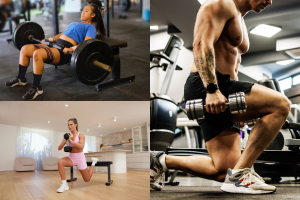
A 15 minute ab workout can do more for your core and overall fitness than you might expect. When you structure those minutes correctly, you can burn fat, build visible ab definition, and improve posture and stability without spending an hour in the gym.
Below you will find a simple plan you can follow at home or in the gym, plus guidance on how often to do it, how to progress, and what you need to do outside your workouts to actually see your abs.
Why 15 minutes is enough for abs
You do not need long, complicated routines to train your abs effectively. Most ab workouts fall in the 5 to 30 minute range, and you can get plenty of stimulus in that window if you stay focused and limit rest.
High intensity interval training, or HIIT, is one reason a 15 minute ab workout works so well. Short HIIT sessions of 10 to 15 minutes have been shown to produce cardiovascular endurance gains similar to much longer steady state workouts, according to research cited by Women’s Health in 2024. Another study in Medicine & Science in Sports & Exercise found that men doing 13 minutes of HIIT burned more calories per minute and increased VO2 max by 12.5 percent more compared to a 40 minute steady session.
When you combine that intensity with targeted core moves, 15 minutes is enough to:
- Hit upper abs, lower abs, and obliques
- Raise your heart rate to support fat loss
- Build stability that carries over to every other exercise you do
You just need a clear structure and consistent effort.
How often you should do this workout
You might feel tempted to do your 15 minute ab workout every day, but your core muscles need rest just like any other body part.
According to a June 2024 article by Chris Protein in Austin, TX, training your abs two to three times per week with two to three exercises per session is enough for growth and strength without overtraining. Working your core hard seven days a week only adds fatigue, not progress.
A good starting point is:
- 2 to 3 sessions per week
- At least 1 rest day between ab sessions
- 15 minutes per workout, either on its own or at the end of your main training
If you are already doing full body strength or cardio on most days, simply plug this ab circuit in two or three times a week after your main workout.
The 15 minute ab workout: No equipment
This version is perfect if you want something you can do at home or while traveling. It is inspired by a 15 minute core conditioning routine from Muscle & Strength that targets upper abs, lower abs, obliques, stabilization, and waist control.
You will work in timed intervals instead of counting every rep. Aim to move with control rather than rushing.
Workout structure
- 5 exercises
- 40 seconds work, 20 seconds rest for each
- Complete 3 rounds in about 15 minutes
Exercises
- Sit ups or crunches
- Russian twists
- Mountain climbers
- Hand walk outs
- Plank hold
1. Sit ups or crunches (upper abs)
Sit ups, done with good form, focus on your upper abs and can be adjusted for beginners or advanced lifters. Muscle & Strength recommends 15 reps with proper foot placement to reduce hip flexor strain. In this timed version, you concentrate on quality for 40 seconds.
How to do it:
- Lie on your back with knees bent and feet flat on the floor
- Cross your arms over your chest or gently place fingertips by your temples
- Curl your torso up, thinking of bringing your ribcage toward your hips
- Lower down slowly, keeping tension in your abs rather than dropping quickly
To make it harder, you can hold a light weight to your chest or slow down the lowering phase.
2. Russian twists (obliques)
Russian twists target the sides of your core, the obliques, which help reduce the appearance of love handles when combined with a solid nutrition plan. The Gym Group notes that including Russian twists in a 15 minute ab workout helps tighten the waist area by working these side muscles.
How to do it:
- Sit with knees bent and feet flat
- Lean back slightly until you feel your abs engage
- Lift your feet a couple of inches off the floor if you can maintain balance
- Clasp your hands and rotate your torso side to side, touching the floor or reaching toward each hip
Focus on twisting from your midsection, not just swinging your arms.
3. Mountain climbers (full core and cardio)
Mountain climbers keep your heart rate up and hit your core, shoulders, and legs at the same time. They also support fat loss by boosting your overall calorie burn, which The Gym Group highlights as part of an efficient 15 minute ab and fat burning routine.
How to do it:
- Start in a high plank with hands under shoulders and body in a straight line
- Drive one knee toward your chest, then quickly switch legs
- Keep your hips low, core braced, and shoulders stacked over your hands
You can slow the pace to focus more on stability or speed it up to make this your cardio push in the circuit.
4. Hand walk outs (stability and stretch)
Hand walk outs challenge your abs, shoulders, and hamstrings in one move. They require you to stabilize your core as your hands move away from your feet.
How to do it:
- Stand with feet hip width apart
- Hinge at your hips and place your hands on the floor in front of your feet
- Walk your hands forward until you are in a strong plank
- Hold for a brief second, then walk your hands back to your feet and stand up
Try not to let your lower back sag. If the floor is far from your hands, you can slightly bend your knees.
5. Plank hold (core endurance)
Planks are a classic for a reason. They build full core endurance, help with posture, and may ease some types of back discomfort by strengthening the muscles that support your spine. The Gym Group suggests gradually working up to a 2 minute plank as a strong finisher to a 15 minute session.
How to do it:
- Rest on your forearms and toes, elbows under shoulders
- Keep your body in a straight line from head to heels
- Squeeze your glutes and brace your abs as if preparing for a light punch
- Breathe steadily and avoid letting your hips lift too high or drop low
If 40 seconds is too long, hold as long as you can, rest briefly, then resume until the interval ends.
Quick reminder: If any exercise causes sharp pain, especially in your lower back or neck, stop that movement and swap it for a gentler alternative, such as a basic crunch or dead bug.
Gym based 15 minute ab workout
If you have access to gym equipment, you can add load to your abs for more definition. A sample 15 minute gym routine for definition includes 2 to 3 sets each of decline sit ups and cable weighted leg raises, with 8 to 15 reps per set. You can fit these into your session two to four times per week, usually at the end.
Here is how you might structure a quick gym version:
- 3 sets of decline sit ups, 8 to 15 reps
- 3 sets of cable weighted leg raises, 8 to 15 reps
Rest around 45 to 60 seconds between sets. Focus on controlled movement and full range of motion rather than racing through the reps.
For lower abs without machines, you can borrow from the Muscle & Strength core routine and do alternate straight leg lowers, 15 reps per leg. Keeping your lower back pressed into the floor and not letting your heels touch the ground makes this more challenging and also improves balance and flexibility.
How to adjust the workout to your level
Your 15 minute ab workout should feel challenging but manageable. You want a strong burn in your core and a bit of breathlessness without losing form completely.
You can scale difficulty in a few simple ways:
-
If you are a beginner
-
Shorten work periods to 20 or 30 seconds
-
Increase rest to 30 or 40 seconds
-
Keep your feet on the floor during Russian twists
-
Do mountain climbers slowly and keep your knees closer to the ground
-
Drop to your knees for planks and hand walk outs if needed
-
If you are more advanced
-
Reduce rest periods to 10 seconds or remove them between moves
-
Hold a weight during sit ups and Russian twists
-
Use ankle weights for leg based movements
-
Add a stability challenge, such as lifting one leg during planks
-
Replace some rest with low intensity core holds like dead bugs
HIIT style ab training is flexible. You can change the length of intervals, swap exercises you dislike for similar ones, and still keep the structure of 15 focused minutes.
The role of diet in visible abs
You can do this 15 minute ab workout every week and still not see a six pack if your body fat stays too high. Your abs are muscles, and they need both training and low enough body fat to become visible.
Research suggests that, in general, men often need to reach about 8 to 12 percent body fat and women around 15 percent to see clear ab definition. The exact numbers vary from person to person, but the principle is the same. You cannot out crunch a calorie surplus.
Both Muscle & Strength and The Gym Group emphasize that nutrition is essential for visible abs. Even doing a hundred sit ups a day will not reveal toned abs unless you pair your workouts with a healthy diet that reduces the belly fat covering the muscles.
Practical steps include:
- Eating mostly whole foods, lean protein, and plenty of vegetables
- Controlling portion sizes so you are in a slight calorie deficit if fat loss is your goal
- Limiting sugary drinks and highly processed snacks that add calories quickly
- Prioritizing sufficient sleep so your hunger hormones and recovery stay in balance
When you combine smart eating with regular strength training, cardio, and this focused ab routine, your core will not just feel stronger, it will gradually look leaner too.
Why this 15 minute routine works long term
The most effective workout is the one you can keep doing. A short, focused routine removes common barriers like time, equipment, and boredom.
This particular 15 minute ab workout works because it:
- Trains all major areas of your core
- Uses body weight, so you can do it anywhere
- Doubles as a light cardio session to support fat loss
- Is easy to scale for beginners and advanced exercisers
- Fits alongside your existing workouts without overwhelming you
You can start with just one round if three feels too hard, then add more over time. Or you can alternate this no equipment version with the quick gym routine to keep your training fresh.
Set a simple goal for yourself today. For example, complete this 15 minute ab workout twice this week, even if you only manage two rounds. Once you prove to yourself that you can fit it in, building a stronger, leaner core becomes a realistic habit, not a distant goal.