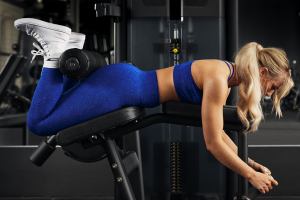
A strong core makes almost everything in daily life feel easier. The problem is that many common ab workout mistakes steal your results and can even leave you with a sore back or cranky hips. With a few targeted tweaks, you can build a solid, pain‑free core without endless crunches.
Below, you will learn which ab moves and habits to avoid, what to do instead, and how to train in a way that actually supports your whole body.
Understand what your core should do
Your abs do much more than create a six‑pack. They stabilize your spine, support your hips, and help transfer force between your upper and lower body. When your core is strong and trained well, you:
- Take pressure off your knees and hips
- Reduce the risk of injury during workouts and daily activities
- Move, lift, and balance with more control and less fatigue
An orthopedic surgeon notes that a stable core helps your body hold better form and reduces strain on joints, especially the knees and hips. That is why getting your ab training right matters far beyond aesthetics.
Stop relying on ineffective ab moves
Not all ab exercises are created equal. Some popular choices look impressive but do very little for your abdominal muscles.
A study from the American Council on Exercise ranked 13 common ab exercises for muscle activation. Several well known moves landed near the bottom:
- Traditional crunches ranked 11th out of 13
- Ab rollers ranked 9th
- Resistance band ab pulls ranked 12th
- Ab rockers came in last at 13th and were up to 80% less effective than top options
If you spend most of your core training time on these, you are working hard without much payoff.
Instead, the same ACE study suggested a short five minute routine built from top performers like bicycle crunches and captain’s chair variations. Swapping out low return moves for these higher activation exercises will give you more benefit in less time.
Avoid sit ups that stress your lower back
Sit ups and classic crunches used to be the default ab move. Now, many experts suggest limiting or modifying them, especially if you have any back sensitivity.
When you do full sit ups, your curved spine presses against the floor while your hip flexors work hard to pull you up. Those hip flexors run from the front of your thighs to your lumbar vertebrae. If they are tight or overactive, they tug on your lower spine and can contribute to back pain.
This does not mean you can never flex your spine. It does mean you should:
- Skip anchoring your feet, which shifts work into your thighs
- Keep ranges of motion smaller and controlled, not jerky
- Prioritize exercises that do not force your lower back to bear the brunt of the movement
Planks and similar moves recruit a more balanced set of muscles on the front, sides, and back of your trunk. They are a smarter default for both strength and long term joint health.
Do not train through back pain
One of the biggest ab workout mistakes is pushing through pain in your lower back, hips, or neck. Ab exercises should be challenging, but they should not hurt.
If you feel back pain during core work, it may signal:
- A weak lower back or deep core, causing your spine to overcompensate
- Misaligned technique, such as arching or rounding your spine excessively
- Fatigue in your abs so your back muscles take over
Both the American Council on Exercise and Gymshark’s training guidance emphasize stopping immediately if you feel sharp or lingering back pain, then reassessing your form. If discomfort continues for more than 10 to 14 days despite rest and adjustments, it is wise to talk with a physician or physical therapist.
In the meantime, dial back to gentler, spine friendly moves like:
- Bird dogs
- Dead bugs
- Glute bridges
These exercises train your core to stabilize your spine while your arms and legs move, which is a safer place to rebuild from.
Do not work your abs hard every day
It is easy to think that daily ab sessions will bring faster results, but your muscles need recovery time to actually grow. Your abs are already assisting in many compound lifts and daily movements, so hammering them every day can backfire.
Guidance from Gymshark suggests programming focused ab workouts every other day, or about 2 to 3 times per week, so your muscles can repair and come back stronger. Training them hard after every session or working through heavy soreness can:
- Limit your performance in other lifts
- Increase the chance of form breakdown
- Raise your risk of strains and overuse injuries
Aim for quality over frequency. One to three well structured ab sessions per week, with rest days in between, is enough for most people when combined with a balanced strength program.
Do not let other muscles take over
Another common mistake is letting stronger muscles like your thighs, arms, or hip flexors do most of the work during ab exercises. You might notice:
- Your quads fatigue before your abs during leg raises
- Your arms burn during planks while your midsection feels fine
- Your thighs tire out in sit ups before your stomach does
These are red flags that your form or setup is off. Many lifters and coaches on forums like Reddit point out that if you never really feel your abs, you are not actually training them effectively.
To fix this, focus on:
- Bracing your midsection gently, as if you are preparing to be poked in the side
- Keeping your ribs stacked over your hips rather than flaring or tilting
- Moving more slowly, especially on the lowering part of the exercise
If you find it hard to feel your core, regress the movement. For example, try bent knee leg raises instead of straight leg raises, or incline planks instead of floor planks. The goal is to keep your abs working without letting other muscles take over.
A helpful cue: during any core movement, imagine zipping up a tight jacket from your pelvic bones to your ribs. That light inward and upward tension helps engage the deeper abdominal muscles that stabilize your spine.
Do not stick to only one kind of ab move
Your core has several key jobs, and only training one of them leaves gaps. Crunches and sit ups mostly work spinal flexion, which is just one piece of the puzzle.
For a stronger, more functional midsection, you need a mix of:
- Anti extension moves, such as planks and dead bugs, to prevent your lower back from arching
- Anti rotation and anti lateral flexion moves, such as side planks and suitcase carries, to resist twisting and side bending
- Rotation and flexion moves, such as bicycle crunches and cable wood chops, to control twisting and bending when needed
Relying purely on crunch variations is one of the most common ab workout mistakes. Research and expert guidance recommend rotating through different movement patterns to build a balanced, stable core.
Do not ignore progressive overload
If you do 50 crunches every workout for months, your body will adapt, then stop changing. Ab muscles respond to progressive overload just like any other muscle group.
Once you can perform 20 to 30 reps of a bodyweight exercise with clean form, start making it harder rather than simply adding more reps. You can:
- Add weight, such as holding a plate during crunches or placing a weight plate on your upper back during planks
- Slow the eccentric phase, for example taking 2 to 3 seconds to lower your legs in leg raises
- Change leverage, such as moving from bent knees to straight legs or from incline to floor planks
A 2023 training guide highlighted that a controlled eccentric phase increases time under tension and can boost strength and muscle gains without needing marathon sets. Short, focused sets that truly challenge your core are more productive than endless light repetitions.
Do not chase abs without adjusting your diet
No ab routine can outperform a diet that keeps a thick layer of fat over your midsection. If visible abs are one of your goals, you need both smart training and a consistent calorie deficit.
Fitness experts, including Men’s Health fitness director Ebenezer Samuel, emphasize that you will not reveal your abs through punishing cardio or crunch marathons alone. Instead, focus on:
- Eating enough protein to support muscle repair
- Prioritizing fiber rich foods like vegetables, fruits, beans, and whole grains
- Creating a modest, sustainable calorie deficit
- Increasing daily movement, such as more walking, rather than only adding intense cardio
Cardio still plays a role, since it helps burn the fat that covers your abdominal muscles. However, it works best alongside strength training and a realistic nutrition plan, not as a stand‑alone fix.
Build a safer, smarter ab routine
To put all of this together, start by checking your current routine against these questions:
- Are most of your exercises effective, spine friendly moves like planks, dead bugs, and bicycle crunches, instead of just sit ups and ab gadgets?
- Do you feel the work in your abs, not mainly in your thighs, hips, or arms?
- Are you training your core 2 to 3 times per week with rest between sessions, rather than hitting it hard every day?
- Do your exercises cover stability, rotation, and anti rotation, not just basic flexion?
- Are you gradually increasing difficulty with controlled tempo or added resistance?
If you answer no to any of these, adjust one habit at a time. For example, you could first replace low value moves like ab rockers with planks and dead bugs. Then, the following week, add a day of rest between hard core workouts. Small, steady changes will protect your back and bring you closer to the strong, capable midsection you are working for.
With better exercise choices, solid technique, and realistic expectations around rest and nutrition, you can avoid painful ab workout mistakes and build a core that supports everything else you do.