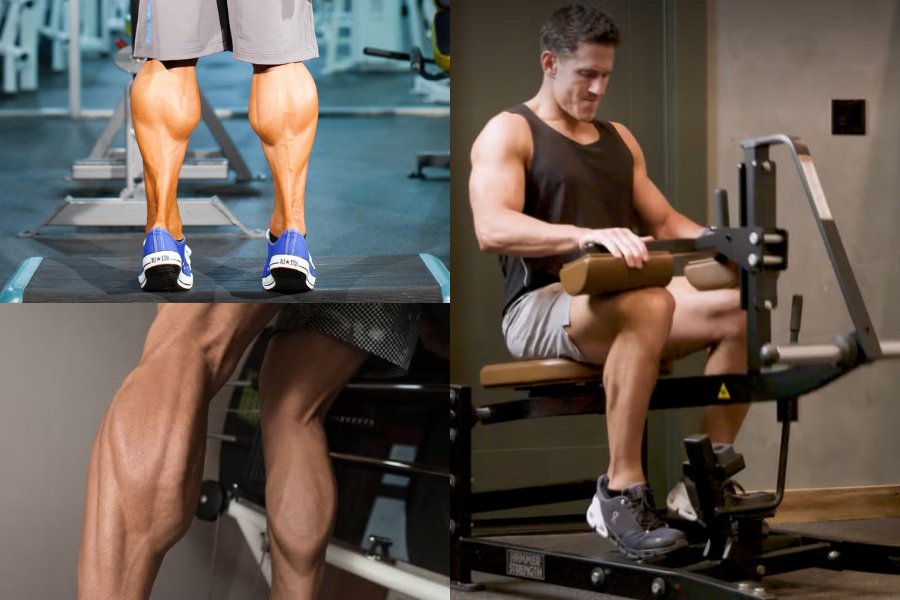
A solid calf workout does more than make your legs look defined. The best calf exercises support your ankles, protect your Achilles tendon, and boost your performance in activities like running, jumping, and even walking up the stairs. By learning how to train both major calf muscles, you can build strength, improve stability, and reduce your risk of injury.
Below, you will find the best calf exercises, how to do them with safe form, and simple ways to fit them into your routine, even if you work out at home.
Understand your calf muscles
Before you start adding sets and reps, it helps to know what you are actually training. Your calves are mainly made up of two muscles: the gastrocnemius and the soleus.
The gastrocnemius is the larger, more visible muscle that gives your calf its rounded shape. It crosses both your knee and ankle and is heavily involved in explosive movements like sprinting and jumping. The soleus sits underneath the gastrocnemius. It is smaller but works hard during walking, running, and standing, especially when your knees are bent.
Both muscles work through plantar flexion, which is the motion of pointing your toes down and lifting your heels off the ground. Because your calves contain a high percentage of slow twitch muscle fibers, they respond well to higher repetitions and controlled movements performed with effort. This is why you often see high rep ranges recommended for effective calf training.
Why strong calves matter
Stronger calves affect much more than how you look in shorts. These muscles contribute to nearly every step you take.
When your calves are strong, you can push off the ground more powerfully. This helps you run faster, jump higher, and change direction more quickly. Research has linked greater calf strength and circumference with better performance in speed and agility tasks, as reported in studies from 2018 and 2021.
Calf strength also plays a protective role. According to experts at the Mayo Clinic, calf raises help strengthen the muscles at the back of your lower legs and support the Achilles tendon, which can lower your risk of injury. Strong, resilient calves help you tolerate longer walks, runs, hikes, and workouts without the same level of fatigue or soreness.
Good calf conditioning supports posture too. Since these muscles help you maintain balance and alignment while you stand, they are part of the foundation for your entire lower body.
Think of your calves as the shock absorbers and springs of your lower body. Train them well, and everything from daily errands to intense workouts feels more stable and powerful.
Standing calf raises
Standing calf raises are one of the best calf exercises for targeting the gastrocnemius. This move is simple, effective, and easy to do almost anywhere.
How to do a standing calf raise
- Stand with your feet about shoulder width apart.
- Hold a dumbbell in each hand if you want extra resistance. Let your arms hang naturally at your sides, with the weights below your shoulders.
- Keep your back straight and your knees gently straight but not locked.
- Press through the balls of your feet and rise up onto your toes as high as you comfortably can.
- Pause briefly at the top and squeeze your calves.
- Slowly lower your heels back down to the starting position with control.
Nicole L. Campbell, a fitness specialist for the Mayo Clinic, recommends this smooth, controlled style of movement to create tension in the calf muscles and protect your joints.
Tips for better results
To get the most from standing calf raises, focus on a full range of motion and deliberate tempo. Think of lifting your heels as far as possible, then lowering them until you feel a gentle stretch in your calves.
You can increase the challenge by standing on the edge of a step with your heels hanging slightly off. This allows a deeper stretch at the bottom and more contraction at the top. Just be sure to hold a railing, wall, or chair for balance if needed. Maintaining a straight back and avoiding bent knees keeps the focus on the gastrocnemius and can help prevent form related discomfort.
Seated calf raises
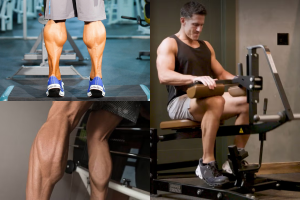
If standing raises are the go to for the gastrocnemius, seated calf raises are the classic way to work your soleus. Because your knees are bent, your gastrocnemius is placed in a shortened, less active position and your soleus has to work harder.
How to do a seated calf raise
- Sit on a sturdy bench or chair with your feet flat on the floor, about hip width apart.
- Place a dumbbell or weight plate across your thighs, close to your knees.
- Keep your back straight and your knees bent at roughly 90 degrees.
- Press through the balls of your feet and raise your heels as high as you comfortably can.
- Pause at the top and consciously squeeze your calves.
- Slowly lower your heels back down, letting them sink toward the floor until you feel a gentle stretch.
This slower style of lifting and lowering helps you fully engage the soleus and reduces the urge to bounce the weight.
Seated variations and safety
Some lifters use an extended seated variation, where the knees are not fully bent, to bring the gastrocnemius more into play. Regardless of the angle you choose, keep your back neutral and avoid rounding forward. This helps you target the right muscles without straining your lower back.
Because seated raises are stable, they are excellent for high repetition work. For example, you might do 2 sets of 10 to 20 reps on each side with about 30 seconds of rest, or use heavier weight for fewer reps if you prefer.
Single leg calf raises
Single leg calf raises are a smart way to challenge your calves and improve balance at the same time. By putting all your weight on one leg, you increase the demand on each calf and can identify any left right strength differences.
To perform a single leg calf raise, stand on one foot near a wall or chair for balance. Lift your other foot slightly off the floor. Rise up onto the ball of your standing foot, pause, then lower with control. You can increase the difficulty by holding a dumbbell in the hand on the same side as the working leg.
A practical guideline is 2 sets of about 15 reps per side with 30 seconds of rest, adjusting as needed for your fitness level.
Foot position and calf targeting
You can fine tune which parts of your calf muscles work hardest by adjusting your foot position. This is especially useful if you want more balanced development or are focusing on specific areas for definition.
- Toes pointing forward tend to work both heads of the gastrocnemius fairly evenly.
- Toes angled slightly outward emphasize the inner, or medial, head of the gastrocnemius.
- Toes angled slightly inward shift more effort to the outer, or lateral, head.
You can apply these angles during standing or seated calf raises. For example, you might perform 4 sets of an exercise, using a different foot angle each set. This approach keeps your training varied and can help you develop more complete calves over time.
Eccentric and dynamic calf exercises
Traditional raises are only one piece of the picture. Eccentric focused exercises and dynamic movements help build strength, power, and resilience.
Eccentric calf raises
Eccentric raises emphasize the lowering part of the movement. Start on a step with both feet, rise up on your toes, then lift one foot so you are balancing on the other. Slowly lower that heel below the step over three to five seconds. Use both feet to rise back up and repeat.
This style of training targets eccentric contractions, which are especially helpful for strengthening muscles and tendons and may reduce the risk of strains during quick movements or sudden stops. Physical therapists such as Dr. Kate Panawash highlight this method for building durability in the calves and Achilles region.
Dynamic power moves
If you want to improve quickness and explosiveness, you can add exercises like jump squats, lunge jumps, and the One Leg Over the Line drill. For that last one, you hop side to side over an imaginary or real line on one foot for a set number of repetitions.
These movements challenge your calves to contract quickly and repeatedly, which can translate into better speed and agility. Start conservatively, and only add dynamic work once you have a base of strength from slower, controlled calf raises.
At home calf exercises without equipment
You do not need a gym or machines to train your calves effectively. Many of the best calf exercises can be adapted to a living room, hallway, or even your kitchen.
Useful at home options include:
- Standard calf raises
- Single leg calf raises
- Outward and inward calf raises using the foot angles described earlier
- Tiptoe walks across the room or down a hallway
- Jump squats and lunge jumps if your joints tolerate impact
- Fast feet drills, where you quickly tap your feet in place on the balls of your feet
You can also turn everyday activities into calf training. Walking or running on an incline or uphill naturally increases calf engagement. The same is true when you increase resistance while biking or using an indoor cycle.
Warm up, stretching, and recovery
Well trained calves are only useful if they feel good and stay healthy. Warm ups, stretching, and recovery are just as important as the exercises themselves.
Before you start training, use dynamic movements like leg swings, walking lunges, and high knees to warm your calves and hamstrings. These drills activate and mobilize your lower body so your muscles are ready for more focused work.
After your workout, or even on rest days, incorporate gentle stretching. Wall calf stretches and foam rolling can help keep the muscles supple and reduce tightness. Foam rolling your calves for two one minute sets, for example, applies external pressure that can ease tension and support better function.
It is also important to avoid doing too much too fast. Progress your workout intensity gradually and listen to signs of fatigue. Rest and recovery days give your muscles time to repair and grow stronger. Some people also find supportive sleeves or similar gear helpful for extra comfort during activity.
Sample weekly calf routine
If you are unsure how to organize these exercises, you can start with a simple plan and adjust as your calves adapt.
Try training calves 2 to 3 times per week. For example:
- Day 1: Standing calf raises, 4 sets of 12 to 20 reps, mixing foot angles each set.
- Day 2: Seated calf raises, 3 sets of 15 to 20 reps, plus single leg calf raises, 2 sets of 12 to 15 reps per side.
- Optional Day 3: Eccentric calf raises on a step, 3 sets of 8 to 10 reps per leg, followed by a short session of tiptoe walks or fast feet drills.
Keep your movements smooth and controlled and focus on feeling the muscles work. As your strength improves, you can increase repetitions, add weight, or introduce more challenging variations.
Bringing it all together
When you commit to regular calf training, you support your entire lower body. The best calf exercises help you build both the visible gastrocnemius and the deeper soleus so you feel stronger, more stable, and more capable in everything from daily errands to demanding workouts.
Start with one or two exercises from this list this week, such as standing calf raises and seated calf raises, and pay attention to how your legs feel over time. With consistency, you will notice more power in your stride, better balance, and a welcome boost in lower body confidence.