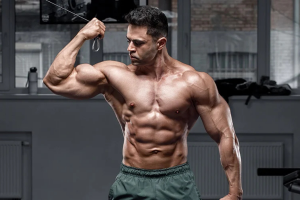
A basic understanding of bicep muscle anatomy can completely change how your arm workouts feel and how fast you see results. When you know what the biceps actually do and how they attach, you can pick smarter exercises, fix your form, and avoid the overuse injuries that stop your progress.
Below, you will walk through what your biceps look like under the skin, how they work in everyday life and in the gym, and how to train them in a way that is both effective and safe.
Get to know your bicep muscle anatomy
Your “biceps” are more than a single lump on the front of your upper arm. The main muscle you see is called the biceps brachii. It sits between your shoulder and elbow on the front of the arm and is responsible for bending the elbow and twisting the forearm so your palm turns up.
The biceps brachii has two heads, which is why it is called “bi ceps” or “two heads”:
- The long head sits on the outer side of your upper arm. It originates from a small area on your shoulder blade called the supraglenoid tubercle.
- The short head sits on the inner side. It starts at another bump on the shoulder blade called the coracoid process.
Both heads travel down the arm, merge into a single muscle belly, and then attach to your forearm at the radial tuberosity and into the forearm fascia through the bicipital aponeurosis. Anatomical descriptions from sources like Physiopedia and anatomy reviews in 2023 and 2024 outline this same structure in detail, including occasional variations such as extra muscle heads in some people.
You also have supporting muscles in the front of the arm that often work alongside the biceps:
- Brachialis, which lies deep beneath the biceps and is a powerful elbow flexor
- Coracobrachialis, which helps move and stabilize the shoulder
Once you see the biceps as part of a team rather than a solo player, exercise choices start to make more sense.
Understand what your biceps really do
You probably think of curls when you think of biceps, but bicep muscle anatomy tells you the biceps do several jobs at once.
Main movements
The biceps brachii crosses both the shoulder and elbow joints, so it works at both:
- At the elbow, it flexes your forearm, which means it bends your arm so your hand moves toward your shoulder.
- At the forearm, it supinates, which means it twists your forearm so your palm faces up. This supination is most powerful when your elbow is bent at about 90 degrees, according to functional descriptions from Physiopedia in 2024.
At the shoulder, the biceps assist with:
- Shoulder flexion, helping you lift your arm forward
- A bit of abduction and adduction, moving the arm slightly away from or toward your body
- Dynamic stability in the first part of shoulder elevation, especially the long head, which helps keep the humeral head centered in the joint during movement
In real life, this means your biceps help with anything that involves lifting, carrying, or turning your hand, for example:
- Picking up a grocery bag from the floor
- Turning a doorknob or using a screwdriver
- Lifting a dumbbell for a curl or row
When you train your biceps, you are really training all these functions, not just “bending the elbow.”
See how nerves and blood supply affect your training
You do not need to memorize every nerve and artery, but having a rough idea helps you understand fatigue and pain.
The biceps brachii are innervated by the musculocutaneous nerve, which comes from the C5 to C7 segments of the cervical spine. This nerve controls the muscle contraction and provides sensation to the outer side of your forearm, while nearby muscles like the brachioradialis are innervated by the radial nerve. If you notice unusual tingling or numbness along that outer forearm, it can sometimes point to irritation higher up along this nerve route, not just a “tight bicep.”
Your biceps receive blood from several muscular branches of the brachial artery in the middle third of the arm. Good circulation is one reason a proper warm up makes your curls feel smoother and less achy. Light sets or dynamic arm movements get blood into the area so the muscle can contract more comfortably.
Connect anatomy to better exercise selection
Once you know the biceps flex the elbow and supinate the forearm, you can choose bicep exercises that use those actions instead of just copying whatever you saw someone else doing in the gym.
Use supination to your advantage
Because the biceps are strongest when your palm faces up, standard supinated curls are your best friend for pure biceps growth. That includes:
- Standing dumbbell curls with palms up
- Barbell curls with an underhand grip
- Cable curls with a supinated handle
You can make these even more effective by focusing on that twisting motion. For example, start a dumbbell curl with your palm facing your body, then rotate the wrist so your palm faces up as you curl. This combines both flexion and supination in one smooth motion.
Target different heads with grip and angle
You cannot fully isolate one biceps head, but you can emphasize one over the other:
- Long head (outer peak): Slightly narrower grips and exercises that stretch the biceps at the shoulder, such as incline dumbbell curls, can place more tension on the long head.
- Short head (inner thickness): Slightly wider grips and movements where the arm comes forward, such as preacher curls, tend to bias the short head.
Hammer curls, where your palms face each other, bring the brachialis and brachioradialis into play. This builds overall arm size and strength even if the biceps are not working alone.
Think beyond isolated curls
Since the biceps assist in shoulder flexion and stabilize the shoulder joint, they also contribute during compound exercises like:
- Pull ups and chin ups
- Bent over rows and seated rows
- Lat pulldowns
You still want direct biceps work if your goal is arm growth, but recognizing that they get plenty of indirect work helps you avoid overtraining them.
Use anatomy to fix your curl form
If you ever feel curls more in your shoulders or lower back, your form is probably fighting against your own anatomy.
Keep the elbows stable
Because the biceps cross the shoulder, it is easy to let your elbows drift forward during a curl. When that happens, your shoulder flexors take over and the biceps do less. Try this instead:
- Keep your upper arm close to your torso or fixed against a pad.
- Only let the elbow hinge so your forearm moves through the curl.
You can picture your elbow as a hinge on a door. The hinge does not walk forward as the door opens, and your elbow should not either.
Control the shoulder position
If your shoulders roll forward when you curl, you shift tension into the front of the shoulder joint and may irritate the long head tendon where it travels through its groove on the upper arm. To keep the biceps in a safer, more efficient position:
- Pull your shoulders gently back and down before you start the set.
- Keep your chest “proud” instead of collapsed.
This aligns the groove where the long head of the biceps runs, which reduces strain on the tendon and makes curls feel more stable, a relationship that orthopedic specialists highlight when discussing biceps tendon issues and rotator cuff problems.
Move through a full but comfortable range
Because the biceps help stabilize the shoulder, extreme swinging or dropping the weight at the bottom of a curl can strain both the muscle and the tendon. Focus on:
- A smooth lower until your elbows are nearly straight but not locked
- A strong squeeze at the top without raising your elbows high in front of you
This full range takes advantage of the muscle’s length tension relationship and usually gives you better growth than short, choppy repetitions.
Protect your biceps from common injuries
Understanding basic bicep muscle anatomy also helps you recognize when something is wrong and how to respond.
Tendon strains and overuse
Repetitive lifting, throwing sports, or weight training without enough rest can irritate the biceps tendons. This may show up as a dull ache in the front of the shoulder or the elbow, especially when you lift or twist your forearm. Over time, this can progress to tendinitis, partial tears, or even dislocation of the long head tendon out of its normal groove when combined with other shoulder injuries such as rotator cuff tears.
Basic care for mild tendon irritation usually includes:
- Rest from painful activities or reducing the load and volume
- Ice or anti inflammatory medications if your doctor recommends them
- Gradual reintroduction of pain free strengthening exercises
Physiotherapy and structured rehabilitation are often suggested to regain strength and motion while calming the tendon, especially in the first 48 to 72 hours after an acute strain, where protocols like POLICE are sometimes used.
Partial and complete tendon tears
The biceps attaches to bone through three tendons. Any of these can tear after a fall, sudden heavy lift, or long term overuse, and the risk increases with age. Tears usually happen in two main places:
- At the shoulder, often involving the long head tendon, sometimes causing a visible “Popeye” bulge in the upper arm when the muscle retracts.
- At the elbow, where the tendon can rupture and significantly weaken elbow flexion and forearm supination.
Diagnosis usually involves:
- A clinical exam that checks your range of motion, strength, swelling, bruising, and any visible bulges
- X rays to rule out fractures
- MRI scans to see how severe the tear is and exactly where it is located
Many partial tears at the shoulder respond well to non surgical treatment that focuses on rest, physiotherapy, and strength rebuilding. However, complete ruptures at the elbow often need surgical repair to restore full strength, especially if you are active or rely on your arms for work or sport.
Surgery to reattach the tendon, for example biceps tenodesis for chronic shoulder pain, usually involves a period of immobilization followed by several weeks of physical therapy. People can often resume more strenuous activity after a few months once healing and strength return, according to clinical descriptions of post operative rehab in 2023 and 2024.
If you ever hear or feel a sudden “pop,” see an immediate change in the shape of your arm, or notice dramatic weakness when you try to bend or twist the arm, you should seek medical care immediately rather than trying to train through it.
A simple rule of thumb: sharp, sudden pain with loss of strength means stop and get checked, not “push through for one more set.”
Turn anatomy knowledge into a smarter bicep routine
You do not need a medical degree to build better biceps, but keeping a few anatomy based principles in mind can guide your training:
- Train elbow flexion and forearm supination together with supinated curls.
- Use a mix of grips and angles to engage both biceps heads plus brachialis and brachioradialis.
- Keep your elbows relatively still and your shoulders stable to keep tension in the muscle and off the tendons.
- Combine direct biceps work with compound pulling movements for balanced strength.
- Respect early signs of tendon irritation and adjust your program before a small issue becomes a tear.
If you pick just one change for your next workout, make it this: slow down your curls, keep your elbows in place, and actively twist your palm up as you lift. You will feel your biceps work more in just a few controlled reps, and now you know exactly why.