A smart bicep workout routine does much more than give you a better flex. When you plan your exercises with intention, you help your muscles grow faster, get stronger, and look more balanced from every angle. Instead of just curling until your arms burn, you can use simple training principles to turn every set into real progress.
Below, you will see how your biceps work, why exercise order matters, and how to structure a routine that builds size, strength, and symmetry.
Understand how your biceps grow
Your biceps are not just one simple muscle. The front of your upper arm is mainly made up of three key players that all affect how your arms look and perform.
The biceps brachii is the classic two headed muscle on the front of your upper arm. The long head creates that noticeable peak when you flex. The short head sits more to the inside and adds support and width. To build a full looking arm, you need to train both heads through different angles and grips, as explained in Gymshark’s 2024 guide on bicep training.
Underneath the biceps sits the brachialis. This muscle is roughly 50 percent stronger than the biceps itself and is a major driver of elbow flexion. When it grows, it pushes the biceps up, which makes your peak look higher. The brachioradialis runs along the top of your forearm and adds thickness and strength to your lower arm, helping complete the overall look of the arm.
Muscle growth happens through hypertrophy. When you lift, you create tiny micro tears in the muscle fibers. During rest, your body repairs those fibers and builds them back thicker and stronger. This is why recovery is just as important as the workout itself.
Target both heads with smart exercise choices
A balanced bicep workout routine should not rely on a single curl. You want a mix of exercises and grips so you can emphasize both the long and short heads, plus the brachialis and brachioradialis.
According to Gymshark’s 2024 recommendations, some of the best exercises for mass include concentration curls, hammer curls, EZ bar curls, preacher curls, single arm high cable curls, and chin ups.
You can think of them in groups:
- Short head focus: concentration curls, preacher curls, single arm high cable curls
- Long head focus: hammer curls, incline dumbbell curls, some chin up variations
- Both heads: EZ bar curls, standard barbell curls, many dumbbell curl variations
- Brachialis and brachioradialis: hammer curls, reverse curls, neutral grip pull variations
The key is not to hit every move in one day. Instead, rotate 2 to 4 different bicep exercises per session so you can give each lift enough energy and attention. This type of variety also stops your muscles from adapting too quickly, which can stall growth.
Use rep ranges that encourage hypertrophy
If your main goal is size, the way you structure sets and reps matters. Research summarized by Gymshark in 2024 suggests that 3 to 4 sets of 8 to 12 reps per exercise works very well for hypertrophy, provided the weight feels challenging within that range.
You can think of it like a training “sweet spot.” The load is heavy enough to stress the muscle, but not so heavy that your form falls apart after just a few reps. Most people progress well using a simple rule. When you hit the top of your rep range with clean technique on all sets, bump the weight up slightly next time.
This gradual increase in load is called progressive overload. Without it, your muscles simply become more efficient at the same effort and stop changing. Over time, adding a bit of weight, another set, or an extra rep gives your arms a steady reason to grow.
Train often enough, but not every day
How often you train your biceps also influences how quickly they grow. Gymshark’s 2024 review notes that training biceps 2 to 3 times per week can produce about 3.1 percent greater muscle growth week by week compared to only once per week. This higher frequency lets you do more quality work without turning each session into a marathon.
At the same time, more is not always better. Your muscles need time to recover and repair those micro tears. Working your biceps every day makes it hard for them to rebuild and can lead to fatigue or even injury. For most people, especially beginners, 1 to 2 focused bicep sessions per week is plenty to start. As you gain experience, you can move to 2 to 3 sessions if you manage your total training volume and rest.
Think about how often you train your back as well. Pull ups, rows, and pulldowns all involve elbow flexion, so your biceps are doing extra work on those days. Factor that into your weekly schedule so you do not accidentally overload them.
Start your workout with smaller muscles
It might feel natural to open your upper body day with big compound back movements and save curls for the end. However, the way you order your bicep exercises can actually change your results.
A June 2026 feature in Muscle & Fitness points out that starting with smaller muscles first, like your biceps and brachialis, can increase overall recruitment of muscle fibers. Beginning your session with moves such as hammer curls, cable curls, or preacher curls tires those smaller muscles early, which may lead to more long term growth compared to always finishing with them after you are already fatigued.
You do not have to reorganize your entire program. A simple tweak works. On a back and biceps day, you might open with 1 or 2 targeted bicep exercises, move into rows and pulldowns, and then finish with a final curl variation if you still have energy. On an arm focused day, starting with isolated bicep work makes even more sense.
Fix size imbalances with unilateral work
Many people notice that one bicep looks bigger or stronger than the other. This is common and fixable, as long as you are deliberate about training each side.
The June 2026 Muscle & Fitness coverage suggests increasing volume and frequency specifically for the weaker arm. You can do this by adding extra sets of unilateral curls or even an extra short session focused only on that side.
In practice, that might look like this. You do your regular bicep workout with dumbbells, always starting with the weaker arm and matching the same reps on the stronger side. At the end of the session, you add 1 to 2 bonus sets of concentration curls or single arm cable curls for the smaller arm only.
Over weeks and months, this extra stimulus tends to bring the weaker side up without overshooting the stronger one.
Focus on form, tempo, and tension
How you perform each rep is just as important as which exercise you choose. Jeff Cavaliere of Athlean X, a well known physical therapist and strength coach, highlights several common bicep mistakes and fixes in a 2024 breakdown.
Some of the most useful tips include:
- Keep your elbows fixed and let the elbow joint move through a full range of motion. If your shoulders are swinging the weight, your biceps are not doing the real work.
- Avoid racing through your curls. A slower tempo, around four seconds up and four seconds down, increases time under tension and makes lighter weights feel surprisingly effective.
- Use the right curl for the right purpose. Incline dumbbell curls place your arms slightly behind your body, which stretches and challenges the long head. Preacher curls put your arms in front and emphasize the short head.
- Do not rely only on barbell curls. Dumbbell curls let each arm work independently, which can reduce imbalances and allow you to lift more weight per side.
Cavaliere also recommends overloading forearm supination to heighten bicep activation. For example, gripping a dumbbell slightly off center between your thumb and index finger changes the leverage and forces your biceps to work harder to rotate the palm up.
Advanced lifters sometimes use cheat reps, where they use a bit of body momentum to lift a heavier weight and then lower it slowly under control. This emphasizes the eccentric part of the lift and can encourage growth. If you are new to training, it is better to master strict form first before experimenting with this technique.
If you are not feeling your biceps as the limiting muscle in your curls, the weight is likely too heavy, your tempo is too fast, or your elbows are drifting.
Sample beginner friendly bicep routine
To tie everything together, here is a simple routine that uses the principles above. It is based on common recommendations from Gymshark and other strength coaches, focusing on clean form, balanced development, and manageable volume.
You can do this session 1 to 2 times per week, usually paired with a back or upper body workout.
-
Warm up, about 5 minutes
Start with light movements that prepare your joints and activate your upper body. For example, a few sets of banded chin ups, rotational light dumbbell curls, an inverted plank, and a gentle behind the back bicep stretch. Aim to feel warm, not tired. -
Seated dumbbell curls, 3 sets of 10 to 12 reps
Sit tall with your back supported and feet planted. Keep your elbows close to your sides and minimize body swing so your biceps stay under tension. Use a weight that feels tough in the final 2 or 3 reps but still allows full control. -
Standing barbell or EZ bar curls, 3 sets of 8 to 10 reps
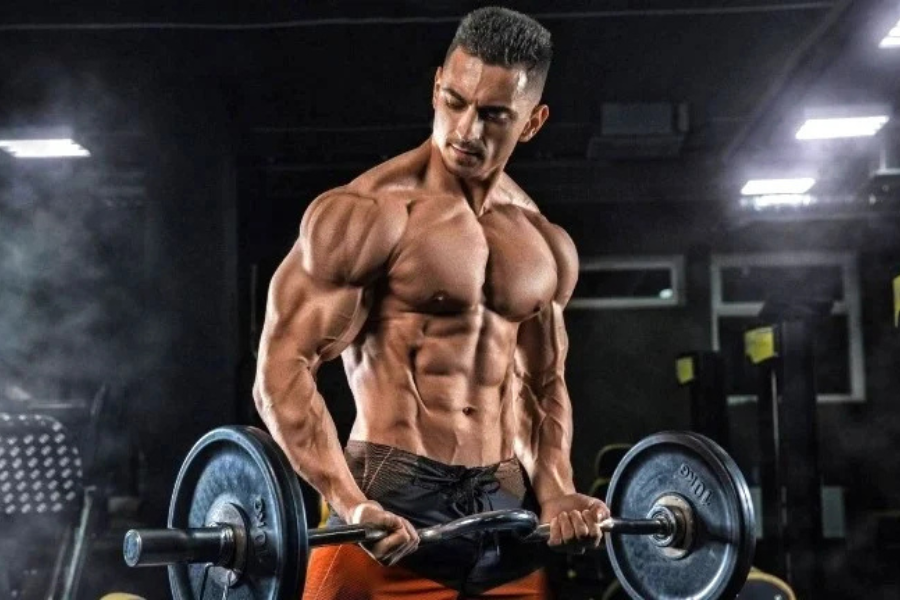
Stand with a stable stance and brace your core. Curl the bar without leaning back. Focus on moving only at the elbows. This move hits both heads of the biceps and lets you handle a bit more weight. -
Single arm preacher curls (or incline bench curls), 2 to 3 sets of 10 to 12 reps each arm
Support your upper arm on a bench so you cannot swing. Lower the weight all the way down and squeeze at the top of each rep. This targets the short head and helps even out left and right differences.
As you progress, you can swap in hammer curls or cable curls for extra work on the brachialis and brachioradialis. No matter which moves you choose, stay in that 8 to 12 rep range for 3 to 4 working sets, and track the loads you use so you can nudge them higher over time.
Put your routine to work
A well planned bicep workout routine boosts muscle growth by:
- Targeting both heads of the biceps plus the supporting brachialis and brachioradialis
- Using rep ranges and loads that prioritize hypertrophy
- Training often enough each week without sacrificing recovery
- Putting smaller muscles first when it makes sense
- Fixing imbalances with unilateral work and good form
You do not need an endless list of fancy curls. Pick a small set of proven exercises, train them consistently 2 to 3 times per week, and apply progressive overload while protecting your technique. Your biceps will have everything they need to grow.