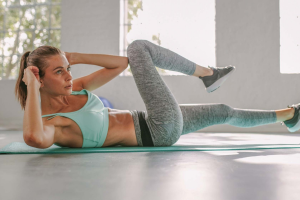
A bodyweight ab workout is one of the simplest ways to build a stronger core, and you can do it right in your living room without any equipment. With the right mix of exercises, you will train not just your “six pack,” but also the deeper muscles that support your spine, hips, and posture.
Below, you will find a complete guide to bodyweight ab workouts, including how your core actually works, a step by step routine you can follow today, and tips to progress safely over time.
Understand what your “core” really is
When you think “abs,” you might picture only the front of your stomach. In reality, your core is an entire network of muscles that wraps around your torso.
It includes your upper and lower abdominals, obliques along the sides of your waist, muscles of the lower back, hip flexors, psoas, and glutes. Together, these muscles help protect your internal organs, keep you upright, and let you twist, bend, and balance without straining your back.
Bodyweight ab workouts work well for core training because most moves are functional. They involve several joints and muscle groups at once and often mimic everyday activities like reaching, lifting, or carrying. Research on bodyweight training has found that consistent bodyweight routines can increase core endurance, lower body power, and flexibility, even without added equipment.
When you keep that bigger picture in mind, you will naturally choose ab exercises that support how you move in daily life, not just how your midsection looks.
Why bodyweight ab workouts are so effective
You do not need cables, machines, or heavy weights to get a serious core workout. Bodyweight ab exercises work so well because they are:
- Accessible, you can do them at home, in a hotel room, or in a small space.
- Scalable, you can make them easier or harder by changing your body position, speed, or time under tension.
- Functional, they often engage multiple muscles and joints together, which improves real world strength and coordination.
- Time efficient, even 10 to 20 minutes is enough to challenge your entire core.
Research supports this approach. A 10 week bodyweight program improved aerobic capacity, core endurance, and lower body power in young women without using external loads. Another study in older adults showed that simple bodyweight movements performed just a few times per month still increased strength and power.
In other words, if you stay consistent, your bodyweight routine really can move the needle.
Learn the key bodyweight ab exercises
You have many effective moves to choose from. Here is how some of the most useful bodyweight ab exercises work and what they target.
Dead bug
Dead bugs teach you to keep your spine stable while your arms and legs move. That is exactly what you need when you carry groceries or walk up stairs.
Lie on your back with arms extended toward the ceiling and knees bent to 90 degrees over your hips. Brace your core as if you are preparing to be gently poked in the stomach and keep your lower back close to the floor. Slowly lower your right arm and left leg toward the ground, pause briefly, then return to the start and switch sides. Move with control and avoid arching your lower back.
Dead bugs are excellent for engaging deep core muscles and improving coordination, which is why they show up in many beginner friendly programs.
Plank and hollow variations
Planks work the front and sides of your core, as well as your glutes and shoulders. You can do them on your forearms or hands. In a solid plank, your body forms a straight line from head to heels, your hips are not sagging, and your ribs are not flaring.
The hollow body hold goes a step further. It is a staple in gymnastics and trains your entire midsection to stay tight. Lie on your back, press your lower back firmly into the floor, then lift your shoulder blades and legs a few inches. Your arms extend overhead, biceps by your ears. The goal is to keep that “hollow” curve without letting your lower back pop off the floor. This position builds serious core strength and endurance (CrossFit Journal via gymnastics style training).
Bird dog
The bird dog is a gentle but powerful anti rotation exercise. Start on hands and knees with wrists under shoulders and knees under hips. Brace your core and slowly extend your right arm forward and left leg back. Hold for a second, then return and switch sides.
You should feel your core working to keep your torso from tipping or twisting. This move is especially useful if you have a history of back discomfort and want to build stability safely.
Glute bridge
Although you may think of it as a glute exercise, the bridge also trains your core and helps you learn how to control your pelvis. Lie on your back with knees bent, feet flat on the floor, and arms at your sides. Brace your abs, then drive through your heels to lift your hips until your body forms a straight line from shoulders to knees. Pause, then lower slowly.
When you brace your core and avoid arching your lower back at the top, you connect your abs and glutes as a unit, which is essential for posture and lower back health.
Side plank
Side planks target your obliques along with your hips and shoulders. Lie on one side, prop up on your forearm, and stack your feet or keep your knees bent for a modified version. Lift your hips off the ground so your body forms a straight line.
If full side planks feel too intense, start with a modified side plank with your bottom knee on the floor. This is a common recommendation in beginner routines because it reduces strain while still building strength in the side body.
Dynamic moves: mountain climbers and bicycle crunches
Once you have a base of stability, you can introduce more dynamic options like mountain climbers and bicycle crunches. Mountain climbers start in a high plank as you drive one knee toward your chest at a time, switching legs with control. You get both a core challenge and a boost to your heart rate, which is why you often see this move in high intensity interval training workouts.
Bicycle crunches alternate elbow to opposite knee while you extend the other leg, which hits both your rectus abdominis and obliques. Focus on slow, controlled reps at first instead of racing.
Try this full bodyweight ab workout
Use this simple routine as your go to bodyweight ab workout. It trains your core from multiple angles and suits most fitness levels.
Warm up, 3 to 5 minutes
Spend a few minutes waking up your body and gently engaging your core. You might do:
- Marching in place or light jogging
- Cat cow stretches on hands and knees
- Torso rotations with hands on hips
- A few practice dead bug reps
The Beginner Abs Workout from SELF uses a similar format, starting with a warm up and then moving into circuits that train all parts of your core, not just your six pack muscles.
Main circuit
Perform each exercise for 30 to 45 seconds, followed by 15 seconds of rest. Move through the full list, rest 60 to 90 seconds, then repeat 2 or 3 times.
- Dead bug
- Glute bridge
- Bird dog
- Forearm plank or high plank
- Side plank, right
- Side plank, left
- Mountain climbers or slow knee drives
If you are a beginner, start with just one or two rounds. A NASM certified trainer designed a similar beginner core routine using dead bugs, glute bridges, bird dogs, bear plank knee taps, and modified side planks, and suggests that you begin with about 7 minutes total and progress to more sets as you get stronger.
Cool down, 3 to 5 minutes
Finish with gentle stretching so your muscles can relax. Try a child’s pose, lying spinal twists, hip flexor stretches, or light hamstring stretches. Focus on slow breathing to lower your heart rate.
Quick guideline: Aim for 10 to 20 focused minutes for your bodyweight ab workout. More time is not automatically better, especially when you are just starting.
How often you should train your abs
To see results from your bodyweight ab workout, consistency matters more than perfection. Most experts recommend training your abs 2 to 3 times per week with at least one rest day between sessions to let your muscles recover.
Exercise physiologist Jeremey DuVall suggests that most people will do well with 2 to 5 different ab exercises per week and 1 to 3 exercises per session, spread across several workouts. You can mix rep ranges, for example shorter holds or heavier variations for 5 to 10 reps, plus more moderate 10 to 20 rep work or timed sets up to 30 seconds, as long as you are using good form and gradually asking your muscles to do a bit more over time.
You can also place ab work strategically in your week. Some options:
- Add this bodyweight ab circuit at the end of 2 full body strength days.
- Do a shorter core focused routine on a nonlifting day.
- Sprinkle mini sets of planks, dead bugs, or bird dogs between other exercises.
Avoid training your abs hard every single day. Your core muscles need rest just like any other muscle group. Overworking them can lead to strain, soreness that disrupts your other workouts, and eventually less progress instead of more.
Progress and adjust your workout safely
As your core gets stronger, your bodyweight ab workout should change a little so you keep challenging yourself.
You can progress in several ways:
- Increase time under tension, for example move from 20 to 40 second holds.
- Add more rounds to your circuit, up to three or four.
- Choose slightly harder variations, such as moving from modified side plank to full side plank.
- Slow down your reps to keep muscles under tension longer.
- Combine core work with short HIIT intervals to build stamina.
Some routines, like the 10 minute ab circuit by trainer Gilles Souteyrand, use short work periods, usually 20 seconds, and brief rests to keep your abs under constant tension and fatigue the muscles quickly. This style shows that you do not need long sessions if you are willing to work with focus for a few intense minutes.
While you progress, watch for common signs that you should pause or modify:
- Your lower back pinches or aches during an exercise.
- You feel the movement mostly in your neck or hip flexors instead of your abs.
- Your form breaks down completely before the time is up.
In these cases, shorten the work interval, take a longer rest, or switch to an easier version until your strength catches up.
Remember the role of nutrition and lifestyle
No bodyweight ab workout can fully replace balanced habits. If your goal is more than strength and you would also like to see more ab definition, you will need to pay attention to your overall routine.
A few key points:
- Eat mostly whole foods, including lean protein, healthy fats, and plenty of fruits and vegetables.
- Include high protein snacks so your body has the building blocks to repair and grow muscle.
- Stay in a modest calorie deficit, if your goal is fat loss, so the muscles you are training can become more visible.
- Sleep enough and manage stress, since both influence how well you recover from workouts.
Core workouts and nutrition support each other. When you fuel and rest wisely, you will feel stronger in every rep, not just during your ab routine.
Putting it all together
A smart bodyweight ab workout does not have to be long or complicated. When you understand that your core includes your abs, obliques, lower back, hips, and glutes, you start to pick exercises that train your entire torso as a team.
Start with basics like dead bugs, planks, glute bridges, bird dogs, and side planks. Perform them 2 to 3 times per week for 10 to 20 minutes, focus on form, and increase the challenge gradually. Layer in more dynamic moves like mountain climbers and bicycle crunches as you feel ready.
If you begin with one short circuit this week and repeat it consistently, you will likely notice steadier posture, better balance, and more control in almost every movement you do. Your stronger core will support you in everything from workouts to everyday life.