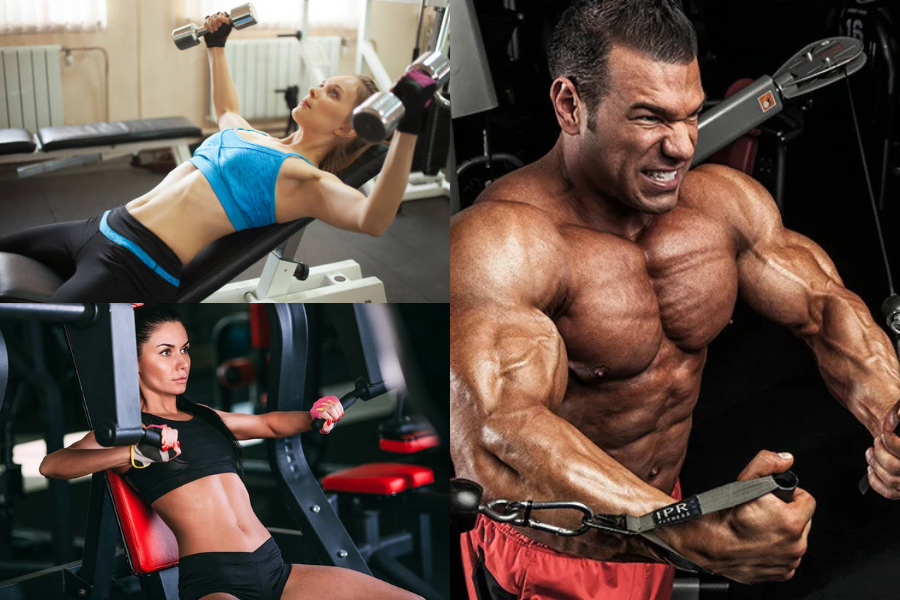
A strong, defined chest is about more than just looking good in a T-shirt. The right chest workout exercises help you build strength, protect your shoulders, and improve your performance in other lifts. With a smart mix of presses, fly variations, and push-ups, you can build muscle fast without overcomplicating your routine.
Below, you will find a clear breakdown of the best chest exercises, how to use them for size or strength, and common form mistakes to avoid.
Understand your chest muscles
Before you load up the bar, it helps to know what you are training. Your main chest muscles are:
- Pectoralis major, the big fan-shaped muscle across your chest
- Pectoralis minor, a smaller triangular muscle underneath that assists with shoulder movement
Together they help you push, pull, lift, and rotate your arms, as explained in the 8fit chest workout guide published in 2024. When you choose chest workout exercises, you want to hit:
- The upper chest near your collarbones
- The mid chest across the sternum
- The lower chest closer to your ribs
If you only press on a flat bench every week, you will usually overdevelop the lower pecs and undertrain the upper chest, which can lead to a droopy look and shoulder issues over time.
Prioritize compound presses for fast size
When your goal is to build muscle fast, heavy compound presses should anchor your chest workouts. These exercises let you move the most weight and recruit the most muscle fibers.
Barbell bench press
The barbell bench press is a classic for a reason. It trains your chest, triceps, shoulders, lats, glutes, and core, which makes it an excellent full-body upper-body lift for building strength and size in beginners and intermediate lifters alike.
To build mass, focus on:
- Sets and reps: 3 to 5 sets of 3 to 8 reps
- Intensity: Most working sets at around 70 to 80 percent of your one-rep max
- Effort level: Stop 2 or 3 reps short of failure on most sets
This type of heavy progressive overload, where you gradually increase weight or reps over time, is key for chest hypertrophy according to research summarized in the Jacked Factory article from June 13, 2017.
Dumbbell bench press
The dumbbell bench press is one of the best chest workout exercises for building muscle and strength, especially if you train at home or have joint issues. Dumbbells:
- Allow a larger range of motion
- Let each arm work independently, which helps correct strength imbalances
- Offer more freedom in hand position, which many people find friendlier on their shoulders
A solid hypertrophy range here is 3 to 4 sets of 6 to 8 reps. Focus on lowering the dumbbells with control, pausing briefly near chest level, and then pressing up while squeezing your pecs together at the top.
Incline presses for upper chest
Most people undertrain the upper chest, which runs from the clavicles to about halfway down the chest. Giving this area around half of your chest volume helps create that strong visual connection between your chest, shoulders, and traps and avoids a bottom-heavy look.
You can use:
- Incline barbell bench press
- Incline dumbbell press
The dumbbell incline press is especially helpful because changing the angle shifts more tension to the upper chest. Aim for 3 to 4 sets of 8 to 10 reps, with the bench at a modest incline, about 15 to 30 degrees. Too steep and you turn it into more of a shoulder exercise.
Add dumbbell fly variations for fullness
Presses build thickness and strength. Fly variations help you create more width and three-dimensional shape by emphasizing arm adduction, which is bringing your arms toward the midline of your body.
Dumbbell chest fly
The dumbbell chest fly allows you to move your chest muscles in a unique way compared with pressing. It places a strong stretch on the pecs and then challenges you to bring your arms together without relying heavily on your triceps.
You can program it as:
- 3 sets of 10 to 12 reps
- Light to moderate weight
- Slow tempo, especially in the stretched position
Since resistance is lower at the top of the range of motion and triceps can take over near lockout, you want to focus on actively squeezing your pecs as your hands meet over your chest.
Decline dumbbell flye
For extra lower chest emphasis, the decline dumbbell flye is a strong option. The stretch and contract pattern helps drive muscle fiber growth through fatigue and improved blood flow to the working tissue. Perform this near the middle or end of your workout with similar reps to the flat dumbbell fly.
Leverage push-ups for muscle and convenience
You do not need machines to build a big chest. In fact, research comparing hypertrophy outcomes in young men found no significant difference between the bench press and push-ups for chest growth and strength when training is matched, which shows that bodyweight work can be just as effective over time.
Push-ups train the:
- Pectoralis major and minor
- Triceps
- Front deltoids
- Core muscles
Different variations help you target different parts of the chest.
Standard, incline, and decline push-ups
You can rotate these simple variations to hit your chest from multiple angles:
- Standard push-ups for overall chest strength
- Incline push-ups with your hands on an elevated surface as an easier option when you are building strength
- Decline push-ups with your feet elevated to hit the upper pecs and front shoulders more intensely
A home routine from the 8fit 2024 guide recommends three rounds of 10 regular push-ups, incline push-ups, decline push-ups, and 5 time under tension push-ups, mixed with short cardio intervals like star jumps and mountain climbers for a full upper body challenge.
Plyometric push-ups
If you want more power and athleticism, plyometric push-ups train your chest at higher velocity. You lower under control, then push so explosively that your hands leave the floor. Athletes use these to improve speed, endurance, and force production.
Use low reps, such as 3 to 6 per set, and plenty of rest so you can maintain quality and minimize the risk of wrist or shoulder strain.
Build an effective chest workout plan
You do not need a dozen different moves in a single session. What matters is smart exercise choice, good form, and consistent progression. Here is a simple template you can adapt based on your equipment and experience.
A good chest workout focuses on 2 or 3 main presses, 1 or 2 fly or crossover movements, and a push-up or dip variation for extra volume, with most sets taken close but not all the way to failure.
Example mass-focused chest day
Use this when your goal is size and you have access to barbells and dumbbells:
- Barbell bench press
- 4 sets of 4 to 6 reps
- Heavy, leaving about 2 reps in the tank on each set
- Dumbbell incline press
- 3 to 4 sets of 8 to 10 reps
- Weighted chest dips (lean forward to emphasize chest)
- 3 sets of 6 to 8 reps
- If you can not add weight yet, do bodyweight reps close to failure
- Dumbbell chest fly
- 3 sets of 10 to 12 reps
- Focus on the stretch and squeeze, not heavy weight
This approach matches the recommendations from Jacked Factory which emphasize heavy compound presses like the barbell and dumbbell bench as your foundation and then adding accessory work, such as dips and flyes, to increase total volume and fullness.
Example beginner dumbbell chest workout
If you are newer to strength training or working at home with limited equipment, you can still grow fast by keeping things simple. For beginners, guidelines suggest 1 to 3 sets of 8 to 12 repetitions, twice per week for strength development.
Try:
- Dumbbell bench press
- 3 sets of 8 to 10 reps
- Incline dumbbell press
- 2 or 3 sets of 8 to 10 reps
- Dumbbell fly or crush‑grip dumbbell press
- 2 or 3 sets of 10 to 12 reps
- Push-ups
- 2 sets close to failure, using incline or knee variations if needed
Start with lighter weights and increase only when the last few reps of each set feel challenging but still controlled.
Train for strength versus size
The same chest workout exercises can be used for different goals depending on how you program them.
-
Strength focused:
-
Lower reps, usually 3 to 6 per set
-
Mostly compound presses like barbell and dumbbell bench
-
Sets taken further from failure to protect joints and allow heavier loads
-
Hypertrophy focused:
-
Moderate reps, usually 6 to 12 per set, sometimes up to 15
-
Mix of compound presses and isolation work like flyes and cable crossovers
-
Sets taken closer to failure to maximize muscle fatigue and growth stimulus
In other words, your intent, rep range, and effort level matter as much as which exercise you pick.
Warm up, recover, and train your back
Building your chest fast does not mean pushing recklessly. A few smart habits will keep you progressing without unnecessary setbacks.
Warm up before heavy sets
Warm up sets with lighter dumbbells or an empty bar wake up the muscles and improve lift quality. Move your shoulders through their range of motion and perform one or two easy sets of presses before your working sets. This helps you handle heavier weights more safely and with better form.
Respect recovery
Chest muscles can take up to 72 hours to fully recover from a hard session. Training them again before they have rebuilt can slow your progress and increase injury risk. Most people do well training chest one or two times per week with sufficient rest between sessions, while letting long term adaptations accumulate gradually over weeks and months.
Do not skip back training
If you only hammer your chest and ignore your back, your shoulders will eventually complain. Rowing movements and pull variations balance out the forward pull of pressing, help maintain healthy posture, and show off your chest development more effectively. A balanced push and pull routine is better for both performance and aesthetics.
Fix common chest training mistakes
Even effective chest workout exercises can fall short if your form works against you. Paying attention to a few key details will help you grow faster and stay pain free.
Elbow and forearm position
Beginners often flare their elbows to 90 degrees during presses, which feels unstable and loads the shoulders. Instead:
- Keep your upper arms at about a 45 degree angle to your torso
- Maintain your forearms perpendicular to the ground during presses, including incline work
According to Ebenezer Samuel, C.S.C.S., these adjustments reduce shoulder stress and keep the workload on your chest where it belongs.
Control and muscle focus
Chasing heavy weights with lots of momentum usually means your triceps and shoulders do most of the work. Use a controlled lowering phase, a short pause near your chest, and then a strong press without bouncing. During flyes and crossovers, avoid letting the weights drift too far behind your body or snapping them together with speed. Instead, think about stretching the pecs and then squeezing them forcefully.
Learn basic bodyweight patterns
Mastering the push-up is one of the best things you can do early on. Simon King, P.T., describes it as a foundational move that sets you up for better technique and upper body strength. If regular push-ups feel too hard, elevate your hands or do them on your knees and gradually progress.
Put it all together
To build your chest quickly and safely, you do not need fancy machines or complicated supersets. Focus on:
- A few heavy compound presses like barbell and dumbbell bench
- Smart use of incline work to build the upper chest
- Fly variations and crossovers for width and shape
- Push-up and dip variations as powerful bodyweight tools
- Solid warm ups, enough rest, and balanced back training
Start with two chest sessions per week, choose 3 or 4 of the exercises above, and log your weights and reps. As long as you add a little more over time, keep your form tight, and respect recovery, your chest will get stronger, fuller, and more defined with each training block.