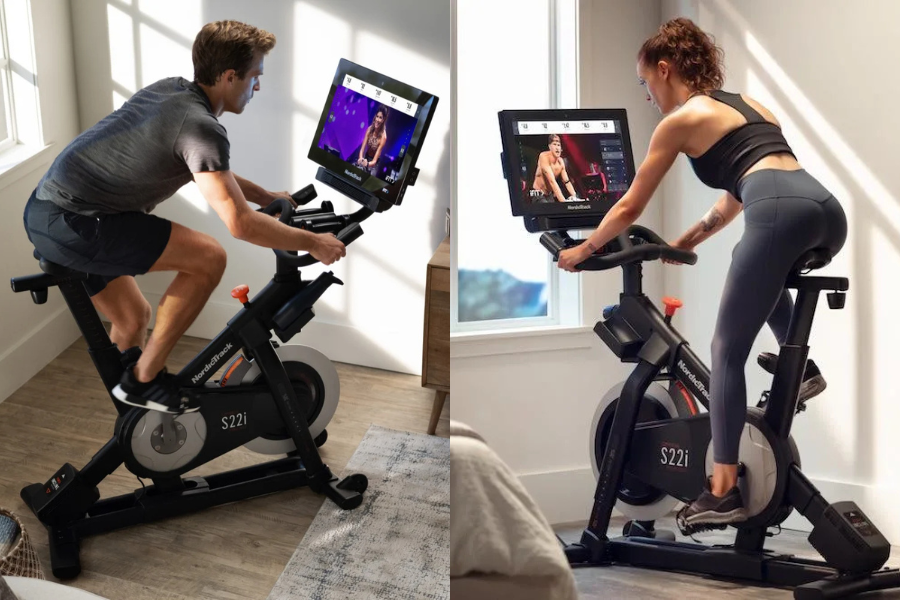
A stationary bike is one of the simplest ways to start losing weight and improving your health. Exercise bike workouts for weight loss are joint friendly, easy to scale to your fitness level, and can fit into short pockets of time during your week.
Below, you will find clear, realistic ways to use an exercise bike for fat loss, from beginner friendly rides to quick interval sessions.
Understand how an exercise bike helps you lose weight
To lose weight, you need a consistent calorie deficit. An exercise bike helps you create that deficit by increasing how many calories you burn each day.
According to Harvard Health data cited by PureGym, 30 minutes of moderate stationary cycling burns about 210 calories for a 125 pound person, 252 calories for a 155 pound person, and 294 calories for a 185 pound person. At a vigorous pace, those numbers increase to roughly 315, 378, and 441 calories in the same half hour (PureGym).
Because stationary cycling is low impact and joint friendly, it is often easier to stay consistent compared to high impact activities like running or jumping. This is especially helpful if you have knee, ankle, or hip concerns, or if you carry more body weight and want to protect your joints while you get fitter (PureGym).
Choose between LISS and HIIT rides
You will see two terms often when you look up exercise bike workouts for weight loss: LISS and HIIT. Both can help you lose fat, and combining them usually works best.
Low intensity steady state (LISS)
LISS means riding at an easy to moderate pace for a longer period without big changes in speed or resistance. You can usually hold a conversation, even if you are slightly out of breath.
PureGym notes that doing LISS cycling 2 or 3 times a week for 30 to 60 minutes can significantly increase your total weekly calorie burn. For example, a 155 pound person doing three 60 minute LISS rides can burn around 1,512 calories per week from those sessions alone (PureGym).
LISS is useful when you are a beginner, when you feel tired or stressed, or when your joints need a gentler workout. It builds your base fitness and supports recovery between harder sessions.
High intensity interval training (HIIT)
HIIT alternating short bursts of very hard effort with easier recovery periods is one of the most time efficient ways to burn calories and improve fitness. On a bike, HIIT often takes just 10 to 30 minutes.
Several sources back up HIIT for fat loss:
- PureGym highlights that 2 to 3 HIIT sessions per week of 10 to 20 minutes can substantially increase calorie burn during and after your workout (PureGym).
- Studio Three notes that HIIT cycling involves pedaling at about 80 to 95 percent of your max heart rate during the hard bursts, which burns a large number of calories in a short time (Studio Three).
- Healthline reports that high intensity stationary bike sessions both burn calories and build strength, which together support fat loss (Healthline).
HIIT is demanding, so you will want at least one rest or easy day between intense sessions.
Set up your bike and effort levels
A good setup keeps you comfortable and helps you work at the right intensity.
Start by adjusting the seat so that:
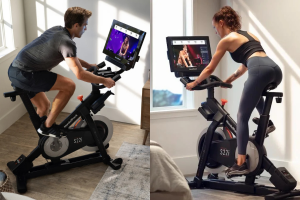
- When you sit on the saddle with your foot on the pedal at the bottom of the stroke, your knee has a slight bend, not fully straight.
- Your knees track over your feet, not collapsing inward or flaring wide.
If your bike has handlebars that move up and down, raise them higher for a more upright, back friendly position, and lower them slightly as your core strength improves.
For effort, use a simple 1 to 10 rate of perceived exertion (RPE) scale:
- 1 to 2: Very light, easy pedaling.
- 3 to 4: Gentle warm up pace.
- 5 to 6: Comfortable but working, your baseline for LISS.
- 7 to 8: Hard, you can only speak in short phrases.
- 9 to 10: Very hard to all out, only a few words at a time.
Jennifer Tallman, an indoor cycling instructor, recommends using different RPE levels and adjusting resistance for intervals instead of riding at one steady effort if you want the best fat burning effect (SELF).
Try a beginner friendly 20 to 30 minute workout
If you are new to exercise or coming back after a break, ease in gradually. Verywell Fit suggests that you can start with just a few minutes and build up until you comfortably reach 30 minutes, which meets the common daily recommendation for cardio exercise (Verywell Fit).
Here is a simple 25 minute ride you can follow:
- Warm up, 5 minutes at RPE 3 to 4, easy pace with light resistance.
- Build phase, 15 minutes at RPE 5 to 6, steady pace where you can talk but feel your breathing pick up.
- Cool down, 5 minutes at RPE 2 to 3, very easy pedaling and deep breathing.
Do this workout 3 days per week to start. As it feels easier, you can add 2 to 5 minutes to the middle section, or gently increase the resistance to keep your effort in that RPE 5 to 6 range.
Verywell Fit recommends working up to at least three cardio sessions per week like this to build endurance and effectively burn calories for weight loss (Verywell Fit).
Use steady state rides for reliable fat burning
Once you are comfortable with 20 to 30 minutes, you can use slightly longer LISS rides as the backbone of your weekly routine.
A sample 40 minute LISS workout:
- 5 minutes warm up at RPE 3 to 4.
- 30 minutes at RPE 5 to 6, a pace you could hold for a long time without needing to stop.
- 5 minutes cool down at RPE 2 to 3.
Healthline notes that depending on your intensity and body weight, stationary bike workouts can burn more than 600 calories per hour (Healthline). Even if your pace is more moderate, those 30 to 40 minute blocks add up quickly through the week.
Steady rides are also ideal if you are:
- Recovering from an injury or joint pain, since stationary cycling is low impact and easy on your knees and hips (Healthline).
- Feeling stressed, since a steady rhythm can be calming.
- Coming back the day after a tough strength or HIIT session and want to move without overdoing it.
Add short HIIT sessions for faster results
When you have a little base fitness, you can layer in HIIT to get more benefit in less time. Interval training helps you burn more calories during your workout and can improve your cardiovascular fitness more quickly than steady riding alone (Healthline).
Here are two simple HIIT formats you can try.
15 minute beginner intervals
This structure is based on Verywell Fit’s suggestion to add short harder efforts to a baseline pace (Verywell Fit):
- 5 minutes warm up at RPE 3 to 4.
- 3 minutes at RPE 5 to 6, your normal steady pace.
- 2 minutes at RPE 7, increase resistance or speed, breathing is heavier.
- Repeat steps 2 and 3 two more times for a total of 10 working minutes.
- 5 minutes cool down at RPE 2 to 3.
You can extend this to 25 or 30 minutes by adding more 3 minute baseline plus 2 minute harder blocks, as your fitness allows.
20 minute HIIT or Tabata style session
If you feel ready for something sharper, you can try a structured HIIT ride. The classic Tabata protocol was first studied on stationary bikes and uses 20 second bursts of near maximal effort with short rest periods (SELF).
Here is a modified, more accessible version:
- 5 minutes warm up at RPE 3 to 4.
- 8 rounds of:
- 20 seconds at RPE 9 to 10, almost all out, increase resistance and speed.
- 40 seconds at RPE 3 to 4, easy pedaling.
- 5 minutes cool down at RPE 2 to 3.
This adds up to 8 minutes of intervals. Studio Three points out that a HIIT cycling session like this can be completed in around 30 minutes and still burn a high number of calories (Studio Three). They also recommend doing intense sessions a couple of hours after a nutritious, carbohydrate rich meal to keep your energy up and support performance (Studio Three).
Aim for no more than 2 or 3 HIIT rides each week, with rest or gentler days in between.
Plan your weekly routine for weight loss
You do not need to ride every day to see results. The key is consistency over weeks and months, not perfection.
Andrea Kalley, a triathlon coach, suggests combining at least three cardio workouts per week with a mix of steady state and intervals, such as several sessions at 60 to 70 percent of your max heart rate and one high intensity interval session for maximum fat burning (SELF).
A sample week might look like this:
- Monday: 30 to 40 minute LISS ride.
- Wednesday: 20 to 25 minute HIIT ride.
- Friday: 30 minute steady ride, with a few 1 or 2 minute pickups at RPE 7 if you feel good.
- Weekend: Optional gentle 20 minute spin or rest, depending on how your body feels.
Pair your workouts with a realistic, portion aware way of eating. A 2010 study cited by Healthline found that indoor cycling three times per week for 45 minutes, combined with a 1,200 calorie daily diet, led to reductions in body weight, body fat, cholesterol, and triglycerides over 12 weeks (Healthline). You may not need to follow that exact plan, but the principle is clear: regular cycling plus a calorie deficit works.
Track effort and progress without obsessing over the bike display
Many stationary bikes display calories burned, but those readouts are often not very accurate. Users in the r/Fitness community note that bike calorie counters can be highly misleading, while power based metrics in watts give a more reliable estimate of how hard you are working (Reddit r/Fitness).
If your bike shows watts, you can use that number to gauge your effort. For example, cycling at 100 watts for 15 minutes might burn about 90 calories, while 200 watts for 15 minutes roughly doubles that to 180 calories (Reddit r/Fitness). The RunBundle stationary bike calorie calculator uses your weight, ride duration, and either intensity or watts to estimate your burn more accurately, and it works with all types of stationary bikes, from upright to recumbent (RunBundle).
If you do not have watts, rely on:
- Your RPE, how hard the ride feels.
- Simple benchmarks, like distance covered in 20 minutes at the same resistance.
- How consistent you are from week to week.
One useful reminder from the r/Fitness thread is that even short rides count. A 10 minute spin is better than nothing, and small daily efforts add up, especially when you avoid overestimating how many calories you burn (Reddit r/Fitness).
Focus on building the habit of getting on the bike regularly. Intensity and duration can grow gradually once the habit is in place.
Make your rides more enjoyable so you stick with them
The best exercise bike workouts for weight loss are the ones you actually do. Small tweaks can help you look forward to your sessions instead of dreading them.
You might:
- Join an indoor spin class if you like group energy. PureGym notes that structured classes can boost motivation, which often leads to more consistent effort and better results (PureGym).
- Create a playlist with a clear warm up, working, and cool down section so the music guides your intensity.
- Set mini goals, such as adding one extra minute to your ride each week, or increasing resistance by one level once a session feels easy.
Stationary bikes give you the same core cardio benefits as a treadmill, elliptical, or outdoor walking and running, but in a low impact format that protects your joints (Verywell Fit). That makes them a strong long term choice for weight loss and overall health.
Start with one simple ride this week, even if it is only 10 or 15 minutes. As your confidence grows, you can mix in longer LISS sessions and short, sharp intervals. Over time, those quick, effective workouts on your exercise bike can add up to meaningful changes in your weight, fitness, and everyday energy.