Hamstring isolation exercises help you build stronger, more balanced legs without relying only on squats and deadlifts. When you train the three hamstring muscles, the biceps femoris, semimembranosus, and semitendinosus, you support both hip extension and knee flexion, which are key for walking, running, and most athletic moves. The challenge is that it is easy to let other muscles take over or to rush through reps, which limits results and can raise your injury risk.
This guide walks you through smart hamstring isolation exercises, how to avoid common mistakes, and how to fit them into your existing workouts without overcomplicating your routine.
Understand what hamstring isolation really means
When you think of hamstring isolation exercises, you might picture only leg curls on a machine. Those are useful, but isolation is really about function. Your hamstrings work across two joints, the hip and the knee, so you can target them by focusing on hip extension, like Romanian deadlifts, and knee flexion, like leg curls.
Exercises that place the hamstrings under tension as they lengthen, known as eccentric training, are especially powerful. A 2023 research review found that eccentric-focused hamstring work can cut hamstring injuries by roughly 56.8 to 70 percent while improving the strength balance between your hamstrings and quadriceps. That is a major payoff for a relatively small time investment in your week.
Pick the right mix of isolation and compound lifts
You do not need to choose between big compound lifts and hamstring isolation exercises. The most effective leg programs use both. Compound movements like deadlifts and good mornings let you load the posterior chain heavily, then isolation work like leg curls lets you focus directly on your hamstrings without your back or glutes giving out first.
Guides from Gymshark recommend pairing compound exercises such as deadlifts and good mornings with machine hamstring curls to get complete hamstring development and to correct muscle imbalances that can otherwise lead to injury. Using this pairing approach, you push your hamstrings hard within safe, controlled ranges of motion, then finish them with isolation moves that you can take close to fatigue.
Romanian deadlift: Your lengthened-position staple
Romanian deadlifts are often highlighted as one of the best hamstring isolation exercises because they load the muscles in a lengthened position. You can use a barbell, dumbbells, or a kettlebell, which makes them easy to slot into nearly any setup.
To feel your hamstrings rather than your lower back, keep a soft bend in your knees and hinge at your hips. Push your hips back, maintain a flat back, and lower until you feel a deep stretch in the back of your thighs. Then drive your hips forward to stand tall.
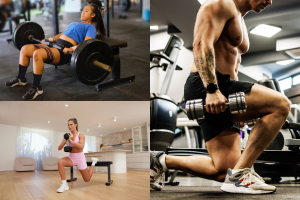
A study cited by Gymshark identified single-leg Romanian deadlifts as one of the most effective moves for activating the biceps femoris, the largest hamstring muscle, alongside kettlebell swings and prone hamstring curls. For strength and muscle, aim for 3 to 4 sets of 6 to 8 reps, resting long enough to keep your form crisp.
Stiff-leg deadlift and good morning variations
The stiff-leg deadlift is very similar to the Romanian deadlift but uses a slightly straighter leg to reduce quad involvement and shift tension even more into the hamstrings. You still want some softness in the knees to protect your joints, but you will feel a stronger stretch near the top of the hamstrings.
Good mornings use a similar hip hinge pattern, but the bar rests across your upper back instead of in your hands. With both moves, the main job of the hamstrings is to extend the hip while your glutes and spinal erectors support the pattern. Start lighter than you think you need, then increase the load gradually.
If you like concrete targets, you can use this guideline for stiff-leg deadlifts: 3 to 4 sets of 8 to 10 controlled reps, focusing on tension rather than speed. For good mornings, keep reps in the moderate range and stop each set when your back position begins to drift.
Leg curl variations for pure isolation
Leg curls are classic hamstring isolation exercises for good reason. They are one of the simplest ways to train knee flexion without your lower back being the limiting factor, which is especially useful if deadlifts are not a good fit for you right now.
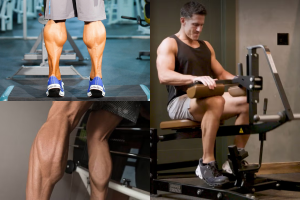
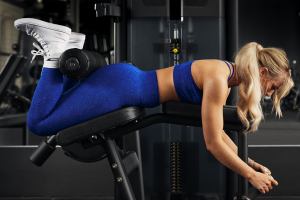
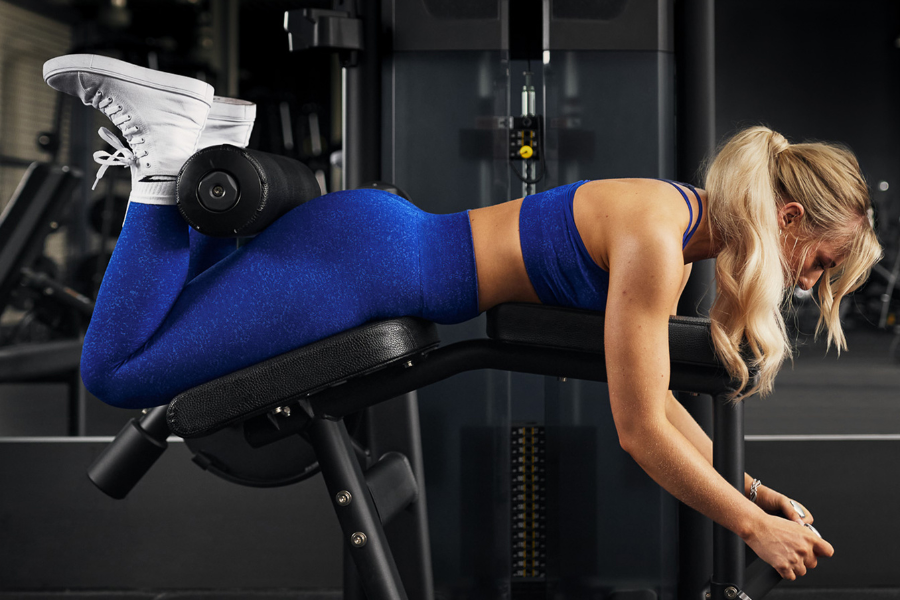
Seated leg curls emphasize the inner portion of the hamstrings, particularly the semitendinosus, and are popular among bodybuilders who want balanced leg development and to fix imbalances that could lead to injury. Prone leg curls, also called lying leg curls, put a bit more emphasis on the outer hamstrings, especially the biceps femoris. Gymshark notes that these prone curls work well at the end of a hamstring session, with higher reps and sets close to failure, because you do not have to worry about balance or posture as much.
Standing leg curls give you another option, especially if you want to train one leg at a time or if seated machines bother your hips. By rotating through seated, prone, and standing variations over time, you cover the hamstrings at slightly different angles and lengths.
Quick cue: Think about pulling your heels toward your glutes and squeezing at the top for a brief pause, instead of just swinging the weight.
Nordic curls, GHD work, and hip thrust tweaks
Once you have a base of strength, you can add more demanding hamstring isolation exercises that challenge you eccentrically, meaning during the lowering phase. Nordic hamstring curls are a prime example. You anchor your feet, lower your body under control from your knees, and then either push off the floor or use assistance to return to the start. These hammer knee flexion and have been highlighted as important for hamstring hypertrophy and injury reduction.
Glute ham raises and hip extensions on a Glute Ham Developer, or GHD, are another high-return option. They combine controlled hip flexion and extension with strong hamstring and glute engagement. Because the leverage is tough, start with partial ranges or band assistance and work up as you gain strength.
For a more accessible tweak, you can modify hip thrusts by placing your feet slightly wider than the typical 90 degree setup. This adjustment increases hamstring involvement during hip extension so you are not training only your glutes.
How to avoid the most common form mistakes
Small technique errors can turn hamstring isolation exercises into lower back or quad exercises without you realizing it. Watch for these frequent issues and correct them early.
-
Using too much weight on curls
If you load leg curls so heavily that you cannot control the lowering phase, your hips will pop up on prone curls or your torso will rock back on seated curls. That shifts tension away from the hamstrings. Pick a weight you can lift explosively in about one second, then lower in roughly three seconds, as Gymshark suggests. This controlled eccentric improves muscle engagement and growth. -
Incorrect pad and body position on machines
On lying leg curls, the pad should sit just above your heels, not mid calf. Hips should stay pressed into the bench, not lifting with each rep. Many people lose hamstring tension simply by setting the machine up incorrectly. Take a minute to adjust the back pad and roller height so your knees line up with the machine’s pivot point. -
Rushing the eccentric phase
Whether you are doing Nordic curls, RDLs, or seated leg curls, dropping quickly on the way down reduces hamstring activation and blunts the protective benefits of eccentric work. Slow, controlled lowers are exactly what research points to when showing big drops in hamstring injury rates with eccentric training. -
Turning RDLs into squats
In Romanian or stiff-leg deadlifts and good mornings, the movement should come mainly from your hips. If you bend your knees too much and sit down instead of back, you turn the exercise into more of a squat and shift load to your quads. Think “hips back, shins almost vertical” and keep the bar close to your legs. -
Letting fatigue ruin alignment
Saving hamstring curls for the end of your leg session is useful, but only if your form stays tight. If you find your lower back taking over or your reps turning into fast, partial swings, end the set. Quality beats extra sloppy reps.
Programming hamstring isolation into your week
You do not need marathon leg days to get benefits. For most people, hitting hamstring isolation exercises 2 to 3 times per week is enough, especially if you are also doing squats, lunges, or deadlifts.
You can:
- Add 2 to 3 sets of leg curls to your existing lower body days
- Swap one quad heavy movement for an RDL or stiff-leg deadlift
- Use Nordic curls or GHD work once per week as a focused eccentric block
Standard leg routines often lean hard toward the quads, with heavy use of leg presses, back squats, and leg extensions. As the National Institute for Fitness and Sport highlighted in a 2019 blog, this quad dominance can create instability and raise your risk of injury during cutting, jumping, and landing. They encourage including leg curls as a critical part of leg programs to better develop the posterior chain and support especially young athletes.
Balancing your week with deliberate hamstring work pays off in performance and resilience, not just appearance.
Progress your hamstring training without stalling
To keep building strength and muscle, you need steady, planned increases in difficulty, known as progressive overload. For hamstring isolation exercises, you can do this by adding small amounts of weight, increasing reps in your current range, slowing your eccentric slightly, or choosing more challenging variations like single-leg RDLs.
A practical timeline is:
- Beginners, increase difficulty every 4 to 6 weeks
- Intermediates, adjust every 6 to 8 weeks
- Advanced lifters, often need a new challenge every 4 to 6 weeks to avoid plateaus
You do not have to overhaul everything at once. Changing just one variable, for example adding a set of Nordic curls after your usual leg curls, is often enough to move your progress forward without overwhelming your joints or nervous system.
Putting it all together
Stronger hamstrings start with understanding what you are actually asking them to do. By combining smart compound lifts with targeted hamstring isolation exercises, paying attention to setup and tempo, and progressing gradually, you can build powerful, well balanced legs that support everything from casual runs to heavy deadlifts.
You do not need to implement every idea at once. Start by choosing one hinge based move, such as the Romanian deadlift, and one curl variation to finish your lower body day. Focus on clean form and slow eccentrics, then layer in more advanced options like Nordic curls or GHD work as your strength and confidence grow.