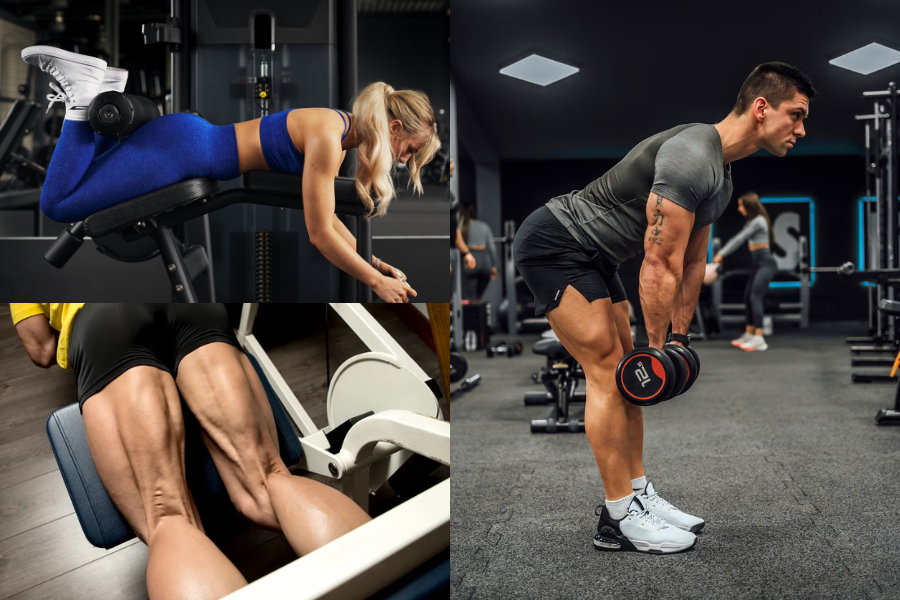
Why your hamstrings matter more than you think
If you sit a lot, run occasionally, or climb a few flights of stairs in a day, your hamstrings are working for you. A smart hamstring workout without equipment can make all of those daily moves feel easier, without requiring a gym membership or a barbell setup at home.
Your hamstrings help decelerate your quadriceps when you walk and run, and they power you up stairs, curbs, and hills. When they are weak, your knees and lower back often pick up the slack, which can lead to pain and injuries over time, as physical therapist Alice Holland, DPT, explains in an interview with Stride Strong Physical Therapy in Oregon, cited by BODi. The good news is that you can build stronger, more resilient hamstrings in a small space with simple bodyweight exercises.
In this guide, you will learn how your hamstrings work, how to warm up safely, and how to follow a beginner friendly routine that you can progress over time, all without equipment.
Understand your hamstrings and common weaknesses
Your hamstrings are a group of three muscles that run along the back of your thighs. They cross both your hip and your knee, which means they help you:
- Bend your knees
- Straighten your hips, like when you stand up from a chair
- Control your leg as it swings forward when you walk or run
When your hamstrings are undertrained compared with your quads, a few things can happen. You might feel tightness behind your knees, cranky knees on the front, or strain in your lower back when you bend and lift. Weak hamstrings can also make you more prone to pulled muscles and other soft tissue injuries if you suddenly sprint, jump, or change direction.
That is why a consistent hamstring workout without equipment is so useful. You can balance out your legs, improve your posture, and help protect your knees and hips, all from home.
Warm up before your hamstring workout
Before you load your hamstrings, you want to get blood flowing and gently rehearse the movements you will be doing. A short warm up, about 5 to 10 minutes, is usually enough.
You can start with light cardio such as marching in place, brisk walking around your home, or a few easy stair climbs. Follow that with dynamic moves that mimic your workout, like leg swings, easy bodyweight squats, and hip hinges with small range of motion.
The goal is to feel warm and a little looser, not tired. A good rule of thumb is that you should be able to hold a conversation during your warm up, and your hamstrings should feel more awake but not strained.
Beginner friendly hamstring workout without equipment
The exercises below are based on bodyweight movements that fitness professionals commonly recommend for building hamstring strength and balance. Healthline notes that many effective hamstring workouts can be done entirely with body weight, which makes them accessible to all fitness levels.
You can treat this as a full beginner workout or mix a few of these moves into your regular leg day. Aim to do this routine 2 to 3 times per week, with at least one rest day between sessions.
Exercise 1: Good morning
The good morning is a simple hip hinge that teaches you how to load your hamstrings safely. It also stretches them while you strengthen them.
- Stand with your feet under your hips and a soft bend in your knees.
- Place your hands behind your head or across your chest.
- Brace your core and keep your back flat.
- Hinge at your hips by sending them straight back, as if you are closing a car door with your glutes.
- Stop when you feel a strong stretch in the back of your thighs but no pain.
- Drive through your heels and squeeze your glutes to return to standing.
Move slowly, especially on the way down. Fitness experts highlight good mornings as a go to bodyweight hamstring exercise that can be done anywhere with no equipment at all.
Exercise 2: Glute bridge
Glute bridges primarily target your glutes, but they also train your hamstrings and help support your lower back.
- Lie on your back with your knees bent and feet flat on the floor, hip width apart.
- Place your arms by your sides with your palms down.
- Press through your heels, squeeze your glutes, and lift your hips until your body forms a straight line from shoulders to knees.
- Pause for one or two seconds at the top, then lower your hips with control.
Avoid arching your lower back. You want the movement to come from your hips, not from pushing your ribcage toward the ceiling.
Exercise 3: Bodyweight Romanian deadlift pattern
A Romanian deadlift pattern is another hip hinge, similar to the good morning, but with your arms free. Healthline includes bodyweight Romanian deadlifts as a beginner friendly hamstring strengthener that trains you to hinge correctly.
- Stand with your feet hip width apart and your knees slightly bent.
- Let your arms hang straight down in front of your thighs.
- Push your hips back and slide your hands down your legs, keeping your spine long and your chest open.
- Stop when your torso is roughly at a 45 degree angle, or you feel a strong stretch in your hamstrings.
- Press through your heels and return to standing, squeezing your glutes at the top.
Think of “closing the door with your hips” again, so you do not accidentally turn it into a squat.
Exercise 4: Reverse lunge
Reverse lunges are often classified as intermediate, since they use one leg at a time, but you can scale them for beginners by using support and limiting your range of motion. They work your quads and glutes while asking your hamstrings to help control and stabilize your knee.
- Stand tall with your feet hip width apart.
- Step one foot straight back and lower your back knee toward the floor.
- Keep most of your weight in your front heel. Your front shin should stay roughly vertical.
- Push through your front heel to stand and bring your back foot up to meet the front foot.
- Repeat on the other side.
You can hold on to a wall or chair for balance, and you can stop your back knee higher off the ground if your legs or knees feel wobbly.
Exercise 5: Step up
If you have a sturdy step, low bench, or even a stable bottom stair, step ups are a great way to train your entire posterior chain. BODi notes step ups as one of nine effective bodyweight moves for stronger hamstrings that also translate directly to daily life, such as climbing stairs or hills.
- Stand facing the step with your feet hip width apart.
- Place one foot completely on the step, pressing through your whole foot, especially the heel.
- Drive through that leg to bring your other foot up to the step.
- Step back down with control, leading with the same leg.
- Switch legs after your set is complete.
Choose a step height that allows you to keep your torso tall and your knee tracking in line with your toes.
How many sets and reps should you do
For a true beginner, volume matters more than fancy variations. Research summarized by BODi suggests that doing around 10 to 16 sets of hamstring focused work per week, spread across a few workouts or in a single dedicated session, can significantly improve strength and may cut hamstring injury risk nearly in half.
Since you are just starting, you can aim for something like:
- 2 to 3 sets of 10 to 15 reps for each exercise in your workout
- Rest 45 to 60 seconds between sets
- 2 to 3 workouts per week
You can begin with fewer total sets, then build up as the movements feel easier. For example, your first week might be 2 sets of each exercise on 2 days, and by week four you might be at 3 sets on 3 days.
If you prefer a very simple plan, BODi suggests doing three sets of 15 reps of each of the nine bodyweight hamstring exercises they highlight, used either as a complete workout or a leg day add on. You can start with the five beginner moves in this article and add more as your confidence grows.
Progress your hamstring workout as you get stronger
Once your beginner hamstring workout without equipment starts to feel manageable, you can increase the challenge without adding weights. Healthline outlines a progression from basic bodyweight exercises to single leg and more advanced variations, all without machines.
Here are a few ways you can progress:
- Slow down the lowering part of each rep to 3 or 4 seconds.
- Add a pause at the bottom of good mornings and Romanian deadlifts.
- Turn your regular glute bridge into a single leg bridge by lifting one foot off the floor.
- Introduce controlled single leg deadlifts, using a wall or chair for balance.
- Gradually work in exercises like Bulgarian split squats or hamstring slides on a towel, once you have solid form.
Advanced moves like Nordic hamstring curls and jump squats are very effective, but they ask a lot from your muscles and joints. You do not need them right away. Focus on smooth, pain free movement and steady progression instead.
Form tips to protect your knees and back
The quality of each rep matters more than the weight you use or the number of exercises you cram into a session. Many experts warn that weak hamstrings and poor hip hinging can create muscle imbalances that contribute to knee pain and poor exercise form, especially if you rush or round your back during movements like deadlifts and good mornings.
Keep these checkpoints in mind:
- Maintain a slight bend in your knees during hip hinges. Locking them out can strain your lower back.
- Keep your spine long and your chest open, as if someone is gently lifting the crown of your head.
- Push your hips back for deadlift patterns, rather than squatting straight down.
- In lunges and step ups, drive through your heel, and keep your front knee in line with your second or third toe.
- Stop a rep if you feel sharp pain, pinching, or tingling, and adjust your range of motion or choose an easier variation.
If any movement bothers your joints, you can shorten the range, reduce the number of reps, or swap it for a more comfortable option. There is always another way to train the same muscles.
You do not need a barbell or a leg curl machine to build strong hamstrings. Consistent, controlled bodyweight moves can deliver real strength and injury prevention benefits in a very small space.
Putting it all together
A beginner hamstring workout without equipment can be as simple as five exercises done a few times a week. Here is one way to structure it:
- Warm up for 5 to 10 minutes.
- Do 2 to 3 sets of 10 to 15 reps each of: good mornings, glute bridges, bodyweight Romanian deadlift pattern, reverse lunges, and step ups.
- Rest 45 to 60 seconds between sets.
- Cool down with gentle hamstring and hip stretches.
Over the next few weeks, you can gradually add sets, play with tempo, or introduce more challenging variations as you get comfortable with the basics that Healthline and BODi highlight in their bodyweight routines.
Try choosing one or two of the exercises in this article and adding them to your next workout or daily movement break. As you feel your legs getting stronger and stairs feeling easier, you will have proof that simple, equipment free work is paying off.