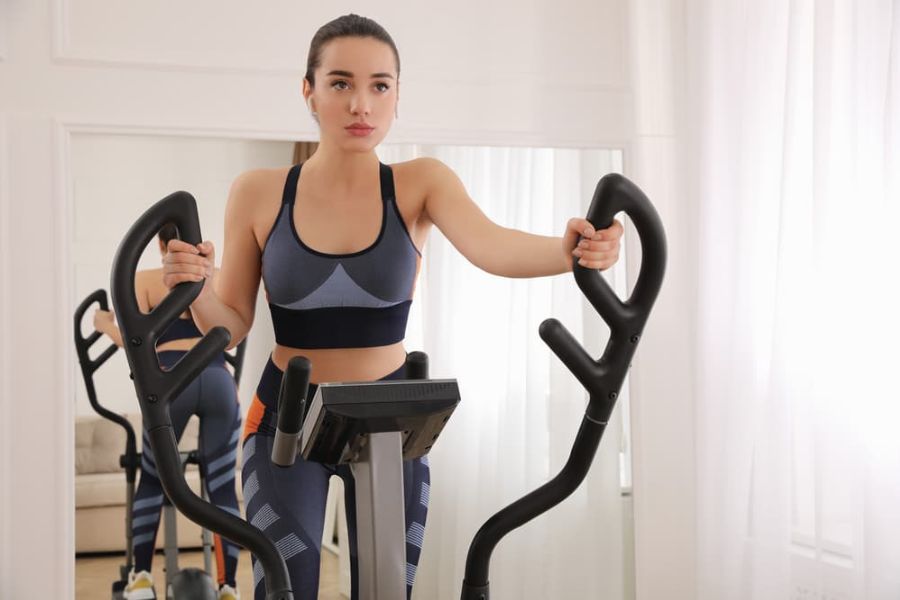
A high intensity elliptical workout lets you work harder in less time, without beating up your joints. By mixing bursts of near-maximum effort with short recovery periods, you can boost your heart health, burn calories quickly, and build full-body strength, all while staying low impact and beginner friendly (NutroOne, Garage Gym Reviews).
If you want to lose weight, improve your fitness, or simply make your workouts more efficient, the elliptical can be a powerful and surprisingly joint friendly tool.
Understand what a high intensity elliptical workout is
A high intensity elliptical workout usually refers to HIIT, or high intensity interval training, done on an elliptical machine. You alternate between short periods where you push close to your limit and easier recovery periods where you catch your breath.
During the intense intervals, you typically aim for about 80 to 90 percent of your maximum heart rate, then drop to roughly 55 to 60 percent during recovery (Garage Gym Reviews). Many effective routines follow a 30 to 60 second hard effort, followed by 1 to 2 minutes of lighter movement (NutroOne).
The elliptical is especially suited to this style of training because you can quickly adjust resistance and incline to increase or decrease intensity without stopping the movement (Garage Gym Reviews). You get the structure of intervals plus a smooth, continuous stride.
See why high intensity elliptical training is so effective
You are not just pedaling faster for the sake of it. A high intensity elliptical workout creates several meaningful benefits for your health and weight loss efforts.
Burn more calories in less time
Because you are working at a higher intensity, you burn more calories per minute than you would at an easy, steady pace. In general, a 30 minute elliptical session can burn about 270 to 400 calories depending on your weight, speed, incline, and resistance level (Healthline).
When you turn it into HIIT, you can push that burn even higher. Some high intensity elliptical sessions can reach about 400 calories in 30 minutes, especially when you increase resistance and incline and use both the upper and lower body handles actively (Set For Set).
On top of that, your metabolic rate stays elevated after your workout. This is called excess post exercise oxygen consumption, or EPOC, and it allows you to continue burning extra calories for several hours once you step off the machine (Garage Gym Reviews).
Protect your joints while training hard
If running or high impact cardio hurts your knees, hips, or back, the elliptical gives you a way to work at high intensity with minimal pounding. The gliding motion reduces stress on joints and bones while still challenging your cardiovascular system (Garage Gym Reviews, Healthline).
Research suggests that elliptical workouts put less strain on joints than running, which makes them a good option if you have knee or hip arthritis or are simply trying to avoid future joint issues (Healthline). At the same time, elliptical training is still weight bearing, so you load your bones against gravity and help maintain skeletal strength (HSS).
Train your whole body at once
When you use the moving handles properly, a high intensity elliptical workout engages your legs, glutes, arms, shoulders, and core in one session (Garage Gym Reviews, Set For Set). You can target different muscles by adjusting incline, resistance, and even the direction of your stride.
Higher inclines and resistance tend to emphasize the glutes and hamstrings, while flatter, faster intervals focus more on the quads and calves. These kinds of adjustments make it easier to avoid muscle imbalances and keep your workouts interesting (Healthline).
Improve heart health and endurance
High intensity elliptical sessions efficiently raise your heart rate and push your cardiovascular system to adapt. A 20 to 32 minute HIIT workout on an elliptical can significantly increase heart rate and provide strong conditioning benefits, often more quickly than moderate steady state cardio (Garage Gym Reviews, Garage Gym Reviews).
If your schedule is crowded, you can still make progress with shorter workouts. Around 20 minutes of high intensity elliptical exercise can be enough on busy days, and about 75 minutes per week of vigorous activity is typically recommended for cardiovascular health (Healthline).
Set your intensity and interval structure
How you structure your high intensity elliptical workout matters. You want it to be challenging but not overwhelming, especially if you are new to HIIT.
Choose a simple interval ratio
A reliable starting point is:
- 30 seconds to 1 minute of hard effort
- 1 to 2 minutes of easier recovery
This 1 to 2 or 1 to 3 work to rest ratio helps you maintain quality sprints across the whole session and steadily build endurance (NutroOne).
As you get fitter, you can shorten the recovery time or lengthen the intense intervals. Very advanced routines sometimes use Tabata style intervals, which involve 20 seconds all out followed by 10 seconds of rest for 8 rounds, or 4 minute blocks. You can repeat those blocks with 2 minutes of rest between them for a tough but time efficient workout (Garage Gym Reviews).
Aim for the right effort level
During your sprints, aim to reach roughly 80 to 90 percent of your maximum heart rate, or even 90 to 100 percent if you are experienced and cleared by a doctor (Garage Gym Reviews, Set For Set). You should be breathing heavily and talking should be difficult, but you should not feel dizzy, faint, or in sharp pain.
Recovery intervals should genuinely feel easier. You keep moving, but your breathing starts to settle and your heart rate drops back toward the comfortable range.
Try sample high intensity elliptical workouts
You do not need a complicated plan to get started. Here are a few sample structures you can adapt to your fitness level and machine.
Beginner friendly 15 minute HIIT session
A short session like this lets you experience intervals without overdoing it, similar to a 15 minute beginner workout structure used by some trainers (Sunny Health & Fitness).
-
Warm up, 3 minutes
Light resistance at level 1 or similar. Easy pace, focus on posture. -
Interval block 1, 4 minutes
- 40 seconds jogging at low moderate resistance (for example, level 2)
- 20 seconds faster sprint at the same resistance
Repeat four times.
- Interval block 2, 4 minutes
- 40 seconds jogging at moderate resistance (for example, level 3 to 4)
- 20 seconds sprint at that resistance
Repeat four times.
- Cool down, 4 minutes
Lower resistance back to level 1, gradually slow your pace, then step off and stretch.
You can progress this by adding another 4 minute block at slightly higher resistance or by lengthening the total session to 20 minutes.
Classic 20 minute HIIT elliptical workout
This style uses a 1 minute hard, 2 minute easy format, similar to some effective interval templates recommended for elliptical training (NutroOne).
-
Warm up, 5 minutes
Light to moderate resistance. Gradually build to a comfortable pace. -
Main set, 15 minutes
- 1 minute high intensity sprint with increased resistance or incline
- 2 minutes of easy pedaling at lower resistance
Repeat this 5 times.
Aim for a total frame of around 20 minutes plus a few extra minutes if you want a longer cool down.
Higher challenge 30 minute interval session
When you are ready for more, you can combine varied intervals, resistance, and incline in a 30 minute workout. Some high intensity plans use resistance levels ranging between 5 and 12 and inclines up to 10 to maximize calorie burn and muscle challenge in that time frame (Set For Set).
Keep the idea simple: longer, moderately hard intervals mixed with shorter, very intense bursts, and always include a warm up and cool down.
If you are new to HIIT or have any health concerns, talk with your doctor before pushing to very high intensities. Start with longer, gentler intervals and build gradually.
Use the elliptical correctly to stay safe
Good technique and smart planning keep your high intensity elliptical workout productive instead of punishing.
Always warm up and cool down
Before you sprint, give your body at least 3 to 5 minutes of light movement. You can add some gentle dynamic stretches to loosen your hips, knees, and ankles. After the workout, slow your pace until your heart rate comes down, then use static stretches for your calves, quads, hamstrings, and hips. This reduces stiffness and helps prevent injury (NutroOne).
Focus on posture and stride
Keep your shoulders relaxed, chest open, and core lightly braced. Avoid leaning heavily on the handles. Instead, push and pull through the arms while your legs move in a cyclical motion, pressing down and back and then pulling up and forward. This balanced drive helps you avoid muscle imbalances and gets more benefit from each stride (HSS).
Pick a resistance level that feels challenging but controllable. If your form falls apart during sprints, lower the resistance slightly so you can move smoothly.
Plan your weekly routine
Most people do best with 2 to 3 high intensity elliptical workouts per week, which leaves space for recovery and other types of exercise (Garage Gym Reviews). If you enjoy longer, moderate sessions, you can add those on alternate days to reach a total of about 150 minutes of weekly cardio, which aligns with common cardiovascular guidelines (HSS).
On days when your legs feel tired or stiff, you can dial down the intensity and use the elliptical as a low impact recovery tool. This helps unload your muscles and joints without completely skipping movement (HSS).
Support weight loss and health beyond the machine
If your main goal is weight loss, remember that even the best high intensity elliptical workout is only one piece of the puzzle.
Consistent short workouts, even as brief as 15 minutes, can meaningfully change your body composition when paired with healthy eating and lifestyle habits (Garage Gym Reviews). You can accelerate your progress by including strength training on a few non HIIT days, since building muscle increases your resting calorie burn (Garage Gym Reviews).
Try treating your elliptical sessions as non negotiable appointments in your week, just like meetings or errands. Then build simple, sustainable nutrition habits around them, such as drinking more water, choosing mostly whole foods, and planning your meals ahead.
Take your first step toward better health
You do not have to overhaul your entire routine overnight. Start with one high intensity elliptical workout this week, even if it is just 10 to 15 minutes of gentle intervals. Notice how your body feels during and after the session.
As your stamina improves, you can extend your workouts, play with incline and resistance, and add more challenging intervals. With time, a high intensity elliptical workout can become a dependable pillar in your path to better health, stronger joints, and sustainable weight loss.