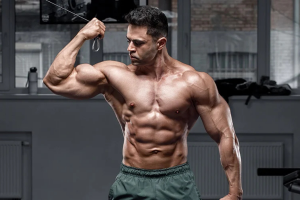
A lower ab workout does more than help your jeans fit better. When you train your lower abs as part of your core, you support your spine, improve posture, and make everyday movement feel easier.
This guide walks you through simple, effective lower ab exercises you can do at home, how to use them in a quick routine, and what actually matters if your goal is a stronger, leaner midsection.
Understand what “lower abs” really are
You often hear people talk about “upper” and “lower” abs, but your six-pack muscle, the rectus abdominis, is actually one long muscle that runs from your ribs to your pelvis. You cannot fully isolate just the lower part, but you can choose movements that emphasize those lower fibers.
Bottom up exercises that move your pelvis toward your ribs are especially helpful. A 6 minute lower ab workout shared by Jeff Cavaliere from ATHLEAN X focuses on this idea by using moves like Figure 8s, Twisted Pistons, and Scissor V Ups to recruit the lower portion of the rectus abdominis and the rest of your core at the same time.
Think of your “lower ab workout” as training the entire core, with extra attention to what is happening around your hips and lower belly.
Why lower ab strength matters
Lower ab and core strength is about far more than appearance. Your core muscles wrap around your trunk and include the pelvis, lower back, hips, and stomach. Strong muscles here help you:
- Maintain better posture
- Stay stable when you walk, run, or lift
- Protect your spine from strain
- Move more efficiently in sports and daily life
A 2019 study on core training suggests that a strong core can improve posture, help prevent injuries, and even reduce back pain. When the muscles around your midsection do their job, your lower back does not have to pick up the slack.
On the flip side, weak core muscles can contribute to poor posture, fatigue, and a higher risk of muscle injuries. Over time, that might show up as an achy lower back after standing, or feeling unsteady when you carry groceries up the stairs.
Clear up the belly fat myth
You can train your lower abs until they burn, but that does not mean you will lose fat specifically from your lower belly.
Research on abdominal training has repeatedly found that sit up or crunch heavy routines do not significantly reduce belly fat thickness, even when people train abs five days a week for several weeks. The reason is simple: spot reduction, the idea that you can burn fat from one area by exercising that area, does not work. Fat loss happens across your whole body when you are in a caloric deficit.
Core and lower ab workouts:
- Build and strengthen the underlying muscles
- Improve posture and how your midsection looks when you stand tall
- Support better movement and athletic performance
To actually reveal those muscles, you still need a mix of whole body exercise and nutrition habits that support fat loss. That typically means:
- Regular aerobic activity, such as 30 minutes of moderate intensity cardio five days a week or about 20 minutes of higher intensity cardio three days a week
- Some resistance training for the whole body to protect muscle while you lose fat
- Eating fewer calories than you burn, usually by emphasizing protein, fiber, and fewer highly processed foods and added sugars
Think of your lower ab workout as the sculpting part. Your overall routine, including how you eat, handles the fat loss.
Learn basic lower ab activation
If you feel ab exercises mostly in your hip flexors or lower back, a bit of setup can make a big difference. Before you start any lower ab workout, practice this simple core brace:
- Lie on your back with knees bent and feet flat.
- Gently tuck your pelvis so your lower back lightly presses toward the floor.
- Imagine zipping up a tight pair of jeans. Draw your belly button slightly toward your spine without holding your breath.
- Keep breathing normally, but maintain this gentle tension.
That deep tension comes from the transverse abdominis, one of the main core muscles that wraps around your midsection like a corset. Pulling it in during each exercise helps protect your spine and keeps your hip flexors from doing all the work.
Try these beginner friendly lower ab exercises
Start with bodyweight movements that emphasize control instead of speed. Aim for smooth, steady reps, not momentum.
Ab contractions
Ab contractions are a small movement that teach you to engage your abs correctly.
How to do them:
- Lie on your back with knees bent, feet flat, arms by your sides.
- Exhale and slowly contract your abs, gently flattening your lower back toward the floor.
- Hold 3 to 5 seconds while breathing lightly, then relax.
Try 10 to 12 repetitions. Keep your neck and shoulders relaxed so the effort stays in your midsection.
Leg drops
Leg drops target the lower portion of the rectus abdominis and challenge you to keep your lower back stable.
How to do them:
- Lie on your back and bring both knees above your hips, shins parallel to the floor.
- Brace your core using the activation technique above.
- Slowly tap one heel toward the floor, then bring it back up and switch legs.
- Only lower your leg as far as you can without your lower back arching off the floor.
Work up to 10 to 16 alternating reps. If this feels easy, straighten your legs a bit to increase the challenge.
Hip lifts
Hip lifts add the bottom up motion that really emphasizes the lower abs.
How to do them:
- Lie on your back with legs straight up toward the ceiling, feet flexed.
- Place your hands on the floor beside you or lightly under your hips for support.
- Exhale and use your abs to tilt your pelvis and lift your hips an inch or two off the floor, sending your feet toward the ceiling, not over your face.
- Lower back down slowly with control.
Aim for 8 to 12 slow repetitions. Think about curling your tailbone off the mat, not swinging your legs.
Bridge
Bridge exercises are a classic core move that also strengthen glutes and hamstrings, all important for stable hips and a supported lower back.
How to do them:
- Lie on your back with knees bent and feet hip width apart.
- Brace your core and press through your heels to lift your hips until they line up with your knees and shoulders.
- Hold for 2 to 3 seconds, then lower with control.
Try 10 to 15 reps. Focus on keeping your ribs down and your core engaged so you avoid overarching your lower back.
Tip: If you feel any of these strongly in your lower back, reduce your range of motion and slow down. Your form matters more than how high or how fast you move.
Add some intermediate moves when you are ready
Once the basics feel solid and you can keep your lower back comfortable, you can add exercises that increase intensity.
Mountain climbers
Mountain climbers are a dynamic move that challenge your lower abs while elevating your heart rate.
How to do them:
- Start in a high plank position with hands under shoulders and body in a straight line.
- Brace your core and bring one knee toward your chest.
- Switch legs in a steady, rhythmic motion, like you are running in place.
You can go slow for more core control or a bit faster for a cardio effect. Start with 20 to 30 seconds.
Scissor kicks
Scissor kicks work your lower abs and hip flexors and test your ability to keep your lower back stable.
How to do them:
- Lie on your back and extend both legs.
- Gently tuck your pelvis and press your lower back toward the floor.
- Lift both legs a few inches off the ground.
- Alternate crossing one leg over the other in a small, controlled scissor motion.
Begin with 15 to 20 seconds and build up as your strength improves.
Rocking plank
The rocking plank is a twist on the classic plank that adds movement and extra demand on the lower abs.
How to do them:
- Start in a forearm plank, elbows under shoulders, body aligned from head to heels.
- Brace your core and gently rock your body forward so your shoulders move past your elbows.
- Rock back to the starting position without letting your hips sag or pike up.
Try 8 to 12 rocks. If your lower back feels strained at any point, rest and reset.
Use these exercises in a simple routine
You do not need a long, complicated lower ab workout for results. The key is consistency and good form.
Here is a sample 10 to 12 minute routine you can do three times per week:
- Ab contractions, 10 to 12 reps
- Leg drops, 10 to 16 alternating reps
- Hip lifts, 8 to 12 reps
- Bridge, 10 to 15 reps
- Mountain climbers, 20 to 30 seconds
- Scissor kicks, 15 to 20 seconds
Rest 20 to 40 seconds between exercises. Complete the full list, then repeat 1 or 2 more times depending on your fitness level. As you get stronger, you can reduce rest, extend work intervals, or add more challenging variations.
Programs like the 6 minute lower ab workout from ATHLEAN X use short, focused sessions with carefully chosen bodyweight moves to hit the lower rectus abdominis and surrounding core muscles efficiently. Another feature called “6 Pack Shuffle” generates customized lower ab workouts by asking for your focus, equipment, and difficulty level, which can be helpful if you like variety and structured guidance.
Stay safe while you train
Good form protects you and makes each rep more effective. Keep these safety tips in mind:
- Move slowly and with control, especially when legs are extended or lifted
- Stop or adjust the exercise if you feel sharp pain in your back, hips, or neck
- Keep breathing and avoid holding your breath during difficult parts
- Make sure your lower back is supported, either by the floor or with a slight pelvic tuck
If you have a chronic condition, past injuries, or ongoing back pain, check in with a doctor or physical therapist before starting a new lower ab workout. They can suggest modifications that suit your body.
Remember that more is not always better. Your abdominal muscles need 2 to 3 days of rest to repair, just like any other muscle group. Working them hard every day can work against your progress and increase your risk of strain.
Balance training with realistic expectations
Heavy or very high volume ab training can increase the size of the muscles around your midsection. For some people, like certain athletes or physique competitors, that is a goal. For others, especially if you prefer a smaller waist, that approach may not be ideal.
The shape you see in the mirror depends on:
- Your underlying skeletal structure
- How your abdominal and oblique muscles develop
- How much body fat sits over those muscles
Many coaches who work with women aiming for a lean, flat look recommend moderate ab work, such as 2 or 3 exercises, 3 sets of 15 to 30 reps, instead of constant heavy weighted ab sessions. In practice, clients often see more change in waist measurements from consistent, balanced workouts and nutrition than from endless ab training alone.
Think of lower ab workouts as one part of your routine, not the entire focus. Your legs, back, chest, and glutes all need attention too, and many compound exercises for those areas already challenge your core.
Put it all together
If you are just starting:
- Learn to brace your core with basic ab contractions.
- Add 3 or 4 lower ab focused moves like leg drops, hip lifts, and bridges.
- Do them two or three times per week in short, focused sessions.
- Pair your workouts with daily movement, some cardio, and steady nutrition habits.
Over the next few weeks you should notice everyday activities feeling easier, your posture improving, and your core feeling more solid during other exercises. Visible definition takes longer and depends heavily on body fat levels, but those deeper strength gains start much sooner.
Choose one exercise from this list to try today, even if it is just ab contractions on the living room floor. Small, consistent sessions are what make a lower ab workout really work for you.