Quadricep workouts do more than build impressive legs. When you train your quads smartly, you support your knees, boost your strength in big lifts, and lower your risk of injury in and out of the gym.
Below, you will learn how to structure safe, effective quadricep workouts, how to perform key exercises with good form, and how to avoid the mistakes that often lead to pain instead of progress.
Understand your quadriceps
Your quadriceps are the big muscles on the front of your thighs. They straighten your knees and, in some cases, help flex your hips. Strong quads make it easier to walk, climb stairs, squat, and jump, and they also help stabilize your knees.
Your quadriceps group includes four muscles:
- Rectus femoris, helps flex your hip and extend your knee
- Vastus lateralis, the large muscle on the outer thigh
- Vastus medialis, the inner thigh muscle that helps stabilize your knee
- Vastus intermedius, sits deep between the other quad muscles and extends the knee
When your quadricep workouts target all four, you build balanced thighs instead of overloading one area and stressing your joints.
Why smart quad training prevents injury
You use your quads constantly, which is why they are tied closely to injury risk. Weak, tight, or unbalanced quadriceps can make you more prone to knee pain, especially around the kneecap, as well as compensation patterns in your hips and lower back.
According to a 2024 Healthline overview of quad exercises, strengthening and toning your quadriceps can improve knee stability, reduce the risk of knee injuries, support athletic performance, and make everyday movements easier. Studies cited by Men’s Health UK in 2023 also connect strong quads with a lower risk of knee osteoarthritis and joint degeneration over time.
In other words, building your quads is not just about muscle size. It is one of the best things you can do to keep moving comfortably as you age.
Common quad workout mistakes that cause problems
You can train hard and still miss your quads. These are the errors that often lead to stalled growth or aches in your knees and back.
Using a partial range of motion
Half reps on leg presses or squats might let you load more plates, but they limit how much your quads actually work. A shortened range of motion reduces muscle activation, especially near the bottom of the movement where your quads must work hardest.
Whenever it is safe for your joints, aim for controlled, full reps. Sit deep into your squats and leg presses without bouncing, and straighten your knees without snapping them.
Letting your form turn into a hip-dominant squat
If you lean too far forward and push your hips back aggressively, you turn quad exercises into hip and back exercises. That means:
- More strain on your lower back
- Less tension on your quads
- Higher injury risk if you fatigue or lose balance
To bias your quads during squats, keep your torso more upright and let your knees travel forward, especially when your heels are slightly elevated. Research on squat mechanics shows that a more upright trunk and forward tibia inclination increases the demand on your quadriceps and creates a knee extensor biased squat, while a big forward lean shifts the work to your hips and glutes.
Avoiding single-leg work
If you skip lunges, Bulgarian split squats, and other unilateral exercises, you may end up with one leg doing more work on every rep. Over time, that imbalance can show up as knee pain or hip tightness on one side.
Unilateral quad exercises help you:
- Spot left to right strength differences
- Improve balance and core stability
- Strengthen each leg equally
Including even one single-leg movement in each lower body workout goes a long way toward injury prevention.
Technique cues for safer quadricep workouts
Small adjustments in your stance and posture greatly change how your quads load. These cues will help you feel your quads more and your joints less.
Foot placement and stance
- For more quad emphasis in squats and leg presses, use a medium to narrow stance with your feet roughly shoulder width or slightly narrower
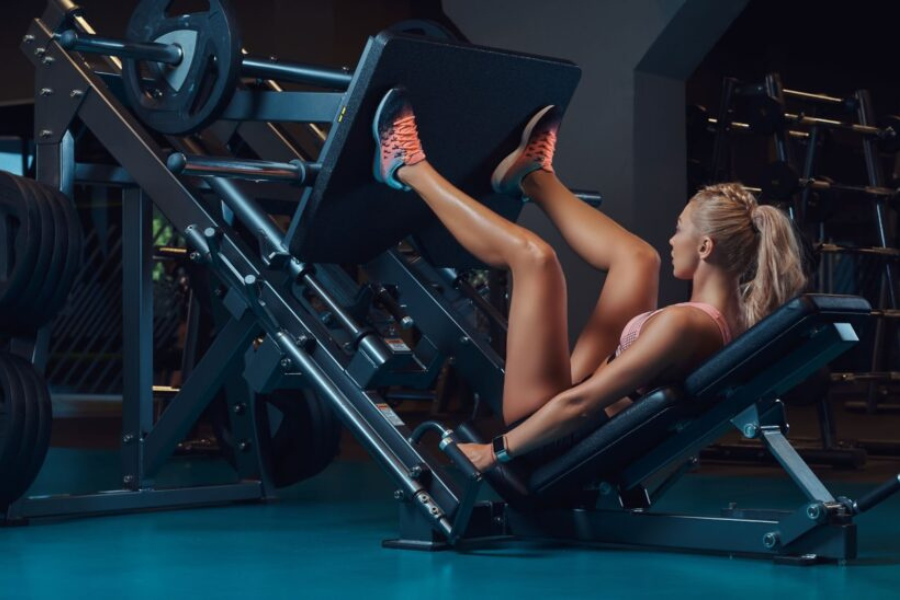
- Place your feet a bit lower on the leg press platform to shift more work to your quads and slightly less to your glutes and hamstrings
- To target the inner quad (vastus medialis), try heel elevated goblet squats or squats with weightlifting shoes that lift your heels
Forward tibia inclination, where your knees move forward over your toes, increases the knee flexion moment and quadriceps demand. This is especially helpful if your goal is quad growth and strength, as long as your knees feel comfortable.
Torso angle and knee tracking
In a quad focused squat, think about:
- Staying tall through your chest
- Letting your knees bend and travel forward instead of pushing your hips far back
- Keeping your knees in line with your toes instead of collapsing in
Squatting with an upright trunk and forward tibia inclination turns the movement into a knee extensor biased squat, which increases quadriceps loading. Researchers also note that deep squats increase knee joint moments, so if you have patellofemoral pain or knee osteoarthritis, it can be safer to avoid very deep depth and keep the range of motion pain free.
Beginner friendly quadricep exercises
If you are just getting started, you do not need heavy barbells. Bodyweight and light weights can build impressive quad strength while you learn safe form.
Goblet squat
The goblet squat is one of the best beginner quadricep exercises. Holding a kettlebell or dumbbell under your chest naturally keeps your torso upright and reduces back strain.
How to do it:
- Stand with your feet shoulder width apart, toes slightly turned out
- Hold a kettlebell or dumbbell close to your chest
- Brace your core and sit down between your heels, letting your knees travel forward
- Keep your chest tall and heels on the floor, then push through your midfoot to stand up
A simple starting plan is 2 sets of 10 reps with about 60 seconds of rest between sets.
Split squat
Split squats teach you single leg control without needing heavy weights.
- Stand with one foot forward and one foot back, about a short lunge length
- Hold dumbbells by your sides or keep your hands on your hips
- Drop your hips straight down, bending both knees, without letting the back knee touch the floor
- Drive through the front foot to stand back up
Aim for 2 sets of 10 reps per side with about 30 seconds of rest. Keep your torso upright and your front knee stacked above your front foot.
Wall sit
Wall sits challenge your quads with a static hold, which is great if dynamic squats feel uncomfortable at first.
- Stand with your back against a wall and your feet about 2 feet forward
- Slide down until your knees are roughly at 90 degrees
- Keep your back flat against the wall and your weight through your heels and midfoot
Hold for 30 seconds or as long as you can maintain solid form, rest 30 seconds, then repeat for 2 sets.
Intermediate and advanced quad builders
Once you are comfortable with basic movements and your knees feel good, you can add more challenging quad dominant exercises.
Front squats
Front squats shift the weight to the front of your body, which naturally makes you keep your torso more upright. This increases quadriceps involvement compared to many back squats.
Key points:
- Rest the bar across the front of your shoulders with your elbows high
- Use a shoulder width stance with heels slightly elevated if needed
- Sit straight down, keep your chest lifted, and let your knees track forward
Even a few sets of front squats per week can quickly stimulate quad growth if you train close to muscular failure in the 8 to 12 rep range.
Heel elevated goblet squats
Elevating your heels on a weight plate or small block increases your squat range of motion and targets the inner quad, often called the “tear drop” muscle (vastus medialis).
- Place a small plate under each heel
- Hold a dumbbell or kettlebell in goblet position
- Squat as deep as your mobility allows, keeping knees tracking over toes
This variation is especially helpful if you have tight calves that make deeper squats hard.
Bulgarian split squats
Bulgarian split squats are a more intense version of split squats that load the front leg heavily and provide a deep stretch in the quads.
- Stand about 2 feet in front of a bench
- Place the top of your back foot on the bench
- Take a shorter stance than a long lunge to focus more on the quads
- Drop your hips straight down and slightly forward, keeping your torso fairly upright
- Drive through the front foot to stand up
Start with bodyweight and move to dumbbells as your stability improves. A common prescription is 2 sets of 10 reps per leg with 30 seconds of rest.
Leg extension machine
The leg extension is an isolation exercise that lets you directly target your quadriceps with minimal fatigue to the rest of your body. It is useful both for hypertrophy and for topping off your quad work at the end of a session.
Form tips:
- Adjust the pad so it rests just above your ankles
- Do not swing the weight, instead lift and lower under control
- Pause briefly at the top to feel your quads working
You can increase difficulty with single leg extensions or short isometric holds at full extension for 2 to 3 seconds.
Plyometrics and power for strong quads
Once your basic strength is in place and you have no current knee pain, you can introduce low volume plyometrics to build power in your quads.
Good options include:
- Squat jumps
- Box jumps
Keep reps low, about 5 per set, to reduce injury risk. Research on jump squat training three times per week over eight weeks shows improvements in explosive strength and sprint performance, in part because your quads learn to produce force quickly.
Recovery, foam rolling, and training frequency
Your quads will not grow or get stronger if you never give them a chance to recover. The same recovery habits that help you build muscle also help you avoid overuse injuries.
How often to train your quads
Current training guidelines suggest:
- Work your quads about twice per week
- Include at least two quad exercises per workout
- Aim for a total of at least 10 quality sets per week
A common approach is three quad focused exercises per workout, 3 sets each, giving you 9 sets per session and room to adjust. Many lifters see solid growth in the 5 to 10 sets per week range, with diminishing returns when you consistently exceed 12 to 20 sets, especially if you are not recovering well.
Always leave at least 48 hours between hard quad sessions.
Foam rolling and mobility
Foam rolling your quads can help you work out muscle spasms, reduce tightness, and prepare for training.
Try this simple routine:
- Lie face down with a foam roller under one or both thighs
- Roll slowly from just above the knee to below the hip for 20 seconds
- Switch sides if you are doing one leg at a time
Do 2 sets of 20 seconds per leg, resting about 30 seconds between sets.
Combine this with a 5 to 10 minute warmup that can include brisk walking, light cycling, or leg swings to get blood flowing before your quadricep workouts.
Sample quad focused workout structure
Here is an example of how you might put all of this together for a balanced, injury conscious session:
- Warm up, 5 to 10 minutes of light cardio plus dynamic leg swings
- Quad focused compound lift, such as front squats or heel elevated goblet squats, 3 sets of 8 to 12 reps
- Unilateral exercise, such as Bulgarian split squats or split squats, 3 sets of 8 to 12 reps per leg
- Isolation or machine work, such as leg extensions, 2 to 3 sets of 10 to 15 reps
- Optional finisher, wall sit or short sets of low rep squat jumps if your knees feel good
- Cooldown, light walking and 2 sets of quad foam rolling
Keep most sets one to two reps shy of muscular failure, and occasionally push a set to near failure on your last exercise for a strong training signal without compromising form.
Smart quadricep workouts are not about chasing the heaviest weight. They are about using full range of motion, solid technique, and enough volume to challenge your muscles while protecting your joints.
If you start with controlled, full reps, prioritize single leg work, and respect your recovery, your quads will grow stronger and your knees will thank you for it.