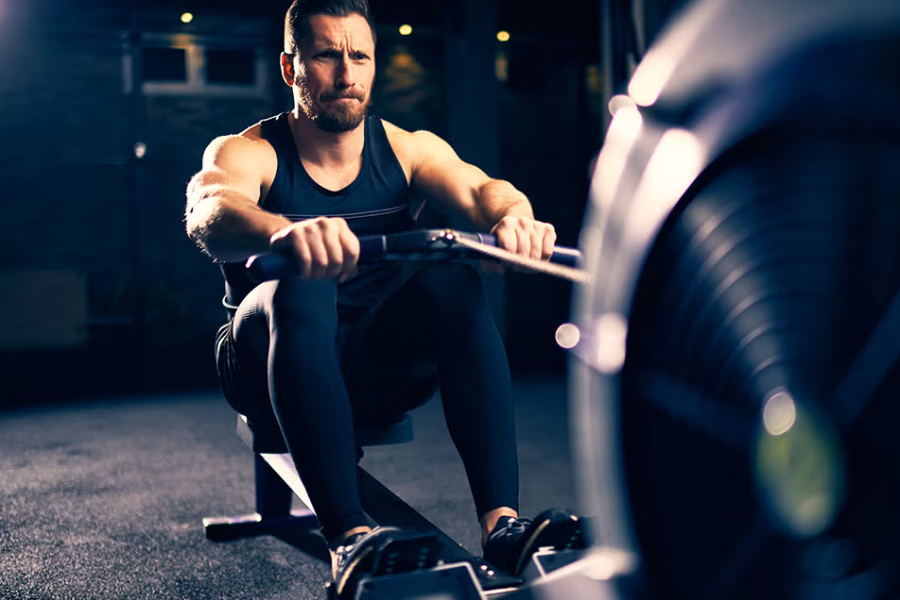
Rowing workouts for beginners are one of the simplest ways for you to get a low impact, full body cardio session that actually feels efficient. You work your legs, core, and upper body in a single motion, so you burn calories, build strength, and protect your joints at the same time. If you are looking for a way to lose weight and improve your health without pounding a treadmill, the rower is a smart starting point.
Below, you will learn what makes rowing so effective, how to set up your machine, the basics of good technique, and a few simple rowing workouts for beginners that you can start this week.
Why rowing is great for beginners
Rowing can feel a little intimidating at first because of the moving parts. Once you understand the basic pattern, it becomes straightforward and rhythmic.
You might like rowing if you want:
- Low impact cardio that is easy on your knees, hips, and ankles
- A workout that uses both upper and lower body at the same time
- A way to build endurance and strength in relatively short sessions
- A realistic option for weight loss that you can do at home or at the gym
The rower, often called an ergometer or just an erg, works about 80% of the major muscles in your body, including legs, glutes, core, back, and arms, which makes it a true full body machine for beginners as of 2025 (Asphalt Green). Because you stay seated, your joints take much less impact compared with running.
Rowing workouts for beginners do have a slight learning curve compared with walking or jogging on a treadmill. Once you get your form sorted out, you get a smooth cardio session that raises your heart rate and improves your fitness without feeling jarring (Garage Gym Reviews).
Get to know your rowing machine
Before you start pulling hard, spend a minute understanding the main parts of the rower and what they do.
Most indoor rowers have:
- A sliding seat that moves back and forth
- A handle attached to a chain or strap
- Footrests or footplates with straps
- A flywheel or water tank that creates resistance
- A damper or resistance setting you can adjust
If you are using a Concept2 rower, you will see a damper lever on the side of the flywheel. Beginners often think that setting this to 10 means a better workout, but that high resistance usually leads to poor form and strain, especially if you are new or coming from CrossFit style workouts (EXR).
A better starting range is a damper between 3 and 5. This simulates realistic water resistance and is what many Olympic rowers use in training (Asphalt Green, UCanRow2). The real resistance you feel still comes from how hard you push and pull, not only from the damper number.
Learn the basic rowing stroke
Efficient rowing technique follows a simple four step pattern. Once you can flow through these steps smoothly, your workouts become easier to maintain and safer for your back and joints.
These four stages are called:
- Catch
- Drive
- Finish
- Recovery
This sequence is used across rowing programs and is recommended as the foundation of proper technique for beginners (Garage Gym Reviews, Asphalt Green).
Catch
At the catch, you are closest to the flywheel.
- Sit tall with a neutral spine, do not round your back
- Knees bent, shins roughly vertical
- Arms straight, shoulders relaxed
- Hinge slightly forward at the hips
Think of this as your ready position.
Drive
The drive is the powerful part of your stroke.
Rowing is a leg driven movement, not an arm exercise. In the drive you want:
- Legs push first, as if you are driving away from the footplates
- Then your body leans back slightly from the hips
- Finally your arms pull the handle towards your lower ribs
This legs body arms sequence is considered best practice for beginners, who are often tempted to pull mainly with the arms instead of pushing through the legs (Asphalt Green).
Finish
At the finish, you are furthest from the flywheel.
- Legs are straight but not locked out
- Torso leans back slightly, still tall
- Handle is pulled in just below your chest
- Elbows stay close to the body
Pause for a split second so you feel control, not a sudden collapse backward.
Recovery
Recovery is the reset.
You simply reverse the drive in a smooth, controlled way:
- Arms extend forward
- Body pivots back to the upright forward lean
- Knees bend and the seat slides back toward the flywheel
You want the recovery to be longer than the drive, about a 1 to 2 or 1 to 3 ratio. That means you push hard for a short time and then glide back a bit more slowly, which is one of the pacing patterns recommended by rowing coaches for beginners (UCanRow2).
Avoid common beginner mistakes
When you start working on rowing workouts for beginners, it is easy to slip into habits that make the workout harder than it needs to be. You will progress faster if you keep an eye on these issues.
One big mistake is chasing speed before you master technique. Many beginners try to row as fast as possible, but Olympic rowers spend years drilling the same four phases of catch, drive, finish, and recovery to keep their movement smooth, efficient, and safe (EXR). For you, that means form first, speed later.
Another common problem is setting the damper too high. Cranking it up to 10 feels intense at first, but it puts more strain on your lower back and makes it harder to keep a consistent pace. A moderate damper matched to your body weight is safer and lets you focus on clean strokes instead of grinding against the machine (EXR).
Hand care also matters. If you grip the handle too tightly or row for too long too soon, you can get blisters, even if you wear gloves. One beginner who jumped straight into longer sets reported blisters on the palm near the fingers after only one workout (Reddit r/Fitness). You can avoid this by relaxing your grip, keeping workouts shorter at first, and letting your hands adapt.
Finally, do not panic if 30 to 40 minutes on the rower feels impossible at the beginning. It is common to feel very tired after only 10 or 15 minutes when you are still figuring out form and pacing (Reddit r/Fitness). You can absolutely build up to longer sessions over a few weeks.
How to track your rowing workouts
Most rowing machines show a few basic numbers. For rowing workouts for beginners, you only need to pay attention to three:
- Time spent rowing
- Stroke rate, how many strokes you take per minute
- Effort level, how hard you feel you are working
Focusing on these three keeps things simple and helps you see progress without drowning in data (Garage Gym Reviews).
Time is the easiest metric. You can start with 5 to 10 minute sessions and gradually increase to 20 or 30 minutes as your fitness improves (UCanRow2).
Stroke rate, often shown as spm, tells you how fast your strokes are. For easy beginner workouts, a range around 20 to 22 spm is recommended by some rowing coaches. A simple 10 minute beginner workout at an easy pace in this stroke rate band is a good starting place (UCanRow2). Other programs aimed at beginners suggest you can also work up toward 22 to 26 spm once you are comfortable (Asphalt Green).
Effort level is how the workout feels. You can think of a 1 to 10 scale, where 1 is very easy and 10 is an all out sprint. Beginners will spend most sessions around a 4 to 6 for steady cardio, and briefly visit 7 to 8 in short bursts during interval workouts.
Beginner workout 1: 10 minute technique session
This workout gets you used to the motion without draining your energy. You can use it as a warm up or as a stand alone workout if you are brand new.
- Set the damper between 3 and 5
- Row for 5 minutes at an easy pace, around 20 to 22 spm
- Rest off the machine for 1 to 2 minutes, walk around and stretch
- Row another 5 minutes, again at an easy pace
Keep your focus on smooth, clean strokes. Follow the legs, body, arms pattern on the drive and reverse it on the recovery. A 10 minute beginner workout like this, at a damper of 5 or below and stroke rate around 22 to 26 spm, is also suggested as a simple starting template by some coaches (Asphalt Green).
If that feels too easy, you can extend each rowing block to 8 or 10 minutes while keeping your stroke rate and effort controlled.
Beginner workout 2: Easy intervals for fitness
Once you can row comfortably for 10 minutes, you can start to add gentle intervals. These help you burn more calories in less time and make rowing more interesting.
Try this simple beginner interval workout:
- Warm up for 5 minutes at an easy pace, 20 to 22 spm
- Row 1 minute at a slightly harder pace, around a 6 out of 10 effort
- Row 2 minutes easy, around a 4 out of 10 effort
- Repeat steps 2 and 3 four times
- Cool down for 3 to 5 minutes at an easy pace
This gives you around 20 to 25 minutes total, including the warm up and cool down. You should be breathing harder during the 1 minute efforts but still able to speak a few words. If you find yourself gasping, slow down and shorten the hard intervals for now.
Beginner workout 3: Short HIIT rowing session
High intensity interval training, or HIIT, can be done on the rower even if you are a beginner. The key is to keep the total time short and focus on sharp form.
A simple HIIT rowing workout for beginners might look like this:
- Warm up for 5 minutes at an easy pace
- Row hard for 30 seconds at about an 8 out of 10 effort
- For the next 30 seconds, use only your legs in a light push and relax your upper body
- Repeat that 1 minute cycle 2 to 3 times at first
- As you get fitter, build up to 5 rounds, which will give you about a 15 minute session including the warm up and easy leg only rest periods
This structure of 30 second bursts followed by brief rest that still uses leg drive is a style recommended in beginner HIIT rowing plans (Garage Gym Reviews). Between rounds, breathe deeply and reset your technique so each effort feels clean.
Use HIIT sessions only one or two times per week when you are just starting. Fill the rest of the week with easier, steady rowing.
If you cannot hold your form during the hard 30 second bursts, reduce your effort before you increase your speed.
Beginner workout 4: Building endurance gradually
If your goal is to lose weight and improve your cardiovascular health, you will eventually want to build up to longer, steady state sessions. You do not need to jump from 10 minutes straight to 40 minutes. You can bridge the gap gradually.
Here is a simple progression you can follow once you are comfortable with 10 to 15 minutes:
Week 1
- Row 3 times per week
- Do 3 sets of 5 minutes rowing with 2 minutes rest between sets
Week 2
- Row 3 times per week
- Do 2 sets of 8 minutes rowing with 2 minutes rest
Week 3
- Row 3 times per week
- Do 1 set of 15 minutes rowing at a steady, moderate pace
For endurance training, keep your stroke rate steady and your exertion at a level you could maintain for the full time, such as a 5 or 6 out of 10 (Garage Gym Reviews). Some programs suggest that once 15 minutes feels manageable, you can extend up to 20 or 30 minutes over time (UCanRow2).
If you like having a structured plan laid out for you, you can also follow a coach built schedule or use pre made plans from indoor rowing programs like EXR. These plans often include regular progress checks and are designed to fit typical weekly routines (EXR). The EXR app, for example, offers workout plans tailored to your fitness level and gives you a way to start rowing workouts right away using a free trial (EXR).
How often you should row each week
You do not need to row every day to see results. Consistency matters more than perfection.
A realistic starting schedule might be:
- 2 to 3 rowing sessions per week in your first few weeks
- Each session 10 to 20 minutes, depending on the workout
- Gradually increasing to 20 to 30 minute sessions as you get stronger
With this approach, many beginners notice progress within a couple of weeks as they feel more comfortable on the machine and less winded at the same pace (UCanRow2). You can add more time or an extra day once you are recovering well between sessions.
Pay attention to your body. Slight muscle fatigue is normal. Sharp pain, especially in your back, shoulders, or knees, is a sign to stop and reassess your form, your damper setting, or how quickly you are increasing your time.
Putting it all together
Rowing workouts for beginners give you an efficient, low impact way to work on weight loss and overall health without spending hours in the gym. You get cardio, strength, and technique practice in every session.
To get started, you can:
- Set your damper between 3 and 5
- Practice the four stages of the stroke slowly until they feel natural
- Start with short 5 to 10 minute sessions, then add simple intervals
- Add one HIIT session and one longer endurance session only when you are ready
- Aim for 2 to 3 consistent workouts each week
Try one of the 10 minute workouts during your next gym visit or home session. As your confidence and endurance grow, you will be able to mix and match these beginner friendly rowing workouts into a routine that supports your goals and fits your schedule.