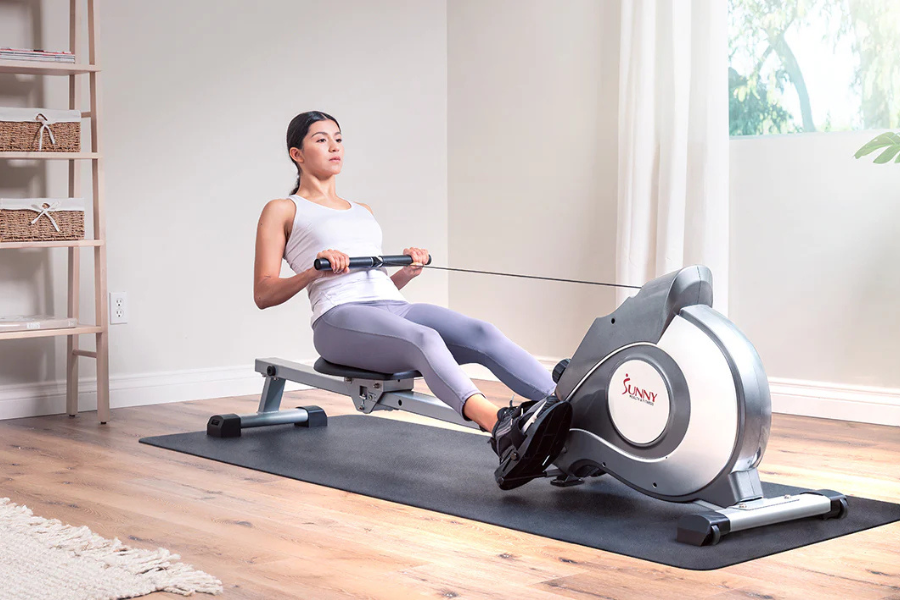
Natural question first. Can rowing workouts for fat loss really make a difference, or are they just another flashy cardio trend? The short answer is yes, rowing can be a powerful tool for burning body fat, improving your conditioning, and building lean muscle at the same time, especially when you use it in a structured way and combine it with smart nutrition.
Below, you will learn how rowing helps with fat loss, how often to row, and several beginner friendly and advanced workouts you can start using this week.
Why rowing works so well for fat loss
Rowing is one of the few cardio options that truly works your entire body. Each stroke uses your legs, glutes, core, back, shoulders, and arms, which means a higher calorie burn in less time compared to many other machines such as bikes or treadmills. Experts estimate that you can burn roughly 300 calories in 30 minutes at a moderate pace, depending on your size and fitness level, and significantly more as intensity rises (RowingMachineWorkouts.com, Healthline).
Rowing is also low impact. Your joints do not take the pounding they might during running, yet your heart rate still climbs quickly. This makes it a solid choice if you have knee or hip concerns or if you simply prefer a joint friendly option (Garage Gym Reviews, Fit&Well).
The big picture is simple. To lose fat, you need a calorie deficit, usually around 500 calories per day for steady weight loss. Rowing helps you create that deficit while building muscle, which can raise your resting metabolic rate over time (Healthline, Women’s Health).
Strength plus cardio in one workout
Traditional cardio often feels like “just” heart and lungs. Rowing is different. Done correctly, about 60 percent of each stroke comes from your legs, 20 percent from your core, and 20 percent from your upper body. Trainers often compare the drive to a deadlift like lower body push, followed by a strong pull with your back and arms (Women’s Health).
Because you engage so many major muscle groups at once, you get:
- A high heart rate for cardiovascular health
- Significant calorie burn during the workout
- Muscle building and toning in your legs, glutes, back, and core
That combination supports fat loss and body recomposition, where you lose fat while maintaining or gaining lean mass. Over several weeks of consistent rowing, adults with no previous exercise history have improved body composition by rowing five days per week, burning an estimated 481 to 713 calories per hour, depending on effort and body size (Women’s Health).
How often you should row for fat loss
You have flexibility in how you structure your rowing workouts for fat loss, but guidelines can help you avoid doing too little or too much.
Health organizations generally recommend at least 150 minutes of moderate intensity aerobic exercise per week. You can meet this with rowing alone, or by mixing rowing with other activities like walking or strength training (Healthline).
For practical planning, you can aim for one of these weekly structures:
- Five sessions of 30 minutes at a moderate pace
- Three to four sessions of 20 to 30 minutes with interval training
- A mix of two interval sessions and two longer steady state rows
If you prefer vigorous efforts, rowing five 15 minute HIIT sessions per week can also support weight loss and heart health, as long as you allow recovery and keep your form solid (Garage Gym Reviews).
Start with solid rowing technique
Before you push the pace, you will get more out of every stroke by dialing in your form. Proper technique helps you burn more calories, protects your back, and makes high intensity intervals feel more controlled (Women’s Health, RowingMachineWorkouts.com).
Think of each stroke in four phases:
-
Catch
Sit tall with your knees bent and shins vertical. Hinge slightly forward from your hips while keeping your back flat and core engaged. Arms are straight, shoulders relaxed. -
Drive
Push through your legs first, like a powerful leg press. Do not yank with your arms yet. Once your legs are nearly straight, lean back slightly, then finish by pulling the handle to your lower ribs. -
Finish
At the end of the drive, your legs are straight but knees not locked, your torso leans back a little, and your elbows are pulled behind you. -
Recovery
Reverse the sequence in slow motion. Extend your arms, hinge your torso forward, then bend your knees to slide toward the front again.
If you are brand new, start with slower, steady rows to let this sequence become automatic before adding high intensity intervals (Garage Gym Reviews).
Use your heart rate and effort to guide intensity
With rowing workouts for fat loss, you do not need a perfectly calibrated heart rate monitor, but some awareness of intensity helps. Many HIIT rowing protocols ask you to alternate between:
- Work intervals at about 80 to 95 percent of your maximum heart rate
- Recovery intervals at about 40 to 50 percent of your maximum heart rate
This pattern lets you work very hard for short bursts, then recover enough to repeat that effort, which is an efficient way to improve conditioning and burn calories (Garage Gym Reviews).
If you are using perceived effort instead of heart rate, treat your hard intervals as 8 or 9 out of 10, where talking is nearly impossible, and your easy intervals as a 3 or 4, where you can speak in full sentences.
Some rowers also like to include longer Zone 2 style sessions, which feel like a gentle but steady effort. These moderate rows can be particularly helpful for fat burning while limiting the hunger spike that can follow very intense training (Reddit).
Beginner rowing workouts for fat loss
If you are new to rowing or returning after a long break, you can make progress with short, approachable sessions that emphasize form, consistency, and mild intervals.
Workout 1: Technique and easy intervals
Use this one to get comfortable on the machine.
- Warm up for 5 minutes at an easy pace. Focus on smooth, controlled strokes.
- Row for 1 minute at a comfortable but steady effort, then 1 minute very easy.
- Repeat the 1 on, 1 off pattern 8 times.
- Cool down for 5 minutes at an easy pace.
This 25 minute workout lets you practice form and slightly raise your heart rate without pushing into true high intensity intervals yet. It mirrors beginner plans that prioritize technique and moderate intensity before more advanced work (Healthline).
Workout 2: Short HIIT starter
Once technique feels natural, try a simple HIIT session.
- Warm up for 5 minutes.
- Row hard for 20 seconds, then row very gently for 40 seconds.
- Repeat that 20 second on, 40 second off pattern 8 to 10 times.
- Cool down for 5 minutes.
A 1 to 2 work to rest ratio like this is often recommended for beginners, because it allows recovery while still training your cardiovascular system and VO2 max (Breaking Muscle). Keep the entire HIIT portion at 10 to 15 minutes or less until your body adapts (Garage Gym Reviews).
Intermediate and advanced HIIT rowing sessions
As your fitness improves after a few months of consistent rowing, you can layer in more challenging workouts that make your rowing sessions even more time efficient for fat loss.
Workout 3: Tabata rowing burst
The Tabata protocol is famous for packing a lot of intensity into a short session.
- Warm up for 5 to 8 minutes.
- Row as hard as you safely can for 20 seconds.
- Rest completely or row very gently for 10 seconds.
- Repeat steps 2 and 3 eight times for a total of 4 minutes.
- Cool down for 5 to 10 minutes.
Research referenced in HIIT rowing guides suggests that Tabata style intervals can help reduce body fat percentage and waist to hip ratio in overweight individuals, when used within a larger training program (Breaking Muscle). Because this format is so demanding, start with a single 4 minute round, and only add a second round once you are confident in your conditioning.
Workout 4: Pyramid intervals
A pyramid workout gradually increases then decreases interval length. It can be mentally engaging and less monotonous.
- Warm up for 5 minutes.
- Row hard for 30 seconds, easy for 30 seconds.
- Row hard for 45 seconds, easy for 45 seconds.
- Row hard for 60 seconds, easy for 60 seconds.
- Row hard for 45 seconds, easy for 45 seconds.
- Row hard for 30 seconds, easy for 30 seconds.
- Cool down for 5 to 8 minutes.
This session blends power and endurance, and it fits well in a 20 to 25 minute window. You can treat it as a stand alone workout or as a conditioning finisher after strength training (Breaking Muscle).
Workout 5: Mixed conditioning row
If you enjoy variety, you can pair rowing with simple bodyweight exercises to challenge more muscles while keeping your heart rate elevated.
For example:
- Row for 500 meters at a moderate to hard effort.
- Step off and do 10 to 15 bodyweight squats and 10 push ups.
- Rest 60 to 90 seconds.
- Repeat 3 to 5 rounds.
Training plans that layer rowing with movements like burpees or core work are popular because they create a full body conditioning effect in a short time window (Men’s Health).
Where longer steady rows fit in
High intensity sessions are effective, but you do not need to sprint every time you sit down on the rower. Longer, lighter efforts also support fat loss and cardiovascular health.
A typical steady state session might look like:
- 5 minute warm up
- 20 to 35 minutes at a light to moderate pace, around 20 to 26 strokes per minute
- 5 minute cool down
Programs that alternate moderate steady sessions with HIIT days have been used successfully in 4 week and 30 day rowing plans for weight loss (RowingMachineWorkouts.com, Fit&Well). These gentler rows are also a good place to focus on breathing, posture, and stroke smoothness.
If you are unsure where to start, two steady 20 to 30 minute rows plus one shorter HIIT session per week is a simple, sustainable foundation.
Combine rowing with nutrition and strength training
Rowing alone cannot completely offset an unbalanced diet. Many coaches note that fat loss is largely diet driven, and that rowing or any exercise is most effective when you pair it with a modest calorie deficit from nutrient dense foods (Healthline, Reddit).
You will support your results if you:
- Aim for a small to moderate calorie deficit, not extreme restriction
- Emphasize lean proteins, whole grains, fruits, vegetables, and healthy fats
- Limit highly processed foods and sugary drinks
- Eat a higher carb meal 2 to 4 hours before tough workouts for energy
- Have a light carb, high protein snack or shake after rowing to help recovery (Fit&Well, Breaking Muscle)
Adding two or more days per week of resistance training, such as weights or bodyweight strength work, can also accelerate fat loss by building muscle and boosting your resting metabolic rate (Healthline, Garage Gym Reviews).
Staying consistent without burning out
The rowing workouts for fat loss that work best are the ones you can stick with. It helps to:
- Choose a realistic weekly schedule and protect those time slots
- Rotate tough HIIT days with easier steady rows or rest days
- Use a heart rate monitor if you enjoy data, especially to keep easy days truly easy (Reddit)
- Track more than just the scale, such as how your clothes fit or how far you can row in 10 minutes
Remember that you do not have to overhaul everything at once. You can start with one simple workout, for example the 20 seconds on and 40 seconds off beginner HIIT, repeat it twice this week, and see how your body responds. Over time, you can build your own mix of rowing sessions that feels challenging but enjoyable, which is exactly the kind of routine that supports long term fat loss and better overall health.