Why tricep exercises for women matter
If you want defined, strong arms, your triceps deserve just as much attention as your biceps. The triceps sit on the back of your upper arm and actually make up most of your upper arm muscle mass. When you straighten your elbow to push a door, press yourself up from the floor, or lift a box onto a shelf, your triceps are doing a lot of the work.
The triceps have three heads, the long head, medial head, and lateral head, that work together to extend your elbows and help with chest-dominant moves like pushups and presses. Because of this, training them improves both how your arms look and how they perform in everyday life. Strong triceps help stabilize your shoulders and support your chest, back, and shoulder muscles, which can reduce strain when you reach, lift, or carry.
How often to train your triceps
You do not have to live in the gym to see results. You can build strength and tone in your triceps with short, focused sessions.
For most women, a good starting point is:
- 2 to 3 tricep-focused workouts per week
- 3 to 6 total tricep exercises in each session
- 2 to 4 sets of 8 to 15 reps per exercise
You can do an all triceps mini workout, or you can plug 2 or 3 tricep exercises into an upper body or full body day. Aim to leave 48 hours between intense tricep sessions so your muscles can recover and grow.
If you are new to strength training, start with bodyweight variations and fewer sets. As you feel more confident, increase the difficulty by adding weight, slowing down the lowering part of each move, or adding an extra set.
Form tips that protect your shoulders
Good form is what makes tricep exercises effective instead of frustrating. It also protects your joints, especially your shoulders, which can be sensitive during pressing movements.
Keep these cues in mind:
- Pull your shoulders down and slightly back, so they are not creeping up toward your ears
- Brace your core as if you are about to cough, this keeps your ribs from flaring and your lower back from arching
- Keep your elbows pointing mostly forward or tucked toward your sides, instead of flaring wide
- Move through a comfortable range of motion, no forcing your joints into painful positions
Triceps work closely with your shoulders. Trainers like Jacqueline Kasen, CPT, emphasize that strong triceps help stabilize your arms and shoulders and increase your range of motion, so focusing on controlled, clean movement pays off in both strength and comfort during workouts.
Bodyweight tricep exercises for women
Bodyweight tricep exercises are ideal if you prefer to work out at home or you are just getting started. They require little to no equipment and they teach you how to control your body in space, which carries over to almost every other exercise you do.
Forearm plank hold
You might think of plank as a core move, but it also trains your triceps, shoulders, and chest. Holding your body in a straight line forces your triceps to work to keep your elbows stable.
How to do it:
- Start on your forearms with elbows directly under your shoulders and legs extended behind you.
- Press your forearms into the floor and step your feet back until your body forms a straight line from head to heels.
- Squeeze your glutes and brace your core so your hips do not sag or hike up.
- Hold for 20 to 40 seconds, breathing steadily, then rest.
To make it easier, drop your knees to the floor and keep your body in a straight line from head to knees.
Tricep pushup
Tricep pushups shift more of the work to the backs of your arms than a standard pushup. The key is keeping your elbows close to your ribs instead of letting them flare out.
How to do it:
- Start in a high plank with your hands under your shoulders and your body in a straight line.
- Rotate your elbows so they are pointing back toward your feet.
- Bend your elbows and lower your chest toward the floor, keeping your elbows hugged in.
- Push through your palms to straighten your arms and return to the starting position.
If this version is too challenging right now, drop your knees to the floor for a modified pushup, or place your hands on a bench, step, or counter so your upper body is higher and there is less weight on your arms.
Diamond pushup
Diamond pushups, sometimes called triangle pushups, are a classic bodyweight tricep move that really challenges the lateral head on the outside of the triceps.
How to do it:
- From a high plank, walk your hands together under your chest.
- Bring your index fingers and thumbs together so they form a diamond shape on the floor.
- Keep your body in a straight line and bend your elbows to lower your chest toward your hands.
- Press back up, maintaining that diamond hand position.
If needed, perform the same movement on your knees. You will still feel strong activation in the backs of your arms without overloading your shoulders.
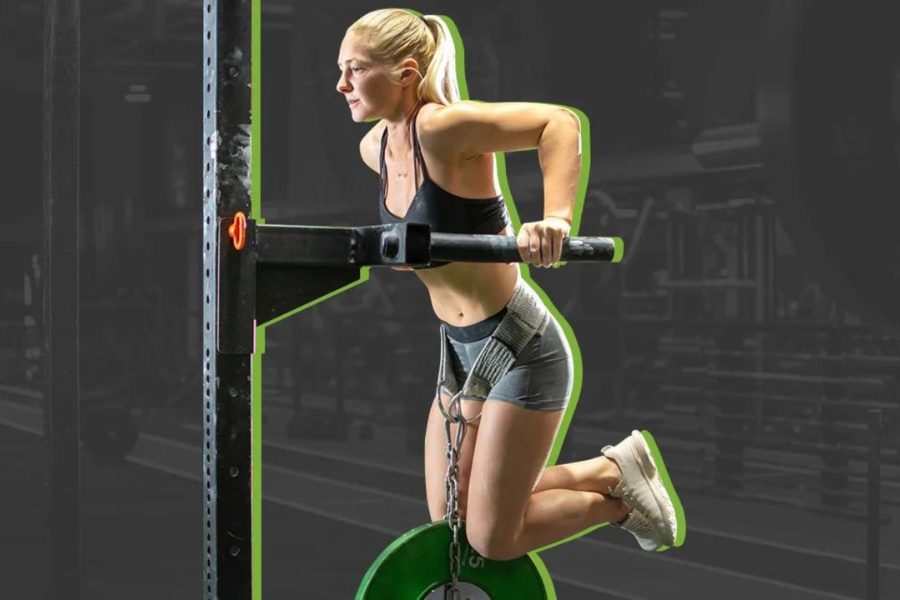
Tricep dips on a chair or bench
Tricep dips require just a sturdy surface like a bench, low table, or chair. They are convenient for home workouts and are easy to adjust to your current strength level.
How to do it:
- Sit on the edge of a bench or chair and place your hands next to your hips, fingers pointing forward.
- Walk your feet out and slide your hips off the edge so your weight is supported by your hands and feet.
- Bend your elbows to about 90 degrees, keeping your back close to the bench.
- Push through your palms to straighten your arms and lift your body back up.
You can bend your knees to make the move easier, or straighten your legs to make it more intense. Take care not to lower too deep, going too low can stress your shoulders more than your triceps.
Dumbbell tricep exercises for women
If you have access to dumbbells, you can add load and variety so your triceps have a new reason to adapt and grow. Light to moderate weights are usually enough, the focus is on control and full range of motion.
Overhead tricep extension
Overhead tricep extensions are a staple for targeting the long head of the triceps along the back of your upper arm.
How to do it:
- Stand or sit tall with your feet about hip-width apart.
- Hold one dumbbell with both hands, palms on the inner plate, and press it overhead so your arms are straight.
- Keeping your upper arms close to your ears, bend your elbows and lower the weight behind your head.
- When you feel a stretch in the back of your arms, press the dumbbell back up until your arms are straight again.
Keep your ribs down and core engaged so you are not arching your lower back to move the weight.
Tricep kickback
Tricep kickbacks isolate each arm and really light up the medial head of the triceps. The most important part is keeping your upper arm still while your forearm moves.
How to do it:
- Hold a dumbbell in your right hand and hinge forward at the hips, keeping your back flat.
- Bend your right elbow to about 90 degrees and pull it close to your side so your upper arm is parallel to the floor.
- Keeping your upper arm still, straighten your elbow and extend the dumbbell behind you.
- Squeeze your triceps at the top, then slowly bend your elbow to return to the starting position.
Complete all your reps on one side, then switch arms. Use a weight that allows you to move slowly and smoothly, without swinging.
Skull crusher (lying tricep extension)
Lying tricep extensions, often called skull crushers, are an effective way to target the long head of the triceps while giving your back support.
How to do it:
- Lie on your back on a bench or mat, feet flat on the floor.
- Hold one or two dumbbells directly over your shoulders with your arms straight and palms facing in.
- Keeping your upper arms vertical, bend your elbows and lower the weights toward your forehead or just behind your head.
- Stop when you feel a stretch in your triceps, then straighten your elbows to press the weights back up.
Move slowly and stay in control so the weights stay directly over your elbows at the top of the movement instead of drifting behind your head.
Single arm tricep reach
This move combines an overhead position with unilateral work so you can spot and correct strength imbalances between sides.
How to do it:
- Stand tall and hold a single dumbbell in your right hand.
- Reach your right arm straight overhead, palm facing forward or in.
- Place your left hand lightly on your right upper arm to keep it steady.
- Bend your right elbow and lower the weight behind your head.
- Extend your arm back up, focusing on squeezing your triceps at the top.
Repeat on the other side, and choose a weight that allows you to keep your torso upright without leaning.
Compound tricep exercises you should know
Compound exercises use more than one joint and multiple muscle groups at once. They are efficient and they often hit your triceps even if the move is not labeled as a tricep exercise.
Close grip bench press
In a close grip bench press, you bring your hands closer together than in a regular bench press. This shifts more of the work to your triceps while still engaging your chest and shoulders.
How to do it:
- Lie on a flat bench with your feet planted on the floor.
- Hold a barbell or a pair of dumbbells with your hands roughly shoulder-width apart.
- Start with your arms straight over your chest.
- Bend your elbows, keeping them tucked toward your sides, and lower the weight to your lower chest.
- Press back up until your arms are straight, without locking your elbows harshly.
Because compound moves are more demanding, it usually helps to perform them earlier in your workout, before your triceps are tired from isolation exercises.
Dumbbell floor press
The dumbbell floor press is similar to a bench press, but you work from the floor, which can feel more stable and easier on your shoulders. It is also a smart way to handle heavier loads safely, since the floor limits your range of motion.
How to do it:
- Lie on your back on the floor with a dumbbell in each hand.
- Bend your knees and plant your feet.
- Start with your upper arms resting on the floor, elbows bent at 90 degrees, and dumbbells over your elbows.
- Press the weights straight up until your arms are extended.
- Lower with control until your upper arms lightly touch the floor again.
Because your elbows stop at the floor, this version can feel more comfortable for many people while still challenging your triceps and chest.
Putting it together: a simple tricep workout
You can combine these moves into a short workout that fits easily into your week. Here is one example you can follow at home or at the gym.
- Warm up for 3 to 5 minutes with light cardio such as marching or jogging in place, arm circles, and gentle chest and shoulder stretches.
- Choose 1 bodyweight tricep exercise, such as tricep pushups or dips.
- Choose 2 dumbbell tricep exercises, such as overhead extensions and kickbacks.
- Choose 1 compound pressing move, such as close grip bench press or dumbbell floor press.
Perform 2 to 3 sets of 8 to 12 reps for each exercise. Rest 45 to 75 seconds between sets. If a move feels too easy, slow down the lowering phase or increase the weight slightly. If your form breaks down or you cannot reach your target reps, lighten the load or shorten the range.
As strength coaches often note, women can perform the same tricep exercises as men, even if strength gains progress differently. What matters is consistent training, gradual progression, and attention to form.
Key points to remember
- Your triceps make up a large portion of your upper arm, so training them is essential for defined, toned arms.
- Strong triceps support your chest, back, and shoulders and improve everyday tasks like pushing, lifting, and carrying.
- You can build impressive tricep strength with bodyweight moves alone, then add dumbbells or cables to progress further.
- Focus on controlled movement, elbows that stay close to your body, and shoulders that are down and back, not hunched.
- Train your triceps 2 to 3 times per week, with enough rest between sessions so your muscles can recover.
Start with one or two tricep exercises for women in your next workout and pay attention to how your arms feel during daily tasks. Over a few weeks, you are likely to notice that pushing doors, carrying groceries, and even holding a plank all feel more powerful.