A bedtime routine that actually helps you fall asleep does not have to be complicated. If you have been wondering what is the 3 2 1 rule for bedtime, think of it as a simple countdown that gently walks your brain and body toward sleep. Instead of trying ten different hacks at once, you focus on just three time-based habits every night.
The 3 2 1 rule for bedtime is part of a broader routine called the 10-3-2-1-0 sleep rule, which is designed to protect your sleep from common disruptors like caffeine, late meals, stress, and screens (HIF Health Hub). You do not have to follow every piece perfectly to benefit from it. Starting with the 3-2-1 part is often enough to notice that you fall asleep faster and wake up feeling more rested.
What is the 3 2 1 rule for bedtime
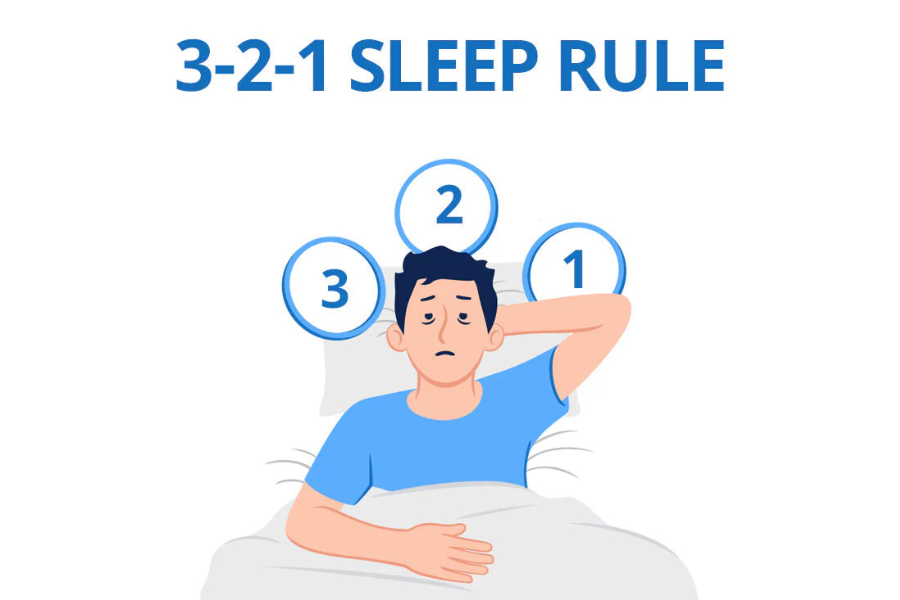
The 3 2 1 rule for bedtime is a simple schedule that tells you what to stop and when in the hours before you go to sleep. It is usually explained like this as part of the 10-3-2-1-0 routine:
- 3 hours before bed: no food or alcohol
- 2 hours before bed: no more work or studying
- 1 hour before bed: no screens
Sleep experts describe this as a practical way to protect your natural sleep cycle without needing special gadgets or supplements. For example, the “3” in the 10-3-2-1-0 rule advises you to avoid food and alcohol three hours before bedtime so late eating and drinking do not disrupt your circadian rhythm or reduce your REM sleep (HIF Health Hub).
The “2” part encourages you to stop working or studying two hours before bed so your brain has time to unwind and your stress level drops before you try to sleep. The “1” part recommends no screen time one hour before bed because the blue light from screens can suppress melatonin and make it harder to fall asleep (HIF Health Hub).
Even if you do nothing else for your sleep, using this 3-2-1 countdown consistently can make a big difference.
How the 3-hour rule helps your body
Three hours before you plan to sleep, the rule asks you to finish eating and avoid alcohol. This window gives your digestive system time to do its work while you are still awake and active.
Late dinners, heavy snacks, or drinks close to bedtime can:
- Trigger heartburn or reflux when you lie down
- Cause more frequent awakenings in the night
- Disrupt your circadian rhythm, which is the internal clock that regulates sleep and wake cycles
- Interfere with REM sleep quality, especially when alcohol is involved (HIF Health Hub)
Health experts who describe the 10-3-2-1-0 routine explain that having your last meal at least three hours before bed reduces these problems and supports a more stable sleep pattern (Health).
If three hours feels like a big jump from what you do now, you can ease into it by:
- Moving your usual dinner 30 minutes earlier for a week
- Swapping late-night heavy snacks for a lighter option earlier in the evening
- Limiting alcohol to once or twice a week and finishing your drink earlier in the night
You might notice that you fall asleep more easily and wake up feeling less groggy when your body is not busy digesting a large meal.
Why the 2-hour rule calms your mind
Two hours before your bedtime, the 3 2 1 rule for bedtime asks you to stop all work and mentally demanding tasks. This includes emails, studying, planning your next day in detail, or anything that keeps your brain in problem-solving mode.
The “2” in the 10-3-2-1-0 sleep rule is designed to give your brain a clear off-ramp from the stresses of the day. According to sleep hygiene guidance, stopping work or studying two hours before bed helps your mind shift into a more relaxed state and can improve both how quickly you fall asleep and the quality of your rest (HIF Health Hub).
If you are used to working right up until you climb into bed, this buffer can feel strange at first. To make the transition easier, you can:
- Set a daily “shutdown” alarm two hours before bed as a reminder
- Do a quick brain dump on paper of anything you are worried you will forget
- Pick one simple wind-down activity, like stretching, a warm shower, or reading a physical book
You are creating a clear line between your workday and your night of rest, which makes it easier for your nervous system to relax.
How the 1-hour rule protects your sleep hormones
One hour before bedtime, the rule recommends turning off screens. That means phones, laptops, tablets, and TVs. This step is focused on protecting melatonin, the hormone that helps your body know it is time to sleep.
The “1” in the 10-3-2-1-0 rule is based on research showing that blue light from screens can suppress melatonin and disrupt your sleep-wake cycle. This can make it harder to fall asleep and might reduce overall sleep quality (HIF Health Hub).
Health experts who describe this routine explain that putting screens away one hour before bed is a practical way to avoid that light exposure and let your brain shift into sleep mode more naturally (Health).
If you are not sure what to do without screens at night, you can experiment with:
- Reading a physical book or magazine
- Light stretching or gentle yoga
- Journaling about your day
- Listening to calming music, an audio story, or a podcast without watching the screen
The first few nights might feel a bit boring, but that quiet is exactly what signals to your brain that it is safe to rest.
How the 3 2 1 rule fits into the full 10-3-2-1-0 routine
The 3 2 1 rule for bedtime is part of a larger framework called the 10-3-2-1-0 rule. The full version usually looks like this:
| Time before bed | What to adjust | Why it helps |
|---|---|---|
| 10 hours | No more caffeine | Caffeine can stay in your system for up to 10 hours and interfere with falling asleep and sleep quality (HIF Health Hub) |
| 3 hours | No food or alcohol | Late eating disrupts circadian rhythms and alcohol reduces REM sleep (HIF Health Hub) |
| 2 hours | No work or studying | Gives your brain time to relax and reduces stress before bed (HIF Health Hub) |
| 1 hour | No screens | Reduces blue light that suppresses melatonin and disrupts sleep-wake cycles (HIF Health Hub) |
| 0 | No hitting snooze | Encourages getting up at your set time so your internal clock stays consistent |
Health articles describing this routine point out that you do not have to be perfect with every step to benefit. Focusing on the 3-2-1 part is an accessible way to improve your sleep hygiene and support your natural wakefulness during the day (Health).
If you ever want to go further, you can start paying attention to your caffeine cut-off and your morning wake time as well, but the 3-2-1 steps are a strong foundation.
How to start using the rule tonight
You do not need to redesign your entire life to try the 3 2 1 rule for bedtime. The key is to start small and be consistent rather than aiming for perfection and giving up.
You can try this simple plan:
- Choose a realistic bedtime for the next week. For example, 11 p.m.
- Count backwards to set your times:
- 8 p.m. is the latest you will eat or drink alcohol
- 9 p.m. is when you stop all work, email, and studying
- 10 p.m. is when you put away screens
- Set reminders on your phone earlier in the day so you are not caught off guard.
- Pick one relaxing activity for the screen-free hour, like reading, stretching, or a warm bath.
If a night does not go as planned, you can still apply whichever part of the countdown is practical. Over time, your evenings will begin to fall into a more predictable rhythm, which makes good sleep more likely.
When to talk to a professional
The 3 2 1 rule for bedtime is designed for general sleep improvement and better sleep hygiene. Many people notice benefits in their energy and mood when they follow it regularly (ColumbiaDoctors).
However, it is important to reach out to a healthcare provider or sleep specialist if you:
- Have chronic insomnia that lasts for weeks or months
- Snore loudly or wake up gasping
- Feel extremely tired during the day even when you think you slept enough
- Suspect an underlying sleep disorder
In those cases, the rule can still be a helpful part of your routine, but you may need personalized medical guidance on top of it.
Key takeaways
The question of what is the 3 2 1 rule for bedtime really comes down to three simple steps that help your body and brain wind down:
- Three hours before bed, finish eating and drinking alcohol so digestion and sleep do not compete.
- Two hours before bed, stop working and studying so your mind can calm down.
- One hour before bed, put away screens so melatonin can rise and your natural sleep cycle can kick in.
Try following the full countdown for just one week. Notice how you feel when you wake up, how long it takes you to fall asleep, and how your mood and focus change during the day. Small, consistent changes in your evening routine often add up to much better nights of rest.