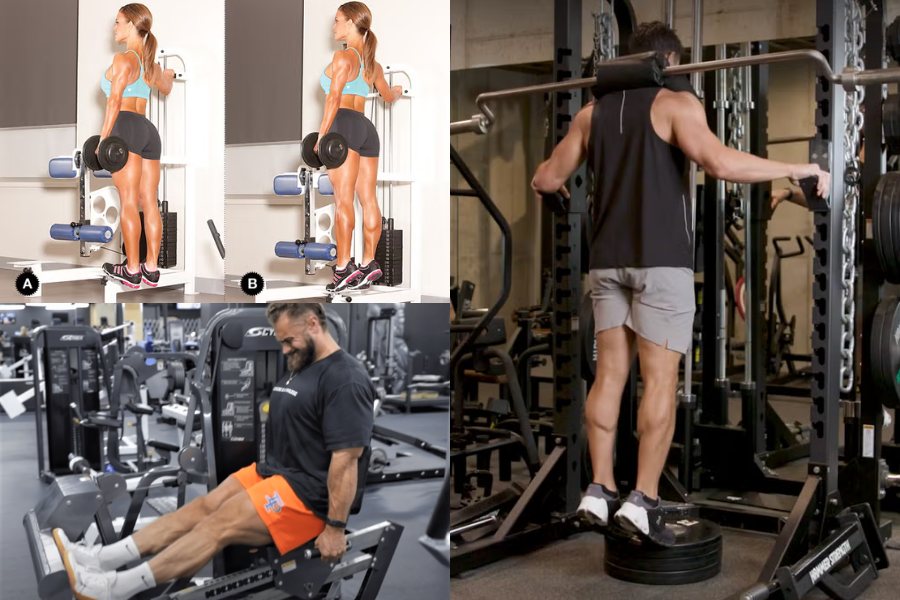
Targeted calf exercises are one of the simplest ways to improve how you walk, run, climb stairs, and even stand in line at the grocery store. A smart calf workout at home can build stronger, more stable lower legs that support your knees, ankles, and everyday movement without needing a gym or special equipment.
Below, you will learn how your calves work, the best at‑home exercises, and how to put them together into an effective routine that fits your schedule.
Understand your calf muscles
Before you start training, it helps to know what you are working.
Your calves are made up of two main muscles. The gastrocnemius is the visible muscle that gives your calf its shape. It crosses both the knee and the ankle, helps you push off the ground, and is more prone to strain because it does so much. Underneath sits the soleus, a flatter, deeper muscle that wraps around the lower leg and plays a big role in stabilizing the ankle and supporting your balance.
When you walk, run, or jump, both muscles work together to:
- Propel you forward
- Absorb impact when your foot hits the ground
- Support the knee and reduce wobbling
- Help protect the Achilles tendon from excessive strain
A focused calf workout at home strengthens this system so you move with more control and feel less vulnerable to tweaks and overuse aches.
Why a calf workout at home matters
Strong calves are not just about appearance. They have a direct effect on your lower body function.
Well trained calves help you:
- Maintain balance on uneven ground
- Stabilize your knees during squats, lunges, and stair climbing
- Reduce the load on your Achilles tendon
- Improve your push off when you jog, sprint, or jump
Because your calves recover relatively quickly compared to larger muscles, you can train them more often with a mix of high‑rep sets and moderate loads. A home based routine is enough to build noticeable strength and definition as long as you are consistent and challenge yourself with good technique.
Warm up before your calf workout
Calf muscles respond well to work, but they are also prone to cramps and tightness if you rush into intense movement. A short warm‑up reduces your risk of muscle strain and makes each exercise feel smoother.
Spend 5 to 8 minutes on:
-
Light cardio
March in place, walk around your home, or do gentle jumping jacks at a slow pace to get blood flowing. -
Dynamic ankle movements
Circle your ankles, point and flex your toes, and rock from heel to toe while standing. -
Easy calf stretches
Stand facing a wall, step one foot back, and gently press your heel toward the floor until you feel a mild stretch in the calf. Hold for 15 to 20 seconds per side.
If you feel sharp pain, swelling, or you cannot comfortably bear weight on one leg, skip the workout and give your body time to rest. Pushing through that level of discomfort increases your injury risk instead of your strength.
Foundational calf exercises you can do at home
You can build an effective calf workout at home using only your body weight and a step, sturdy book, or low platform. Start with these foundational moves and focus on slow, controlled reps.
Standing calf raises
Standing calf raises are the classic go to move for calf strength. They work your calves through a full range of motion and are especially effective for the gastrocnemius.
How to do them:
- Stand tall with feet about hip width apart and hands resting lightly on a wall, chair, or countertop for balance.
- Press through the balls of your feet to lift your heels as high as you comfortably can.
- Pause briefly at the top, then slowly lower your heels until they are just below your starting position.
- Repeat for 3 to 4 sets of 20 to 25 reps.
To make the movement more effective, let your heels drop into a deeper stretch at the bottom if you are standing on a step or raised surface. Performing calf raises in a stretched position, with toes pulled slightly up toward your shins, leads to significantly greater muscle growth compared with only working the top half of the movement. At the end of your sets, you can add a few partial reps in that stretched bottom position to increase tension on the muscle fibers and encourage hypertrophy.
Single leg calf raises
Once basic standing calf raises feel comfortable, you can progress to single leg versions. These increase the load on each calf and help address left right strength differences.
How to do them:
- Stand on one leg with the other leg bent slightly behind you for balance.
- Hold a wall or chair with one hand if needed.
- Press through the ball of your standing foot, lifting your heel as high as possible.
- Lower slowly into a stretch and repeat.
Aim for 2 to 3 sets of 10 to 15 reps per leg. If you need more challenge, hold a dumbbell or a heavy household item like a filled water jug on the same side as the working leg.
Seated calf raises
Seated calf raises shift more emphasis toward the soleus muscle. You can do these using a chair and some household weight.
How to do them:
- Sit tall in a chair with your feet flat on the floor, knees at roughly 90 degrees.
- Place a heavy object across your thighs, closer to your knees.
- Keeping your toes on the floor, lift your heels as high as you can.
- Lower slowly until your heels lightly touch the floor and repeat.
Seated variations are useful for building endurance and stability in the lower leg. However, when your main goal is visible calf growth, prioritizing standing calf raises is usually more effective because they place the muscles under greater load and at longer lengths.
Bodyweight moves that train your calves
Certain full body exercises naturally give your calves a solid workout. When you adapt them slightly, they can be powerful tools in your home routine.
Squat and lunge variations
Your calves help stabilize your ankles and knees in every squat and lunge. You can dial up their involvement with simple adjustments.
Try these ideas:
- Raised heel squats. Place your heels on a low platform or a pair of weight plates while your toes stay on the floor. As you squat, your calves work harder to control your balance.
- Walking lunges with heel lift. At the top of each lunge, drive through the front foot and rise onto the ball of your foot for a brief calf raise before stepping into the next rep.
These tweaks increase ankle motion and calf activation without changing the base movement too much.
Downward dog for active stretching
Downward dog is more than a yoga pose. It offers an active stretch for your calves and hamstrings and can double as a gentle strength move.
From a plank position, lift your hips up and back into an inverted V shape. Press one heel at a time toward the floor while bending the opposite knee slightly. You will feel a stretch move through your calves and Achilles. Spend 20 to 30 seconds “pedaling” your feet in this position as part of your warm up or cool down.
Plyometric and cardio based calf work
Explosive and cardio focused moves challenge your calves in a different way. They help you build power, coordination, and endurance while also raising your heart rate.
Jump rope
If you have a jump rope, it is one of the most efficient tools for a calf workout at home. Each hop requires a quick, powerful contraction from your calves and reinforces strong landing mechanics.
A simple structure is:
- 3 to 4 rounds
- 30 seconds of jumping
- 30 seconds of rest between rounds
Focus on small, quick jumps and land softly on the balls of your feet. Keep your knees slightly bent to absorb impact.
Jumping drills
If you do not have a rope, you can still use jumps to work your calves.
Options include:
- Jumping jacks
- Butt kickers in place
- Jump squats, starting with bodyweight only
Keep your sessions short, pay attention to good landing mechanics, and stop if you feel sharp pain or excessive tightness in your calves or shins.
Adjusting exercises to better target your calves
Small changes in foot position and technique can shift emphasis to different parts of your calves and make your workout more complete.
Here are simple tweaks to try during calf raises:
- Turn toes slightly inward to emphasize the outer part of the calf.
- Turn toes slightly outward to shift focus toward the inner portion.
- Play with inversion and eversion, meaning rolling slightly to the outside or inside of your feet, while still keeping your ankles safe and controlled.
No matter which variation you choose, drive through the balls of your feet and avoid rushing the movement. The slow lower and stretched bottom position are where much of the muscle building stimulus occurs.
For calf strength and growth, quality reps in a full, stretched range of motion will usually beat fast, shortened movements.
Sample home calf workout plan
You can put these ideas together into a simple routine that fits within 15 to 20 minutes. Adjust the sets and reps based on your current fitness level.
Beginner routine
- Warm up, 5 minutes of light cardio and ankle mobility
- Standing calf raises, 3 sets of 15 to 20 reps
- Seated calf raises, 2 sets of 15 to 20 reps
- Downward dog with pedaling heels, 2 rounds of 20 to 30 seconds
- Gentle calf stretch, 2 rounds of 20 seconds per side
Intermediate routine
- Warm up, 5 to 8 minutes
- Single leg calf raises on a step, 3 sets of 10 to 15 reps per leg
- Raised heel squats, 3 sets of 10 to 12 reps
- Jump rope, 3 to 4 rounds of 30 seconds on and 30 seconds off
- Finisher, partial reps at the bottom stretch position for each calf, 10 to 12 quick pulses per leg
- Cool down with calf and ankle stretches
Train your calves 2 to 4 times per week, leaving at least one day between harder sessions if you are sore. Over time, increase difficulty by adding weight, slowing down the lowering phase, or increasing total volume.
How to stay safe and track progress
Listening to your body is part of a good calf workout at home. Mild burning or fatigue in the muscles is normal during high rep work, but intense pain, swelling, or difficulty putting weight on the leg are signs to stop and rest.
To stay safe:
- Add volume gradually instead of jumping from a few sets to many.
- Warm up before cardio days that include running, jumping, or long walks.
- Keep your landings soft during plyometrics.
- Make sure your shoes provide enough support for your activity.
You can track progress by noting how many reps you complete with good form, how high your heels rise, or how your calves feel during daily tasks like climbing stairs. Over a few weeks, you should notice stronger push off, better balance, and more defined calves.
With a bit of consistency and attention to technique, your calf workout at home can become one of the most effective parts of your entire fitness routine.