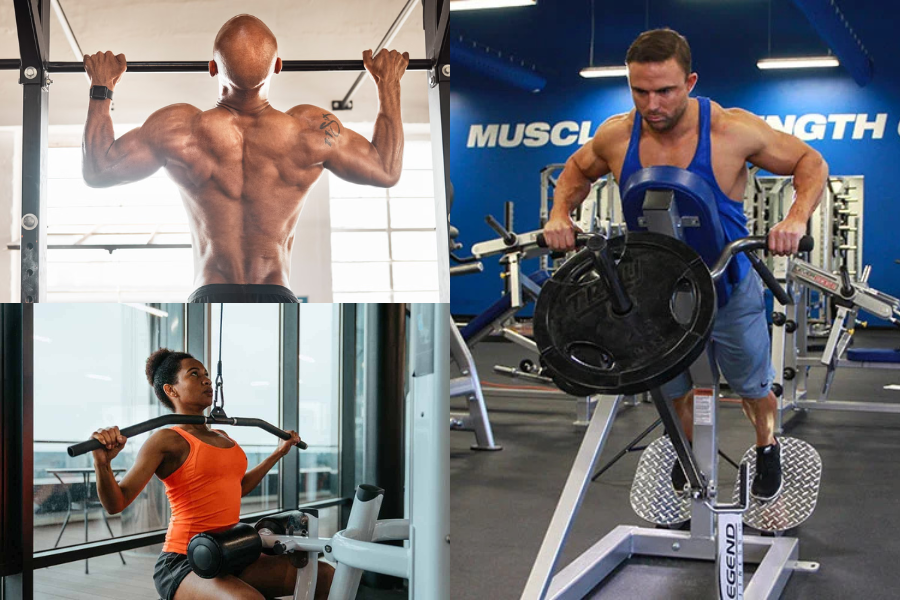
A strong, resilient back does more than help you look fit. It supports your spine, improves posture, protects you from everyday aches, and powers almost every movement you make. A focused back workout with dumbbells gives you all those benefits without needing a barbell or bulky machines.
You can do every move in this guide at home or in the gym with a simple set of dumbbells. You will build muscle across your upper, mid, and lower back while also improving core stability and balance.
Why your back needs dumbbells
A back workout with dumbbells trains far more than the big muscles you see in the mirror. Your lats, traps, rhomboids, and erector spinae all support your spine and help you lift, twist, and carry safely.
Compared with machines and barbells, dumbbells give you a greater range of motion and make each side of your body work independently. Physical therapists Jaime Aparicio and Amber Lowe note that dumbbell back exercises allow unilateral training to correct muscle imbalances and recruit stabilizer muscles for better overall strength and control, which is especially useful at home where equipment is limited.
This combination of range of motion, unilateral work, and stability makes dumbbells ideal if you want to:
- Improve posture and ease back stiffness
- Build muscle and strength with limited space
- Reduce injury risk by training supporting muscles around the spine
Warm up before you lift
Before you pick up a weight, you want your muscles and joints ready to move. A good warm up increases blood flow, activates the muscles you are about to train, and lowers your chance of strain.
Peloton strength coach Austin Cagley recommends starting your dumbbell back workouts with light cardio and dynamic stretches that focus on the back, shoulders, and hips. A simple 5 to 8 minute warm up might include:
- 2 minutes of brisk walking or marching in place
- Arm circles forward and backward
- Torso twists with soft knees
- Bodyweight squats while keeping your chest lifted
You should feel warmer and more mobile, not tired. From there you can safely move into heavier pulling and hinging movements.
How to choose the right weight
The best back workout with dumbbells is one you can perform with control. Going too heavy encourages swinging and poor form, which shifts tension to joints instead of muscles.
When you are learning a new exercise, start lighter than you think you need. Cagley suggests gradually increasing load while keeping form as your top priority. Use these quick checks:
- You can complete 8 to 12 reps with steady, controlled tempo
- You feel the exercise mostly in the target muscles, not in your lower back or joints
- Your form looks the same on the final rep as it did on the first
If you are using momentum or rocking your torso, the weight is likely too heavy. When in doubt, drop down and master the movement first.
The five essential dumbbell back exercises
Below you will find a complete dumbbell back workout that covers your upper, mid, and lower back and your core. You can run it as a full session two or three times per week, leaving at least one day of rest between workouts.
1. Single arm dumbbell row
The dumbbell row is one of the best exercises you can do for back strength and muscle. It targets your lats and rhomboids and it also challenges your core to stabilize your torso. For many people this is the main strength builder in their back routine.
How to do it:
- Place your left hand and left knee on a bench or sturdy surface. Your right foot stays on the floor, right hand holding a dumbbell.
- Keep your back flat from head to hips, core braced, and shoulders square to the floor.
- From a straight arm position, pull the dumbbell toward your hip, not your shoulder. Think about pulling with your elbow, not your hand.
- Squeeze your shoulder blade toward your spine at the top, then lower with control until your arm is fully extended again.
Aim for 3 sets of 8 to 12 reps per side. If you feel more work in your biceps than in your back, slow the movement down and focus on that “elbow drives back” cue.
2. Chest supported incline row
The incline dumbbell row is a stricter version that removes momentum and isolates your middle and lower lats. Lying on the bench keeps your torso from rocking and forces your back to do the heavy lifting.
How to do it:
- Set a bench at about a 30 to 45 degree angle. Lie face down with your chest on the pad and feet firmly planted for balance.
- Hold a dumbbell in each hand with arms hanging straight down and palms facing each other.
- Pull both dumbbells up toward your ribcage, keeping your elbows close to your body.
- Pause and squeeze your shoulder blades together, then lower slowly until your arms are straight again.
Perform 3 sets of 8 to 12 reps. Because your chest is glued to the bench, you will not be able to cheat with body English, so a slightly lighter weight than your bent over row is normal.
3. Kelso shrug
Kelso shrugs target the upper back muscles that control scapular retraction, mainly your traps and rhomboids. Improving this pattern can help your posture and may reduce neck and shoulder tension.
The classic version uses a 45 degree incline bench, but you can also perform it from a strong hip hinge if you are training at home.
How to do it on a bench:
- Lie chest down on a 45 degree incline bench with a dumbbell in each hand and arms extended. Your palms face each other.
- Without bending your elbows much, draw your shoulder blades back and slightly down, as if you are trying to pinch a pencil between them.
- Hold the top position briefly, then let your shoulders protract and return to the start.
You are moving mostly through the shoulder blades, not through a big arm pull. Start with 2 to 3 sets of 10 to 15 controlled reps.
4. Renegade row
The renegade row is a powerful combination of back exercise and core challenge. You hold a plank position while rowing, which makes your abs, obliques, and shoulders work hard to keep your hips from tipping.
How to do it:
- Set two dumbbells on the floor, shoulder width apart. Place your hands on the dumbbell handles and step your feet back into a high plank.
- Keep your body in a straight line from head to heels. Widen your feet if you need more stability.
- Shift your weight slightly to one side, then row the opposite dumbbell up toward your hip, keeping your elbow close to your body.
- Lower the weight gently to the floor and repeat on the other side.
Control is key here. If your hips are twisting a lot, place your feet wider or drop to your knees to modify. Work up to 3 sets of 6 to 10 reps per side.
5. Dumbbell Romanian deadlift
Dumbbell Romanian deadlifts, often called RDLs, are one of the best ways to strengthen your lower back, glutes, and hamstrings. They target the erector spinae that run along your spine and support posture.
How to do it:
- Stand tall with a dumbbell in each hand, arms straight and weights resting in front of your thighs.
- Unlock your knees slightly and hinge at your hips, sending them back as the dumbbells slide down your legs. Keep your spine neutral, chest open, and core tight.
- Lower until you feel a strong stretch in your hamstrings but can still maintain a flat back.
- Drive your feet into the floor and push your hips forward to return to standing, squeezing your glutes at the top.
Avoid rounding your back or squatting your hips straight down, both of which move tension away from the right muscles and onto your spine. Start with 3 sets of 8 to 12 smooth reps.
If you feel any of these exercises primarily in your joints instead of your muscles, or you wake up sore in unexpected areas, that is a sign to revisit your form, reduce the weight, and slow your tempo.
Farmer’s carry for real world strength
To round out your back workout with dumbbells, add farmer’s carries. Heavy carries train your grip, upper back, and core as you walk, making your body better at things like carrying groceries, luggage, or kids.
How to do it:
- Stand between two heavy dumbbells. Hinge at the hips to pick them up with a flat back.
- Stand tall, brace your core, and let your shoulders sit slightly back, not shrugged toward your ears.
- Walk in a straight line for about 30 seconds, keeping your steps smooth and your torso upright.
- Set the dumbbells down with control, rest, and repeat.
Aim for 3 to 4 rounds of 30 second walks. Over time you can increase either the weight or the distance.
Putting it all together: Sample routine
Here is how you can structure a complete back workout with dumbbells using the moves above:
- Warm up, 5 to 8 minutes
- Single arm dumbbell row, 3 x 8 to 12 per side
- Chest supported incline row, 3 x 8 to 12
- Kelso shrug, 2 to 3 x 10 to 15
- Dumbbell Romanian deadlift, 3 x 8 to 12
- Renegade row, 3 x 6 to 10 per side
- Farmer’s carry, 3 to 4 x 30 second walks
Rest 60 to 90 seconds between sets for strength and control. If you are newer to training, you can start with just the first three or four movements and gradually add more volume as your strength improves.
Form checks and common mistakes
Back training should feel challenging, not risky. A few simple cues will keep you on track:
- Keep your torso close to parallel to the floor on bent over rows to avoid turning them into mostly trap and bicep work.
- Pull with your elbows during rows to better engage your lats and rhomboids.
- Avoid swinging or using momentum. If you need to rock your body to move the weight, choose a lighter dumbbell.
- Prioritize a neutral spine on RDLs. If your lower back rounds, reduce your range of motion or weight.
If you notice discomfort in your lower back or joints, or you feel nothing in the muscles you intend to work, pause and reset your position. Filming a set on your phone can help you spot habits like standing too upright, bending your knees too much, or letting your shoulders roll forward.
Your next step
You do not need a full gym to build a strong, capable back. With a pair of dumbbells and a bit of floor space, you can train every major back muscle, support your spine, and move through your day with more ease and confidence.
Pick two or three of these exercises and add them to your next workout. Focus on slow, controlled reps, quality form, and consistent practice. Over the coming weeks you will likely notice better posture, stronger lifts, and a back that feels less like a weak spot and more like a strength.