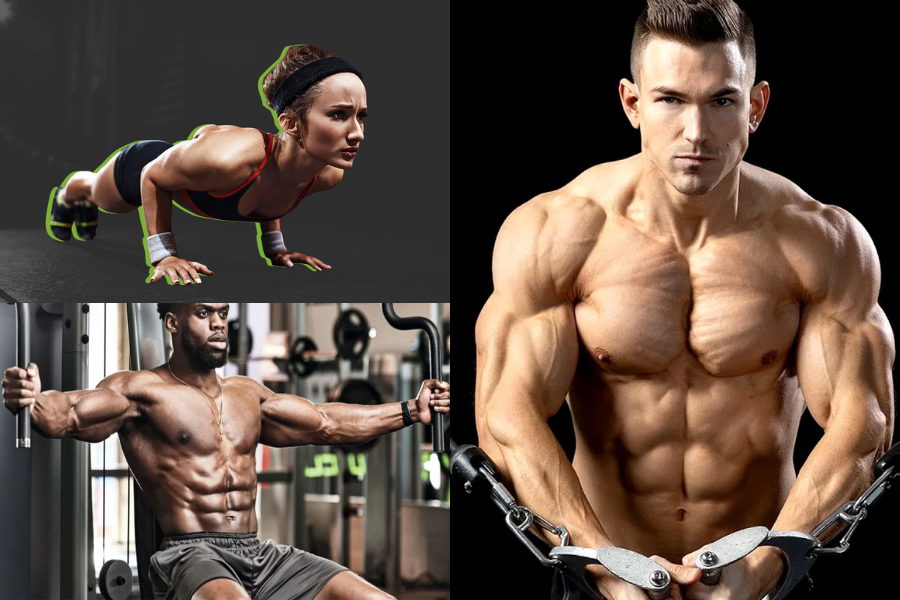
A strong chest does more than fill out a T‑shirt. Smart chest workouts help you push, pull, carry, and stabilize your body in everyday life. The good news is that you do not need an advanced program or hours in the gym. With a few simple moves and a clear plan, you can build strength and definition without dreading chest day.
Below, you will find beginner friendly chest exercises, easy at‑home options, and simple routines you can actually look forward to doing each week.
Why chest workouts matter
Your chest muscles, mainly the pectoralis major and pectoralis minor, play a role every time you push something away from you or support your upper body.
When you train your chest regularly you:
- Improve posture and help prevent neck and back strain, according to coach Elise Young, CPT, CFSC, as reported in 2024 by Women’s Health Magazine
- Make daily tasks like pushing doors, lifting groceries, or getting up from the floor easier
- Build total upper body strength since good chest exercises also engage your shoulders, triceps, and core
Chest workouts are not just for men either. Women benefit from chest training just as much, and the best chest exercises for men are the same for women, as highlighted in a 2024 article by UPPPER Fitness Gear.
Aim to train your chest 1 to 2 times per week. If you are new to strength training, start with one weekly session, see how your body responds, then add a second when you feel ready.
Start with pushups as your foundation
If you only did one chest exercise, it should probably be the pushup. Fitness expert Simon King identifies the pushup as the most important starting chest exercise for beginners because it builds a solid foundation. You can adjust the difficulty simply by changing your hand or foot position, so it grows with you.
Pushups primarily target your pectoralis major, but they also work the pectoralis minor, triceps, front of the shoulders, and your core. Studies with trained young men show that pushups can provide muscle activation and strength gains comparable to the bench press, and a regular pushup requires you to lift about 64% of your body weight. That is serious resistance without any equipment.
How to do a solid standard pushup
- Start in a high plank position with your hands slightly wider than shoulder width and your body in a straight line from head to heels.
- Brace your core and squeeze your glutes so your hips do not sag.
- Bend your elbows to lower your chest toward the floor, keeping them at about a 45 degree angle from your torso, not flared straight out.
- Lower until your chest is just above the ground or as far as your mobility allows.
- Press your hands into the floor to return to the starting position.
If you cannot manage a full pushup yet, you are not alone. That is where variations come in.
Beginner friendly pushup variations
You can modify pushups to match your current strength level and still get a great chest workout.
- Incline or hands elevated pushup: Place your hands on a sturdy bench, box, or even a wall. The higher your hands, the easier the move. This is one of the most beginner friendly ways to learn good form.
- Knee pushup: Keep your hands on the floor but drop to your knees. Make sure you stay in a straight line from your head to your knees.
- Eccentric pushup: Lower slowly from the top position for 3 to 5 seconds, then use your knees or an incline to help you back up. This builds strength through the hardest part of the motion.
- Incline pushup progression: Gradually lower the height of your hands over the weeks, from a countertop to a bench to the floor.
You can also use different variations to emphasize different muscles or training effects. Decline pushups, where your feet are elevated, shift more work to the upper chest and front shoulders. Wide pushups involve the serratus anterior more, and plyometric pushups help you develop speed and power by training your muscles to produce force quickly.
Add simple weight training for extra strength
Once you are comfortable with pushups, you can build more size and strength by adding weights. You do not need complicated moves. A few basic chest exercises done well are enough.
Barbell bench press
The barbell bench press is a classic for a reason. After you have a pushup base, it becomes a key progression exercise. It activates your chest, shoulders, triceps, lats, glutes, and core.
To get the most out of it and protect your shoulders:
- Lie on the bench with your eyes under the bar and your feet flat.
- Retract your shoulder blades by gently pinching them together. This keeps your chest engaged and prevents your shoulders from taking over. Protracting the scapula, or letting your shoulders round forward, shifts the work away from your chest.
- Grip the bar slightly wider than shoulder width.
- Lower the bar to about mid chest while keeping your elbows at roughly a 45 degree angle from your torso, not flared to 90 degrees.
Avoid ego lifting by choosing a weight you can control. Going too heavy reduces chest involvement, increases reliance on secondary muscles, and raises your injury risk.
Dumbbell bench press
If you are new to lifting, it can be wise to start with dumbbells before moving to a heavy barbell. Dumbbell bench pressing has several advantages:
- Each side works independently, which helps fix strength imbalances
- You can use neutral or slightly rotated grips that feel kinder on your shoulders and wrists
- Your stabilizing muscles have to work harder, which improves control
You can perform dumbbell presses on a flat bench, an incline, or even the floor. The Dumbbell Floor Press in particular is beginner friendly because the floor limits your range of motion and reduces shoulder strain, while still targeting your chest and triceps.
Incline press tips for your upper chest
Incline presses are great for targeting your upper chest fibers. One common mistake is pressing the weights at the same angle as the bench when it is nearly upright. This stresses your shoulders and misses your upper chest.
Fitness expert Ebenezer Samuel suggests focusing on keeping your forearms perpendicular to the ground, regardless of bench angle. This simple cue helps you hit more chest fibers without overloading your shoulder joints.
Shape and isolate with flyes and cables
Pressing movements build strength and size, but you can add a couple of isolation exercises to really feel your chest working.
Decline dumbbell flyes
Decline dumbbell flyes apply a strong stretch and contract stimulus to your chest. The principle is simple: you lower the weights out to your sides in a wide arc, which stretches the pecs under load, then you bring them back together and squeeze. This stretch and contract under tension is great for sculpting three dimensional pecs.
Start light and move slowly. The goal is to feel your chest working, not to move the heaviest dumbbells in the gym. Going too heavy here can stress your shoulders.
Cable crossovers
Cable crossovers let you keep constant tension on your chest throughout the entire movement. They are also useful if one side of your chest feels weaker because you can deliberately focus on that side and restore balance over time.
You can adjust the pulleys high, mid, or low to slightly shift the emphasis on different areas of your chest. No matter the angle, control the handles and avoid letting the weights slam down.
Warm up properly before chest day
Skipping your warmup might save five minutes, but it costs you in the long run. Not warming up your chest muscles before a workout increases your risk of sprains, strains, or tears, and it limits your range of motion, which means fewer gains.
A simple chest warmup can look like this:
- 3 to 5 minutes of light cardio like brisk walking or cycling to increase blood flow
- Dynamic movements such as arm circles, band pull aparts, and shoulder rolls
- One or two light sets of your first chest exercise to groove the pattern before using working weights
You should feel warmer and more mobile, not tired, when you finish your warmup.
Think of your warmup as turning up a dimmer switch, not flicking a light on and off. Ease your muscles into the session so they can perform at their best.
Avoid common chest training mistakes
Good technique keeps chest workouts effective and enjoyable. A few frequent mistakes can stall your progress or cause discomfort.
Letting your shoulders take over
If you protract your shoulders while pressing, meaning they round forward, your chest does less of the work and your shoulders get overloaded. Instead, keep your shoulder blades gently pulled back and down. This places your chest in a better position to push and protects your shoulder joints.
Flaring your elbows
Many beginners press with their upper arms at a 90 degree angle to the torso. This flared position stresses the shoulders and can cause pain over time. As Men’s Health fitness director Ebenezer Samuel explains, keeping your upper arms at about 45 degrees to your torso is safer and lets your lats support the movement. This angle improves chest activation and often helps you perform more quality reps.
Turning incline presses into shoulder presses
When you use a steep bench angle and press straight up in line with that angle, you are basically doing a shoulder press. Remember the forearms perpendicular to the ground cue. It steers more of the work back into your chest, especially the upper portion.
Ignoring your back
If you only train your chest, your shoulders tend to round forward. This can hurt your posture and even hide your chest gains. Including back exercises like barbell rows helps counteract the forward pull from chest work, keeps your shoulders healthy, and improves how your chest looks from the side. Ebenezer Samuel specifically recommends this balanced approach for long term progress.
Use intensity wisely, not recklessly
Once your form is consistent, you can spice up your chest workouts with simple intensity techniques. Used correctly, they help stimulate muscle growth without making your sessions feel overwhelming.
Options include:
- Drop sets, where you reduce the weight slightly after reaching failure and continue the set
- Half or quarter reps at the end of a set to extend time under tension
- Pausing for a second or two in the bottom position of a pushup or press, or at the peak contraction of a flye
These methods can be powerful, so start with just one per workout and avoid adding them to every exercise. More is not always better.
On the other hand, ego lifting, or trying to impress yourself or others with too much weight, quickly backfires. When the load is too heavy, your form falls apart, secondary muscles take over, and your chest gets less benefit. Choose weights that challenge you while you still control every rep.
Simple chest workouts you can follow
You do not need a huge menu of exercises. Pick a handful, do them consistently, and slowly progress. Here are two straightforward routines, one for the gym and one for home.
Beginner friendly gym chest workout
Do this 1 to 2 times per week, resting at least one day, ideally two days, between sessions so your muscles can recover and grow.
- Pushups or incline pushups: 3 sets of 8 to 12 reps
- Dumbbell bench press (flat or slight incline): 3 sets of 8 to 12 reps
- Cable crossovers or dumbbell flyes: 3 sets of 10 to 15 reps
- Barbell rows or another back exercise: 3 sets of 8 to 12 reps
Rest 60 to 90 seconds between sets. Focus on smooth, controlled reps and feeling your chest work.
If you are further along and want a short term challenge, research has outlined more advanced 28 day plans that alternate two workouts, combining German volume training with tabata style protocols, such as doing 10 sets of 6 reps of the barbell bench press with short rests in one session, and a second session focused on incline dumbbell presses, dips, and fascial stretching. That style is effective but demanding, so build a solid base first.
Simple at home chest workout
No gym, no problem. You can train your chest effectively in your living room.
- Hands elevated pushups (on a bench, coffee table, or sturdy chair): 3 sets of 10 to 15 reps
- Regular pushups: 3 sets of 6 to 12 reps
- Wide pushups: 2 to 3 sets of 8 to 12 reps
- Decline pushups (feet elevated) or band resisted pushups if you have bands: 2 to 3 sets of 6 to 10 reps
Again, rest about 60 seconds between sets. Choose variations that feel tough but doable with good form. Over the weeks, you can progress by lowering your hand height, adding a pause at the bottom, or moving to harder variations like typewriter or plyometric pushups.
Making chest day something you enjoy
The best chest workouts are not the most complicated or extreme. They are the ones you can stick with. To make chest day something you actually look forward to:
- Keep your routine short and focused instead of marathon sessions
- Track your small wins, like one more pushup or a slightly heavier dumbbell
- Mix in a new variation every few weeks to keep things interesting
- Pair chest exercises with a favorite playlist or podcast so the time passes quickly
Start with one change this week, such as adding a short pushup circuit at the end of your usual workout or trying dumbbell presses instead of machines. As you feel your chest getting stronger and everyday movements getting easier, you will have one more reason to look forward to the next workout.