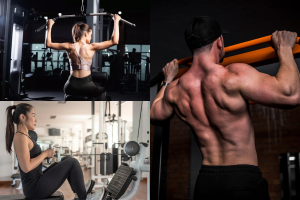
A solid chest workout routine does more than build visible muscle. It improves posture, makes everyday tasks feel easier, and supports almost every upper body movement you do. With a few smart exercise choices, you can train your chest effectively at home or in the gym, whether you are a beginner or already lifting regularly.
Below, you will find how your chest muscles work, how to structure a chest workout routine, and specific exercises you can plug in right away.
Understand your chest muscles
Before you plan a chest workout routine, it helps to know what you are actually training. Your main chest muscles are:
- Pectoralis major, the large fan-shaped muscle across your upper chest
- Pectoralis minor, a smaller muscle that sits underneath and helps move your shoulder blade
These muscles help you push, pull, rotate your arms, and lift objects. Because they are involved in big, energy-hungry movements, working them out can burn a good amount of energy, which supports fat loss and overall toning.
Many chest exercises also train your triceps, front deltoids, and core at the same time. That means every smart rep gives you more than one benefit.
Key benefits of a chest workout routine
Putting a consistent chest workout routine in your week offers more than just aesthetics.
You can expect:
- Stronger pushing power: Tasks like pushing a stroller, closing heavy doors, or moving furniture become easier when your chest is stronger.
- Better posture and balance: A strong chest, paired with back training, helps keep your shoulders in a healthier position instead of slouching forward.
- Higher functional strength: Many chest exercises, especially with dumbbells or body weight, improve coordination, stability, and control.
- Support for weight management: Working large muscles like the chest increases energy expenditure, which can help with fat loss and body recomposition.
If you are dealing with a concave chest or excess chest fat, building the underlying muscle is also key to a fuller, more defined shape over time.
How often to train your chest
For most people, training your chest twice per week works very well. This gives you enough total work to see progress, along with time for recovery.
A simple approach looks like this:
- 1 chest-focused workout early in the week
- 1 chest-focused or push-focused workout later in the week
With consistent effort, you often feel stronger within 3 to 4 weeks, and you usually notice clearer changes in muscle size and shape after 8 to 12 weeks of regular training.
How to structure a chest workout routine
You can think of your chest workout routine in four pieces:
- Warm up
- Compound exercises for overall strength
- Isolation exercises for targeted muscle work
- Cooldown and recovery
1. Warm up
Your warm up should prepare your joints, raise your heart rate, and get your chest ready to work.
Aim for:
- Around 5 minutes of light cardio such as brisk walking, cycling, or light jumping jacks to increase blood flow
- Dynamic upper body moves, such as arm circles, shoulder rolls, and gentle band pull-aparts
- A few ramp up sets of your first chest exercise with lighter weight. For example, 2 light sets of dumbbell bench press before your working sets.
This helps improve performance and reduces injury risk.
2. Start with compound chest exercises
Compound exercises use more than one joint and muscle group at the same time. They should form the foundation of your chest sessions because they:
- Let you lift heavier weights
- Recruit more total muscle
- Build overall strength and size efficiently
For a chest workout routine, strong compound choices include:
- Barbell bench press
- Dumbbell bench press
- Incline dumbbell press
- Decline dumbbell press
- Chest dips
- Push up variations
Most people do best with 2 to 4 total chest exercises per workout, starting with these big lifts.
3. Add isolation or focus moves
After your main compound movement or two, you can add exercises that focus on specific areas, such as the inner chest or upper chest.
Examples include:
- Flat dumbbell fly
- Incline dumbbell fly
- Cable crossover
- Standing cable chest fly
- Dumbbell pullover
These moves generally use lighter weights and higher reps, so they work well at the end of your workout.
4. Choose sets, reps, and weight
You can adjust your sets, reps, and weight based on your goal.
In general:
- Strength focus: 2 to 5 sets per exercise, 5 to 10 reps with heavier weight, longer rests
- Muscle growth (hypertrophy) focus: 2 to 5 sets per exercise, 10 to 30 reps, with weight that challenges you in that range
Pick a weight that makes the last 2 reps feel tough but still allows clean form. If you could keep going well past your target reps, increase the weight slightly next time.
5. Manage your rest times
Rest matters more than many people think.
A practical guide:
- 2 to 3 minutes of rest for heavy compound lifts such as bench press or dips
- 1 to 2 minutes of rest for lighter isolation exercises such as flies or cable crossovers
Using slightly longer rests at the start of your workout helps you lift heavier. Shorter rests near the end can increase the “pump” and finish your chest off without dragging the session out.
Best dumbbell chest exercises
Dumbbell chest workouts are convenient and accessible. Most gyms always have dumbbells available, even if the bench press station is busy, and you can also use them at home.
Dumbbells are especially useful because they:
- Allow a greater range of motion than many barbell exercises, which helps with deeper stretch and stronger contraction
- Train each side independently, which helps correct muscle imbalances and improves symmetry
- Let your arms move in a more natural path, which can reduce stress on sensitive shoulders
- Can be used safely without a spotter, as you can drop them to the side if you get stuck
Here are highly effective chest exercises you can build into your routine:
- Dumbbell bench press: A staple for overall chest size and strength.
- Incline dumbbell press: Targets your upper chest at roughly a 30 degree bench angle, taking some stress off the front of your shoulders.
- Decline dumbbell press: Emphasizes the lower portion of your chest.
- Neutral grip dumbbell press: You press with your palms facing each other, which can feel more comfortable on your shoulders.
- Chest squeeze press: You press the dumbbells together as you push up to keep constant tension on the inner chest.
- Dumbbell floor press: Limits shoulder strain by reducing range of motion, and is a great at home or accessory move.
- Dumbbell reverse grip press: Changes the angle of pull and shifts emphasis to slightly different chest fibers.
- Flat dumbbell fly: Stretches and isolates your chest, best used with lighter weight and strict control.
- Incline dumbbell fly: Combines the fly motion with an upper chest focus.
- Dumbbell pullover: Works your chest and lats together, especially good at the end of a workout.
You do not need all of these at once. Choose two or three that suit your equipment and comfort, and rotate others in over time.
Beginner friendly chest workout routine
If you are newer to resistance training, you will benefit from a simple, repeatable structure that teaches good technique before you increase the weight.
A well rounded beginner routine often mixes barbells, dumbbells, cables, and body weight so you can challenge your chest from different angles. One effective beginner lineup includes:
- Push up
- Bench press
- Incline dumbbell bench press
- Cable crossover
- Partner medicine ball chest pass
You can follow this pattern:
- Perform 2 to 3 sets of each exercise
- Rest 90 seconds between exercises and 60 seconds between sets
- Start with light dumbbells, a bare or lightly loaded barbell, and light cable settings
Your main goal at this stage is to master form and develop confidence. As those improve, you can slowly add more weight, extra sets, or slightly more difficult variations like decline push ups or dips.
If you are dealing with a concave chest or “man boobs,” stay consistent with this type of routine. Building muscle under the skin combined with overall fat loss from full body training and nutrition changes will gradually improve shape and firmness.
At home chest workout with no equipment
You do not need a gym membership to run an effective chest workout routine. Push ups are a powerful bodyweight option, and research shows they can provide similar chest muscle growth and strength gains as bench press training in trained young men when volume is matched.
Push ups mainly target your pectoralis major and minor, but they also work your triceps, front shoulders, and core.
You can adjust push ups to match your level:
- Regular push ups: Great base move. Using a slightly wider hand position increases chest engagement.
- Incline push ups: Hands on a bench, counter, or step. These reduce the amount of body weight you have to push, perfect if you are still building strength.
- Decline push ups: Feet elevated on a bench or step, which shifts more load toward your upper chest and shoulders.
- Diamond push ups: Hands close together under your chest, increasing triceps and inner chest involvement.
- Offset or one leg push ups: Change your base of support to challenge stability and core.
- Plyometric push ups: Explosive push off the floor for power.
- Deficit push ups: Hands on blocks or handles to increase range of motion and chest stretch.
- Seal or wide push ups: Extra wide hand placement to target the outer chest.
A simple no equipment circuit could look like:
- 10 regular push ups
- 60 seconds of star jumps
- 10 incline push ups
- 30 mountain climbers
- 10 decline push ups
- 5 slow, time under tension push ups (3 seconds down, 1 second up)
Repeat this sequence 3 times. The combination of different push up styles and cardio bursts keeps intensity high and challenges both strength and endurance.
Progressing your chest workouts over time
At some point, your body adapts, and what used to feel challenging becomes easy. When your beginner routine starts to feel too comfortable, you can:
- Add more sets, such as going from 2 to 3 or 4 working sets per exercise
- Increase weight slightly while keeping good form
- Use more advanced exercises, such as heavier dumbbell presses or weighted dips
- Rotate in new routines like a dumbbell only chest day or a more advanced gym based chest session
The idea is to slowly raise the challenge so your chest muscles have a reason to grow and get stronger.
Simple recap you can use today
To build a chest workout routine that works, you only need a few clear steps:
- Train your chest twice per week when possible.
- Warm up with light cardio, dynamic stretches, and a couple of lighter sets.
- Start each session with compound presses like bench press, dumbbell press, or push ups.
- Add one or two isolation moves such as flies or cable crossovers.
- Work mostly in the 5 to 10 rep range for strength and 10 to 30 reps for muscle growth, using 2 to 5 sets per exercise.
- Rest 2 to 3 minutes for heavy lifts and 1 to 2 minutes for lighter ones.
- Progress gradually by adding weight, sets, or more challenging variations.
Pick one or two of these ideas and put them into your next workout. As you repeat the routine and track your progress, your chest strength, shape, and everyday confidence will grow with it.
References
- Gymshark. (2024, October 7). The 6 best chest exercises for strength & size. Gymshark.
- Muscle & Strength. (n.d.). Chest Exercises. Muscle & Strength.
- Health & Wellness US. (n.d.). Chest Workout Exercises. HealthWellnessUS.com. (No publication date or author listed)
- Built With Science. (2024, October 19). The ONLY 2 chest exercises that actually grew my chest. Built With Science.
- Fitness Evolution Bellingham. (2025, August 20). Chest workout routine: Your guide to chest day gains. FitEvo Bellingham Blog.