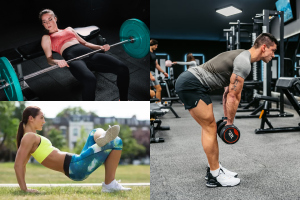
A fat loss plan that actually sticks usually starts with simple, repeatable movement. Fat loss exercises for beginners do not have to be extreme or complicated. You are looking for a routine that you can do consistently, that feels manageable on busy days, and that gradually challenges your body enough to change.
Below, you will find beginner friendly exercises and sample routines that help burn fat, build strength, and support steady progress without needing a gym full of equipment.
Understand how fat loss really works
Before you jump into any fat loss workout, it helps to know what actually drives results. Exercise matters, but it is only part of the picture.
Your body loses fat when you are in a caloric deficit over time. That means you consistently burn more calories than you eat. Fat loss exercises help by:
- Increasing your daily calorie burn
- Building muscle, which slightly raises your resting metabolism
- Improving your energy and mood, which makes it easier to stick with healthy habits
Bodyweight workouts, like the Beginner Bodyweight Workout from Nerd Fitness, are especially useful at this stage because they combine strength and light cardio without equipment and can be done almost anywhere. The key is progressive overload, which means you gradually make the exercises harder so your muscles keep adapting and you keep seeing changes.
Think of your workout as the engine and your nutrition as the fuel. You need both to move in the right direction.
Start with simple bodyweight strength moves
Strength training is one of the most effective types of fat loss exercises for beginners. When you work your major muscle groups, you burn calories during the workout and you encourage your body to hold on to lean muscle while you lose fat.
Begin with basic bodyweight moves you can do at home:
Squats
Squats work your legs and glutes, which are big calorie burning muscles.
- Stand with your feet about hip width apart.
- Push your hips back and bend your knees as if sitting into a chair.
- Keep your chest up and your weight mostly in your heels.
- Lower until your thighs are as parallel to the floor as feels comfortable, then stand back up.
If full squats are tough, use a chair. Sit down slowly, then stand up, and over time, try to hover just above the seat before standing.
Pushups (or incline pushups)
Pushups train your chest, shoulders, arms, and core.
- Start in a plank with your hands under your shoulders and your body in a straight line.
- Lower your chest toward the floor while keeping your elbows at about a 45 degree angle from your ribs.
- Push back up to the starting position.
If that is too difficult, place your hands on a sturdy table, countertop, or wall to reduce the load. As you get stronger, move your hands lower until you reach the floor.
Glute bridges
Glute bridges activate the back of your body and support your posture.
- Lie on your back with knees bent and feet flat on the floor, hip width apart.
- Press your feet into the ground and lift your hips until your body forms a straight line from shoulders to knees.
- Squeeze your glutes, pause for a second, then lower with control.
You can make these harder over time by pausing longer at the top or lifting one leg at a time.
Planks
Planks build core strength, which helps you maintain good form in every other exercise.
- Start on your forearms and toes with your elbows under your shoulders.
- Keep your body in a straight line from head to heels.
- Brace your abs as if someone is about to poke your stomach.
Hold for as long as you can maintain good form, even if that is only 10 seconds at first. Rest, then repeat.
You can also use a full body circuit similar to the Nerd Fitness Beginner Bodyweight Workout, which combines multiple moves in a 20 minute routine done in three circuits. A structure like that keeps your heart rate up while you build strength, which is ideal for beginners who want fat loss and muscle tone at the same time.
Add low impact cardio for extra burn
Strength training is your foundation. Cardio is your volume knob. It helps you reach the overall activity levels that organizations such as the World Health Organization and the CDC recommend for healthy adults, which also supports weight loss.
The WHO suggests about 150 minutes of moderate intensity activity per week for adults between 18 and 64. The CDC offers two main options: 30 minutes of moderate exercise five days per week, or 20 minutes of vigorous exercise three times per week for weight loss. Both approaches can work, so choose the one that feels realistic for you.
For beginners, steady, low impact cardio is usually the easiest place to start. You might try:
- Brisk walking outside or on a treadmill
- Easy cycling
- Light jogging, if your joints are comfortable with it
- Marching in place while watching TV
Aim for 20 to 30 minutes at a pace where you can talk in short sentences but not sing. Over time, you can stretch some sessions to 40 or even 60 minutes if your schedule and energy allow.
Use high energy moves carefully
Once you are comfortable with basic strength and cardio, you can sprinkle in more intense exercises that raise your heart rate and increase calorie burn. Many beginner friendly fat loss guides recommend movements like burpees, mountain climbers, dumbbell squat presses, and kettlebell swings.
These exercises are effective because they use large muscle groups and elevate your heart rate quickly. For example, kettlebell swings can burn a significant number of calories in a short time while working your legs, core, back, and shoulders.
If you are new to exercise, treat these moves as optional upgrades, not day one requirements. Focus on form first:
- Start slowly with fewer repetitions.
- Use light weights or even water bottles if you are not familiar with dumbbells.
- Stop if anything feels sharp or painful, and talk with your doctor if you have concerns before trying vigorous exercise.
You will still lose fat with consistent moderate workouts, especially when your nutrition supports your goals, so there is no need to rush to the most intense version of every move.
Build a weekly routine you can maintain
The best fat loss exercises for beginners are the ones you can repeat week after week. A balanced plan includes both strength and cardio and leaves space for rest.
Guidance from fitness organizations suggests that beginners aiming for fat loss do well with roughly:
- 2 to 3 days of strength training
- 2 to 3 days of cardio
- 2 rest days, which can be complete rest or light movement like walking or stretching
Here is a simple example schedule you might follow:
| Day | Focus | What it could look like |
|---|---|---|
| Monday | Strength | 20 to 30 minute bodyweight circuit |
| Tuesday | Cardio | 25 to 30 minute brisk walk |
| Wednesday | Rest or light movement | Gentle stretching or an easy 15 minute walk |
| Thursday | Strength | Repeat or slightly progress Monday’s workout |
| Friday | Cardio | 30 minute walk with a few short faster intervals |
| Saturday | Strength or mixed | Bodyweight circuit plus 10 minutes light cardio |
| Sunday | Rest | Full rest or casual activity like strolls |
You will notice that you are not working out every day. That is on purpose. Beginners are often tempted to train daily, but advice from trainers and gyms in 2024 highlights that working out every single day at first can leave you exhausted and actually reduce performance. On the other hand, exercising only once per week is unlikely to lead to meaningful progress.
Starting around three days a week is a good way to build the habit. Once that feels automatic, you can move toward four or five days per week, as long as your body feels recovered and your schedule allows it.
Progress gradually for steady results
Fat loss happens over weeks and months, not days. You will get better results if you nudge your routine forward slowly instead of overhauling it every few days.
Here are practical ways to apply progressive overload and track your improvements:
- Add a few repetitions. If you did 8 squats last week, try 10 this week.
- Extend your holds. Increase your plank time by 5 to 10 seconds when it feels manageable.
- Trim your rest periods slightly, which keeps your heart rate up.
- Add a small amount of weight, such as light dumbbells or household objects, once the bodyweight version feels easy.
Many beginner programs use simple tracking sheets where you record your sets, reps, and how the workout felt. You can follow the same idea in a notebook or notes app, which makes your progress visible. When you look back after 4 to 6 weeks and see that you have doubled your repetitions or walked 10 more minutes than when you started, it becomes much easier to stay motivated.
Pair your workouts with smart recovery
Fat loss and muscle gain happen when your body recovers from the stress of exercise, not during the workout itself. That is why most beginner routines, including the Nerd Fitness Beginner Bodyweight Workout, recommend spacing workouts at least 48 hours apart for the same muscle groups. This rest period gives your muscles time to repair and get stronger.
To support recovery and sustainable fat loss:
- Prioritize sleep as much as possible.
- Eat balanced meals with enough protein, whole grains, fruits, and vegetables.
- Stay hydrated throughout the day.
- Pay attention to joint pain. If something hurts, scale the movement or rest and, if needed, consult your doctor.
Remember that you are playing a long game. The goal is not to be completely worn out after every session. It is to finish your workout feeling challenged but capable of returning in a day or two to do it again.
Put it all together
You do not need a perfect plan before you begin. Start with one or two short sessions this week that combine simple bodyweight strength moves and easy cardio. As these workouts begin to feel familiar, build toward the activity levels recommended by the WHO and CDC, adjust your nutrition so you are in a modest caloric deficit, and gradually increase the challenge.
Fat loss exercises for beginners work best when they are:
- Simple enough that you actually do them
- Consistent from week to week
- Progressively a little harder over time
- Paired with smart nutrition and adequate rest
Pick one strength move and one short walk you can commit to in the next few days. Once you complete those, you can add the next step. Steady, realistic actions are what lead to steady, realistic results.