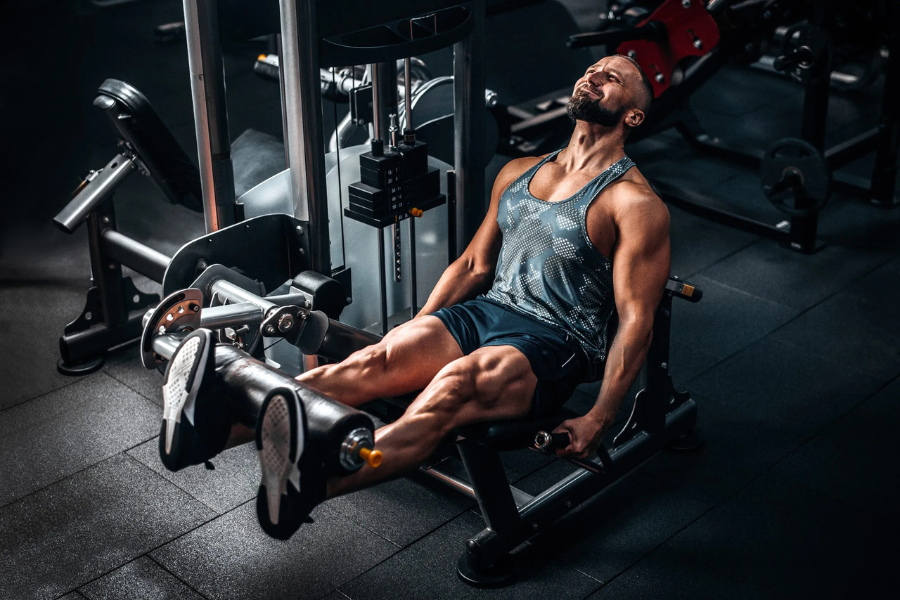
A strong quad muscle workout does much more than build bigger legs. When you train your quadriceps properly, you support your knees, improve your balance, and make everyday movements like walking stairs or getting out of a chair feel easier. Your quads are a large, powerful muscle group, and they respond well to the right mix of exercises, technique, and training effort.
Below, you will learn how your quads work, how to train them safely and effectively, and how to put everything into a straightforward quad muscle workout you can actually stick with.
Understand your quad muscles
Your quadriceps sit at the front of your thighs and are made up of four main muscles: rectus femoris, vastus lateralis, vastus medialis, and vastus intermedius. Together they straighten your knee and help flex your hip, which means they are involved every time you walk, run, jump, or stand up from a seat.
Strong quads do more than move your leg. They also stabilize your kneecap and support your knee and hip joints, helping you maintain posture and balance while you move. When your quads are weak, you are more likely to deal with knee pain, patellofemoral issues, and even a higher risk of knee osteoarthritis and some ACL injuries because your knee cannot absorb and control forces as well.
That is why a quad muscle workout is not just for appearance. It is a key part of long term joint health and overall strength.
Learn why quad training matters
If you have ever seen lifters skip leg day, you already know that quad workouts are often underperformed. This is a problem for several reasons.
Well developed quadriceps are essential for:
- Building impressive leg size and shape, since they are the most voluminous muscle group in your body
- Improving performance in big lifts like squats and deadlifts
- Supporting daily life activities like walking, climbing stairs, and getting up from the floor
- Maintaining independence and mobility as you age, including standing from a chair and climbing stairs with less pain
When you keep your quads strong with regular exercise, you also help stabilize your kneecap, which can reduce falls and make walking and running feel more controlled and efficient. Even simple movements like walking and cycling can help older adults maintain quad strength and stay active with less knee discomfort.
If you want better athletic performance, healthier knees, or simply more confidence in your lower body, making quad training a priority is worth your time.
Get your quad training form right
To get the most from your quad muscle workout, how you perform each exercise matters just as much as which moves you choose.
Prioritize quad stress, not your ego
Many people load up heavy weights on squats or leg presses, then end up doing half reps with poor control. This ego lifting approach limits quad growth, even though the weight on the bar looks impressive. For maximum development, you want full range of motion, controlled tempo, and sets that come close to muscular failure, usually within three reps of not being able to complete another rep.
This often means using lighter weights than you might expect while you adjust your form. Over time, as your technique improves, you will be able to increase the resistance without sacrificing depth or control.
Use full range of motion
Your quads respond best when you bend your knees deeply enough that your thighs come at least parallel to your calves. Many lifters cut their range short on squats and leg presses, which leaves muscle growth on the table.
Work within your current mobility, but aim to gradually increase depth while staying pain free and stable. You may need to start with bodyweight or light loads as you build up.
Adjust your shin and torso angles
Your shin position changes how much your quads work relative to your hips and glutes. Increasing your forward shin angle, so your knees travel a bit more over your toes, shifts more emphasis onto your quadriceps and a bit away from your glutes and lower back.
You can encourage this position by:
- Elevating your heels on a small plate or wearing lifting shoes during squats
- Taking a slightly shorter stance on split squats or lunges
- Staying more upright through your torso in front squats and goblet squats
If your ankle mobility is limited, your range might be smaller at first. Consistency and gentle mobility work will help over time.
Protect your lower back
Traditional barbell back squats heavily involve your lower back, often nearly as much as some of your quad muscles. Your lower back might fatigue first, which can cut sets short before your quads are fully challenged.
To keep more stress on your quads and less on your lower back, you can:
- Use quad focused squat variations like front squats or heel elevated goblet squats
- Incorporate machine based movements like hack squats or Smith machine squats to reduce lower back involvement
- Keep your core braced and ribs stacked over your hips
These adjustments make it easier to reach true quad fatigue safely.
Choose effective quad exercises
You do not need dozens of movements to build strong quads. A handful of well chosen exercises, done consistently, will cover all four quadriceps muscles and support balanced development.
Squat variations that emphasize quads
Squats are a staple for leg strength, and a few small tweaks can make them more quad focused.
- Barbell front squat. Holding the barbell in front of your body encourages a more upright posture and increases load on your quads compared with a traditional back squat.
- Heel elevated goblet squat. Standing on a small plate or wedge while holding a dumbbell at your chest increases knee bend, reduces hip dominance, and boosts quad activation, and it can also help if ankle mobility is limited.
- Hack squat or Smith machine squat. These guided movements limit balance demands and lower back strain, letting you really focus on driving through your quads.
Bodyweight squats are also an excellent starting point that strengthen your quadriceps, core, and lower body without equipment. You can make them harder by slowing your tempo or increasing depth as you get stronger.
Unilateral moves to correct imbalances
Single leg exercises challenge your balance and stabilizing muscles and are great for evening out strength differences between your right and left leg.
- Bulgarian split squat. With your rear foot elevated and a shorter stance plus an upright torso, this variation targets your quads and the stabilizing muscles around your knee and hip more than traditional squats. You can make it easier by reducing your squat depth at first.
- Lunges with front foot elevated. Raising your front foot on a small plate increases knee bend and puts more stress on your quads. As you improve, you can hold dumbbells or a barbell to add resistance.
These exercises are especially helpful if you feel one leg take over during bilateral moves like squats or leg presses.
Isolation work for complete quad development
Compound lifts are great, but some quad muscles, like the rectus femoris, are not fully targeted by squats and leg presses alone. Research suggests that this muscle responds particularly well to exercises like leg extensions and sissy squats, with a 2021 study showing significantly more rectus femoris growth from leg extensions compared with squats.
The leg extension is a key isolation move for maximum quad growth. It:
- Allows focused activation of your quads without heavily taxing the rest of your body
- Lets you train more frequently because overall fatigue is lower
- Makes it easy to use single leg work or isometric holds at the top of the rep for an intense quad pump
Performed alongside your compound lifts, leg extensions help ensure all parts of your quadriceps are challenged.
Use a smart quad workout structure
You can build strong quads without spending hours in the gym. The key is training often enough, with the right amount of sets and reps, and getting close to muscular failure.
Guidelines from 2024 advice recommend:
- Training your quads about twice per week
- Including at least two quad exercises per session
- Performing a minimum of 10 total sets for quads per week
- Working mostly in the 8 to 12 rep range for 3 to 4 sets per exercise, which is a classic hypertrophy zone
Aim to leave only one to three reps in the tank on most sets. That means your last few reps feel challenging, but your form still stays controlled.
Here is a simple sample structure you can adapt:
Quad day example
- Front squats or heel elevated goblet squats, 3 to 4 sets of 8 to 10 reps
- Bulgarian split squats or lunges, 3 sets of 8 to 12 reps per leg
- Leg press or hack squat, 3 sets of 10 to 12 reps
- Leg extensions, 3 sets of 12 to 15 reps, focusing on a squeeze at the top
If you prefer full body or upper lower splits, you can simply sprinkle 2 to 3 of these movements into your routine twice weekly instead of dedicating an entire day.
Try quad exercises at home
You do not need a gym membership to build and maintain strong quads. Most quadriceps exercises can be done at home, often with just your bodyweight.
Useful options include:
- Bodyweight squats. These strengthen your quads, core, and lower body and are easy to adjust by changing squat depth.
- Bulgarian split squats using a chair or sofa. These challenge your stabilizers and can be scaled by holding onto a support or reducing depth.
- Lunges. Forward or reverse lunges build strength and balance with no equipment.
- Squat jumps or box jumps. These explosive movements build lower body power and involve your quads heavily. To reduce injury risk, keep reps low, around 5 per set, so fatigue does not compromise your landings.
These home friendly exercises improve knee stability, reduce the risk of knee injuries, enhance athletic performance, and make everyday tasks like carrying groceries up the stairs feel easier.
Support quad strength with mobility and recovery
Your quad muscle workout will be more effective if you also pay attention to stretching and rest.
Tight quadriceps can pull on your pelvis and spine and contribute to lower back discomfort. A simple standing quad stretch, where you stand tall and gently pull your heel toward your glutes while keeping your knees close together, can help improve posture, balance, and lower back comfort when done regularly.
Allow at least 48 hours between intense quad sessions so your muscles can recover and grow. Sleep, hydration, and a balanced diet with enough protein will all support that recovery process. Some lifters also use pre workout supplements to help maintain the mental focus needed for hard leg training, especially when pushing sets close to failure.
Put it all together
An effective quad muscle workout does not have to be complicated. When you:
- Understand what your quadriceps do and why they matter
- Focus on full range of motion and upright, quad focused squat positions
- Combine compound squats and lunges with isolation moves like leg extensions
- Train your quads twice per week with enough challenging sets
- Include mobility and stretching to keep your knees and hips moving well
you create a simple, sustainable plan that builds strength, supports your joints, and improves your everyday life.
Start with one or two changes in your next workout. Maybe you elevate your heels on goblet squats, or you add a few sets of leg extensions at the end of your session. As you get comfortable, you can gradually build up to a full routine that leaves your quads stronger week after week.