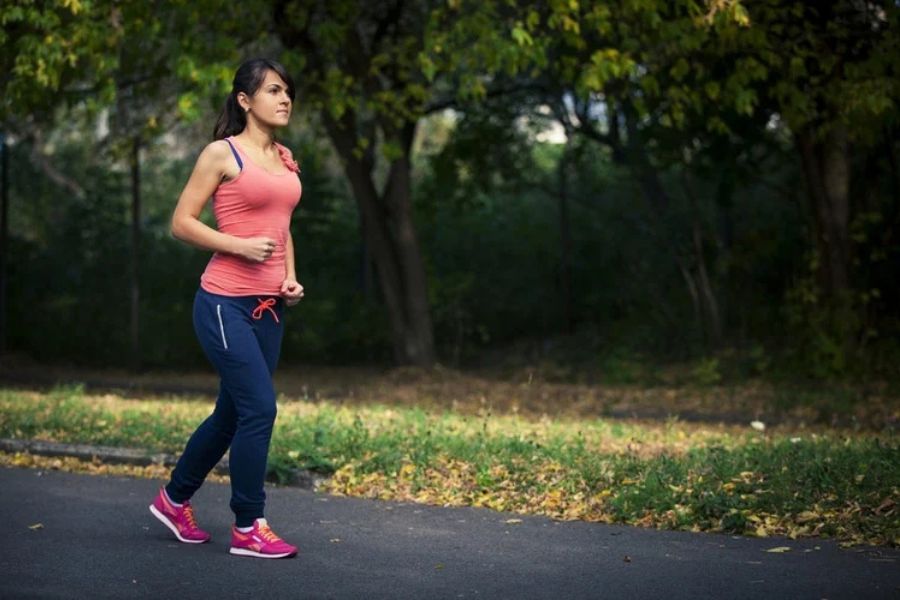
A walking workout might be the simplest way to move more, but when you turn it into walking workouts at home, it becomes incredibly practical too. You can get your steps in, raise your heart rate, and support weight loss without stepping outside or buying a full home gym.
Below, you will learn how walking workouts at home work, why they are effective for fitness and weight loss, and exactly how to build routines that fit into your day, even if you only have 10 minutes.
Understand what walking workouts at home are
Walking workouts at home are structured walking sessions you do indoors. You can walk in place, loop around your home, use the stairs, or follow guided indoor walking videos that mix walking with simple moves.
Many indoor walking workouts combine walking on the spot with movements like punches and standing crunches. Walking is used as the “base” move between exercises to keep your heart rate up and make the session feel like a full cardio routine, as seen in popular Grow With Jo workouts (Women’s Health).
You do not need to talk yourself into a big, complicated routine. A walking workout at home is simply any focused block of time where you walk with purpose, at a pace that feels brisk for you, and you do it regularly.
Learn why walking at home works for fitness
Walking looks gentle, but it checks a lot of important fitness boxes.
When you walk briskly, your heart rate rises, your breathing deepens, and your muscles pull more oxygen from your blood. This is exactly what your body does during other forms of cardio, such as jogging or cycling. Exercise physiologist Jordan Boreman notes that walking in place raises your heart rate, pumps more oxygen and blood to muscles, and burns calories, which all contribute to better fitness (Cleveland Clinic).
Health authorities recommend at least 150 minutes of moderate intensity aerobic activity per week. A common example is brisk walking for 30 minutes per day, 5 days a week, which can be done outdoors or at home (Verywell Fit). When you hit this amount consistently, you help lower your risk of:
- Heart disease and stroke
- Type 2 diabetes
- Some types of cancer
- High blood pressure
With walking workouts at home, you get closer to that 150 minute target without needing perfect weather, a safe outdoor route, or a gym membership.
Use walking to support weight loss
If you are curious whether walking workouts at home can help you lose weight, the answer is yes, especially when you pair them with a reasonable eating plan.
Walking burns calories, and over time, those burned calories support fat loss. In one example, a 20 minute low impact indoor walking workout helped digital creator Kayla Nelsen burn 186 calories and reach an average heart rate of 145 beats per minute. The intensity matched her outdoor walks, where her heart rate usually ranges from 130 to 145 beats per minute (Women’s Health).
Walking in place alone for 30 minutes can burn roughly 100 to 200 calories, depending on your body size and pace (Cleveland Clinic). If you do that most days of the week, the numbers start to add up.
For weight loss, your key levers with walking workouts at home are:
- Total weekly time spent walking
- Intensity, such as normal pace versus brisk intervals
- Consistency over months, not just weeks
You do not have to walk for an hour every day to see benefits. You can stack shorter sessions, like three 10 minute walks, to reach the same daily total.
Try simple at home walking moves
You might think walking workouts at home only mean “march in place,” but you have more options than that. Physical therapist Lindy Royer suggests four simple exercises that mimic the benefits of walking and can be done in even a small apartment (Fit&Well).
Basic movements you can rotate
You can build an effective circuit using:
- Walking or marching in place, lifting your knees to a comfortable height
- Butt kicks, where you lightly tap your heels toward your glutes
- Taking the stairs, either full flights or repeated up and down on a few steps
- Laps around your home, hallway, or even a single room
Royer recommends doing these as a mini circuit for 3 to 5 minutes and repeating as many rounds as you can within your time goal (Fit&Well). You can treat the circuit as your full workout or drop in a round whenever you have a short break in your day.
Add variety with indoor walking workouts
If you prefer more guidance, you can follow indoor walking videos. Many routines, like the Grow With Jo style mentioned earlier, weave in:
- Walking on the spot
- Alternating punches
- Standing crunches
- Side steps and knee lifts
These combinations keep your heart rate in a moderate to vigorous zone without jumps or high impact moves. Kayla Nelsen described her 20 minute indoor walking workout as feeling like a gym workout without ever leaving her apartment, and she found the moves easy to follow even with poor coordination (Women’s Health).
Some instructors do not talk through the whole workout. They use music and on screen timers instead, which many people find less distracting and easier to follow at home (Women’s Health).
Follow a beginner friendly walking plan
If you are new to regular exercise or coming back after a break, a gradual plan will help you build up without burning out.
Verywell Fit suggests this simple starting point for walking workouts, which you can do indoors or outside:
- Week 1, Walk at an easy pace for 15 minutes, 5 days a week
- Each following week, Add 5 minutes to your daily walk until you reach 30 minutes per day (Verywell Fit)
Once you can comfortably walk 30 minutes at a time, you can:
- Add short bursts of faster walking, such as 1 minute brisk, 2 minutes comfortable
- Try “speed building” walks where you gradually increase pace
- Mix indoor circuits with regular steady walking sessions
To reach moderate intensity, aim to cover a mile in about 20 minutes or less, which usually puts you at 64 to 76 percent of your maximum heart rate (Verywell Fit). You should notice faster breathing, but still be able to speak in short sentences.
Use simple gear to level up your walks
You can do walking workouts at home with zero equipment, but certain items can make your workouts more interesting or more comfortable.
Clothing and footwear
Flexible athletic shoes and comfortable clothes are enough to get started. The same outfit can work whether you are walking indoors, outside, or on a treadmill (Verywell Fit).
Optional tools to increase challenge
If you enjoy home workouts and want to progress your walking, you can try:
- Weighted vest, Products like the ZELUS weighted vest come in 6 to 30 pound options and are marketed for walking, strength training, running, and more. Using a vest can increase calorie burn and muscle engagement during home walks (Amazon).
- Ankle weights, Adjustable pairs, such as APEXUP or Sportneer sets, add gentle resistance for walking, yoga, and aerobics. They can make simple moves like marching in place or butt kicks more demanding for your legs and glutes (Amazon).
- Under desk or compact treadmills, Small walking pads like the Egofit Walker or UREVO Smart Walking Pad are designed to fit under a desk, fold away, and run quietly. Many include inclines, app or remote control, and noise reduction features, which makes them practical for apartments or shared spaces (Amazon).
- Resistance bands, Bands designed for walking workouts or fabric loop bands for legs can help you mix light strength work with your walks, for example, side steps, glute kicks, or standing leg lifts (Amazon).
You can also use a basic step counter or fitness tracker. Royer notes that tracking steps during indoor walking can help you simulate the benefits of outdoor walking and make your progress more visible (Fit&Well).
You do not need a full home gym to get results. A simple space, a pair of shoes, and a consistent plan are enough to start changing your fitness.
Combine walking with strength moves
For overall health and fitness, you are encouraged to do at least two days per week of muscle strengthening activities, along with your cardio. You can fold this into your walking workouts at home.
The Cleveland Clinic notes that adding small weights while walking in place and mixing in moves like push ups or crunches can enhance muscle strengthening, and this aligns with recommendations from the American College of Sports Medicine (Cleveland Clinic).
You could try:
- 3 minutes brisk walking in place
- 1 minute bodyweight squats or wall push ups
- 3 minutes laps or stair walking
- 1 minute standing crunches
Repeat this kind of pattern a few times and you will finish with a workout that hits your heart, lungs, and major muscle groups in a short window.
Make walking fit your lifestyle
One of the biggest advantages of walking workouts at home is how flexible they are.
Walking in place makes it easy to fit exercise into a busy day. You can do 5 to 10 minute bursts between meetings, while dinner is in the oven, or during a favorite show. These short sessions help support cardiovascular health and keep energy levels steadier through the day (Cleveland Clinic).
Here are simple ways to make walking a natural part of your routine:
- Pair a 10 minute indoor walk with your morning coffee
- Walk in place while listening to a podcast or audiobook
- Turn TV time into “walk during the ads” or “walk the first 15 minutes”
- Use a mini stair circuit every time you go to a different floor
- Keep comfortable shoes in sight so it is easy to start
Walking at home can also support your mood. Royer notes that the mini circuits of indoor walking exercises are a way to move your body that may lift your mood, especially if you feel bored or restless indoors (Fit&Well).
Stay safe and listen to your body
Walking is low impact for most people, but it is still exercise, so it is worth approaching it with care.
SportsCare Physical Therapy highlights walking as a fundamental part of any home workout routine and notes that you do not need a lot of money, space, or equipment to get started. They also recommend talking with your doctor or a physical therapist before starting new exercise programs, especially if you are recovering from an injury or surgery, so you can make sure your walking workouts are safe and tailored to your limits (SportsCare Physical Therapy).
Pay extra attention if you:
- Feel pain rather than normal exercise discomfort
- Get dizzy, unusually breathless, or have chest discomfort
- Have existing heart, joint, or balance conditions
If something does not feel right, slow down, shorten the session, or stop and check with a professional.
Take your first steps today
You do not need the “perfect” plan to begin. You can start with what you have today.
Try this, clear a small area in your living room or hallway, set a timer for 10 minutes, and walk in place or around your space at a comfortable pace. If you feel good, add another 5 minutes tomorrow. In a few weeks, you can be walking 30 minutes most days, which is right in line with the recommended amount for better health and fitness.
Over time, those short walking workouts at home can transform how you feel in your body, how much energy you have, and how confident you feel about moving more every day.