Whether you want more definition in your upper body or simply wish to move with greater ease, a dumbbell shoulder workout can help you reach those goals. Strong shoulders stabilize day-to-day activities such as lifting groceries from your car or pushing heavy doors open at work. They also help you excel in athletic pursuits by improving overhead and lateral motions. Best of all, you do not need a ton of equipment or time to see worthwhile results. You can create a powerful shoulder routine with just a pair of dumbbells and a small space in your home.
Below, you will learn how to choose the right weights, master fundamental shoulder exercises, and avoid the most common mistakes. The process is straightforward once you know the basics of good form, consistency, and smart progression. After a few weeks, you will likely notice an increase in shoulder stability, better posture, and more confidence handling everyday tasks. Here is how to begin building your strongest shoulders yet.
Enjoy the benefits of dumbbell shoulder workouts
Dumbbells offer simplicity and versatility. You can easily adjust them as you improve, and you do not need a big machine or a specialized bench for most movements. This makes dumbbell training perfect if you work out at home or in a small gym. Meanwhile, there is ample opportunity to grow stronger and expand your range of motion.
Another advantage is that dumbbells encourage balanced strength development in your left and right sides. When you grip a dumbbell in each hand, you force both shoulders to do their share of the lifting work. Over time, this helps prevent muscular imbalances that can lead to poor posture or difficulty in everyday tasks.
Dumbbells also provide a safer way to introduce progressive overload, meaning you can steadily increase resistance by moving up to a slightly heavier pair once a current weight feels manageable. This incremental method is far easier on your shoulder joints than attempting to jump up 20 or 30 pounds at a time.
Understand your shoulder muscles
Before you pick up any weights, it helps to know what you are targeting. Your shoulder region consists of multiple muscles that allow you to lift, press, and rotate your arms. Each muscle group contributes to different movements, so focusing on each one ensures a well-rounded dumbbell shoulder workout.
The primary shoulder muscles include:
• Deltoids: These are usually what you picture when you think of round, sculpted shoulders. They have three main parts: anterior (front), lateral (side), and posterior (rear). Each part needs specific exercises to achieve balanced strength and size.
• Rotator cuff: This group of four smaller muscles sits deep in your shoulder joint. They stabilize the joint and help you rotate your arm. While you might not see them visibly, they are crucial for injury prevention.
• Trapezius and surrounding upper back muscles: Although we often think of them as part of your back, your traps and neighboring muscles also support overhead movements and shoulder stability.
Having a basic understanding of these muscles ensures you do not neglect any part of your shoulders. People often spend time on the front delts but ignore their rear delts and rotator cuff, which can cause tightness or disjointed movement. If you balance all these areas, you can look forward to stronger and more mobile shoulders that allow for bigger lifts and safer day-to-day motions.
Gather your gear
All you truly need for a dumbbell shoulder workout is a comfortable pair of shoes, an open section of your living room or bedroom, and enough space to move your arms overhead. That said, a few supportive items can make your sessions smoother and help you focus on good form:
• A pair (or two) of dumbbells in suitable weights. Beginners often start with 5 to 8 pounds and gradually progress. Choose a weight that challenges you but does not compromise your form.
• A mat or soft surface. It is beneficial for exercises that involve kneeling, sitting, or lying down for shoulder isolation work.
• A stable chair or bench. This can help you concentrate on form during seated shoulder presses or provide assistance for beginners learning new movements.
You may also want to keep a water bottle nearby, especially for longer workouts. The key to success lies in picking a weight that challenges but does not overwhelm you. If you find yourself arching your back or straining your neck to get the dumbbells overhead, consider using a lighter weight until your strength improves.
Try these dumbbell shoulder exercises
Certain movements are particularly effective at targeting your deltoids and supporting muscles. Mixing them in a single routine ensures you hit each shoulder region adequately. Below is a handy overview of some core shoulder exercises, along with their recommended sets and reps for beginners and intermediate lifters.
| Exercise | Target Area | Sets x Reps (Beginner) | Sets x Reps (Intermediate) | Rest Between Sets |
|---|---|---|---|---|
| Seated Shoulder Press | Front & Side Delts | 3 x 10–12 | 4 x 8–10 | 60–90 seconds |
| Lateral Raise | Side Delts | 3 x 12–15 | 4 x 10–12 | 30–45 seconds |
| Bent-Over Reverse Fly | Rear Delts | 3 x 10–12 | 4 x 8–10 | 60–90 seconds |
| Upright Row | Front & Side Delts | 3 x 12–15 | 3 x 10–12 | 45–60 seconds |
| External Rotation (Light) | Rotator Cuff | 2 x 12–15 | 3 x 10–12 | 30 seconds |
Below is more detail on how each exercise works so you can begin your dumbbell shoulder workout with confidence:
Seated shoulder press
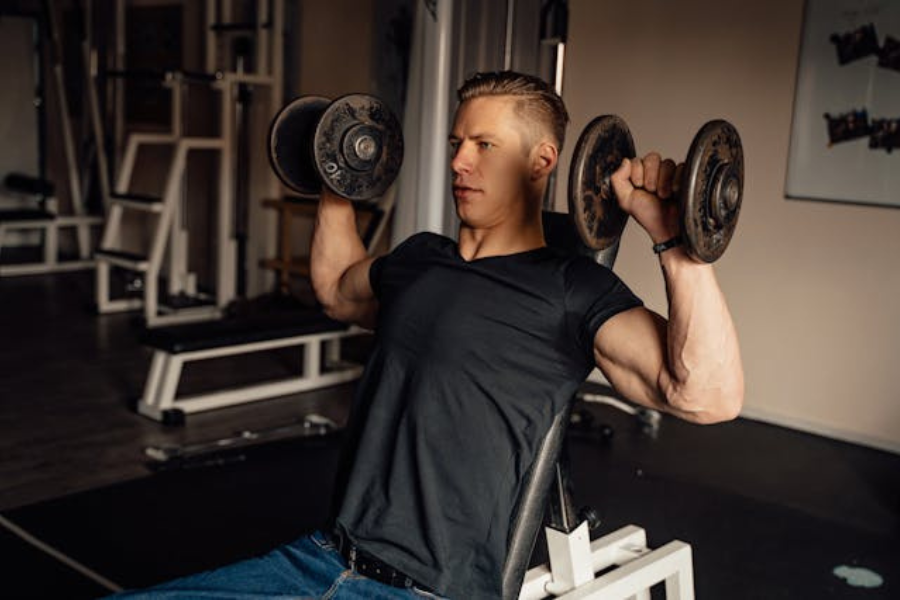
Sit on a chair or bench with your feet flat on the floor and a dumbbell in each hand. Hold the weights at shoulder height, palms facing forward. Engage your core, then press the dumbbells overhead until your arms are nearly straight. Avoid locking your elbows at the top. Slowly lower the dumbbells back down to your shoulders. This compound exercise targets your front and side delts, as well as your triceps.
Lateral raise
Stand tall with your feet hip-distance apart, and hold a dumbbell in each hand at your sides. Leading with your elbows, raise the dumbbells out to the sides until they are about shoulder height, keeping a slight bend in your elbows. Hold for a second, then lower the weights under control. This movement can be surprisingly challenging if you are new to shoulder training, so start light to maintain form.
Bent-over reverse fly
Hinge at the hips so your chest is close to parallel to the floor. Keep your knees soft but stable. Hold the dumbbells in front of your thighs with your palms facing one another. Lift the weights out to the sides, focusing on squeezing your shoulder blades together. A slow, controlled descent is key to really activating the rear delts. If you feel your lower back rounding, adjust your stance or reduce the weight.
Upright row
Stand with the dumbbells resting against your thighs, palms facing the front of your legs. Pull the weights up toward your chin, leading with your elbows. At the top of the movement, your elbows should be slightly higher than your shoulders. This exercise works your front and side delts, although it can put stress on the shoulder joint if you use too much weight or rush. Keep your form clean and stop if you feel pain.
External rotation
Using very light dumbbells, stand or sit with your elbows bent at 90 degrees close to your sides. Rotate your forearms outward, keeping your elbows clamped to your ribcage. This strengthens the rotator cuff, a crucial part of maintaining shoulder stability and preventing injury. Perform these rotations slowly and with focus.
Feel free to alter the number of sets and reps to match your goals. If you want more endurance and muscle stability, add a few more reps per set. If you aim to build maximum strength, try fewer reps at a slightly heavier load. Remember to rest adequately between sets to allow your muscles to recover before the next exercise.
Progress with advanced techniques
Once you feel comfortable with the basics, you can move forward by trying more challenging techniques or adding slight modifications to your current exercises. Progressing helps ensure you continue reaping results from your dumbbell shoulder workout and do not hit a plateau.
To add intensity, you can experiment with supersets. This approach involves performing two exercises back to back without rest. For example, you might do a set of lateral raises immediately followed by bent-over reverse flies. The increased time under tension challenges your muscles and can make your routine more time-efficient.
You might also introduce isometric holds, which involve pausing at the top or bottom of an exercise. For instance, pause for one or two seconds at the top of a lateral raise before lowering the weights. This small change can seriously amplify the burn in your delts and strengthen your mind-muscle connection.
Additionally, consider different stances, such as performing shoulder presses in a half-kneeling position. With one knee on the floor and your torso upright, you force your core to stabilize more thoroughly. This variation not only strengthens your shoulders but also engages your entire trunk to keep you steady.
Stay safe and track progress
While building stronger shoulders, you want to ensure you do not overtax your joints or cause any avoidable strains. Paying attention to proper form makes the biggest difference in preventing issues. Keep these tips in mind:
- Keep your core tight. This helps stabilize your body and prevents arching your back during overhead presses.
- Maintain control. Swinging the dumbbells using momentum can strain your shoulders and reduce muscle engagement.
- Use a full but comfortable range of motion. Avoid forcing your joints into extreme positions.
- Increase weight slowly. Jumping too quickly to heavier dumbbells is a common reason people experience shoulder pain.
It also helps to pay attention to feedback from your body. If you experience sharp or lingering discomfort in your shoulders, try lighter loads or reduce your total volume until you feel completely ready to resume. In some cases, consulting with a trainer or a medical professional may be the best choice if pain persists.
Alongside safety, you will want to measure your progress so you can celebrate achievements and know when to step up your regimen. One straightforward way is to note each workout in a small journal or app, tracking the weight used, sets performed, and approximate difficulty. Over time, you might see clear evidence that you are pressing more weight or performing more reps without feeling overly fatigued. That is a solid sign that your consistency is paying off.
Combine workouts with proper recovery
Effective recovery bolsters the benefits of any dumbbell shoulder workout, allowing your muscles to rebuild and become stronger. Think of your shoulder sessions as only part of the bigger fitness picture. The following strategies help you optimize your rest days:
• Stretching and mobility: Light stretches for your neck, shoulders, and upper back reduce stiffness, and incorporating gentle shoulder circles or band work can increase flexibility.
• Adequate sleep: Muscle repair happens most effectively during deep, restorative sleep. Aim for a regular sleep schedule, ideally around seven to nine hours per night.
• Balanced nutrition: Protein supports muscle growth, while healthy carbs fuel your workouts. Make sure you also get enough vitamins and minerals, especially vitamin C and magnesium, to keep your joints and tissues robust.
• Active rest: Activities such as casual walking, gentle yoga, or easy cycling get your blood flowing without placing undue stress on your shoulders.
Even small habits like staying hydrated and giving yourself mental breaks can have a big impact. If you plan your shoulder training for two or three days a week, use the intervening days to let your deltoids and rotator cuff recover. Most importantly, listen to your body. If your shoulders feel especially tight or fatigued, consider an extra day of rest before pressing on.
Final thoughts
A smart dumbbell shoulder workout goes beyond just hoisting weights overhead. It involves an understanding of your shoulder’s anatomy, a focus on balanced exercises, and plenty of respect for proper form. By choosing the right dumbbell weight, consistently hitting your sets and reps, and gradually introducing advanced elements, you can create a routine that remains challenging and rewarding over the long run.
Whether you are pushing a heavy cart at your job or reaching for an item on a tall shelf, you will quickly notice how much stronger, more stable shoulders can make daily tasks feel easier and more comfortable. Your posture may improve, your arms and back may feel more supported, and you might discover a confidence boost from seeing the results of your hard work.
Now is the best time to start. Pick up those dumbbells, make any necessary adjustments to your workout space, and commit to a routine that pushes you at a sustainable pace. Once you find your groove, you will realize that unlocking strong, functional shoulders is well within your reach. With discipline, patience, and smart recovery, you have everything you need to see and feel real progress.