A challenging workout does not have to mean pounding the pavement or jumping until your knees complain. You can build an effective routine of fat loss exercises without running that protects your joints, fits in small spaces, and still leaves you pleasantly tired and sweaty.
Below you will find low impact, high reward options you can mix and match into a weekly plan.
Understand how fat loss really works
Before you pick specific exercises, it helps to understand what actually drives fat loss. This keeps your expectations realistic and your plan focused.
You cannot choose exactly where your body loses fat. Doing endless crunches will strengthen your abs but will not magically melt only belly fat. The British Heart Foundation notes that spot reduction is not possible and that exercises like sit ups and crunches mainly build muscle under the fat, rather than burning the fat itself.
Fat loss happens when you create a consistent calorie deficit. You burn more energy than you take in, so your body pulls from stored triglycerides, or fat, across your entire body, not just the area you are working. Aerobic exercise is especially effective for this because it raises your heart rate and increases oxygen delivery which helps your body metabolize stored fat for energy.
The most effective plan combines two things: regular aerobic activity to burn calories and strength training to build muscle. More muscle means you burn more calories even when you are resting.
Focus on joint friendly cardio
You can get all the benefits of cardio without running or jumping. The key is to choose activities that you can do often, that feel kind to your joints, and that raise your heart rate into a moderate or vigorous zone.
Walking and incline walking
Daily walking is one of the simplest fat loss exercises without running. It is adaptable to your schedule, easy on your joints, and realistic to maintain long term. Research on overweight and obese postmenopausal women has shown that both slower walking around 3.4 mph and faster walking around 4.1 mph can significantly reduce visceral fat, which is the deep fat around your organs. Slow walking can actually be a more achievable starting point for many people.
If you use a treadmill, try incline walking. Walking uphill engages more muscles in your glutes and hamstrings and gives you similar fat burning benefits to running, but with less impact on your knees. Start with a modest incline and a pace that lets you talk in short sentences, then gradually increase one variable at a time.
Aim for at least 30 minutes of moderate walking most days of the week. You can split this into shorter 10 to 15 minute walks if that fits your day better.
Cycling for low impact intensity
Cycling, whether on a road bike or a stationary bike at home, is a strong option for low impact fat loss. It strengthens your heart and lungs while being gentle on hips, knees, and ankles. A 2024 study reported that cyclists had a nearly 20 percent lower risk of heart disease, and even short 10 minute rides can be enough to break a sweat and support fat loss.
You can use intervals on the bike to make sessions more efficient. Alternate 1 minute of faster pedaling with 2 minutes of an easier pace. Repeat this pattern for 10 to 20 minutes, plus a warm up and cool down.
Rowing for total body work
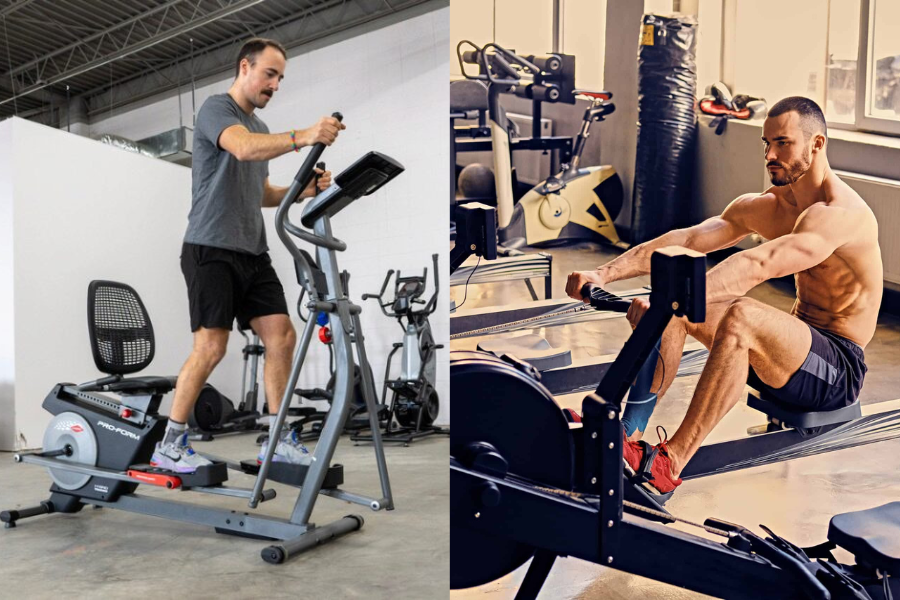
If you have access to a rowing machine, you have a full body cardio and strength tool in one. Rowing engages roughly 86 percent of your muscles, combining leg drive with core support and upper body pulling. This makes it a very time efficient choice for fat loss exercises without running, since you challenge your muscles and your cardiovascular system at the same time.
To keep it low impact, focus on smooth strokes and controlled movements rather than yanking the handle. Start with short bouts like 5 minutes of rowing followed by 2 minutes of easy movement, and build from there.
Elliptical and other low impact machines
Elliptical trainers simulate a running pattern without the impact. Your feet stay in contact with the pedals so your joints experience a smooth, gliding motion. This is helpful if you have knee or hip concerns but still want a higher intensity cardio session.
Other gentle options include:
- Swimming or water aerobics for a buoyant, joint friendly workout
- Dance inspired cardio that lets you move continuously at a moderate pace
- Low impact cardio classes that avoid jumping but still keep you moving
The common thread is sustained movement that keeps your heart rate elevated. Choose the one you enjoy enough to repeat regularly.
Use low impact HIIT for faster results
High intensity interval training, or HIIT, is not only for people who sprint or do burpees. You can design low impact HIIT circuits that alternate short bursts of effort with active recovery, without any running or jumping involved.
HIIT is effective for fat loss because it challenges your cardiovascular system in a short window, and research shows it can improve fitness and burn significant calories in less time than steady state cardio. Low impact intervals protect your joints while still raising your heart rate quickly.
You might try a simple circuit like this:
- 30 seconds brisk marching in place or on an incline, 30 seconds easy
- 30 seconds fast but controlled step ups on a low platform, 30 seconds easy
- 30 seconds of moving planks or mountain climbers on an elevated surface, 30 seconds easy
Repeat this 3 to 5 times depending on your fitness level.
Low impact HIIT can also be done on machines. On a bike, elliptical, or rower, cycle between 20 to 40 seconds of hard effort and 40 to 60 seconds of light effort. Keep total work time around 10 to 20 minutes if you are new to intervals, not including warm up and cool down.
Build muscle with strength training
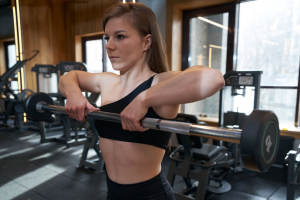
Strength or resistance training is a powerful, and sometimes underrated, tool for fat loss. When you build lean muscle mass, you increase your resting metabolic rate, so you burn more calories even when you sit, work, or sleep. Guidance from the British Heart Foundation in 2024 highlights that strength training supports weight loss by increasing calorie burn during and after your workout.
Aim for at least two days per week of full body strength sessions. Focus on compound movements that work several muscle groups at once. This gives you more benefit for your time.
Good low impact choices include:
- Squats or sit to stands from a chair
- Glute bridges on the floor or a bench
- Pushups against a wall, countertop, or on the floor
- Bent over rows with dumbbells or resistance bands
- Overhead presses with light dumbbells
You can use lighter weights, such as 5 to 8 pounds, for about 12 repetitions, or heavier weights for fewer reps. The key is that the last few repetitions feel challenging but your form stays solid.
Farmer’s walks and carries
Loaded carries, such as farmer’s walks, are an often overlooked fat loss exercise without running. You simply carry weights in your hands while you walk. This raises your heart rate and works your grip, shoulders, and core all at once.
Choose a pair of dumbbells or kettlebells that feel heavy but controllable. Stand tall, brace your core, and walk in a straight line for 20 to 40 seconds. Rest briefly, then repeat. Overhead carries, where you hold weight above your head as you walk, add even more core engagement, as long as your shoulders are comfortable.
Turn bodyweight moves into fat burners
You do not need equipment to challenge your body. Calisthenics, or bodyweight exercises, can improve cardiovascular fitness and strength using very little space.
Mountain climbers and moving planks
Mountain climbers start in a plank position, then you alternate driving your knees toward your chest. They work your core, shoulders, and legs while raising your heart rate. If full floor mountain climbers bother your wrists or feel too intense, place your hands on a bench or sturdy table to reduce the load.
Moving plank variations, such as plank jacks without the jump, slow army crawls, or walking your hands forward and back, are also effective. They engage your entire body while keeping one or more points of contact with the floor at all times, which keeps impact low.
Walking lunges and slow flows
Bodyweight walking lunges performed continuously for 5 to 10 minutes can create a surprising fat burning effect. You combine constant movement with leg strength and endurance. Focus on controlled steps, a gentle knee bend, and keeping your front knee aligned with your toes.
You can create short bodyweight flows that chain together squats, lunges, hip hinges, and upper body moves in a continuous sequence. Move at a pace that lets you breathe but keeps you from fully resting.
Support your exercise with daily movement
Your planned workouts are important, but so is everything you do in between. Moderate intensity activities in daily life can burn more calories than you might expect, especially if you are consistent.
Housework, gardening, and gentle home projects all count as aerobic activity if they elevate your heart rate and keep you moving for at least a few minutes at a time. Experts recommend at least 30 minutes of moderate aerobic exercise per day to burn visceral belly and liver fat, and you can accumulate this time across different activities throughout your day.
If you sit often for work, try small changes such as:
- Standing or pacing during phone calls
- Taking the stairs when possible
- Doing 5 minute walking breaks every hour
These habits make it easier to stay in a calorie deficit without requiring long, intense workouts.
Put it together into a weekly plan
To turn these ideas into results, it helps to see how they fit into a simple week. Adjust the specifics to match your schedule and current fitness level.
For example, you might start with:
- 3 days of brisk walking or cycling for 30 to 40 minutes
- 2 days of full body strength training with squats, rows, and presses
- 1 to 2 short sessions of low impact HIIT, 10 to 15 minutes each
- Daily light movement such as housework, gardening, or short walks
Remember that consistency matters more than perfection. If a day gets busy, even a 10 minute walk or a quick strength circuit is better than skipping movement entirely.
Key points to remember
Fat loss exercises without running can be just as effective as traditional cardio, especially if they are activities you enjoy and can sustain over time. Aerobic exercise helps you burn calories and reduce visceral fat, while strength training builds muscle that keeps your metabolism higher at rest.
You cannot pick exactly where the fat comes off first, but you can create an environment where your body draws on stored fat more often, protects your joints, and gradually changes shape. Start with one or two low impact options that feel approachable, then build from there as your fitness and confidence grow.