Building a stronger lower body does more than shape your legs and glutes. A consistent hamstring and glute workout can support your posture, protect your lower back, boost your running performance, and even help your body burn more calories at rest thanks to increased muscle mass. With a few simple steps and the right exercises, you can train these muscles safely and effectively, even as a beginner.
Below, you will learn how your glutes and hamstrings work, how to warm up properly, and exactly which moves to focus on for results you can feel.
Understand why glutes and hamstrings matter
Your glutes and hamstrings are key players in almost every lower body movement you make. When they are strong and active, daily tasks like walking, climbing stairs, and lifting heavy objects feel easier and safer.
The glutes are a group of three muscles that sit on the back of your hips. The gluteus maximus, the largest muscle in your body, is responsible for hip extension and helps stabilize your lower back and pelvis when you stand, walk, and climb stairs. The gluteus medius and minimus help keep your hips steady when you balance on one leg, which is essential for injury prevention during sports and everyday life.
Your hamstrings run down the back of your thighs. They include the biceps femoris, semitendinosus, and semimembranosus muscles, all of which work together to bend your knee and extend your hip. These muscles are especially active when you sprint, jump, or decelerate your body when slowing down from a run.
When you strengthen these muscle groups you can:
- Improve hip and knee stability
- Reduce your risk of hamstring strains and lower back pain
- Increase your power for running, jumping, and lifting
- Support better metabolic health, since more muscle burns more calories at rest
Warm up for safer, stronger workouts
A good hamstring and glute workout starts before the first heavy set. Warming up helps you raise your core temperature, wake up sleepy muscles, and move your joints through a comfortable range of motion. This is especially important if you spend a lot of time sitting, which can cause your glutes to switch off and your hamstrings to tighten.
Step 1: Do 5 to 10 minutes of light cardio
Begin with easy movement that slightly elevates your heart rate without tiring you out. You might:
- Walk briskly on a treadmill
- Cycle on a stationary bike
- March in place or do light step-ups at home
This gentle work increases blood flow to your legs and prepares your body for more demanding exercises.
Step 2: Activate glutes and hamstrings
Next, perform dynamic moves that specifically target the muscles you are about to train. Nutrisense suggests a sequence that is ideal for beginners:
- Knee hugs to warm up the hips and hamstrings
- Glute bridges to fire the gluteus maximus
- Lunges with elbow to instep to open the hips and stretch the hamstrings
- Hip flexions or leg swings to loosen the hip joint
Two sets of 8 to 10 reps per movement is enough to feel more mobile and ready to lift.
Focus on the right movement patterns
Effective hamstring and glute training is not random. The most efficient workouts include a mix of compound exercises, which work many muscles at once, and isolation exercises that target a single muscle or movement. Compounds like deadlifts and hip thrusts help you build strength and muscle mass quickly, while isolation moves such as leg curls and banded clamshells fine-tune activation.
The key patterns you want in your routine are:
- Hip extension, where you drive hips forward or upward
- Hinge movements, like Romanian deadlifts
- Single leg exercises, which improve balance and fix side-to-side imbalances
- Knee flexion, where hamstrings curl the leg
Once you understand these patterns, you can plug in different exercises without losing the structure of your program.
Learn the best hamstring and glute exercises
Research from Barbell Medicine and other strength experts highlights a group of eight highly effective moves for building your glutes and hamstrings. These exercises cover all the key movement patterns and can be adjusted to your experience level.
Squats
Squats are a staple lower body exercise that primarily target your quadriceps but also engage your glutes and, to a lesser extent, your hamstrings. Because they let you use relatively heavy loads, they are excellent for overall leg strength.
For more direct glute and hamstring focus you can:
- Sit back slightly more to increase hip involvement
- Try goblet squats if you are a beginner for easier control
- Use sumo or wider-stance squats, which can increase glute activation
Conventional deadlifts
Conventional barbell deadlifts are one of the most powerful tools for hamstring growth because they involve heavy weight, hip extension, and multiple joints at once. Barbell Medicine recommends about 3 sets of 6 to 8 reps for strength and muscle gain.
Keep your back neutral, push the floor away with your feet, and think of driving your hips forward as you stand up. This helps distribute the effort across glutes, hamstrings, and spinal erectors instead of overloading your lower back.
Hip thrusts and glute bridges
Hip thrusts and glute bridges are some of the best choices for directly targeting the gluteus maximus. They train hip extension without putting much stress on your lower back and they still activate the hamstrings as helpers.
You can start with bodyweight glute bridges on the floor. Once those feel easy, progress to:
- Barbell hip thrusts on a bench
- Dumbbell hip thrusts
- Machine hip thrusts if your gym has one
Performing 3 sets of 8 to 10 reps with controlled tempo usually works well.
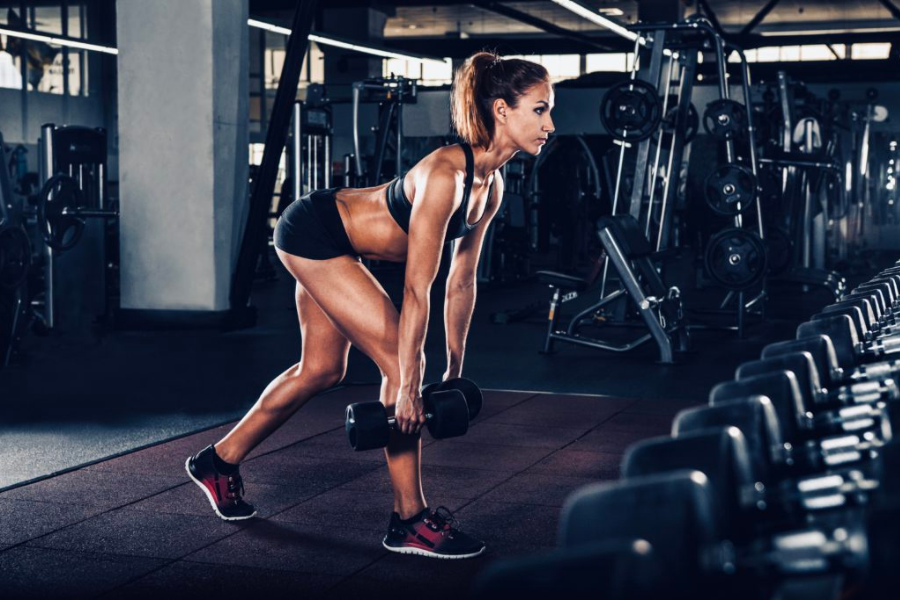
Romanian deadlifts (RDLs)
RDLs place a strong emphasis on the eccentric, or lowering, part of the lift. This slow stretch under tension is very effective for building hamstrings, glutes, and the muscles along your spine.
Keep a soft bend in your knees, hinge at the hips, and lower the weight only as far as you can while maintaining a flat back and a good hamstring stretch. RDLs also transfer well to your conventional deadlift, since the movement is similar.
Step-ups and split squats
Step-ups and split squats are single leg exercises that challenge your balance and force your glutes and hamstrings to work hard to stabilize your hips. Studies show that step-ups can create glute and hamstring activation comparable to squats, deadlifts, and hip thrusts.
You can:
- Start with bodyweight step-ups onto a low box or step
- Progress by increasing the height or holding dumbbells
- Use split squats or Bulgarian split squats to place more load on one leg at a time
These moves are especially helpful if one leg feels weaker than the other or if you are a runner who wants to reduce injury risk.
Hamstring curls and hip extensions
Isolation exercises like hamstring curls let you hone in on knee flexion and fully fatigue the hamstrings. Lying leg curls, seated leg curls, or stability ball leg curls are all effective when you move slowly and control the full range of motion.
Hip extension machines or cable kickbacks can complement your program by targeting the glutes from a slightly different angle. Combining isolation work with your main compound exercises can help you build balanced strength and muscle size.
Build a beginner-friendly workout plan
If you are new to strength training, you can still follow a structured hamstring and glute workout without feeling overwhelmed. The goal is to start with manageable volume and focus on good technique.
Here is a simple routine based on beginner guidance from Nutrisense and other experts:
- Warm up
- 5 to 10 minutes light cardio
- 2 sets of knee hugs, glute bridges, lunges with elbow to instep, and leg swings
- Main workout (2 to 3 times per week)
- Squats or goblet squats, 3 sets of 8 to 12 reps
- Romanian deadlifts or single leg RDLs, 3 sets of 8 to 10 reps
- Hip thrusts or glute bridges, 3 sets of 8 to 12 reps
- Step-ups or split squats, 2 to 3 sets of 8 to 12 reps per leg
- Hamstring curls (machine, ball, or dumbbell), 2 to 3 sets of 10 to 15 reps
- Cooldown
- Light walking for a few minutes
- Gentle stretching for glutes and hamstrings
As you get stronger, you can increase the weight, add a set here and there, or try advanced techniques such as single leg variations. Pay attention to your form and stop any exercise that causes sharp pain.
A good starting rule: add weight only when you can perform your current sets with controlled, repeatable technique and no loss of range of motion.
Use smart technique to protect your body
Good technique is less about looking perfect and more about moving in a way that is repeatable, efficient, and safe for your body. Barbell Medicine describes this as the REP model: Repeatable, Efficient, Points of performance.
In practice, that means you should:
- Aim to perform your reps in a consistent way from set to set
- Choose variations and stances that feel natural for your hip and leg structure
- Focus on a few key cues, for example, keeping your spine neutral and pushing through your whole foot
If you are unsure about your form, consider scheduling a session with a personal trainer or physical therapist who can watch your movement patterns and make individualized suggestions. This extra guidance can help you avoid common mistakes that lead to overuse injuries.
Support recovery for better results
Training creates the signal for your muscles to grow and strengthen. Recovery is when the actual change happens. When you give your glutes and hamstrings enough time and care between sessions, you will notice better performance and less soreness.
Simple recovery practices include:
- Taking at least one full rest day between hard lower body workouts
- Sleeping enough so that your body can repair muscle tissue
- Eating sufficient protein and overall calories to support muscle growth, ideally with help from a sports nutritionist if you have specific health goals
- Foam rolling your glutes and hamstrings for 30 to 60 seconds per side after workouts to ease tightness
If your muscles feel constantly sore or your performance is dropping, that is a sign to scale back volume or intensity for a week.
Putting it all together
When you approach your hamstring and glute workout with a clear plan, progress becomes much more predictable. You warm up with intention, focus on a core group of proven exercises, and respect recovery just as much as hard training days.
Start with one or two of the exercises above in your next workout and build from there. As you get more comfortable, you can adjust sets and reps, add new variations, and shape a routine that fits your schedule and goals. Over time you will not only see more defined glutes and stronger hamstrings, you will also feel more stable, powerful, and confident in every step you take.