A busy schedule does not have to derail your fat loss goals. HIIT exercises for fat loss let you burn more calories in less time by alternating short bursts of hard effort with brief recovery periods. With the right structure, you can build a highly effective routine in as little as 15 to 25 minutes.
Below, you will learn how HIIT works for fat loss, how often to do it, and get sample short sessions you can follow at home or in the gym.
What HIIT is and how it supports fat loss
High intensity interval training, or HIIT, is any workout where you switch between near‑maximal effort and low‑intensity recovery. Instead of 40 minutes of steady jogging, you might do repeated 30 second sprints followed by short rest periods.
Research cited by PureGym suggests that a 15 minute HIIT workout can burn more calories per minute and increase VO2 max more effectively than 40 minutes of steady‑state cardio, which makes it a time efficient choice for fat loss and endurance improvement. You are essentially trading workout length for intensity.
The key is the intensity of the “work” intervals. You aim for about 80 to 95 percent of your maximum heart rate, or levels 9 to 10 on a perceived exertion scale, then drop to easier effort around levels 3 to 4 during recovery. A full HIIT session usually lasts between 20 and 60 minutes, including warm up and cool down, depending on your fitness level and goals.
Why HIIT exercises are effective for fat loss
HIIT is popular for fat loss because it helps you burn calories during the workout and for hours afterward. This “afterburn” effect is called excess post exercise oxygen consumption, or EPOC.
Performance coach Lisa Reed explains that HIIT exercises generate enough EPOC to let you burn about 25 percent more calories after your workout compared to activities like walking or running at a steady pace, since your body uses extra oxygen to recover from the intense effort. She also estimates that the metabolism boost from HIIT can last up to three days and increase your metabolic rate by around 10 percent after a single session.
Trainer Rafique “Flex” Cabral notes that when you perform HIIT workouts three or four times per week, you compound this post workout metabolism boost and support weight loss by building and maintaining lean muscle mass. Lean muscle burns more calories at rest than fat tissue, so you are improving your baseline metabolism over time, not only during the workout itself.
HIIT may also be particularly effective at reducing abdominal fat compared with some other exercise types. Research indicates that HIIT can be especially effective for people who are overweight or obese, helping reduce body fat and waist circumference, while also providing benefits like lower blood pressure, better blood sugar control, and improved insulin sensitivity in a shorter amount of time than traditional endurance training.
What the research says about HIIT vs steady cardio
You might wonder if HIIT is truly superior to more traditional moderate cardio for fat loss. The research is nuanced.
A systematic review and meta analysis of 11 randomized clinical trials involving 379 adults with overweight or obesity found that HIIT was not significantly better than continuous aerobic training, or CAT, for reducing body fat percentage. The mean difference was only minus 0.55 percent body fat, which was not statistically meaningful, and there was also no significant difference for reducing abdominal visceral fat when measured with DEXA scans.
However, the same analysis found that HIIT provided superior improvements in some key health markers. Compared with continuous aerobic training, HIIT significantly increased maximal oxygen uptake (VO2 max) with a small effect size, and it improved fasting blood glucose and reduced total cholesterol. These benefits came in sessions that averaged about 26.6 minutes, while the continuous training sessions averaged 44 minutes over similar study durations.
A separate review of 13 studies involving 424 adults with overweight or obesity showed that both HIIT and traditional moderate exercise effectively reduced body fat and waist circumference. HIIT matched these fat loss results while providing similar or better improvements in cardiovascular health and metabolic markers, often in less time.
So HIIT is not a magic solution that melts fat while moderate cardio does nothing. Instead, it is a time efficient method that can deliver comparable fat loss with added fitness benefits, which is especially appealing when you are busy.
How often and how long you should do HIIT
Because HIIT is intense, more is not always better. Experts often recommend limiting pure HIIT workouts to two or three sessions per week so your body can recover and you can avoid injury or burnout.
In the research, HIIT was typically performed three to five times per week for sessions that lasted about 20 to 30 minutes, including work and recovery intervals, over five to sixteen weeks. In real life, you can get meaningful results with:
- 2 to 3 sessions of HIIT per week
- 15 to 30 minutes per session, including warm up and cool down
- One rest or low intensity day between HIIT days
Lisa Reed notes that as little as 20 minutes of HIIT three times per week can effectively boost metabolism and promote weight loss when paired with a sensible nutrition plan. Shorter sessions starting at 15 minutes can still be useful, especially if you are a beginner building up your conditioning.
On non HIIT days, you can focus on light walking, mobility, or strength training to support recovery and maintain an active lifestyle without overtaxing your system.
Best HIIT structure for short fat loss sessions
To design short HIIT exercises for fat loss, you want a clear work to rest structure. For most people, especially beginners, a simple ratio works well. For example, you can alternate 30 seconds of high energy movement with 10 seconds of rest or 30 seconds of harder work with 30 to 60 seconds of easier movement.
A common approach for beginners is:
- 5 minute warm up at easy effort
- 10 to 15 minutes of intervals
- 5 minute cool down
Within the interval block, you can choose low impact moves like brisk walking intervals, cycling, or bodyweight circuits, or higher impact options like sprints and jump squats if your joints tolerate them.
Beginners can safely do HIIT at home without equipment by simply alternating 30 seconds of intense exercise, such as mountain climbers or fast marching, with 10 seconds of rest. This method is flexible, and you can adjust the interval lengths and exercise intensity as your fitness improves.
Sample no equipment HIIT workout for home
Here is a simple full body routine that you can complete in about 20 minutes without any equipment. It combines cardio and strength focused moves for maximum calorie burn.
-
Warm up, 5 minutes
Walk in place, arm circles, gentle squats, and light torso twists. -
Main circuit, 12 minutes
Perform 30 seconds of work followed by 15 seconds of rest. Complete all moves, then rest for 60 seconds, and repeat the full circuit two or three times depending on fitness level.
- Jumping jacks or low impact jacks
- Bodyweight squats
- High knees or fast marching
- Push ups on the floor or against a wall
- Alternating reverse lunges or step back lunges
- Plank hold or hands elevated plank
- Cool down, 3 minutes
Walk slowly and stretch your quads, hamstrings, chest, and shoulders.
This type of full body HIIT workout targets your upper body, lower body, and core within a compact 20 to 25 minute block. You do not need specialized knowledge or equipment, which keeps the barrier to entry low.
Elliptical HIIT routine for low impact fat burning
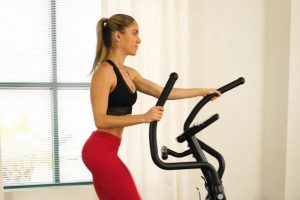
If you prefer low impact exercise or need to protect your joints, an elliptical trainer is a great way to apply HIIT principles without pounding. You can manipulate resistance, incline, and speed during the intervals.
Try this 20 minute beginner elliptical HIIT session:
- 5 minutes easy pedaling to warm up
- 30 seconds at high intensity, where your breathing is heavy and you would struggle to talk, followed by 1 minute of easy pedaling
- Repeat the 30 seconds hard, 1 minute easy pattern 10 times
- 3 to 5 minutes of slow pedaling to cool down
This structure lets you safely increase your heart rate and fat burning while maintaining a controlled, gliding motion. As your conditioning improves, you can gradually lengthen the hard intervals to 40 or 45 seconds or slightly decrease the recovery time.
Safety tips before you start HIIT
HIIT is demanding, so it is important to approach it thoughtfully. Sudden all out efforts without preparation can increase your risk of injury and burnout.
A few practical guidelines will help you stay safe:
- Build a base first if you are very inactive by walking or doing light cardio three times a week for several weeks before adding HIIT
- Start with one session per week, then increase to two or three as your body adapts
- Monitor how you feel during and after workouts, and back off if you notice joint pain, extreme fatigue, or trouble recovering between sessions
- Modify intensity by changing speed, resistance, or range of motion rather than forcing yourself into advanced moves
Experts also highlight that proper hydration and gear matter during HIIT. Rapid intervals can lead to dehydration, which affects performance and safety. Aim to drink about 7 to 10 ounces of water every 10 to 20 minutes during exercise to maintain fluid and electrolyte balance. Wear snug, moisture wicking clothing and supportive cross trainer shoes so you can move freely and minimize injury risk.
If you have a medical condition, are pregnant, or have been inactive for a long time, check with your healthcare provider before starting HIIT.
How to fit HIIT into a realistic weekly plan
HIIT works best as part of a balanced routine, not as the only thing you do. Since you only need two or three short HIIT sessions per week for meaningful results, you can easily fit them into a busy schedule.
A simple weekly structure could look like this:
- Monday, 20 minute home HIIT circuit
- Tuesday, 30 minute brisk walk or light cycling
- Wednesday, rest or gentle stretching
- Thursday, 20 minute elliptical HIIT session
- Friday, strength training with weights or bodyweight
- Saturday, casual activity like hiking, swimming, or playing a sport
- Sunday, rest
This approach balances intense work with easier movement and recovery, which supports sustainable fat loss. You are not relying on HIIT alone but using it as a powerful tool inside a broader lifestyle that includes everyday activity, strength training, sleep, and nutrition.
If you only have three short workout slots per week, you can dedicate two to HIIT and one to strength training, then simply move more on the other days through walking or active errands.
Putting it all together
HIIT exercises for fat loss are effective because they combine intense intervals with brief recovery periods to maximize calorie burn in short sessions. Thanks to the afterburn effect, or EPOC, your body continues burning extra calories for hours after you finish. Over time, HIIT helps you maintain lean muscle mass, improves your cardiovascular fitness, and supports better blood sugar and cholesterol levels.
You do not need long gym sessions or fancy equipment. Two or three 15 to 25 minute HIIT workouts each week, whether at home or on equipment like an elliptical, can meaningfully support your fat loss goals when you pair them with smart eating and regular movement.
Choose one of the sample routines, schedule it into your week, and give yourself permission to start where you are. As your fitness improves, you can gradually increase intensity or duration. The most important step is to begin and stay consistent.