A fat loss diet for men can feel confusing, especially with so many competing plans and rules. Instead of chasing a “perfect” plan, it helps to understand a few guiding principles so you can build a way of eating that fits your lifestyle and actually lasts.
Below, you will learn how to set calories, balance your macros, choose foods that keep you full, and use strategies like meal prep and intermittent fasting in a realistic way.
Understand your calorie needs
At its core, a fat loss diet for men relies on a calorie deficit. You lose fat when you consistently burn more calories than you eat, regardless of the specific foods or macros you choose. That is why every effective diet, from low carb to Mediterranean, works through some form of reduced calorie intake (Healthline).
For many men, a 1,500 calorie diet can be a reasonable starting point for fat loss. However, your ideal number depends on your age, weight, height, and activity level (Healthline). A more tailored way to start is to estimate your total daily energy expenditure (TDEE) using an equation like Mifflin St. Jeor, apply an activity factor, then subtract around 500 calories per day. This level of deficit typically leads to about one pound of weight loss per week, which is considered sustainable and safe for most men (Healthline).
If you prefer a more practical approach, you can track what you currently eat for 7 days, average the calories, then reduce that total by 300 to 500 calories per day. This method is less precise on paper, but it reflects your real life and usual intake.
Get your macro balance right
Once you know your target calories, your next step is to decide how much protein, fat, and carbohydrate you want to eat. There is no single magical macronutrient ratio for a fat loss diet for men. What matters most is that you keep your calorie intake below your calorie burn (Healthline). That said, certain ranges tend to work better for appetite control, energy, and muscle maintenance.
Protein for fullness and muscle
Protein is the most filling macronutrient, and it plays a key role in preserving muscle while you lose fat. Many men do well aiming for 1.2 to 2 grams of protein per kilogram of body weight per day (Healthline). So, if you weigh 80 kilograms, that is roughly 96 to 160 grams of protein daily.
You can spread this across your meals with foods like chicken, turkey, fish, eggs, Greek yogurt, lentils, tofu, or lean beef. Higher protein intake helps you stay satisfied between meals, which makes it much easier to stick to a calorie deficit.
Healthy fats for hormones and satisfaction
Dietary fat is calorie dense, but it is essential for hormone health and overall well being. A good target for fat intake is usually between 10 and 30 percent of your daily calories, focusing mainly on unsaturated fats (Healthline).
Sources like olive oil, avocados, nuts, seeds, and fatty fish provide monounsaturated and polyunsaturated fats that support heart health. At the same time, you should keep saturated fats under 10 percent of your calories to help reduce cardiovascular risk (Healthline).
Carbohydrates for energy and performance
Carbohydrates can fit into a fat loss diet for men, especially when you choose higher fiber, minimally processed options. General guidelines suggest that carbs can make up 45 to 65 percent of your daily calories, with an emphasis on vegetables, fruits, legumes, and whole grains (Healthline). These sources help keep blood sugar steadier and support training sessions.
If you find you are very sensitive to carbs or tend to overeat refined sources like sweets, white bread, or pastries, you may do better with a lower carb ratio and more protein or healthy fats. Some coaches and organizations, such as ISSA, even suggest different starting ratios based on body type, but these are just templates to test rather than strict rules (Bodybuilding.com).
Choose foods that support fat loss
The quality of your food choices has a big effect on how easy your diet feels. You can hit your calorie target with fast food and cookies, but you will likely stay hungry and feel sluggish.
Focus on whole, minimally processed foods
A fat loss diet for men is easier to follow when most of your calories come from whole or lightly processed foods such as:
- Vegetables and fruits
- Whole grains like oats, quinoa, and brown rice
- Lean proteins, including poultry, fish, eggs, and beans
- Nuts, seeds, and other sources of healthy fats
These foods are generally more filling, nutrient dense, and supportive of long term health. Health experts recommend limiting highly processed foods, fast food, refined carbs, and added sugars because they are linked to weight gain and can make it harder to control hunger (Healthline).
Combine protein and fiber
One simple rule you can follow at most meals is to combine a lean protein source with high fiber carbs or vegetables. This pairing slows digestion, keeps you fuller longer, and helps prevent overeating (Healthline).
For example, you might build a meal with grilled chicken, roasted vegetables, and a small portion of brown rice, or a salmon fillet with sweet potato and a big side salad. Over time, this pattern can make your calorie deficit feel manageable instead of restrictive.
Use meal prep to stay consistent
Even with the best plan, your results depend on what you actually eat day to day. That is where meal prep becomes a powerful tool in any fat loss diet for men.
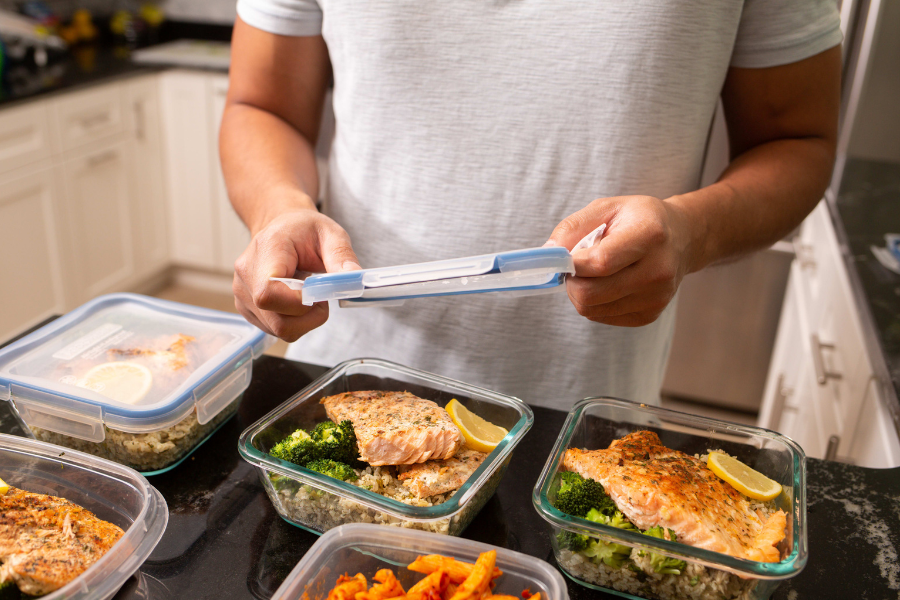
When you prep several meals at once, you portion out the right amount of calories and nutrients ahead of time. This lets you skip constant weighing and measuring and makes it easier to hit your protein and carb targets around workouts (MyProtein).
You might batch cook:
- A high protein fish meal, like seared tuna with sweet potato, which can deliver around 38 grams of protein per serving (MyProtein)
- Salmon with vegetables, which adds valuable omega 3 fats that support staying lean (MyProtein)
- Lean beef dishes with spiralized vegetables for a lower carb twist that still feels substantial (MyProtein)
By keeping several portions ready in the fridge or freezer, you reduce the chances of grabbing whatever is most convenient when you are tired or busy.
You do not need elaborate recipes to meal prep effectively. Choose 2 or 3 basic meals you actually enjoy, cook them in bulk, and repeat.
Explore structured meal plans for guidance
If you like more structure, a short term meal plan can give you a clear starting point. For example, a four week fat burning plan that focuses on high protein, high fiber, and relatively low carbs can help you build muscle while losing fat without feeling overly hungry (Men’s Journal).
These plans often include:
- Protein rich smoothies for breakfast
- Lean protein salads with whole grain crackers for lunch
- Stir fries with vegetables and brown rice for dinner
Some plans have helped men lose significant weight, such as one reader who reported dropping more than 60 pounds by following a structured, balanced program consistently (Men’s Journal).
If you follow a plan like this, use it as a guide rather than a permanent rulebook. Over time, you can swap in similar meals that match your food preferences while keeping the same basic structure: lean protein, high fiber carbs, vegetables, and controlled portions.
Consider lifestyle based approaches like the Mayo Clinic Diet
If you are more interested in long term change than a temporary diet, lifestyle focused programs such as the Mayo Clinic Diet can be a good fit. This approach is designed as a long term weight management method that encourages you to build healthy habits like eating more fruits and vegetables, avoiding mindless eating in front of the TV, and staying active for at least 30 minutes each day (Mayo Clinic).
The plan uses a Healthy Weight Pyramid that puts vegetables and fruits at the base, followed by whole grains, lean proteins, and healthy fats. Many of these foods can be eaten in generous amounts, which helps you feel satisfied even while losing fat (Mayo Clinic).
The Mayo Clinic Diet has two phases. The first phase usually leads to a loss of about 6 to 10 pounds in two weeks, and the second focuses on slower, steady loss of 1 to 2 pounds per week (Mayo Clinic). The plan can also be adapted if you have conditions such as diabetes, by adjusting the balance of fruits and vegetables and managing carb intake more carefully.
Use intermittent fasting as an optional tool
Intermittent fasting is another popular strategy in many fat loss diets for men. Instead of changing what you eat, you focus on when you eat by cycling between periods of fasting and eating (Johns Hopkins Medicine).
Common fasting schedules
Two of the most common fasting patterns are:
- The 16/8 method, where you eat during an 8 hour window each day and fast for the remaining 16 hours
- The 5:2 method, where you eat normally on five days each week and limit intake to one 500 to 600 calorie meal on two non consecutive days (Johns Hopkins Medicine)
Some research suggests that alternate day fasting can lead to more rapid weight loss than simple time restricted eating, although it is usually harder to maintain socially and tends not to be followed for long periods (Men’s Health).
What fasting can and cannot do
Intermittent fasting can help you lose about 10 to 30 pounds over 3 to 6 months in some cases, especially when full day fasts are used (Men’s Health). However, it does not guarantee weight loss on its own. If you eat large amounts of junk food during your eating windows, you can still gain weight. You still need a calorie deficit and good food quality for best results (Men’s Health).
During fasting periods, water, black coffee, and very low calorie drinks are usually allowed. Some experts suggest that adding small amounts of butter, MCT oil, or up to two tablespoons of full fat cream to coffee is also acceptable without fully breaking the fast (Men’s Health).
Behind the scenes, fasting encourages your body to shift from burning stored sugar to burning fat for fuel, a process sometimes called a metabolic switch (Johns Hopkins Medicine). This switch is what makes intermittent fasting appealing for fat loss, although you still need to keep your overall calories in check.
When you do eat, it is best to follow a pattern similar to a Mediterranean style diet with plenty of leafy greens, healthy fats, lean proteins, and complex carbs, rather than using your eating window as an excuse to binge on fast food (Johns Hopkins Medicine).
Put it all together
A sustainable fat loss diet for men does not need to be complicated. You will get the best results if you:
- Set a realistic calorie deficit based on your own body and activity
- Eat enough protein to protect muscle and control hunger
- Choose mostly whole, minimally processed foods
- Use meal prep or structured plans to simplify your routine
- Consider lifestyle programs or intermittent fasting if they fit your preferences
As you go, track more than just the scale. Waist measurements, progress photos, strength in the gym, and how your clothes fit all give you a more complete picture. Then you can make small adjustments to your calories or macros if your progress stalls.
Choose one change to make this week, whether that is prepping lunches, increasing your protein, or setting a consistent eating window. Build from there, and your diet will start to feel less like a short term fix and more like a routine you can actually maintain.