Intermittent fasting benefits go beyond the number on the scale. When you time your meals instead of constantly counting calories, you can support your metabolism, your mood, and even your brain health, often with a surprisingly simple routine.
Below, you will see how intermittent fasting works, what science-backed benefits you might notice, and how to decide whether it fits your life and health goals.
Understand what intermittent fasting is
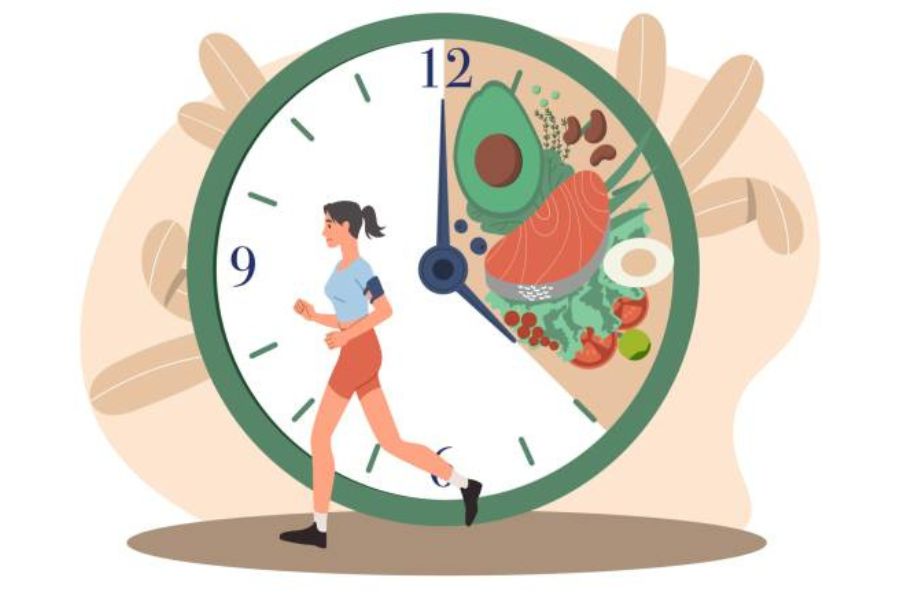
Intermittent fasting is an eating pattern where you cycle between periods of eating and periods of not eating. You focus on when you eat rather than exactly what you eat at every meal.
The most common approach is time restricted eating. For example, the 16:8 method means you fast for 16 hours, then eat all your meals in an 8 hour window. Mass General Brigham notes that this type of plan is popular because it is simple and does not require you to track every calorie or macro in an app (Mass General Brigham).
You still want balanced meals, but the schedule itself is what triggers many of the health effects you have probably heard about.
Support weight loss without heavy math
If you are interested in weight loss, intermittent fasting can help you eat less without a complicated diet.
You naturally take in fewer calories
By limiting your eating to a set window, you usually reduce how many times you snack or graze. Research from Harvard T. H. Chan School of Public Health suggests that daily intermittent fasting, such as eating between 8 a.m. and 4 p.m., leads people to eat about 250 fewer calories per day on average. That is roughly half a pound of weight loss per week, without tracking every bite (Harvard T.H. Chan School of Public Health).
Other clinical trials show that various intermittent fasting methods can cut body weight by about 4 to 10 percent over several weeks in people who are overweight (Journal of Yeungnam Medical Science). You may not see dramatic overnight changes, but the results can add up steadily.
Your body learns to burn fat more easily
After 10 to 12 hours without food, your body starts to switch from using stored sugar to using fat for energy. Experts at Mass General Brigham describe this as a metabolic switch that helps your body burn fat more efficiently over time (Mass General Brigham).
Johns Hopkins researchers call this “metabolic switching” as well and note that it is a key reason intermittent fasting can support a leaner body composition and better metabolism overall (Johns Hopkins Medicine).
Improve blood sugar and insulin sensitivity
If you deal with energy crashes or are worried about blood sugar, intermittent fasting may help your body handle glucose more smoothly.
A landmark study led by Courtney Peterson found that when men with prediabetes ate within a shorter window earlier in the day, they dramatically improved their blood sugar control. This sparked more research into intermittent fasting for cardiometabolic health, including blood sugar, blood pressure, and weight management (Harvard T.H. Chan School of Public Health).
In a review of multiple studies, time restricted eating and other intermittent fasting patterns improved insulin sensitivity and lowered fasting insulin levels, especially when weight loss occurred. This can be helpful if you are at risk for type 2 diabetes, PCOS, or fatty liver disease (Mass General Brigham).
Another analysis in the Journal of Yeungnam Medical Science reported that intermittent fasting improved glucose metabolism and insulin sensitivity and even reduced glycated hemoglobin in people with type 2 diabetes over 12 months (Journal of Yeungnam Medical Science).
If you already take medication for blood sugar, you should always speak with your doctor first. Harvard experts stress that people with diabetes may need medication adjustments to avoid low blood sugar when they change their eating schedule (Harvard T.H. Chan School of Public Health).
Boost heart health and lower inflammation
Your heart and blood vessels can benefit from intermittent fasting too, not just your waistline.
A 2022 narrative review reports that intermittent fasting can lower total cholesterol, LDL cholesterol, triglycerides, and systolic blood pressure, and sometimes raise HDL cholesterol. Together, these shifts are linked with a lower risk of cardiovascular disease (Journal of Yeungnam Medical Science).
Intermittent fasting also appears to reduce inflammatory markers like C reactive protein and certain cytokines. Since chronic inflammation plays a role in heart disease and metabolic disorders, lowering these markers may give you extra protection over time (Journal of Yeungnam Medical Science).
Harvard researchers note that intermittent fasting has been shown to consistently lower blood pressure and reduce oxidative stress, a type of cellular damage that can contribute to cancer and heart disease. They also highlight improvements in biomarkers of aging and circadian rhythm, so you may be supporting long term health in several ways at once (Harvard T.H. Chan School of Public Health).
Support brain function and mental clarity
You might notice that your brain feels sharper when you are not eating all day long.
Johns Hopkins neuroscientist Mark Mattson, who has studied intermittent fasting for decades, links this way of eating to enhanced cognitive function and even protection against age related neurodegenerative diseases like Alzheimer disease and Parkinson disease (Johns Hopkins Medicine).
Part of this effect may come from increased brain derived neurotrophic factor, or BDNF. Psychology Today describes how intermittent fasting can raise BDNF levels, which support memory, learning, and brain flexibility. People in real life examples, like Larissa, a 34 year old graphic designer, reported better focus and problem solving after adopting a fasting schedule (Psychology Today).
In a 2024 study, brain imaging showed that intermittent fasting changed the connectivity between parts of the brain involved in emotional regulation and anxiety. This suggests that fasting is not only affecting your body but also reshaping some brain networks related to how you feel emotionally (Alpha Psychiatry).
Ease anxiety and stabilize your mood
One of the most surprising intermittent fasting benefits is its potential effect on your mood and anxiety levels.
In the 2024 longitudinal study mentioned above, adults who followed a time restricted eating schedule with an 18 hour fasting window for 50 days saw significant drops in anxiety scores. The reductions were still present two months after they stopped fasting, which hints at lasting emotional benefits (Alpha Psychiatry).
Psychology Today reports that intermittent fasting can help stabilize blood sugar, reduce mood swings and irritability, and lower inflammation that is linked to depressive symptoms. People like Marlon, a 41 year old social worker, noticed fewer emotional ups and downs and less anxiety after adopting a 16:8 routine (Psychology Today).
Fasting may also foster a stronger sense of control and discipline. For example, Sienna, a 29 year old software engineer, described feeling more confident and intentional in other parts of life after sticking to her eating window. That spillover effect can make your daily routine feel less chaotic and more manageable (Psychology Today).
Intermittent fasting appears to support emotional wellbeing by improving anxiety scores, stabilizing mood, and encouraging a deeper mind body awareness, particularly when you approach it in a flexible and sustainable way.
Encourage cellular cleanup and long term health
Even though you cannot see it, intermittent fasting may be helping your cells repair and refresh themselves.
Researchers describe how periods without food may trigger autophagy, which is the body’s built in cleanup system. During autophagy your cells remove damaged components and recycle them. Mass General Brigham notes that this process could reduce inflammation and protect healthy cells, which might improve energy and comfort and support weight loss over time (Mass General Brigham).
According to Johns Hopkins, intermittent fasting is linked with a longer life span in animal studies, and human research suggests protective effects against conditions like type 2 diabetes, heart disease, inflammatory bowel disease, some cancers, and age related brain disorders (Johns Hopkins Medicine).
You should not think of fasting as a magic shield, but as one more lifestyle tool that can work alongside movement, sleep, and nutrient rich foods.
Choose an intermittent fasting style that fits you
You have several options for structuring an intermittent fasting routine. The best one is usually the one you can live with.
Common patterns include:
- 16:8 time restricted eating, where you fast for 16 hours and eat during an 8 hour window each day
- Early time restricted eating, where you finish eating by mid afternoon, which may give extra benefits for blood sugar and blood pressure (Harvard T.H. Chan School of Public Health)
- 5:2, where you eat normally 5 days a week and limit calories significantly on 2 nonconsecutive days
- Alternate day fasting, where you alternate normal eating days with very low calorie days
Clinical trials suggest that alternate day fasting can lead to slightly faster weight loss than 5:2, about 0.75 kilograms per week compared with 0.25 kilograms. Both, however, are effective for reducing body weight and improving metabolic health (Journal of Yeungnam Medical Science).
If you are just getting started, a daily time restricted eating pattern like 16:8 is often the most approachable. Dietitians at Mass General Brigham highlight that these methods are easy to tailor to your lifestyle, which makes them easier to maintain (Mass General Brigham).
Know the challenges and when to be careful
Intermittent fasting is not right for everyone, and even if it is a good fit, you should expect an adjustment period.
Johns Hopkins experts note that hunger and irritability are common in the first 2 to 4 weeks as your body learns the new rhythm. Many people who stick with it report that these symptoms fade and then they feel better overall (Johns Hopkins Medicine).
Fasting is generally not recommended if you:
- Have a history of disordered eating
- Are pregnant or breastfeeding
- Have certain chronic conditions unless supervised by a clinician
If you have diabetes or take medications that affect blood sugar or blood pressure, you should check with your healthcare provider before you start. You may need to adjust doses or timing to stay safe (Harvard T.H. Chan School of Public Health).
It is also worth keeping in mind that intermittent fasting is not automatically better than traditional calorie restriction for everyone. A randomized clinical trial found that alternate day fasting and daily calorie restriction led to similar weight loss and cardiovascular improvements after 12 months in people with obesity (Nutrients/MDPI). So you can think of fasting as a different tool, not a required one.
Putting it into practice
To try intermittent fasting in a gentle, sustainable way, you can start small.
Choose a 12 hour overnight fast first, such as finishing dinner by 7 p.m. and eating breakfast at 7 a.m. After a week or two, you can stretch that to 14 hours, then 16 if you feel well. Focus your eating window on satisfying, minimally processed foods with protein, healthy fats, and fiber so you are not starving between meals.
From there, you can pay attention to how your body responds. You might notice better appetite control, more steady energy, or a calmer mood. The scientific research suggests that behind the scenes, you may also be improving your insulin sensitivity, protecting your heart, and supporting your brain and cells in ways that will matter for years to come.