Why full body rowing workouts are so effective
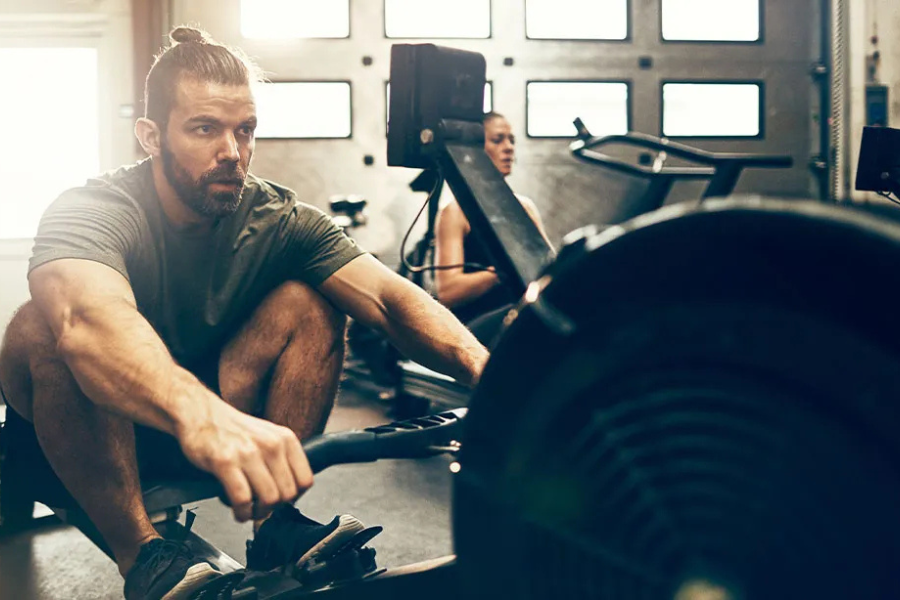
If you want one workout that can help you lose weight, build strength, and feel energized every day, full body rowing workouts are hard to beat. Rowing engages your legs, back, core, and arms all at once, which means a high calorie burn in less time and steady progress toward your fitness goals.
Because you sit while you row, it is also low impact on your joints. That makes it a smart choice if you want serious results without the pounding of running or high impact classes. According to the American Fitness Professionals Association, rowing uses around 65 to 75% leg work and 25 to 35% upper body work, so you are getting a true head-to-toe workout every time you strap in (Healthline).
What muscles you work when you row
Every stroke on the rowing machine is a coordinated chain of movements. You are not just pulling with your arms, you are driving from your legs, stabilizing through your core, and finishing with your back and shoulders.
During a full rowing stroke, you work:
- Legs: quadriceps, hamstrings, calves, and glutes
- Core: abdominals and obliques
- Back: lower back, lats, and upper back muscles like the rhomboids and trapezius
- Arms and shoulders: biceps, triceps, forearms, and deltoids
- Chest: pectoral muscles
Concept2 describes how these muscles fire during each phase of the stroke. In the catch, your abs brace and your triceps straighten your arms as you grip the handle. In the drive, your powerful leg muscles, glutes and hamstrings push the seat back, while your shoulders and back help open your torso. At the finish, your abdominals hold you steady and your biceps and back keep the handle close to your body. The recovery then uses your triceps, abs, hamstrings, and calves to slide you back into position for the next stroke (Concept2).
Because so many muscles are involved, rowing builds both strength and stamina. Exercise physiologist Chris Dempers explains that rowing machines work your legs, upper back, core, abs, lower back, obliques, glutes, and hamstrings, which helps you increase overall strength and endurance together instead of training them separately (Cleveland Clinic).
How rowing helps with weight loss and energy
If weight loss is one of your goals, full body rowing workouts give you a powerful combination of calorie burn and muscle building. A 30 minute rowing session can burn around 300 calories, and a vigorous 30 minute workout can burn about 369 calories for a 155 pound person, which is more than an elliptical session of the same length for that same person (Rowing Machine Workouts, Healthline).
Rowing is not just about calories during your workout. Because you are working large muscle groups, you build lean muscle mass. More lean muscle can raise your resting metabolic rate so you burn slightly more calories even at rest (Rowing Machine Workouts). Over weeks and months, that extra burn adds up.
Rowing also improves your cardiovascular health and stamina. A 2015 study found that rowing five days a week for six weeks decreased fat mass and total body fat percentage, and also improved cholesterol levels and back strength in people with low vision (Healthline). Regular rowing can help you meet the CDC recommendation of 150 minutes of moderate intensity exercise per week, which is linked with better heart health and long term energy (Cleveland Clinic).
Beyond the physical changes, rowing has mental benefits too. Full body rowing workouts have been linked with stress reduction and improved mood (Rowing Machine Workouts). The rhythmic motion, focus on breathing, and sense of progress can leave you feeling more relaxed and energized after a session, not drained.
Why rowing is gentle on joints but tough on fitness
You might expect a workout that uses this many muscles to be hard on your body. In reality, rowing is low impact and joint friendly when you use proper technique. Since you are seated and your feet stay in place, there is no pounding like running and less strain on your knees and ankles. Healthline notes that rowing can be a good option even for people with early stage osteoarthritis or for active recovery days because it burns significant calories without extra joint stress (Healthline).
Rowing machines also rank high for cardio benefits. Chris Dempers explains that rowing is a low impact cardiovascular exercise that burns calories efficiently, coming in just below running but above elliptical machines, while still being gentle on your joints (Cleveland Clinic). When you row consistently, you may notice better posture, balance, and coordination too, thanks to stronger core and back muscles that support your spine and help stabilize your body in everyday movements (Cleveland Clinic).
Getting your technique right from day one
Good form is what makes full body rowing workouts both safe and effective. If you only pull with your arms or round your back, you miss out on power and increase your risk of injury. British Rowing and Sunny Health and Fitness both emphasize that proper technique is essential to maximize benefits and protect your lower back, wrists, and knees (British Rowing, Sunny Health and Fitness).
Here is a simple way to think about the four positions of the stroke:
-
The catch
Sit tall with a neutral, flat back that pivots from your hips, not your spine. Knees are bent, shins vertical, arms straight, wrists flat, and you are gripping the handle lightly. Your core is braced and your weight is balanced forward on your sit bones (British Rowing, Sunny Health and Fitness). -
The drive
Push the foot pedals with your legs while keeping your arms straight and your core engaged. Think about pushing the machine away from you with your feet. Do not snap your knees to a hard lock, and keep your back tall as you open your hips slightly and start to lean back (Sunny Health and Fitness). -
The finish
When your legs are nearly straight and your torso is leaning back just past upright, pull the handle toward your lower ribs. Your elbows travel back, not out to the side. Your abs stay tight to support your spine. This is where your upper body and arms add power on top of your leg drive (Concept2, Sunny Health and Fitness). -
The recovery
Reverse the movement in slow motion. Extend your arms first, then hinge your torso forward from the hips, then bend your knees to slide back to the catch. The recovery should be relaxed and controlled, not rushed. British Rowing recommends giving equal attention to the drive and recovery for smooth, efficient strokes (British Rowing).
Sunny Health and Fitness suggests filming yourself or using a mirror so you can check your form, especially your back position and sequencing, and make adjustments before bad habits set in (Sunny Health and Fitness).
Structuring full body rowing workouts for results
To feel more energized and see steady progress, you want a mix of workout styles instead of the same pace every time. A four week rowing weight loss routine might include four rowing sessions per week with a warm up, a main set, and a cool down, and a blend of high intensity intervals, medium intervals, and longer steady rows (Rowing Machine Workouts).
A personal trainer designed a 30 day rowing for weight loss plan that uses sessions from 20 to 50 minutes. The plan rotates between high intensity intervals, low intensity steady rows, distance challenges, floor exercises, and rest days so you burn fat while still giving your muscles time to recover and grow (Fit&Well).
A simple weekly structure you could follow is:
- One short high intensity interval session
- One medium interval workout
- One longer steady state row
- One mixed session with rowing plus bodyweight work
Keep your stroke rate in a moderate range of about 20 to 26 strokes per minute for most of your workouts. This helps you maintain control, focus on form, and still generate plenty of power (Rowing Machine Workouts).
Garage Gym Reviews also suggests paying attention to a few key data points on your rowing monitor, such as elapsed time, stroke rate, pace per 500 meters, and effort level, so you can track how your fitness improves over time (Garage Gym Reviews).
Think of each session as practice, not a test. When you show up consistently and move well, speed, distance, and calories burned almost always take care of themselves.
Balancing rowing with recovery and nutrition
The faster you want to progress, the more you need recovery to match your effort. Even though rowing is low impact, your muscles and joints still need breaks. A 4 week weight loss plan that features rowing emphasizes at least three rest days per week so your body can repair and grow stronger. Using tools like foam rollers helps ease muscle soreness and reduce delayed onset muscle soreness, or DOMS, after harder sessions (Rowing Machine Workouts, Fit&Well).
Fueling your body well also supports better full body rowing workouts. For workouts that last 30 minutes or more, try to eat a high carb meal two to four hours beforehand so you have enough energy, then follow your session with a light carb plus high protein snack to aid muscle repair. Your regular meals should include quality protein and a balance of carbs and healthy fats so your body has the building blocks it needs to adapt to your training (Fit&Well).
When you combine smart training, solid technique, planned rest, and simple nutrition habits, rowing becomes more than just another cardio machine. It becomes a reliable way for you to feel stronger, leaner, and more energized in your everyday life.
How to get started this week
You do not need a complex training plan to begin. Set a realistic goal, such as rowing three times this week for 15 to 20 minutes. Focus on:
- Learning the basic stroke positions
- Keeping your back neutral and core engaged
- Staying in a moderate stroke rate range
- Finishing each workout feeling like you could do a little more
As you get comfortable, you can add intervals, longer rows, or extra sessions. Many people notice positive changes in energy, mood, and sleep within a couple of weeks of consistent rowing, even before big changes show up in the mirror (NordicTrack, Cleveland Clinic).
Start where you are, aim for consistency over perfection, and let full body rowing workouts become a simple habit that supports your health every single day.