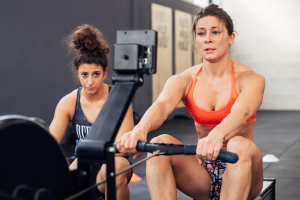
Indoor rowers are no longer just tucked away in CrossFit boxes. Rowing machine cardio workouts are now a favorite for people who want a joint friendly way to lose weight, improve heart health, and build strength at the same time. With the right approach, you can turn that flywheel into one of the most efficient tools in your fitness routine.
Below, you will see how rowing supports your health, what the science says, and how to structure workouts that match your goals and fitness level.
How rowing machine cardio workouts benefit your body
A rowing machine session is more than mindless pushing and pulling. Each stroke recruits your legs, hips, core, back, and arms in one coordinated movement. Several sources estimate that rowing engages around 80 to 85 percent of your major muscles, significantly more than treadmill running or typical elliptical workouts (GQ).
By combining upper and lower body work, rowing gives you:
- A strong cardiovascular challenge for your heart and lungs
- Muscular endurance in your legs, glutes, back, and shoulders
- Core activation that supports posture and balance
This blend is why a 30 minute session on a rowing machine can deliver a cardio workout that is comparable to running, while staying easier on your knees and back (Cleveland Clinic).
Cardiovascular fitness and heart health
If you are looking for a way to improve your heart health without pounding the pavement, rowing is a smart option. The repetitive, rhythmic motion raises your heart rate into a training zone that strengthens your cardiovascular system.
Research shows that consistent rowing can significantly increase VO₂ max, which is your ability to use oxygen efficiently during exercise. In one eight week study, beginners who rowed three times per week increased VO₂ max by about 10 percent (GQ). Higher VO₂ max generally means better endurance and lower risk of cardiovascular problems.
The Cleveland Clinic notes that rowing machines provide a low impact, full body cardio workout that builds strength and stamina while supporting heart health (Cleveland Clinic). When you row for around 20 to 30 minutes at a moderate pace, you are already close to the U.S. Centers for Disease Control and Prevention guideline of 150 minutes of moderate intensity exercise per week (Cleveland Clinic).
If staying consistent has been a challenge, framing rowing as your daily heart health appointment can help you turn it into a habit rather than a chore.
Weight loss and calorie burning potential
You might be wondering if rowing is as effective as more traditional choices like running for weight loss. The short answer is that rowing machine cardio workouts can absolutely support weight loss, especially when you pair them with a calorie deficit from your overall diet.
Healthline reports that a 175 pound adult can burn about 139 calories in 15 minutes of moderate rowing. That makes rowing a solid aerobic option that rivals running in calorie expenditure while being easier on the joints (Healthline). The Cleveland Clinic also places rowing above elliptical machines for calorie burn, although slightly behind running, and notes that calories burned depend on your speed, intensity, and resistance settings (Cleveland Clinic).
Other sources agree that while rowing does burn a meaningful number of calories, running tends to burn more over the same time, which makes running slightly more efficient for pure weight loss goals (American Home Fitness). However, that is only part of the story.
Rowing shines as a weight loss tool because it is:
- Full body, so you fatigue multiple muscle groups rather than only your legs
- Low impact, so you can row more frequently with less joint stress
- Versatile, since you can adjust intensity for long steady rows or short intervals
Discussions in the rowing community highlight that longer steady state workouts at moderate intensity, often called Zone 2 training, burn a lot of calories over time without leaving you excessively hungry afterward (Reddit r/Rowing). High intensity interval training, or HIIT, on the rower can also be very effective when you want to get more work done in a short session (Reddit r/Rowing).
Regardless of the style you choose, remember that a consistent calorie deficit is still the main driver of fat loss. Rowing is your supportive tool, not the only factor (Reddit r/Rowing).
Joint friendly, low impact movement
If high impact workouts leave you with aching knees or a sore back, the low impact nature of rowing may feel like a relief. Rather than pounding forces through your feet like running, you move in a smooth sliding motion that reduces stress on your joints.
Multiple sources describe rowing as gentle on the joints and a suitable option if you have joint issues or are returning to exercise after a break (Reddit Fitness, Men’s Health). A 2022 twelve week study found that guided rowing exercises reduced knee pain, strengthened thigh muscles, and improved chair stand speed in adults with mild knee osteoarthritis (GQ).
Cleveland Clinic also notes that a 30 minute rowing session can deliver a strong cardio stimulus with less impact on knees and back compared with high impact running workouts (Cleveland Clinic).
If you have existing joint conditions, it is still important to talk with your doctor before starting a new program. With proper technique and a sensible pace, many people find they can train hard on a rower without the flare ups they experience from running or jumping based workouts.
Muscle strength, endurance, and posture
Rowing is often thought of as “just cardio,” but the movement pattern has clear strength and posture benefits. Each stroke is essentially a coordinated hip hinge and pull, similar to a deadlift paired with a row.
According to several experts, proper form involves a powerful leg drive through your heels, then your torso leaning back slightly from the hips, and finally your arms pulling the handle toward your lower ribs (Men’s Health). This sequence trains your:
- Quadriceps and glutes as you push
- Hamstrings and core as you control your body position
- Upper back, lats, and shoulders as you pull
Because rowing involves both short bursts of effort and sustained work, it is especially useful for building muscular endurance rather than maximum strength. American Home Fitness notes that rowing is better suited for building muscle and improving muscular endurance than for burning the absolute maximum number of calories for weight loss (American Home Fitness).
Healthline adds that rowing engages major muscle groups in your legs, back, core, and arms, which improves posture, balance, coordination, and cardiovascular endurance when you practice consistently (Healthline).
If you pair regular rowing with basic resistance training, such as bodyweight squats, pushups, and dumbbell rows, you give yourself a balanced foundation for both fat loss and overall strength.
The importance of proper rowing technique
Good technique is the difference between a workout that builds you up and one that wears you down. Proper rowing form also helps you get more power out of every stroke so your workouts are more effective.
Rowing coach John Steventon describes the stroke as three sequential phases. Your legs drive first, then your body swings back, and your arms pull last, which maximizes power and reduces injury risk (Men’s Health). On the way back to the starting position, you simply reverse the order. Arms extend, body hinges forward, then knees bend.
Users on fitness forums often mention that it can take up to three weeks of consistent coaching or focused practice to master good form, especially if you are new to the motion (Reddit Fitness). That time is well spent, since poor technique typically shows up as lower back or shoulder discomfort.
Many rowers also make the mistake of cranking the resistance to maximum. On popular machines like the Concept2, setting the drag factor between 4 and 6 is ideal for most people, with slightly higher drag reserved for short sprints and lower drag for longer endurance work (Men’s Health). Even elite sprinters find that the maximum drag is counterproductive.
If you are unsure about your form, recording a short video from the side or asking a coach or experienced rower to watch you for a few minutes can prevent a lot of frustration.
Sample rowing machine cardio workouts to try
Once your technique feels solid, you can tailor your rowing machine cardio workouts to your fitness level. Several health and fitness sources offer structured plans that you can follow or adapt.
Healthline outlines beginner, intermediate, and advanced rowing plans that gradually increase workout length and intensity. Beginners might start with 20 minutes of moderate rowing, while advanced rowers progress to structured HIIT sessions that challenge VO₂ max and overall exercise capacity (Healthline).
Men’s Health highlights a few effective formats you can borrow for variety and progress (Men’s Health, Men’s Health):
- A 30 minute steady row at around 20 strokes per minute to build aerobic endurance
- One minute “on, one minute off” intervals where you alternate hard rowing and easy recovery
- Short 100 meter sprints at all out effort with generous rest between each
- Sessions that alternate stroke rates, for example 20 strokes per minute for a few minutes, then 30 for a short burst
You can also combine rowing with strength moves in circuits. Examples include rowing 400 meters at a strong but sustainable pace, then performing kettlebell deadlifts and pushups before returning to the machine (GQ). Other combinations pair the rower with burpees or thrusters to build both fat burning and muscular endurance in as little as 10 to 20 minutes (Men’s Health).
If you prefer a simpler approach, you can structure your week around:
- Two steady state sessions of 20 to 30 minutes at a conversational pace
- One interval session where you alternate short, harder rows with full recovery
This mix covers general health, supports weight loss, and keeps your workouts from feeling repetitive.
Tracking progress and staying motivated
It is easy to underestimate how much work you are doing when every workout looks the same on the display. Tracking a few key metrics helps you stay engaged and see improvement.
Many rowers find it useful to monitor:
- Total time or distance per session
- Average split per 500 meters
- Stroke rate, measured as strokes per minute
- Heart rate, especially if you are training specific zones
Rowers on Reddit recommend using a heart rate monitor connected to apps like ErgData or Garmin Connect for more accurate calorie tracking, since built in rower estimates tend to overstate calorie burn (Reddit r/Rowing).
If weight loss is your goal, you can aim for a total weekly calorie deficit of around 3,500 calories, or about 500 calories per day, through a combination of diet and exercise, which is a common starting point for steady fat loss (Healthline). Rowing can provide a meaningful portion of that deficit in a time efficient way.
To keep your workouts enjoyable, pay attention to how they feel, not just the numbers. Many people report that they find rowing more engaging than other cardio options and that it feels gentler on their knees, shins, and feet than running (Reddit Fitness). If you like the experience, you are far more likely to stick with it.
If you are new to rowing, focus first on learning the movement with shorter, comfortable sessions. Once your stroke feels natural, gradually extend your workouts and experiment with intervals for an extra challenge.
Start where you are today. Even 10 focused minutes on the rower can be a meaningful first step toward better health. As your fitness improves, you can build toward longer, more structured rowing machine cardio workouts that support weight loss, protect your joints, and strengthen your entire body.