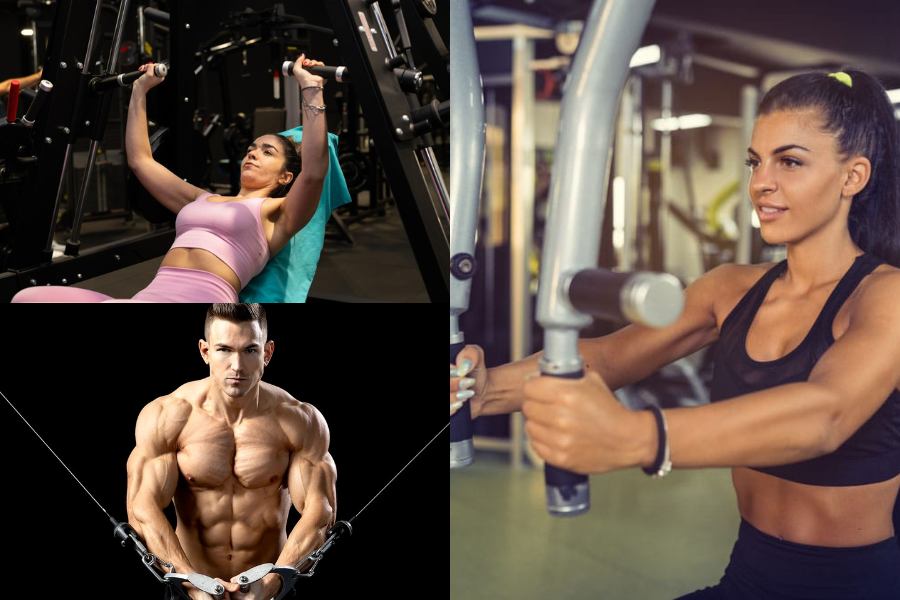
A focused chest workout for lower chest muscles can make your whole upper body look more defined and balanced. With a few simple exercises and smart training habits, you can target this area effectively without turning every session into a marathon.
Below, you will learn how your lower chest works, which exercises to prioritize, and how to train safely so you keep making progress.
Understand your lower chest
Your chest is mainly made up of the pectoralis major, which has upper and lower fibers, and the smaller pectoralis minor that sits underneath. The area you usually think of as the “lower chest” is part of the pectoralis major, sometimes called the abdominal head or sternocostal portion.
You cannot completely isolate the lower chest, because all chest fibers work together, but you can shift emphasis to that region by changing the angle of your arm path. Movements where your arms press or fly downward relative to your torso tend to load the lower fibers more than the upper ones.
Once you understand this, the logic behind decline presses, dips, and high to low flies becomes much clearer.
Think of lower chest training as aiming a spotlight, not flipping a separate muscle on and off.
Key principles for lower chest training
Before you choose exercises, it helps to set up a few simple rules for your chest workout for lower chest muscles. These will keep your sessions productive and reduce your risk of injury.
Train at the right volume
Research and expert guides suggest that training your lower chest around twice per week with about 4 to 12 total working sets focused on this area is a solid target for hypertrophy. You can spread those sets across 2 to 4 exercises, for example decline presses, dips, flies, and push-ups, to cover different angles.
You can fit this into an upper body day or a push workout so your chest, shoulders, and triceps all get attention together.
Focus on form and tempo
To actually feel your lower chest working instead of just your shoulders and triceps, you should prioritize:
- A controlled tempo, especially on the way down
- A full but comfortable range of motion
- A strong mind-muscle connection, thinking about driving your biceps toward the midline of your body
- Finishing sets close to failure without sacrificing technique
This careful style of lifting does more to grow your lower chest than simply piling extra weight on the bar.
Protect your shoulders and pecs
A common cause of injury during any chest workout for lower chest focus is lifting more weight than you can control. This can strain the pectoral muscles or irritate the shoulder joint, especially during bench pressing variations.
Injuries often come from poor recovery, rushed warm ups, and ignoring warning signs. You can avoid many problems by:
- Warming up properly before heavy sets
- Choosing manageable loads you can pause and control
- Backing off when you feel sharp or unusual pain
- Allowing rest days so tissues have time to recover
Consistently using these injury prevention tactics lets you keep training instead of spending weeks sidelined.
Best lower chest exercises to know
You do not need a long exercise list. A handful of well chosen movements can cover your lower chest thoroughly. You can then swap variations in and out over time to stay motivated.
Decline dumbbell bench press
The decline dumbbell bench press is one of the most effective exercises for your lower chest. Setting the bench at a decline angle of about 15 to 30 degrees lines your arm path up with the lower chest fibers while reducing shoulder involvement. Using dumbbells also lets each arm move independently, which helps fix imbalances and increases your range of motion.
To perform it safely:
- Set a decline bench to roughly 15 to 30 degrees.
- Sit at the top, place dumbbells on your thighs, and carefully lie back.
- Start with the dumbbells over your chest, palms facing forward.
- Lower the weights slowly toward the sides of your chest, keeping your elbows slightly tucked.
- Press back up while thinking about squeezing your lower chest, not just locking out your elbows.
Because decline pressing can easily overwork the front of your shoulders, it is usually better to start light and use higher repetitions until your technique feels natural.
High to low cable fly
The high to low cable fly is ideal when you want to isolate the lower chest more and keep tension constant. By pulling the cables from above shoulder height down toward your hips, you minimize shoulder involvement and direct work toward the lower pec fibers.
Here is how to set it up:
- Set both pulleys on a cable station above shoulder level.
- Stand in the center with a handle in each hand and take a small step forward.
- With a slight bend in your elbows, sweep your arms down and in toward your front pockets.
- Squeeze at the bottom, then slowly return to the start without letting the weights crash.
Keep the weight moderate so you can really feel the lower chest shortening at the bottom of each rep rather than just yanking the cables with your arms.
Dips for lower chest
Dips are a powerful bodyweight exercise for your lower chest when you adjust your body position. With a forward lean and slightly flared elbows, you shift the focus away from your triceps and onto your chest, especially the lower fibers. The deeper you go under control, the more stretch and activation you get in the lower pecs.
To emphasize your lower chest:
- Grip parallel bars or a straight bar.
- Lean your torso slightly forward and let your legs drift behind you.
- Lower yourself until you feel a strong stretch across your chest, not pain.
- Press back up while thinking about driving your chest up through your hands.
If full bodyweight dips are hard right now, you can use an assisted dip machine or a resistance band for support. If they are easy, you can add weight with a dip belt as you get stronger.
Incline push-ups
Incline push-ups are a simple and accessible way to train your lower chest without heavy equipment. By placing your hands on an elevated surface, such as a bench, sturdy box, or step, you mimic the arm position of a decline press. This angle favors the lower chest more than standard push-ups, while still training your triceps and shoulders.
To get the most from this variation:
- Place your hands slightly wider than shoulder width on a stable surface.
- Walk your feet back until your body forms a straight line from head to heels.
- Lower your chest toward the surface while keeping your elbows at about a 30 to 45 degree angle from your torso.
- Push back up and consciously squeeze your chest at the top.
You can adjust difficulty by changing the height of the surface. Higher makes it easier, lower makes it harder.
Sample simple lower chest workout
To put this all together, here is a straightforward chest workout for lower chest emphasis you can use twice per week. Adjust sets and reps based on your experience, but stay focused on clean technique.
- Decline dumbbell bench press
- 3 sets of 8 to 12 reps
- Rest 60 to 90 seconds between sets
- High to low cable fly
- 3 sets of 10 to 15 reps
- Rest 45 to 60 seconds
- Dips with forward lean
- 3 sets close to technical failure
- Use assistance if you cannot reach at least 6 controlled reps
- Incline push-ups
- 2 to 3 sets to near failure as a finisher
This routine gives you a mix of heavy pressing, isolation work, and bodyweight training. You hit the lower chest fibers from different angles without needing a long exercise list.
If you are newer to resistance training or coming back from a break, you can cut each exercise to 2 sets at first and then build up as your recovery improves.
Warm up and avoid common mistakes
Even a simple chest workout for lower chest muscles can go wrong if you skip your warm up or rush your sets. A few minutes of preparation will protect your shoulders and pecs and make your working sets feel better.
Warm up effectively
Before you touch your heavier sets, spend 5 to 10 minutes on:
- Light cardio, such as brisk walking or cycling
- Dynamic shoulder and chest movements, like arm circles and band pull-aparts
- 1 to 2 very light sets of your first chest exercise
This gradually increases blood flow and primes the joints and connective tissues for heavier loads.
Watch for these mistakes
To stay healthy and keep progressing, try to avoid:
- Letting your ego choose the weight instead of your form
- Bouncing the weight off your chest or dropping too quickly in dips and push-ups
- Training through sharp or localized pain just to finish a set
- Hitting lower chest hard several days in a row without recovery
Most lower chest injuries come from poor recovery and ignoring warning signals, not from one isolated bad rep. Listening to your body is one of the easiest ways to keep training consistently.
How to progress over time
Progress does not have to be complicated. A few simple strategies will keep your lower chest development moving forward.
You can:
- Add a small amount of weight to presses and dips when you hit the top of your rep range with solid form.
- Add an extra set to one exercise once the whole workout feels manageable and you recover well.
- Slow your tempo slightly or pause at the bottom of a press or fly to make the same weight more challenging.
- Switch variations occasionally, for example dumbbells instead of a barbell, to keep your joints fresh and your muscles adapting.
Effective lower chest training is not just about looks. Strong and balanced pecs help with arm rotation and extension, and they support better performance in pushing movements overall. When you combine smart exercise choices, careful technique, and patient progression, you will see improvements in definition and strength across your entire chest, not just the lower portion.