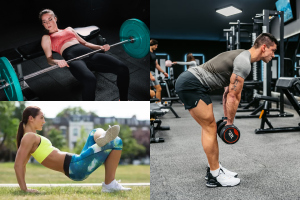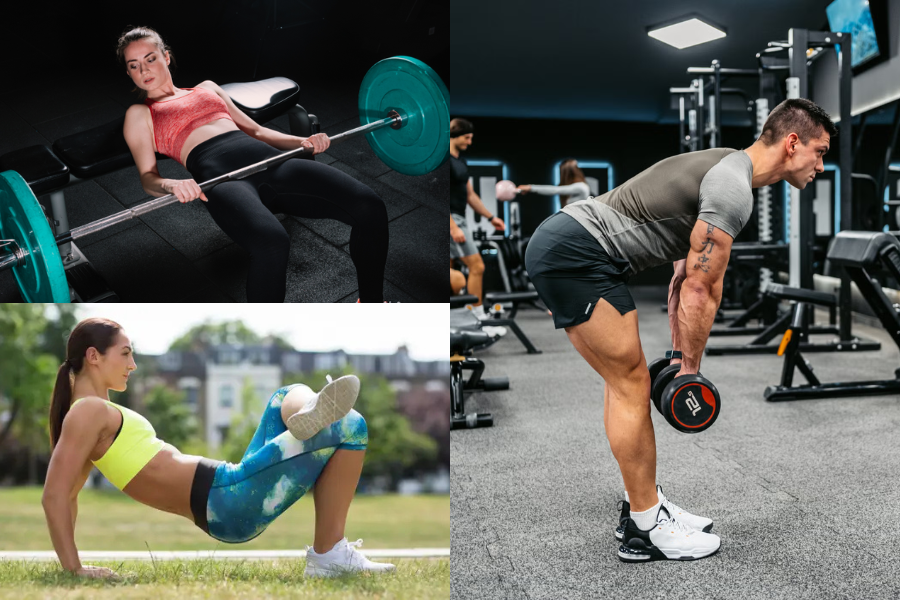
A smart glute workout gym plan does much more than shape your lower body. Strong glutes support your back, stabilize your hips, and power almost every step, jump, and pedal stroke you take in and out of the gym.
Below, you will find practical tips to warm up your glutes properly, choose the right exercises, and structure your workouts so you actually see progress, not just soreness.
Understand why glute training matters
Your glutes are not just one muscle. They are a team of three: the gluteus maximus, medius, and minimus. Together they control hip extension, hip rotation, and hip abduction, and they keep your pelvis stable when you walk, run, or stand on one leg.
According to Planet Fitness, strengthening these three muscles helps improve posture, boost athletic performance, reduce injury risk, and support your lower back by stabilizing your hips and spine. When your glutes are weak or “asleep,” your lower back, hamstrings, and hip flexors tend to pick up the slack, which can lead to discomfort or overuse injuries over time.
In a well designed glute workout, you are training for:
- Strength, so you can move heavier loads safely
- Power, so you can run faster and climb stairs more easily
- Stability, so your knees and hips track better in daily life and sport
Keeping this bigger picture in mind will help you stay consistent when workouts feel challenging.
Activate your glutes before you lift
Walking into the gym and jumping straight under a barbell is tempting, but it is not ideal for your glutes. A brief activation routine signals to your brain that you want those muscles to do the work, which improves your mind muscle connection and reduces your risk of injury. Peloton instructors and physical therapists note that glute activation before training helps you recruit the glutes more effectively during your main lifts and makes your workout more efficient overall.
Simple glute activation sequence
You can complete an effective activation warm up in about 5 to 8 minutes. Try this flow:
-
Glute bridges
Lie on your back with knees bent and feet flat. Drive through your heels and squeeze your glutes to lift your hips. Pause for 1 to 2 seconds at the top, then lower slowly. Aim for 10 to 15 controlled reps. -
Clamshells
Lie on your side with hips and knees bent. Keep your feet together and open your top knee like a clamshell without rolling your hips back. This targets the glute medius and minimus on the side of your hip. Perform 12 to 15 reps each side. -
Banded lateral walks
Place a light band just above your knees or around your ankles. Slightly bend your knees, keep your chest tall, and step sideways while maintaining tension in the band. Take 8 to 10 steps each direction. -
Standing hip abductions
Stand tall, hold a wall or rail for balance, and lift one leg out to the side without leaning. Focus on feeling the side of your glute work. Perform 10 to 12 reps each side.
Peloton’s guide highlights drills like hip thrusts, step ups, banded lateral walks, standing hip abduction, clamshells, and single leg deadlifts as key activation moves that do not require heavy weights or even squats to wake your glutes up before you train.
Pick the right exercises in the gym
When you plan a glute workout gym routine, you want a mix of compound exercises and isolation moves. Compounds hit multiple muscle groups and allow heavier loads. Isolation exercises zoom in on the glutes so you can feel and target them more directly.
Best compound lifts for glutes
Research and coaching guides from brands like PureGym and Gymshark consistently call out several heavy hitters for glute growth:
-
Squats
Back squats and front squats, especially with a slightly wider or sumo stance, recruit the glutes strongly. Heavier squats between 90 and 100 percent of your one rep max significantly increase glute engagement. -
Romanian deadlifts (RDLs)
Dumbbell or barbell RDLs allow an excellent range of motion and high loading potential. They strengthen the hamstrings and posterior chain while powerfully targeting the glutes, which is why many coaches treat them as a foundational glute exercise. -
Bulgarian split squats
These single leg squats with your rear foot on a bench challenge balance and stability and place a deep stretch on the glutes of your front leg. They also highlight any side to side strength differences. -
Step ups
Stepping onto a bench or box with control forces the glute of your working leg to push you up. This mimics real life movements like stairs and hills and is especially helpful for runners and hikers.
Gymshark specifically lists barbell hip thrusts, back squats, front squats, Bulgarian split squats, deadlifts, and Romanian deadlifts as the six best compound exercises to grow and strengthen the glutes in a gym setting.
Key isolation moves for focused glute work
Once you have a couple of compound lifts in place, add more targeted work to fully develop all three glute muscles.
Some effective isolation exercises in a glute workout gym plan include:
-
Hip thrusts
Barbell or dumbbell hip thrusts are highlighted across multiple sources as one of the most effective exercises for the gluteus maximus. In fact, barbell hip thrusts can activate the glute max more than back squats or split squats, making them ideal for building size and strength around the hips. -
Glute bridges
Similar to a hip thrust but with your shoulders on the floor instead of a bench. This is a great starting point for beginners and still very useful as a lighter accessory lift. -
Glute kickbacks
Cable or machine kickbacks help you focus on squeezing the glute of one leg at a time, which is especially helpful if you struggle to feel your glutes in heavier compound lifts. -
Good mornings
With a bar on your upper back, you hinge at the hips and keep a slight bend in your knees. This move targets the hamstrings and glutes and encourages you to control your hip hinge pattern.
PureGym coaches and other trainers often divide glute exercises this way: heavy compound lifts like squats, Romanian deadlifts, Bulgarian split squats, and step ups to maximize overall glute activation, then isolation moves such as hip thrusts, glute bridges, kickbacks, and good mornings to zero in on the muscle and drive growth.
Structure your glute training for results
The best exercises will not help much if your plan is random. A strong glute workout gym program uses appropriate frequency, intensity, and progression so your muscles have a clear reason to grow.
How often to train your glutes
Most experts land in a similar range:
- Peloton physical therapists suggest training glute focused exercises three to four times per week for muscle growth, with two to three times per week being enough for general health benefits.
- Other research and coaching guides recommend training the glutes two to four times each week, while allowing at least 48 hours between hard sessions for recovery.
A practical approach is to start with 2 days per week of dedicated glute and lower body work. As your recovery improves and you want more focus, you can move up to 3 days per week.
How many sets and reps to use
You do not need complicated math to set up your sets and reps. Use a mix of ranges so you build strength, size, and endurance at the same time:
- 4 to 8 reps for heavy strength work on big compound lifts like squats, deadlifts, and hip thrusts
- 8 to 12 reps for hypertrophy (muscle growth) on both compounds and isolations
- 12 to 15 reps for lighter accessory work and to build muscular endurance
PureGym trainers recommend combining these ranges in one program and ensuring that the weights you choose are challenging, while still allowing you to maintain good form throughout each set.
Use progressive overload on purpose
Your glutes respond to gradual, consistent increases in training stress. This idea is called progressive overload. According to Gymshark, continuing to grow your glutes relies on increasing at least one of the following over time:
- The amount of weight you lift
- The number of reps or sets you complete
- The time under tension, for example, slower negatives or pauses
- The difficulty of the variation, such as moving from a glute bridge to a hip thrust
You do not need to change everything at once. Pick one variable, adjust it slightly each week, and track your changes so you can see progress.
A useful rule of thumb: if you hit the top end of your target rep range with solid form in all sets for two consecutive workouts, it is time to increase the weight a little in your next session.
Sample glute workout gym routine
Use this sample as a starting point. You can repeat it twice per week with at least one rest day between sessions.
Warm up and activation, 5 to 8 minutes
- 10 to 15 glute bridges
- 12 clamshells each side
- 10 banded lateral walks each direction
- 10 standing hip abductions each leg
Main workout
-
Barbell hip thrusts
3 to 4 sets of 6 to 8 reps
Focus on driving through your heels and pausing at the top for a full glute squeeze. -
Romanian deadlifts (dumbbell or barbell)
3 sets of 8 to 10 reps
Keep your back flat, push your hips back, and feel the stretch in your hamstrings and glutes. -
Bulgarian split squats
3 sets of 8 to 10 reps per leg
Lean your torso slightly forward and push through the heel of your front foot. -
Step ups
2 to 3 sets of 10 reps per leg
Use a bench that challenges you but still feels stable. Avoid pushing off the trailing leg. -
Glute kickbacks or cable kickbacks
2 to 3 sets of 12 to 15 reps per leg
Keep the movement slow and controlled, and avoid swinging your leg.
Cool down
Finish with light stretching of your hip flexors, quads, hamstrings, and glutes for 3 to 5 minutes. This helps you maintain mobility and can reduce post workout stiffness.
As you get stronger, you can swap exercises in and out. Planet Fitness suggests beginner friendly moves like bodyweight squats, lunges, donkey kicks, fire hydrants, side lunges, and frog pumps, many of which can be loaded over time for progressive challenge.
Make your glute workouts more effective
Small adjustments in technique and routine can noticeably change how well your glutes respond to training.
Focus on quality, not just weight
It is tempting to chase heavier weights as quickly as possible, but for glute training, how you lift is as important as what you lift. To get more from each rep:
- Take a brief pause at the hardest part of the movement, for example, the top of a hip thrust.
- Maintain tension in your glutes throughout the set instead of relaxing at the bottom.
- Keep your range of motion consistent, even when the set starts to feel challenging.
Use tools and machines wisely
You can build strong glutes with free weights alone, but gym equipment can make your training more convenient and sometimes more joint friendly. Coaches at the Glute Lab, where the BC Strength equipment line was developed, have found that Smith machine variations of glute exercises can be surprisingly effective when used correctly for hip thrusts or squats.
If you are new to machines, start light, focus on the movement pattern, and adjust the setup so that your joints feel supported rather than forced into awkward positions.
Respect recovery and consistency
Strength and muscle gains happen when you rest, not while you are lifting. Most research suggests that training your glutes two to four times per week with at least 48 hours between hard sessions is ideal for progress, provided you are eating enough and sleeping well.
You can expect to see some changes in strength and muscle within a couple of months if you:
- Train consistently each week
- Challenge yourself with appropriate loads
- Gradually increase volume or intensity over time
Think of your glute workout gym routine as a long term project that supports the way you move, not just how you look in the mirror.
Putting it all together
An effective glute routine does not need to be complicated or take hours. If you:
- Activate your glutes before lifting
- Pick a blend of compound and isolation exercises
- Train them 2 to 3 times per week with progressive overload
- Prioritize good form and steady improvements
you will build stronger, more powerful glutes that support every workout you do.
Choose one tip to apply in your next session, such as adding a short activation warm up or swapping in hip thrusts for another lower body exercise. Notice how much more you feel your glutes working when you give them the focused attention they deserve.