A small muscle group can make a big difference in how you move. Calf strengthening exercises improve your balance, protect your ankles, and give you more power in everything from daily walks to sprint workouts. You feel that benefit every time you push off the ground, climb stairs, or land from a jump.
In this guide, you will learn how your calves work, why they matter so much for performance and injury prevention, and how to build a simple routine that keeps them strong and resilient.
Understand your calf muscles
Before you start doing calf strengthening exercises, it helps to know what you are actually working.
Your calf is not just one muscle. It is a muscle group made up of two main players:
- Gastrocnemius: This is the larger, more visible muscle that gives your calf its shape. It crosses both the knee and ankle and is packed with fast-twitch fibers, which are important for explosive movements such as sprinting and jumping.
- Soleus: This sits underneath the gastrocnemius and crosses only the ankle joint. It is rich in slow-twitch fibers that support endurance and help you stand, walk, and maintain posture for long periods.
These muscles come together above your heel to form the Achilles tendon. Together, they point your toes, help you push off the ground, and stabilize your ankle while you move. Sport and Spinal Physiotherapy describes this calf complex as essential for absorbing impact loads and supporting your lower limb and posture during everyday tasks and sports activities.
When you train your calves, you want to challenge both the gastrocnemius and the soleus so you get a mix of power, stability, and endurance.
Why calf strengthening exercises matter
Strong calves do a lot of quiet work in the background. When you ignore them, the effects often show up as pain, stiffness, or repeat injuries in your lower legs and feet.
Everyday movement and posture
Your calves help you:
- Walk, run, and climb stairs by propelling your body forward and upward.
- Stand upright by supporting your ankle and contributing to your overall posture.
- Maintain balance when you change direction or move over uneven surfaces.
Because the soleus works hard whenever you are on your feet, strengthening it improves your ability to stay comfortable during long days of standing or walking. It also helps your legs support your body and maintain good posture.
Performance in running and sports
If you run, play court sports, or do any activity with quick footwork, your calves are heavily involved. They provide the final push with every step and help you control how you land.
According to Sport and Spinal Physiotherapy, increasing calf strength helps you:
- Propel your body forward with more power in each stride.
- Absorb impact to reduce stress on your knees and feet.
- Improve speed, acceleration, and change of direction in sports that involve sprinting and jumping.
Stronger calves can also reduce common issues like calf fatigue and tightness during hard workouts.
Injury prevention and rehab
Good calf strength is critical for preventing a wide range of lower limb problems. Sport and Spinal Physiotherapy notes that strong calves help protect you from:
- Calf tears and strains
- Ankle sprains
- Plantar fasciitis
- Shin splints (medial tibial stress syndrome)
- Patellofemoral pain
- Tendon issues in the ankle, foot, and knee
- Certain stress fractures
Calf muscle strains are especially common in athletes who sprint or change direction quickly. Overuse injuries are also common if your calves are asked to do more work than they can handle without enough rest. New York Bone and Joint Specialists highlight that building strength through resistance exercises helps prepare your calves for these stresses and reduces the risk of strain.
If you are returning from a calf strain, particularly in the soleus, simply resting is not enough. Proper calf strengthening exercises are essential to prevent the same injury from recurring when you go back to running or sport.
Warm up before you work your calves
Your calves handle a lot of load, so you want them warm and ready before you jump into harder exercises.
You can start with 5 to 10 minutes of light activity such as walking, easy cycling, or marching in place. Then, include a few simple movements that prepare your ankle and calf:
- Gentle ankle circles
- Heel-to-toe rocks while standing
- Light bodyweight squats or lunges
A basic warm up like this increases blood flow, prepares your muscles for movement, and helps lower the risk of strain when you start your calf strengthening exercises.
Foundational calf strengthening exercises
These moves target both the gastrocnemius and the soleus. Start with your body weight and progress slowly.
Standing straight-knee calf raises
This classic exercise focuses more on the gastrocnemius and trains that strong push-off you use in running and jumping.
- Stand tall with your feet hip width apart and hands lightly on a wall or chair for balance.
- Keep your knees straight but not locked.
- Rise up onto the balls of your feet as high as you comfortably can.
- Pause and squeeze your calves at the top.
- Lower your heels back down slowly and with control.
Aim for 2 to 3 sets of 10 to 15 repetitions. Sport and Spinal Physiotherapy recommends progressing this exercise by increasing repetitions, moving to single-leg versions, adding weights, or increasing speed as your strength improves.
Bent-knee calf raises
When you bend your knee, you shift more of the work to the soleus. This exercise is especially useful if you spend a lot of time standing or walking.
- Stand with your feet hip width apart and hold onto a stable surface.
- Bend your knees slightly, as if you are beginning a shallow squat.
- From this position, push up onto the balls of your feet.
- Hold briefly at the top, then lower your heels slowly.
Try 2 to 3 sets of 12 to 15 repetitions. The bent-knee position keeps tension on the soleus, which supports endurance and posture.
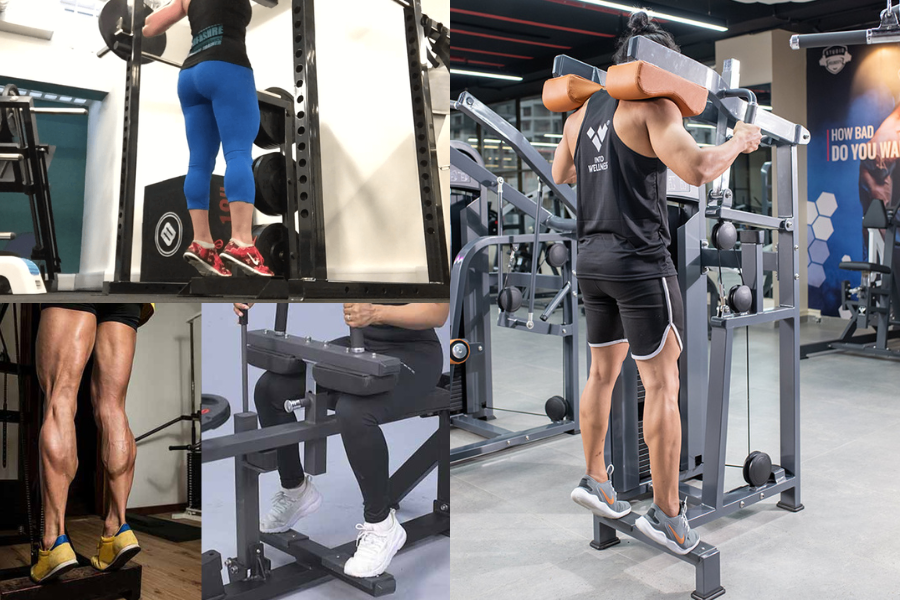
Seated calf raises
Seated calf raises give you a focused way to work your calves without loading the rest of your body as much. They are a good option if you are easing back from injury or want to isolate the muscles.
- Sit on a sturdy chair or bench with your feet flat on the floor.
- Place your hands on your thighs or gently rest a weight across your knees if you are ready for more resistance.
- Press through the balls of your feet to lift your heels off the ground.
- Pause at the top and squeeze your calves.
- Lower your heels under control, not letting them drop.
Bodybuilding style seated calf raises emphasize slow, controlled movements and a strong squeeze at the top to encourage both strength and muscle growth.
Single leg and balance focused moves
Once you are comfortable with basic double-leg exercises, you can shift more load onto one leg at a time. This strengthens your calves and also improves ankle control and balance.
Single-leg calf raises
Single-leg calf raises are one of the most effective calf strengthening exercises because all of your body weight rests on one calf at a time.
- Stand near a wall or counter for support.
- Lift one foot off the ground so you are standing on the other leg.
- Press up onto the ball of your standing foot as high as you can.
- Hold briefly, then lower slowly with control.
You can make this harder by holding a dumbbell or by performing the exercise on a step to increase your range of motion. Start with 2 sets of 8 to 10 repetitions per side and build from there.
Isometric calf holds
Isometric exercises involve holding a position instead of moving through a full range of motion. They are useful for building strength around sore or sensitive joints.
- Stand with your feet hip width apart.
- Rise up onto your toes.
- Hold this position for 10 to 20 seconds while breathing deeply.
- Lower your heels with control.
Repeat for 3 to 5 holds. You can progress by increasing the hold time, moving to one leg, or adding light weight.
Lunges with heel lift
Lunges work multiple lower body muscles and also give your calves extra work when you adjust your foot position. Stephanie Mansour explains that lunges engage the soleus to stabilize your ankles and the gastrocnemius to stabilize your knees, and lifting the front heel increases the challenge to your calves.
To try this variation:
- Step one foot forward into a lunge stance.
- Lower into a lunge while keeping your torso upright.
- At the bottom of the movement, lift the heel of your front foot so you are on the ball of your foot.
- Lower the heel, then push back up to standing.
You can start without the heel lift to get comfortable with balance, then add the calf emphasis when ready.
Dynamic and sport-style calf exercises
If you already have a base of strength and want to move toward more athletic work, you can incorporate dynamic calf strengthening exercises that mimic running and jumping.
Hopping drills
Hopping exercises combine explosive calf raises with quick ground contact, which makes them especially useful for runners and court sport athletes. Sport and Spinal Physiotherapy notes that hopping can be progressed by increasing height, speed, reducing ground contact time, or adding obstacles.
You can start simply:
- Stand on both feet with knees slightly bent.
- Perform small ankle hops by pushing off the balls of your feet while keeping your knees relatively straight.
- Land softly and immediately hop again.
Over time, you can progress to single-leg hops, lateral hops, or small hurdle hops if your body tolerates them well.
Plié squats with heel lifts
Plié squats with lifted heels tie calf work into a larger leg exercise and help with lower body control. Stephanie Mansour recommends these as leg day moves that effectively target and strengthen your calves.
To perform:
- Stand with your feet wider than hip width and toes turned out slightly.
- Lift both heels off the ground so you are on the balls of your feet.
- Lower into a squat, keeping your chest up and knees tracking over your toes.
- Press back up while keeping your heels lifted if you can.
You can experiment with variations such as alternating heel lifts or lifting both heels simultaneously depending on your balance.
At home ways to increase calf load
You do not always need formal gym exercises to strengthen your calves. You can also adjust everyday activities to challenge them more.
Stephanie Mansour suggests practical options like:
- Walking or running on hills or using a treadmill incline.
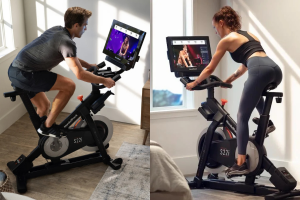
- Adding resistance on a stationary bike to increase calf involvement.
Small changes like choosing a hillier route for your walk or cycling with a bit more resistance can gradually build calf strength over time without a complicated program.
Stretching and recovery for healthy calves
Strong muscles also need to be flexible and well recovered if you want to avoid tightness and pain.
New York Bone and Joint Specialists emphasize that regular calf stretching and foam rolling keep the muscles supple and can help prevent tightness that leads to strain or injury.
You can build a simple flexibility routine:
After your workout or at the end of the day, spend a few minutes stretching your calves, glutes, hamstrings, and lower back to reduce overall tension in the lower body.
A typical sequence includes a wall calf stretch, a seated hamstring stretch, and gentle lower back and glute stretches. One 2023 guide recommends holding each stretch for about 30 seconds and repeating three times for best results.
Alongside stretching, pay attention to:
- Footwear: Shoes that support your feet and lower legs can decrease stress on your calves and reduce overuse injuries.
- Form: Good technique in leg exercises prevents extra strain on the calf muscles.
- Hydration and activity: Staying active, warming up before exercise, and drinking enough water all help prevent cramps and strains.
If you notice persistent tightness, pain, or symptoms such as tingling and numbness in your calves, it might be related to issues like sciatic nerve irritation. In that case, it is smart to speak with a qualified health professional for a tailored plan.
How to build your own calf routine
You can fit calf strengthening exercises into your current workouts rather than creating a separate long session. Here is one simple way to structure them 2 to 3 times per week:
- Warm up: 5 to 10 minutes of light cardio plus ankle mobility.
- Main strength moves
- Standing straight-knee calf raises, 2 to 3 sets of 10 to 15 reps
- Bent-knee or seated calf raises, 2 to 3 sets of 12 to 15 reps
- Single-leg focus
- Single-leg calf raises or isometric holds, 2 sets of 8 to 10 reps or 10 to 20 seconds per side
- Optional dynamic work
- Light hopping or walking on an incline if your body tolerates it
- Cool down
- Calf and lower body stretching for a few minutes
Start with a level that feels manageable and increase the difficulty gradually by adding repetitions, sets, or resistance. If you are unsure where to begin, keep the volume low, focus on slow controlled movement, and see how your calves feel the next day.
Over time, you will notice that stairs feel easier, runs feel smoother, and you have more confidence in your balance. Those are clear signs that your calf strengthening exercises are paying off.