A strong hamstring workout routine does more than build the backs of your legs. It supports your hips and knees, protects you from injury, and makes everyday movements like walking, running, and climbing stairs feel easier. When you train your hamstrings in a smart, structured way, you also improve your overall strength and athleticism, not just how your legs look.
Below, you will learn how your hamstrings work, how often to train them, and exactly which exercises and rep ranges to use. You will also see a sample hamstring workout routine you can follow or adapt.
Understand your hamstring muscles
Your hamstrings are a group of three muscles at the back of your thigh, the biceps femoris, semitendinosus, and semimembranosus. They cross both the hip and knee joints, which means they help you extend your hips and bend your knees at the same time. These actions are essential for walking, running, and jumping, as well as squatting and bending your knees to sit down or stand up.
Because they work at two joints, your hamstrings need to be trained in two main movement patterns: hip hinging and knee flexion. Hip hinge movements like Romanian deadlifts and good mornings focus on hip extension. Knee flexion movements like leg curls target the hamstrings directly as they bend your knees. Both are necessary for complete development and balanced strength, as outlined in the RP Strength hamstring training guide by Dr. Mike Israetel in 2024.
When you understand this basic anatomy, your hamstring workout routine becomes easier to design. You stop guessing and instead make sure each workout includes both a hip hinge and a curl variation.
Set your training frequency and volume
You can get good results from hamstring training two or three times per week, as long as you balance your total sets and recovery. The RP Strength 2024 guide explains training volume using four ranges, Maintenance Volume, Minimum Effective Volume, Maximum Adaptive Volume, and Maximum Recoverable Volume.
For most people, that usually looks like this:
- 2 to 3 hamstring sessions per week
- Each session including 2 to 3 hamstring-focused exercises
- Total weekly sets in a moderate range that feels challenging but still recoverable
If your hamstrings are a weak point, a third weekly session with slightly lower volume can help you bring them up. If your legs are already heavily worked through squats and deadlifts, two focused hamstring sessions per week are usually enough.
Pay attention to how you feel between sessions. Persistent soreness, tightness, or declining performance are signs you might need to reduce sets or training days.
Choose effective hamstring exercises
A well-rounded hamstring workout routine combines big compound lifts with focused isolation work. Compound exercises involve multiple joints and muscle groups, which help you build overall strength and muscle mass. Isolation exercises directly target the hamstrings and let you accumulate volume with less overall fatigue.
Key compound movements
Compound hamstring exercises emphasize hip extension and the posterior chain. These include:
- Conventional deadlifts
- Romanian deadlifts
- Single leg deadlifts
- Hex bar deadlifts
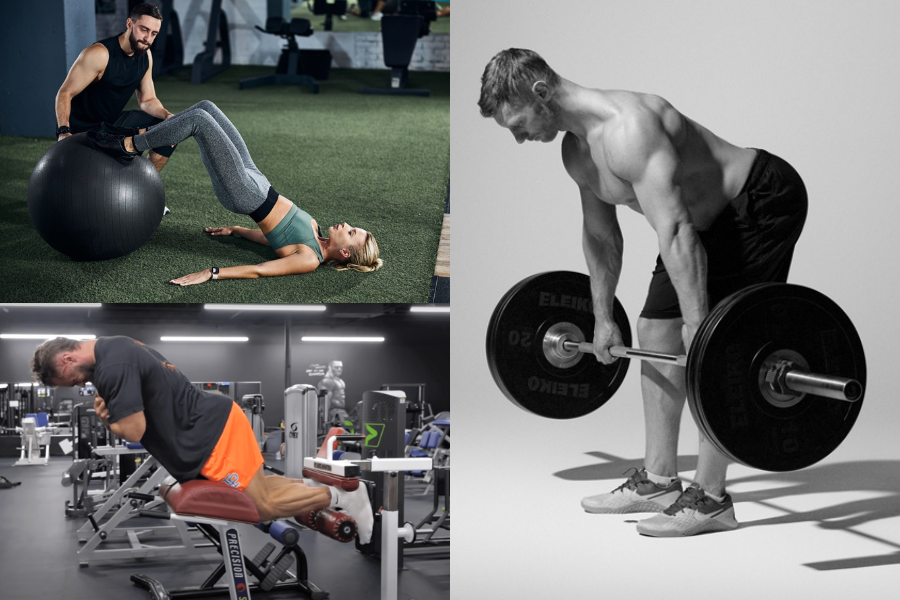
Conventional deadlifts heavily load your posterior chain and demand a lot from your core, hips, and back stability. Romanian deadlifts, often called RDLs, are performed with a soft bend in the knees and a focus on pushing your hips back. They give you a deep hamstring stretch and strong contraction without as much lower back stress, which is why they are frequently listed as one of the best hamstring exercises for building size and strength.
Single leg Romanian deadlifts and single leg deadlifts add a balance and coordination challenge while targeting each leg independently. Research highlights these single leg versions as especially effective for activating the biceps femoris, the outer hamstring muscle, making them excellent additions to your hamstring routine.
Hex bar deadlifts use a neutral grip and place the weight closer to your center of mass, which reduces upper body stress and can allow you to lift heavier weights. This makes them a functional choice for building strength you can feel in everyday movements.
Focused isolation movements
Isolation exercises for the hamstrings focus on knee flexion. These include:
- Seated hamstring curls
- Lying hamstring curls
- Nordic hamstring curls
- Glute ham raises on a GHD
Seated and lying hamstring curls are staples in many programs for a reason. They directly target the hamstrings, let you control the load precisely, and can be adjusted easily for beginners or advanced lifters.
Nordic hamstring curls and glute ham raises are powerful bodyweight options. Nordic curls have you control the lowering phase of kneeling from upright to near the floor, resisting with your hamstrings. They are excellent for building strength, especially when you do not have access to machines. Nordic curls are widely recommended where leg curl machines are unavailable.
Use smart rep ranges for growth
Different hamstring exercises respond best to different rep ranges. The RP Strength 2024 guide recommends using heavier reps for hip hinge movements and higher reps for curl variations to cover the full range of muscle fibers.
- Hip hinges such as Romanian deadlifts, stiff leg deadlifts, and good mornings work best in the 5 to 10 rep range. These loads are heavy enough to challenge your posterior chain without letting supporting muscles fail too early.
- Leg curls and other isolation movements tend to respond well in the 10 to 30 rep range. Lighter to moderate weights allow you to focus on a full range of motion and strong contractions without aggravating your lower back.
This spread of rep ranges gives your hamstrings a variety of stimuli. It also keeps your joints happier, because you are not loading every exercise as heavy as possible.
Warm up the right way
A good hamstring workout routine does not start with your heaviest set. Warming up prepares your muscles, joints, and nervous system so you move better and reduce the risk of pulled or strained hamstrings.
A simple structure you can use:
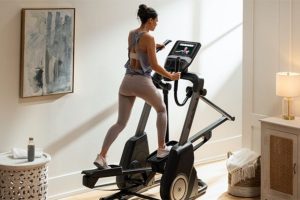
- 10 minutes of light cardio, walking, jogging, a stair machine, or even dancing, to increase blood flow
- 3 rounds of 10 reps each of:
- Knee hugs
- Glute bridges
- Lunges with elbow to instep
- Hip flexion swings or controlled leg raises
This kind of warm up is recommended in beginner hamstring routines that focus on both activation and mobility before loading your muscles heavily.
When you feel your hips and legs moving more freely and your breathing is slightly elevated, you are ready to start your main sets.
Sample hamstring workout routine
Here is a balanced 3 day per week hamstring workout routine that you can plug into your existing training. Adjust the weights so that you finish each set with 1 or 2 reps left in the tank.
Always check with your physician or a qualified professional before starting a new routine, especially if you have a history of hamstring or lower back injuries.
Day 1: Heavy hip hinge focus
- Romanian deadlift
- 3 sets of 6 to 8 reps
- Rest 2 to 3 minutes between sets
- Seated hamstring curl
- 3 sets of 10 to 15 reps
- Rest 1.5 to 2 minutes
- Single leg Romanian deadlift
- 2 sets of 8 to 10 reps per leg
- Rest 60 to 90 seconds
This day targets strength and a deep stretch under load. Keep your back flat, push your hips back, and lower until you feel a strong stretch without losing form.
Day 2: Unilateral and stability work
- Single leg deadlift or single leg Romanian deadlift
- 3 sets of 8 to 10 reps per leg
- Rest 90 seconds
- Hex bar deadlift
- 3 sets of 6 to 8 reps
- Rest 2 to 3 minutes
- Lying hamstring curl
- 3 sets of 12 to 20 reps
- Rest 1.5 to 2 minutes
This day focuses on balance, coordination, and building strength that carries over into sport and daily life. Single leg work helps prevent strength imbalances that can contribute to hamstring strains.
Day 3: Volume and injury prevention
- Good mornings or light Romanian deadlifts
- 3 sets of 8 to 10 reps
- Rest 2 minutes
- Nordic hamstring curl
- 3 sets of as many controlled reps as possible
- Rest 2 minutes
- Glute bridge with feet elevated or physio ball leg curl
- 3 sets of 15 to 20 reps
- Rest 1.5 minutes
Nordic curls and physio ball leg curls often appear in hamstring injury prevention programs because they build strength when the hamstrings are lengthened, which is important during sprinting and sudden changes of direction.
Support your hamstrings with mobility and recovery
Strength is only part of a healthy hamstring workout routine. Mobility, hip balance, and recovery matter just as much for keeping your legs feeling good and reducing injury risk.
Long hours of sitting can tighten your hip flexors and leave your hamstrings elongated but weak. This imbalance can increase your risk of pulled hamstrings, as highlighted in beginner routines that emphasize both strengthening and stabilizing the pelvis. To counter this, include:
- Hip flexor stretches such as a kneeling hip flexor stretch with a gentle pelvic tuck
- Glute activation moves like bridges and hip thrusts
- Core stability exercises that improve control of your pelvis and lower back
Foam rolling can also help. Gently gliding your hamstrings over a foam roller for 2 sets of around 20 seconds, with short rests, can reduce muscle tightness and improve flexibility in a way similar to massage, but at no extra cost.
Finish your hamstring sessions with 5 minutes of stretching that targets your hamstrings, hip flexors, and lower back. Focus on relaxed breathing and avoid bouncing. Stretching combined with regular strength work is consistently recommended as a way to decrease your risk of pulled or torn hamstrings.
Form and safety tips
Good technique lets your hamstring workout routine build you up instead of wearing you down. A few key cues to remember:
- For hip hinge exercises, bend deeply at the hips while keeping your lower back neutral. Avoid rounding your spine as you reach for the floor.
- For leg curls, start from a fully extended knee and bring the pad or resistance all the way toward your glutes. Use a controlled tempo instead of jerking the weight.
- Choose weights that you can move with control through the full range of motion. The goal is strong, smooth reps, not sloppy personal records.
If you are new to these movements, consider checking in with a personal trainer or physical therapist for a quick form check. A single session of guidance can save you a lot of trial and error.
Putting it all together
A powerful hamstring workout routine does not need to be complicated. When you include both hip hinges and knee flexion, use smart rep ranges, and train 2 or 3 times per week, you set yourself up for stronger and more resilient legs. Add in a short warm up, some focused mobility work, and you have a plan that supports your workouts and your daily life.
Start by picking one or two of the sample days and fitting them into your current schedule. After a few weeks, notice how your stride, your posture, and your lower body strength change as your hamstrings catch up to the work you are giving them.