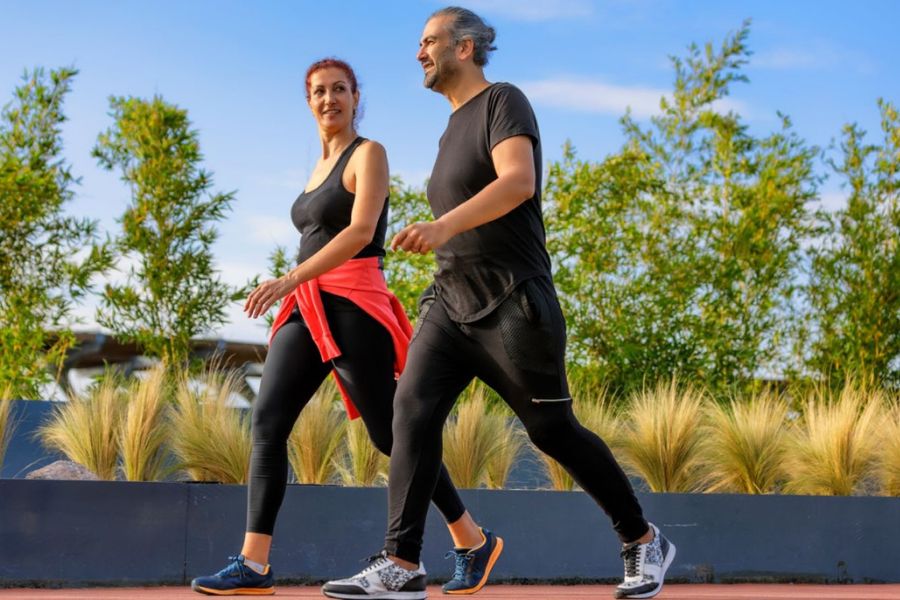
A brisk walk is already great for your health. When you add resistance, walking workouts with weights can feel more challenging and help you burn slightly more calories in the same amount of time. The key is doing it safely and choosing the right type of weight for your body and goals.
Below, you will learn how walking with weights works, what the research actually says, and how to design a beginner friendly routine that supports fat loss without wrecking your joints.
Understand how walking with weights helps
Walking is a low impact way to improve cardiovascular health, support weight loss, and boost your daily energy. When you introduce weights, you add extra load for your muscles and heart to handle.
That extra load can:
- Increase your heart rate at a given walking speed
- Slightly raise your calorie burn
- Engage more muscles in your upper or lower body, depending on the weight you use
However, the increase is not dramatic. A 2013 study found that walking on a treadmill with a weighted vest equal to 15% of body weight burned about 6.3 calories per minute compared with 5.7 calories per minute without the vest, which is a modest bump rather than a huge jump in fat burn (Healthline).
Think of walking workouts with weights as a smart way to gently turn up the intensity, not as a shortcut that replaces consistent exercise and solid nutrition.
Know the different types of walking weights
There is no single “best” weight for everyone. Each option has trade offs in terms of muscle engagement and joint stress.
Hand weights
Hand weights or light dumbbells are a common starting point. You hold them while you walk and let your arms swing naturally.
According to physical therapists, starting with about 3 pound weights in each hand is typical. Going much heavier can increase the risk of elbow and shoulder strain, especially if you tense your grip or swing aggressively (Healthline). Hand weights can modestly increase calorie burn by adding resistance to that natural arm swing.
If you do not own dumbbells, you can improvise with water bottles or soup cans. This is a simple way to experiment without buying new equipment (TODAY).
Ankle weights
Ankle weights wrap around your lower legs and add resistance to each step. They can strengthen your calves, quadriceps, and hip flexors, and they also ask more from your core to keep you stable (Healthline).
However, they change how your leg swings and increase stress on your knees and hips. Physical therapists and researchers note that ankle weights can cause muscle imbalances and raise the risk of tendon or ligament injuries during walking and aerobics (Harvard Health Publishing). They are more appropriate for controlled leg lifts and targeted strength work than for long walks.
If you choose to experiment with ankle weights for short, flat walks, keep them light, usually 5 pounds or less per leg, and pay close attention to any knee or hip discomfort (Healthline).
Wrist weights
Wrist weights serve a similar purpose to hand weights, but they strap on so you do not need to grip them. That convenience is tempting, but experts generally do not recommend wrist weights for cardio.
Swinging your arms with added weight can cause imbalances and joint or tendon injuries in your wrists, elbows, shoulders, and neck (Harvard Health Publishing). For most people, light hand weights are a safer choice.
Weighted vests
Weighted vests sit near your center of gravity and distribute weight evenly around your torso. This makes them safer and more comfortable than holding weights in your hands or strapping them to your ankles (UCLA Health).
Research suggests that vests can raise your heart rate, increase energy expenditure, and even improve functional lower body power during walking (Men’s Health UK). A vest also allows you to keep a natural arm swing and stride length.
Most experts suggest keeping vest weight to about 5 to 10% of your body weight to avoid overloading your joints (Harvard Health Publishing, Healthline). For a 150 pound person, that means starting around 7.5 pounds and building up slowly if you feel good (UCLA Health).
People with back or neck problems like spinal stenosis or disc degeneration should be especially cautious, since extra load on the spine can worsen symptoms (Harvard Health Publishing).
If you are brand new to exercise, have arthritis in your hips, knees, or ankles, or have a back or neck injury, check with your doctor before using a weighted vest or any walking weights (UCLA Health, MasterClass).
Focus on safe and effective fat loss
To use walking workouts with weights for fat loss, you want a mix of:
- Regular walking
- Occasional weighted walking
- Strength training at least twice per week
Experts emphasize that walking, even with a weighted vest, usually does not stress your muscles enough to build significant strength or size on its own. Traditional strength training with weights through a full range of motion is still more effective for that goal (NPR).
You can think of your plan in three layers:
- Baseline movement: Aim for at least 7,000 to 8,000 steps per day for overall health and lower risk of early death (Men’s Health UK).
- Cardio workouts: Schedule 3 to 5 dedicated walking workouts per week where you walk at a brisk pace that raises your heart rate and leaves you slightly breathless but able to talk.
- Resistance training: Add two or more strength sessions per week focusing on major muscle groups with exercises like squats, lunges, rows, and presses. Plans that combine walking and strength, such as 31 day challenges or 4 week walking plus weights programs, have been shown to improve fitness, build muscle endurance, and enhance health for beginners (TODAY, Men’s Health UK).
Your fat loss comes primarily from the combination of total weekly activity and your nutrition, not from any single tool. Weighted walking is just one way to expand that overall activity in a time efficient way.
Design a beginner friendly weighted walking plan
If you currently walk without weights, start there first. Once a 20 to 30 minute brisk walk feels comfortable, you can begin layering in resistance.
Step 1: Choose your weight type
For most people, the safest choices for walking workouts with weights are:
- Light hand weights, around 1 to 3 pounds
- A light weighted vest, about 5% of your body weight to start
Wear supportive shoes that offer flexibility, stability, and cushioning, especially if you will be adding weight or walking on hills (MasterClass).
Step 2: Start small and test your form
Here is a simple way to introduce weights over a week:
- Warm up for 5 minutes of easy walking without weights.
- Add your chosen weight. Walk for 10 to 15 minutes at a comfortable pace.
- Finish with 5 minutes of easy walking without weights and gentle stretching.
Pay attention to your posture. Keep your chest tall, shoulders relaxed, and core lightly engaged. With hand weights, resist the urge to punch or swing exaggeratedly. Let your arms swing naturally at your sides.
If you feel joint pain, numbness, or sharp discomfort, stop and remove the weights. Walking without weights should never hurt, so any pain that shows up only with added resistance is a sign to scale back or change your approach.
Step 3: Progress gradually
After 1 to 2 weeks of comfortable 15 minute weighted walks, you can increase either time or intensity, but not both at once.
You might:
- Add 5 minutes to your weighted segment, up to about 30 minutes.
- Keep time the same but walk slightly faster.
- Save the weights for hills or intervals instead of the entire workout.
Experts recommend starting with 2 to 3 weighted walks per week of 15 to 20 minutes and allowing at least 24 to 48 hours between sessions that stress the same muscles so they can recover (MasterClass).
Combine walking weights with strength exercises
One way to boost fat burn and muscle engagement is to weave short strength blocks into your walk. This approach has been used in 31 day and 4 week plans that mix cardio with resistance training for full body benefits (TODAY, Men’s Health UK).
A simple template might look like this:
- Walk 10 minutes at a moderate pace to warm up.
- Stop and perform 1 set of 10 to 12 bodyweight squats, lunges, or step ups.
- Walk another 5 to 10 minutes.
- Stop for an upper body move using your hand weights, such as overhead presses or bent over rows.
- Repeat this walk plus strength pattern 2 or 3 times.
This style creates a circuit that keeps your heart rate elevated while you build muscular endurance. Over time, you can increase the number of sets or add more challenging movements, like goblet squats or walking lunges with dumbbells (Men’s Health UK).
Stay safe and avoid common mistakes
Walking workouts with weights are most helpful when they fit your body and current fitness, not somebody else’s challenge on social media. A few guidelines can help you stay on track.
- Skip heavy ankle and wrist weights for long walks. They raise injury risk by pulling on joints and tendons in awkward ways (Harvard Health Publishing).
- Avoid using hand weights on a treadmill. If you lose balance, the combination of moving belt and hard metal is not forgiving (Peloton).
- Keep vest weight reasonable. Vests of 25 to 50 pounds can overload your joints. Most people do well in the 5 to 8 pound range or up to about 10% of body weight (Healthline, UCLA Health).
- Respect pain signals. Discomfort in your muscles is expected. Sharp or lingering joint pain is not. Stop and reassess if something feels off (MasterClass).
- Include rest and recovery. Muscles adapt when you rest them, not just when you use them. Aim for 24 to 48 hours before you heavily load the same areas again (MasterClass).
If you enjoy data, you can also use heart rate zones to keep your effort in the right range. Some walking plans suggest targeting 60 to 90% of your maximum heart rate on certain days to build fitness while keeping intensity manageable for most people (Men’s Health UK).
Put it all together
When you combine regular walking, light resistance, and brief strength blocks, you create a routine that supports fat loss and overall health without needing extreme workouts. Start with the basics, like a 20 minute walk with a few short strength stops, and layer in weights only as your body adapts.
Over time, you will likely notice that hills feel easier, your posture improves, and your stamina grows. That gradual progress, supported by consistent movement and smart use of walking workouts with weights, is what ultimately moves the needle on your fitness and fat loss goals.