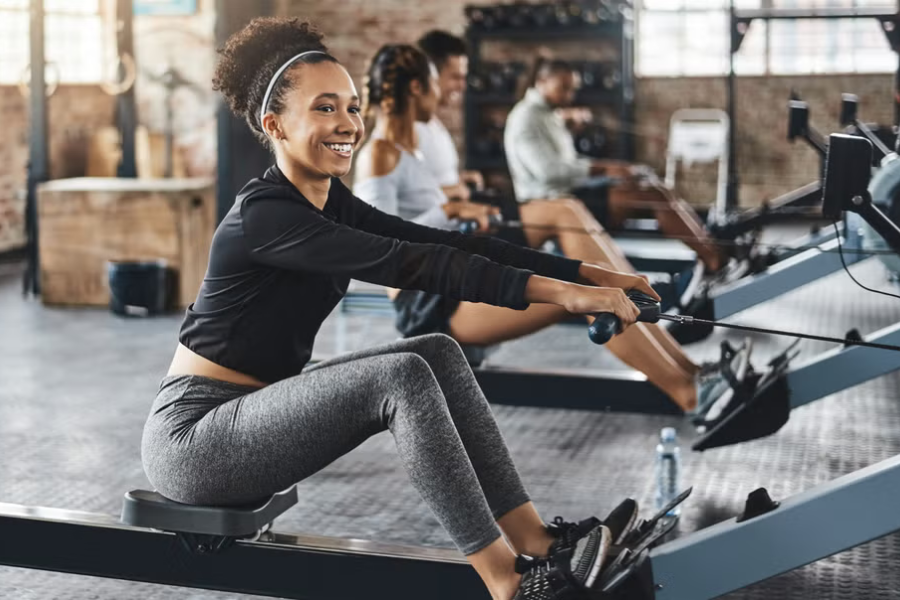
A rowing machine might look simple, but it is one of the most powerful tools you can use to burn fat, build muscle, and improve your heart health in less time. When you combine it with rowing machine interval training, you turn every session into a highly efficient calorie burner.
Below, you will learn why interval training on a rower works so well for fat loss, how it compares to steady cardio, and how to structure beginner friendly intervals that fit into a busy week.
What rowing machine interval training actually is
Rowing machine interval training is a workout where you alternate between harder and easier efforts on the rower. Instead of rowing at one steady pace, you move through bursts of high intensity and periods of low or moderate intensity.
For example, you might row hard for 30 seconds, then recover at an easy pace for 60 to 90 seconds, and repeat. This pattern is a form of high intensity interval training, or HIIT. On a rowing machine, HIIT works especially well because each stroke uses your legs, core, back, and arms together, which makes your body work harder with every pull (Garage Gym Reviews).
You can change the difficulty of your intervals in several ways:
- Increase or decrease your stroke rate, which is how many full strokes you take per minute
- Push harder or lighter through the legs and handle
- Adjust the resistance or damper setting on the machine
This flexibility lets you build sessions that fit your current fitness level and goals (Marathon Handbook).
Why intervals boost fat burn more than steady rowing
When your goal is fat loss, you care about both calories burned during your workout and what happens in the hours afterward. Rowing machine interval training helps on both fronts.
Higher intensity, more muscles, more calories
Rowing already recruits roughly 86 percent of the muscles in your body as you push through the legs, hinge at the hips, and pull with the upper body (Marathon Handbook). When you add intervals on top of that, you significantly increase the cardiovascular and metabolic demand.
During the hard bursts, your heart rate typically climbs to at least 85 percent of your maximum heart rate, which is the kind of intensity associated with HIIT style training (Marathon Handbook). Because these spikes are so demanding, they allow you to achieve similar fitness and fat burning benefits as longer, moderate workouts, often in about 40 percent less time (Marathon Handbook).
The “afterburn” effect
Another reason rowing intervals are so effective is what happens after you step off the machine. Intense intervals create an elevated metabolic state, sometimes called the afterburn effect. Studies suggest that HIIT rowing can keep your metabolic rate elevated for up to 14 hours after the workout (Marathon Handbook).
That does not mean you are burning thousands of extra calories while sitting on the couch, but it does mean your body is working a little harder than normal for a significant stretch of time. Over weeks and months, that extra burn adds up.
Time efficiency for busy schedules
If you have struggled to fit long cardio sessions into your day, rowing intervals can be a realistic solution. A focused 20 minute interval session can provide similar or better fitness benefits than a 45 minute steady state workout, while still improving both cardiovascular and muscular endurance (RP3 Rowing).
This combination of higher intensity plus lower time commitment makes it easier to be consistent, which matters more than any single workout.
You do not need hour long gym visits to see results. Well designed rowing intervals can deliver a meaningful fat burning workout in as little as 15 to 30 minutes.
How rowing intervals support weight loss safely
Rowing machine interval training is not only effective. It also offers several advantages that make it sustainable as part of a weight loss plan.
Low impact, full body conditioning
Unlike running, rowing is low impact, which is easier on your joints while still giving you a challenging cardiovascular workout. Because rowing engages your legs, core, back, and arms, you are combining strength and cardio in one movement, which helps build muscle while burning calories (The Fitness Outlet).
More muscle helps your body use energy more efficiently, and it can improve how defined you look as you lose fat.
A realistic calorie burn
Rowing is not a magic trick, but it is efficient. A typical 30 minute moderate intensity rowing session can burn roughly 200 to 300 calories, with higher numbers, around 400 calories, for individuals with greater body weight (Rowing Machine Workouts). When you add intervals, your total energy expenditure goes up because of those hard pushes and the afterburn effect.
Combined with a calorie controlled diet, that burn can help you create a sustainable deficit, which is the core requirement for fat loss (Rowing Machine Workouts).
Potential benefits for metabolic health
Interval training on the rower has been associated with improvements in cardiovascular fitness, and research suggests it may also help improve insulin resistance, which is important for long term metabolic health (Garage Gym Reviews). When your body handles blood sugar more effectively, weight loss and weight maintenance become more manageable.
Key elements of an effective interval session
You do not need advanced metrics or complicated patterns to benefit from rowing machine interval training. A few core principles will help you structure safe and effective workouts.
Warm up and cool down every time
A proper warm up prepares your muscles and joints and reduces injury risk. Even a short session should start with at least 5 minutes of easy rowing at a gentle pace and stroke rate (Garage Gym Reviews).
Similarly, finish with 3 to 5 minutes of light rowing or easy movement off the machine. This allows your heart rate to come down gradually.
Use effort levels you can feel
You can judge intensity by how easily you can talk while rowing:
- Easy effort, less than about 55 percent, you can speak in full sentences
- Moderate effort, you can say a phrase but need to pause for breath
- Hard effort, around 80 percent or more, talking is very difficult (Garage Gym Reviews)
During your work intervals you should feel closer to that hard zone. During recovery you should be able to catch your breath and speak comfortably again. Using this simple scale keeps your training intuitive without needing a heart rate monitor.
Mind your stroke rate and resistance
Stroke rate is the number of full rowing strokes you complete each minute. For fat loss focused interval training, a moderate stroke rate of about 20 to 26 strokes per minute tends to work well, since it balances intensity with good form (Rowing Machine Workouts).
On many machines you can also adjust the damper or resistance. For intervals, a middle setting, often around 3 to 5 on a standard indoor rower, is usually recommended. This mimics the feel of rowing on water without causing unnecessary fatigue or poor technique (The Fitness Outlet).
Protect your form
Good rowing form does more than prevent injury. It also helps you apply power efficiently so you get more results from each stroke. Focus on:
- Driving primarily with your legs, then leaning back slightly from the hips, then pulling with the arms
- Reversing that order on the way back in, arms, body, then legs
- Keeping your core engaged so your lower back stays supported
If you feel pain instead of normal muscular effort, shorten your intervals, reduce intensity, or take an extra rest day.
Sample interval workouts you can try
Once you understand the basics, you can plug them into simple, structured workouts. Here are a few options at different levels.
1. 10 minute intro to intervals
If you are new to rowing, even a short interval session can feel surprisingly challenging because you are using so many muscles you may not usually recruit. A 10 minute beginner workout might look like this (Marathon Handbook):
- Warm up for 3 minutes at an easy pace
- Alternate 30 seconds of moderately hard rowing with 60 seconds of easy rowing for 6 rounds
- Cool down for 1 minute at a very gentle pace
Keep your focus on smooth strokes rather than all out speed. The goal is to get used to changing gears without losing form.
2. 20 minute beginner HIIT session
Once you are comfortable on the machine, you can extend the time. A common beginner HIIT structure is:
- Warm up 5 minutes easy
- Row hard for 30 seconds at about 24 to 26 strokes per minute
- Row very lightly for 90 seconds
- Repeat steps 2 and 3 for 8 to 10 total rounds
- Cool down 3 to 5 minutes easy
This 20 minute format builds your ability to handle intensity while still offering plenty of recovery (The Fitness Outlet).
3. 35 minute endurance builder
If you want to support fat loss and overall stamina, you can use longer intervals that gradually increase in intensity:
- 5 minutes easy pace
- 5 minutes moderate pace
- 5 minutes moderate to vigorous pace
- Repeat this 15 minute block a second time
- Finish with a 5 minute cool down
This 35 minute workout helps you stay on the rower longer without jumping immediately into all out sprints, and it trains your body to sustain effort while keeping form in check (Garage Gym Reviews).
How often you should row for fat loss
Consistency matters more than perfection. For most people, aiming to row about 20 to 30 minutes, four to five times per week, is an effective schedule for cardio fitness and fat loss (Garage Gym Reviews). Try to avoid hard interval sessions on back to back days and cap your training at six days per week.
A structured plan might include:
- 2 interval focused rowing days
- 1 or 2 steady or moderate pace rowing days
- At least 3 rest or active recovery days per week (Rowing Machine Workouts)
Those rest days are not optional. They give your muscles and nervous system time to recover and help you avoid overtraining or elevated stress hormones, which can actually work against fat loss if they remain high for long periods (Rowing Machine Workouts).
Alongside your training, pay attention to your overall calorie intake, sleep, and daily movement. Rowing intervals are a powerful tool, but they work best as part of a broader routine that supports your health from multiple angles.
Start with one interval workout this week, even if it is only 10 or 15 minutes long. As your confidence and conditioning improve, you can build from there and watch your endurance, strength, and fat loss progress follow.