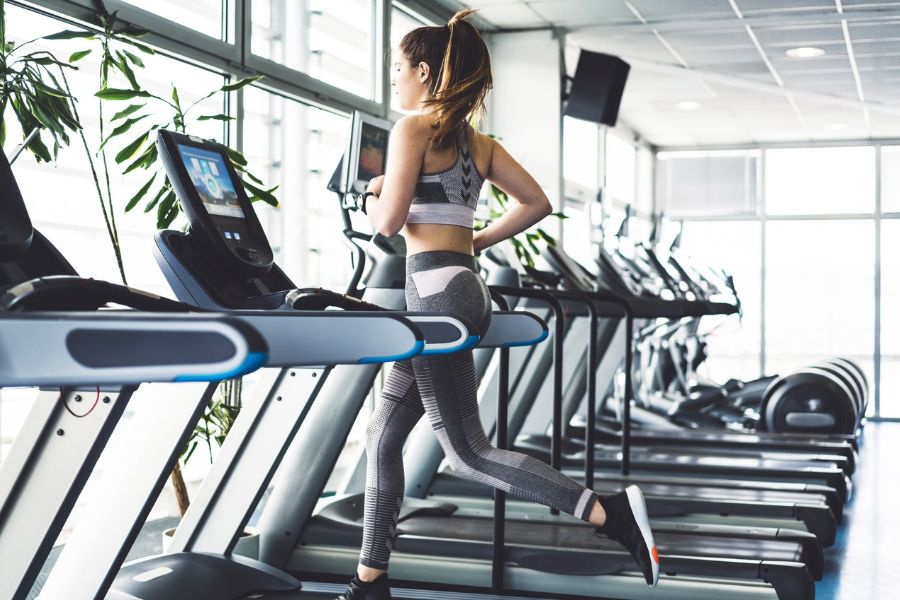
A treadmill can be one of the simplest tools for getting started with cardio, and the right treadmill weight loss workouts can make your time on the belt actually feel purposeful. Instead of guessing speeds or randomly pressing buttons, you can follow clear routines that match your current fitness level and build from there.
Below, you will find beginner friendly treadmill workouts, how often to do them, and how to progress without burning out or getting injured.
Understand how treadmill workouts support weight loss
Treadmills help you burn calories, which is a key part of losing weight. If you burn more calories than you eat over time, you create a calorie deficit and your body starts using stored fat for energy. That is true whether you walk, jog, or run, and whether you are on a treadmill or outside. What the treadmill adds is control over speed, incline, and duration so you can adjust workouts more precisely.
For example, a 155 pound person can burn around 150 calories walking briskly at 3.5 mph for 30 minutes on a treadmill, which is a straightforward, low impact way to move more in your day (NordicTrack). If that same person runs at 6 mph, the calorie burn is closer to 300 calories in 30 minutes, about double what brisk walking provides (NordicTrack).
You do not have to run to see results though. Walking on an incline can significantly increase calorie burn, often with less stress on your joints than running. Walking at a 5 percent incline can increase metabolic cost by 52 percent and at 10 percent by 113 percent compared with flat walking because your leg muscles are working harder (NordicTrack).
Set realistic goals before you start
Before you jump into treadmill weight loss workouts, it helps to decide what you are aiming for and what is actually doable this month, not in theory.
Start with three questions:
- How many days a week can you realistically walk or jog on a treadmill?
- How much time can you set aside on those days, even if it is only 15 to 20 minutes?
- What feels like a reachable first goal, such as completing 3 workouts a week for 4 weeks, or comfortably walking 30 minutes at a time?
Health guidelines suggest at least 150 minutes of moderate aerobic activity, like brisk walking, or 75 minutes of vigorous activity, like running, per week for general health and weight management (Verywell Health). You do not need to hit that number in week one. You can work up to it by adding a few minutes to your sessions or an extra workout day as you feel stronger.
If weight loss is your goal, remember that your treadmill routine is one part of the picture. You will see the best results when you pair your workouts with eating habits that support a calorie deficit and with enough sleep to recover.
Start with flat and incline walking
If you are new to exercise, returning after a break, or prefer low impact movement, walking workouts are a smart place to begin. They are easier on your joints than running and still very effective for weight loss, especially when you add incline.
Beginner flat walking workout
Use this if you are just getting comfortable being on the treadmill.
- Total time: 20 minutes
- Frequency: 2 to 4 times per week
-
Warm up
Walk at 2.5 to 3 mph with 0 percent incline for 5 minutes. -
Main set
Walk at a speed that feels like a brisk but sustainable pace for you, usually 3 to 3.5 mph, for 12 minutes. Stay at 0 percent incline. -
Cool down
Slow to 2 to 2.5 mph for 3 minutes.
You should be able to speak in short sentences but not sing. If you are gasping for air, lower the speed. If it feels too easy, gently increase the speed by 0.2 to 0.3 mph.
Beginner incline walking workout
Once you are comfortable walking 20 to 30 minutes on flat, add incline to boost calorie burn without pounding your joints.
Incline walking between 5 and 12 percent significantly increases calorie burn and activates the posterior chain muscles, like your glutes and hamstrings, and can reduce joint stress compared with running (NordicTrack, Planet Fitness).
Try this gentle incline session:
- Total time: 25 minutes
- Frequency: 2 to 3 times per week
-
Warm up
5 minutes at 2.5 to 3 mph, 0 percent incline. -
Rolling inclines
- 3 minutes at 3 to 3.5 mph, 2 percent incline
- 3 minutes at 3 to 3.5 mph, 3 percent incline
- 3 minutes at 3 to 3.5 mph, 4 percent incline
- 3 minutes at 3 to 3.5 mph, 2 percent incline
- Cool down
5 minutes at 2 to 2.5 mph, 0 percent incline.
The gradual change in incline helps your muscles adapt and keeps the workout interesting without feeling overwhelming.
Try the popular 12 3 30 workout (with modifications)
You might have seen the 12 3 30 treadmill workout online. The original version is simple: set your treadmill to a 12 percent incline and 3 mph, and walk for 30 minutes. It gained popularity after influencer Lauren Giraldo credited it with helping her lose about 30 pounds and stick with a routine that felt doable around five days a week (TODAY).
Walking at 12 percent incline at 3 mph for 30 minutes is not as gentle as it sounds. It is quite intense, especially if you are just starting out. The good news is that you can use the same idea and scale it to your current fitness.
Incline walking like this:
- Engages your glutes, hamstrings, quads, and calves more intensely than flat walking
- Raises your heart rate to improve cardiovascular fitness and metabolism
- Burns more calories than flat walking, which can support steady weight loss when paired with a supportive diet (Planet Fitness, TODAY)
Beginner friendly 12 3 30 style progression
Work your way up rather than jumping straight to 12 percent.
Week 1 to 2:
- 5 minute warm up at 0 percent incline, 2.5 to 3 mph
- 10 minutes at 3 percent incline, 3 mph
- 10 minutes at 4 percent incline, 3 mph
- 5 minute cool down at 0 percent incline, 2 to 2.5 mph
Week 3 to 4:
- 5 minute warm up at 0 percent incline
- 10 minutes at 5 percent incline, 3 mph
- 10 minutes at 7 percent incline, 2.8 to 3 mph
- 5 minute cool down
Weeks after that, you can gradually increase the incline by 1 to 2 percent or the duration by 2 to 3 minutes if your body feels good.
Experts recommend starting the official 12 3 30 no more than 2 to 3 times per week for under 30 minutes, then increasing as you adapt, to avoid overuse injuries in your lower back, hamstrings, knees, Achilles, and feet (Planet Fitness, TODAY).
Add simple HIIT intervals once you have a base
After a few weeks of consistent walking, your body adapts. That is when interval training can help you progress without needing to spend much longer on the treadmill.
High Intensity Interval Training, or HIIT, alternates short bursts of harder effort with easy recovery periods. On a treadmill, that can mean changing speed, incline, or both.
Research and fitness experts point out that HIIT treadmill workouts can:
- Burn up to 28 percent more calories than steady state walking at the same time length (NordicTrack)
- Increase the afterburn effect, also called excess post exercise oxygen consumption, so you continue to burn extra calories after your workout is over (8fit)
- Deliver many of the benefits of longer moderate workouts in a shorter time window (Verywell Health, Healthline)
Beginner HIIT treadmill workout
Use this once you can comfortably walk for 25 to 30 minutes. Keep the inclines moderate at first.
- Total time: 15 to 20 minutes
- Frequency: 1 to 2 times per week, with walking days in between
-
Warm up
5 minutes at 2.5 to 3 mph, 0 to 1 percent incline. -
Intervals
Repeat this 4 to 6 times:
- 1 minute jog or power walk at 3.5 to 5 mph, 1 to 2 percent incline
- 1 to 2 minutes easy walk at 2.5 to 3 mph, 0 to 1 percent incline
- Cool down
3 to 5 minutes at a relaxed walking pace.
A simple framework is to cycle one minute of walking, one minute of jogging, and one minute of running (or faster walking) for four rounds, which gives you a challenging 15 minute workout that you can eventually extend to 30 minutes (8fit).
Pay attention to how you feel. During the harder minute, you should feel pushed but safe, without sharp pain or dizziness. During the recovery minute or two, your breathing should come back under control.
Mix and match weekly for better results
Variety helps you avoid plateaus, keeps your workouts more interesting, and works your body in slightly different ways. Changing speeds, inclines, and workout types also supports continued weight loss by preventing your body from getting too efficient at a single routine (Healthline).
Here is a simple weekly structure that balances effort and recovery:
| Day | Workout type | Example |
|---|---|---|
| Monday | Flat walking | 20 to 25 minutes, mostly flat |
| Tuesday | Rest or light activity | Stretching or an easy walk outdoors |
| Wednesday | Incline walking | 25 minute rolling incline session |
| Thursday | Strength training or rest | Bodyweight squats, lunges, core work |
| Friday | HIIT intervals | 15 to 20 minute beginner HIIT workout |
| Saturday | Optional easy walk | 20 minutes at a comfortable pace |
| Sunday | Rest | Full rest or gentle movement |
Combining treadmill cardio with strength training is recommended for optimal weight loss and overall health because added muscle helps you burn more calories even at rest (Healthline).
Focus on form, safety, and small progress
Good form makes treadmill weight loss workouts feel better and helps you stick with them.
Aim to:
- Walk with long, natural strides. Avoid overstriding, where your foot lands too far in front of you.
- Keep your shoulders relaxed, chest open, and look forward, not down at your feet.
- Use your arms lightly for balance, instead of leaning heavily on the handrails.
- Breathe deeply from your belly to improve endurance (NordicTrack).
When you increase intensity, whether that is speed, incline, or time, do it gradually. Increasing speed in small steps, such as 0.25 mph, or raising the incline bit by bit is safer and gives you time to notice fatigue or joint discomfort before it becomes an injury (Verywell Health).
Incline work in particular can place extra stress on your lower back, hamstrings, Achilles tendon, knees, and the bottoms of your feet, so it is worth listening closely to any aches and building in rest days if you are trying a routine like 12 3 30 (TODAY).
What to expect for belly fat and body changes
It is normal to wonder whether treadmill workouts will specifically target belly fat. While you cannot choose exactly where your body will lose fat first, consistent treadmill sessions can lower overall body fat, which includes fat around your midsection, especially when paired with a calorie deficit and strength training (Verywell Health).
High intensity treadmill sessions, like HIIT intervals or challenging incline walks, are especially effective for reducing body fat in less time (Healthline). At the same time, steady walking sessions help you rack up weekly movement and support heart health.
You might notice early changes in:
- How easily you climb stairs or walk up hills
- Your energy during the day
- Your mood and sleep
- How your clothes fit, even before the scale changes much
That is all progress, and it counts.
Putting it all together
You do not need advanced programming or long hours to use treadmill weight loss workouts effectively. Start with simple flat walking, layer in gentle inclines, and add one HIIT style session each week once you feel ready.
Most importantly, choose routines that feel challenging but repeatable. A 20 minute walk you actually do three times a week will move you closer to your goals than a punishing plan you dread and skip. Pick one of the beginner workouts above, schedule it for your next treadmill session, and notice how much more confident you feel when you know exactly what to do the moment you press start.